Climate change: a story in ice

Feature story - August 28, 2009
August 28th marks when there will only be 100 days left to go before a crucial world summit on climate change. Greenpeace China is marking the day with a beautiful ice sculpture.

melting ice sculpture

This beautiful yet tragic ice exhibit is made from glacial melt water from the sources of the Yangtze, Yellow and Ganges Rivers.

Five sculptors carved, shaped and chipped away at the ice for two weeks to create these sculptures.

Chinese Li Heping and American Joesph Ellis were the two lead sculptors.

We brought the water to Beijing where it became the seed for 100 ice sculptures which will be displayed August 28 at The One Moon Art Gallery in Ditan Park in the Chinese capital.

More than one billion people in China and India rely on this water to survive.

Two years ago a United Nations study said that in 30 years 80 percent of the Himalayan glaciers would disappear if climate change continues at its current rate.

Since then scientists across the planet have found evidence that climate change is happening faster than ever.

Tipping Point

A climate tipping point is unfolding in the Himalayas. The rapid melting of glaciers caused by global warming is jeopardising the water supply for 1.3 billion Asians who live in the watershed of the 7 great rivers that originate in the region. If we cannot stop runaway climate change, babies born today - at this moment - will face a very different reality when they grow up, where water availability would be a serious problem.

The Himalayan glaciers are melting at a rate faster than recorded for other glaciers anywhere in the world.  The IPCC suggests that glacier coverage will fall by at least 43% and possibly as much as 81% by the end of the century - depending on how effectively we act to restrain our greenhouse gas emissions.

China and India together account for one-third of the world's population but both countries' water resources (per capita are far below the global average. The two largest developing countries share the challenge of balancing the goals of development and environmental protection. They must pursue a low-carbon development path if we are to avert environmental and humanitarian disaster.

Global countdown to Copenhagen

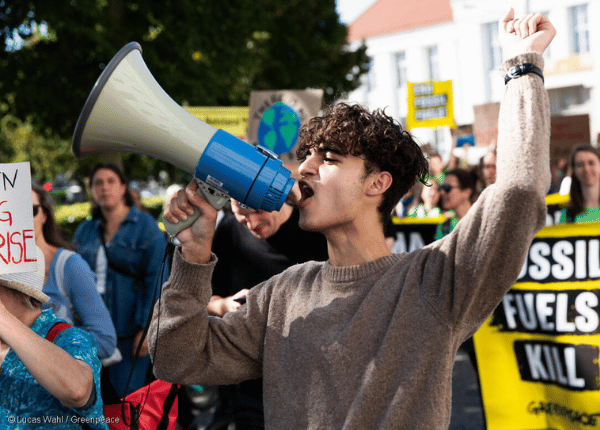
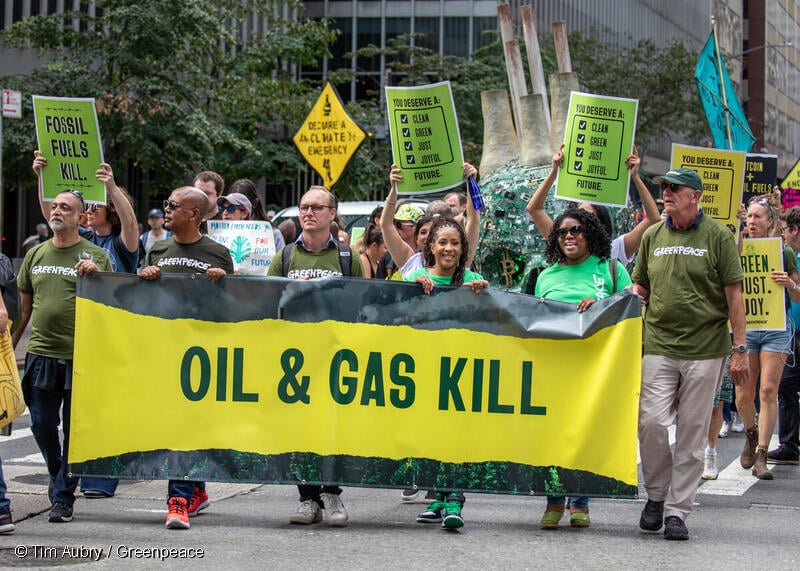
In other parts of the world - our activists staged public events to highlight the number of days left for our leaders to take action. In Brazil, we set up large clocks in eight cities. In Belgium, 10,000 people formed a giant humans banner in the shape of a big clock. Our team in Switzerland placed a giant banner on a retreating glacier saying 'Our Climate, Your Decision' and there was bike riding activity in the Philippines.

It's up to us to tell our governments that they have to make a fair and effective climate change deal at the UN climate change summit in Copenhagen in December.

Time to take responsibility

The latest scientific research shows catastrophic climate impacts can be averted by reducing global greenhouse gas emissions after 2015 in order to keep global temperature increase below 2 degrees Celsius. We are urging developed countries, as a group, to agree to cut emissions by 40 percent below 1990 levels by 2020. And developing countries must reduce their projected emissions growth by 15-30 percent by 2020.

A strong climate treaty will not only reverse the march of dangerous climate change - it will also help us tackle the world's largest challenges. We will create millions of green jobs, reduce healthcare costs, lift millions out of poverty, and put renewable energy into the hands of everyday citizens in the developing world.