South Pacific turtles banner
Activists encountered the longliner, Ho Tsai Fa 18, while it was
hauling in miles of fishing line. The captain was asked to release
all of the live catch back to the ocean. When he refused, our
activists freed everything, including several oceanic sharks and a
massive Pacific blue marlin that leapt into the air like a rocket
as soon as it was freed and quickly swam away.
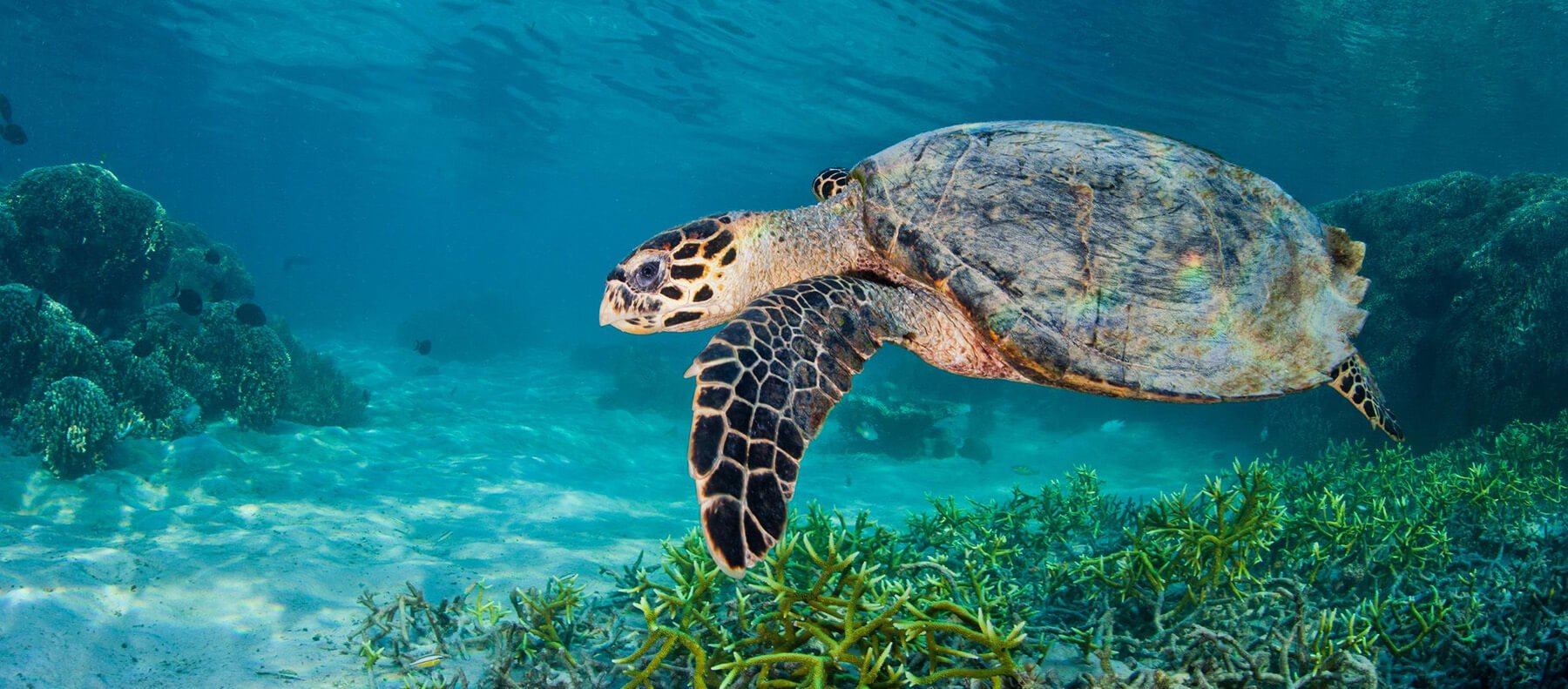
Our activists also found a juvenile olive ridley sea turtle
caught on the line and were able to release it alive. In the past,
this species of turtle was slaughtered in the hundreds of thousands
for meat and leather. It has yet to recover from centuries of
over-exploitation. This young turtle probably hatched in Papua New
Guinea where olive ridleys are known to nest.
Pirate?
The Esperanza also hauled in miles of the longline and activists
branded the hull of the fishing vessel with "PIRATE?" in red
paint.
Why the question mark? To make a point: loopholes in existing
regulations and lack of enforcement on the high seas make it
impossible to know when legal vessels are actually fishing
illegally -- and the pockets of international waters surrounded by
national fishing zones provide safe haven for pirates who are
plundering fish from nearby Pacific island countries. Turning
those international waters into Marine Reserves would make piracy
harder.
Once the fishing gear was completely out of the water, the
captain of the Taiwanese vessel reluctantly agreed to leave
international waters. But several miles of his line remains on the
Esperanza. Greenpeace will return it to the vessel's company
headquarters in Taiwan.
Tuna is one of the most valuable exports from the Pacific,
bringing in more than 10 percent of the total GDP of the region. It
is worth $3 billion a year, but up to 95 percent of this goes into
the pockets of foreign fishing operators who take 900 times as much
fish from the Pacific as Pacific nations do. The Esperanza is
currently in the Pacific defending the pockets of international
waters we call the Pacific Commons from greedy fishing fleets.
These industrial fleets have decimated and almost destroyed their
own fisheries and are now determined to exploit the Pacific as much
as possible.
Overfished and Overexploited
The Western and Central Pacific Fisheries Commission is supposed
to responsibly regulate fishing in this region. But last December
Japan and Korea, together with Taiwan and mainland China, blocked
conservation measures advocated by Pacific island countries to
protect these stocks for the future. This happened despite strong
scientific advice that yellowfin and big-eye tuna catches be
reduced. The ability for the Pacific island countries to make
decisions about tuna in their region is continually being
undermined by the interests of distant countries. It's a stalemate
that will see tuna disappear from sandwiches and sushi across the
world unless some serious changes are made soon.
With an international crew including citizens from Fiji,
Kiribati, the Solomon Islands and Papua New Guinea, we have taken
to the high seas to defend the Pacific ourselves.
In 2005, 24 percent of all tuna caught in the Pacific was caught
in international waters. Creating marine reserves in these areas
would go a long way towards protecting tuna habitat and future
fishing. Within marine reserves the tuna populations can recover
and help to replenish stocks outside the reserves. Pirate fishing
vessels will no longer be able to steal from Pacific Island
nations' waters by claiming their catch is from the high seas.
United the people of the Pacific can stop their future from
being fished to death, by halving the fishing activity in the
region and declaring the Pacific Commons as marine reserves, off
limits to fishing.
We cannot allow the fishing industry to destroy the last tuna
stocks in the name of consumer demand. Greenpeace is also asking
retailers to act as gatekeepers, ensuring that fish sold on their
shelves is not stolen from the people of the Pacific, or overfished
to the point that a consumer buying fish today becomes complicit in
that fish disappearing tomorrow.