In spite of Greenpeace's campaign and similar concerns expressed
by many other organizations and leaders around the world,
ExxonMobil has refused to take action to combat climate change.
Instead, ExxonMobil has spent money on deceptive advertising,
touting its concern for the environment, as well as using tactics,
including legal action against many Greenpeace offices and its
activists, designed to silence global efforts to expose
ExxonMobil's polluted environmental record.
Below is a timeline of Greenpeace's efforts and Exxon's evasive
and hostile response:
April 2001: Greenpeace Executive Directors Contact ExxonMobil CEO
The executive directors of Greenpeace in the United States and
Greenpeace International in Amsterdam send letters to ExxonMobil
executives asking the company to clarify its position on the Kyoto
Protocol and climate change. The company faxes a form letter to
both Greenpeace offices stating that it had published its position
in advertisements that ran in major newspapers across the country.
In these advertisements, ExxonMobil denounced the Kyoto Protocol,
calling the climate regulation "too much, too soon." ExxonMobil's
position would later be adopted as the outline for the Bush
administration's energy policy.
August 2001: A Boycott is Born
In several countries, Greenpeace is at the forefront of a global
movement to boycott ExxonMobil products. As a result of college
students and community activists holding protests and teach-ins
around the country, a boycott of ExxonMobil begins to take force
and goes global. In Germany, the United Kingdom, Luxembourg,
Australia, France, Canada and other countries, consumers begin to
boycott ExxonMobil/Esso's products. In the U.K. ,the number of
consumers boycotting ExxonMobil/Esso gas skyrockets to more than
one million.
May 2002: ExxonMobil's Undercover Dealings Exposed
Greenpeace United States releases evidence that ExxonMobil paid
not only lobbyists but also supposedly impartial scientists to
undermine and weaken environmental protections. Entitled "Denial and
Deception: A Chronicle of ExxonMobil's Corruption of the Debate on
Global Warming," the report details the company's role in
international and U.S. climate policy, including attempts to
stonewall the Kyoto Protocol.
July 2002: ExxonMobil Tries its Hand at Censorship
Esso sues Greenpeace in France, for the organization's parody of
the Esso logo, written with dollar signs ($$) instead of "SS". A
judge later upholds free speech, ruling in our favor.
September 2002: A Bad Brand and a Bad Investment
Greenpeace UK receives a leaked
copy of a Deutsche Bank report to ExxonMobil. The confidential
advisory states that the Greenpeace campaign against ExxonMobil was
harmful to the Esso brand and therefore an investment risk. "While
the company insists that it has suffered no fiscal impact from the
(Greenpeace-led) boycott, being handed a reputation as
environmental enemy number one for such a big customer-facing
business has to be considered a brand risk."
October 2002: Greenpeace Shows Up at the Pumps

In the United States, hundreds of celebrities and local
activists join Greenpeace at gas stations in New York and Los
Angeles, where activists chain
themselves to gas pumps, while in more than 20 other cities,
protestors call on motorists to boycott ExxonMobil. Dressed in
tiger suits or wearing "Don't Buy ExxonMobil" t-shirts, activists
hand out information about the company's record while supporters
cheer them on and motorists honk their horns in support.
That same month in Luxembourg, more than 600 activists
peacefully shut down every Esso station in the country, including
the largest Esso station in the world. The company continues to
ignore a global cry for clean energy initiatives and attempts to
slap Greenpeace Luxembourg with over $245,000 in damages.
February 2003: We give Exxon Employees the Day Off
Greenpeace volunteers close down more than 100 Esso stations
across the United Kingdom. Another 100 volunteers peacefully block
the entrance to the company's huge UK headquarters in Surrey, where
more than 1,000 staff normally work. Esso sends its staff home in
response.
March-May 2003: Speech Bubble Mania

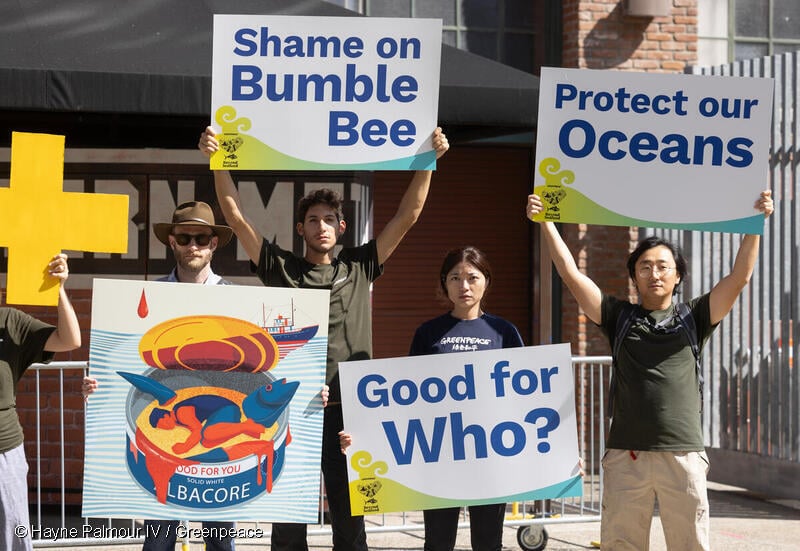
Activists around the world participate in a visual
petition where they take photographs of themselves holding speech
bubbles saying things like "ExxonMobil: You won't see this face
again!" and mail the pictures to Exxon executives. In the months
leading up to the company's annual shareholders meeting, Exxon
executives and board members receive over 40,000 photos.
May 2003: The Annual Distort
Greenpeace USA releases a spoof of the
ExxonMobil annual report, and it causes a stir amongst
financial leaders and the business community. The annual report
generates articles in such publications as the Wall Street Journal,
Fortune magazine and Oil Daily.
May 2003: A Peaceful Protest Meets Police Hostility
Volunteers from as far away as Italy, Australia and the United
Kingdom join Greenpeace USA at ExxonMobil's international
headquarters in Irving, Texas, to
protest the company's negative influence on climate change.
Although the protest is peaceful, some of the volunteer protestors,
including a Baptist minister and a mother and son, are pepper
sprayed, arrested and locked up for two days in jail. All of the
individuals are arrested for criminal trespass, a class B
misdemeanor. In addition, each individual is also charged with riot
and/or engaging in organized criminal activity -- which are
potential felonies.
July 2003: An Irritated Tiger-ExxonMobil Lashes Out
In the wake of the May protest, ExxonMobil files a civil suit
against both the U.S. and international Greenpeace entities and 38
individuals seeking injunctive relief and damages. Greenpeace is
able to resolve the matter out of court with all felony charges
being dropped.
January 2004: French Court Upholds Freedom of Expression
In 2002, ExxonMobil tried to obtain an injunction and almost
$100,000 for damages to its trademark against Greenpeace France.
The suit stemmed from Greenpeace France's use on its Web site of a
parody logo with a double dollar sign ($$) instead of the double
"S" in Esso's logo. In January, a French court rejected the claims
and ruled that Greenpeace France's Web site did not constitute a
trademark infringement.
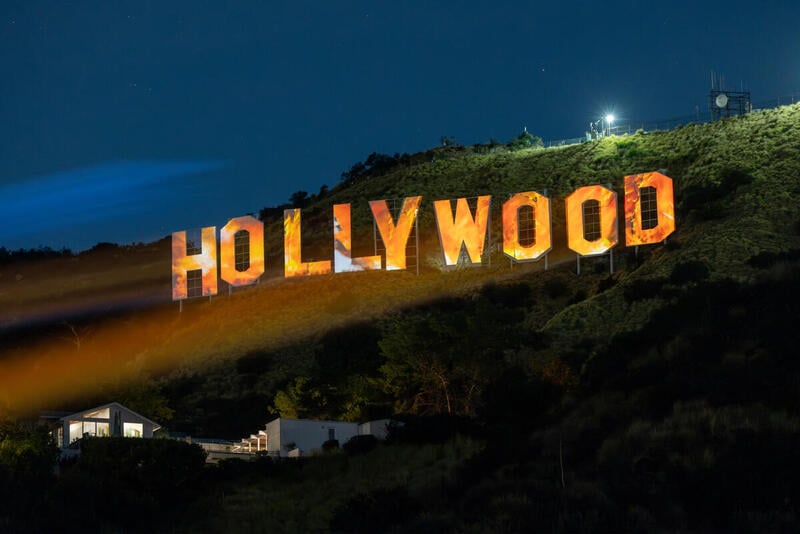
May 2004: Now Showing: Exxtreme Weather Events
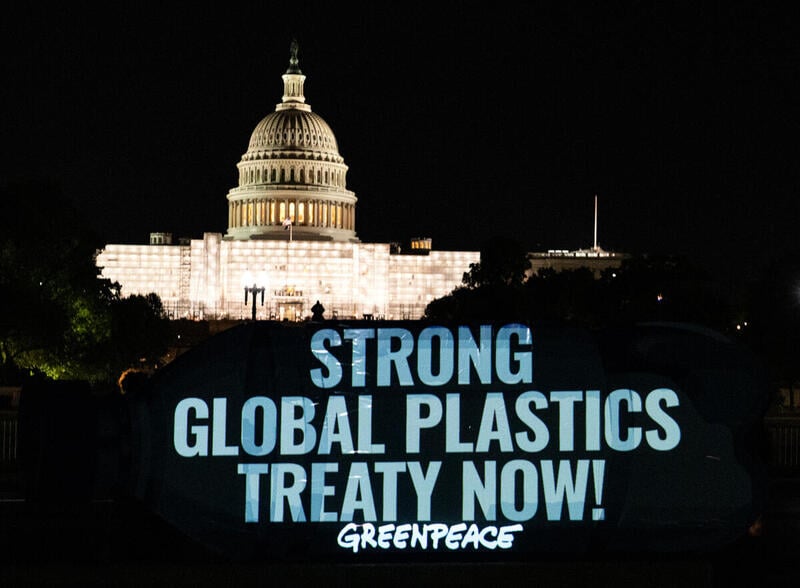
On the eve of ExxonMobil's annual shareholder meeting, we project 100-foot
images of floods, storms and other impacts of global warming
where shareholders gathered the next day. Our projections warned
that the company's policies on global warming are a risk to their
investment and the planet.
June 2004: The Secret's Out
Climate skeptics funded by ExxonMobil can no longer hide behind
front groups. We launch a new Web site, www.exxonsecrets.org, to
expose the links between ExxonMobil money and the think tanks,
associations and individuals denying global warming.