Feature story - July 16, 2004
From spreading sea lice to flooding the salmon market, fish farming in North America threatens the health of wild salmon populations. Alaska has already banned fish farming, but until Canada follows suit, Alaskan salmon remains under threat. Oh Canada: "Keep it Wild!"
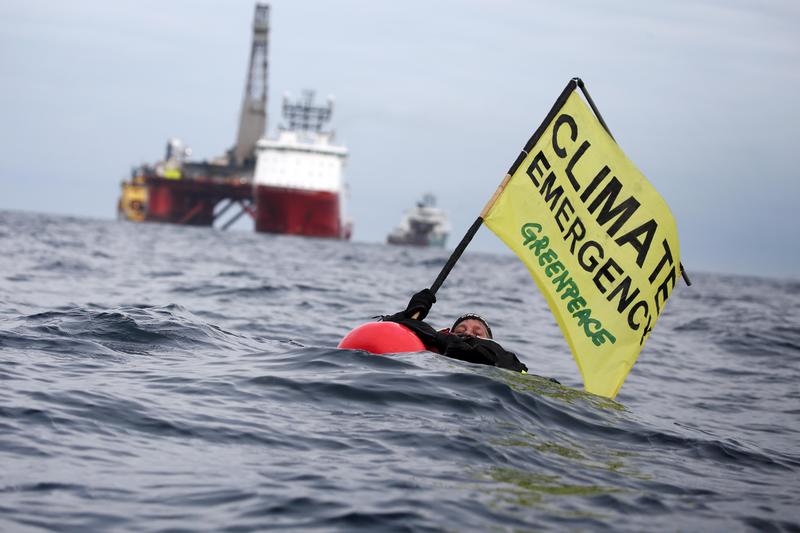
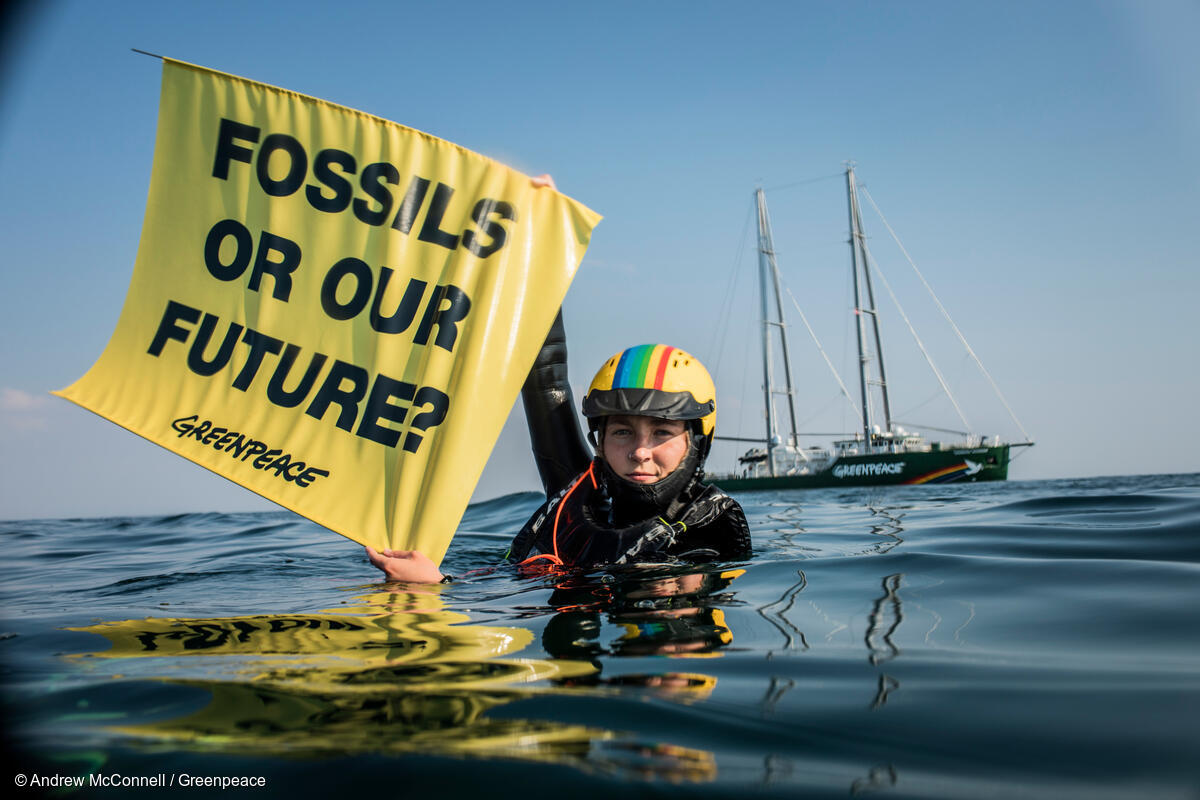
Greenpeace activists protest fish farming in British Columbia
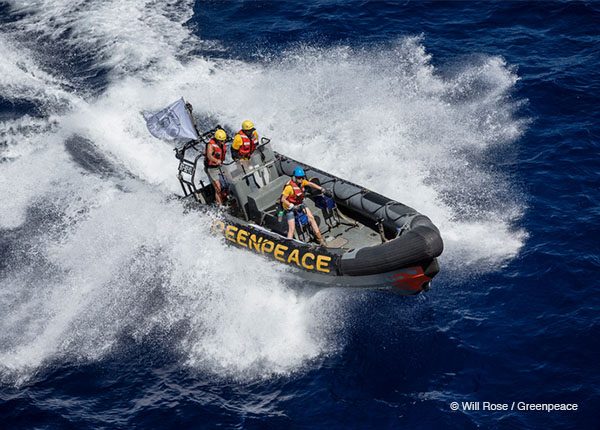
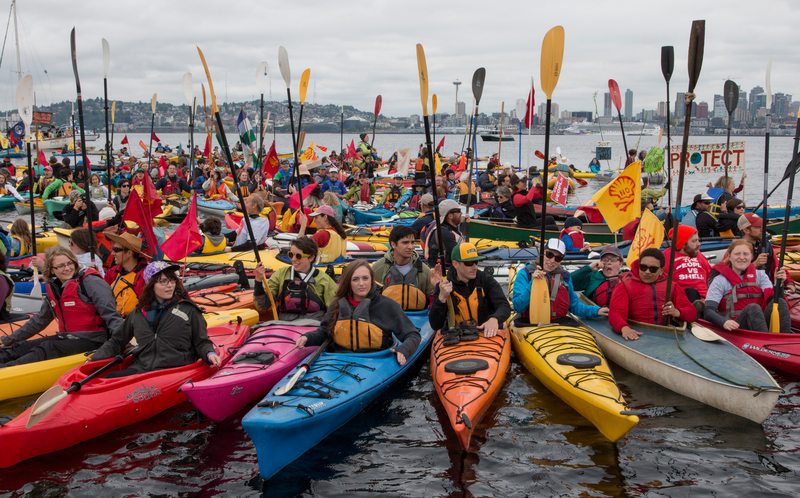
A flotilla of more than 30 boats, led by Greenpeace, Alaska
natives, and First Nations from Canada, made its way up the British
Columbia coast to protest fish farms in the Broughton Archipelago.
The flotilla demanded an end to the expansion of fish farms along
the west coast of North America and the closure of all fish farms
in the Archipelago.
"Greenpeace and Alaska stand resolutely opposed to fish farms,
which generate lethal amounts of sea lice that threaten wild
salmon," said Jeremy Paster of Greenpeace U.S. "British Columbia is
expanding aquaculture toward Alaska, a reckless move that endangers
wild salmon stocks in both Canada and the U.S."
Paster was one of several American and Canadian activists aboard
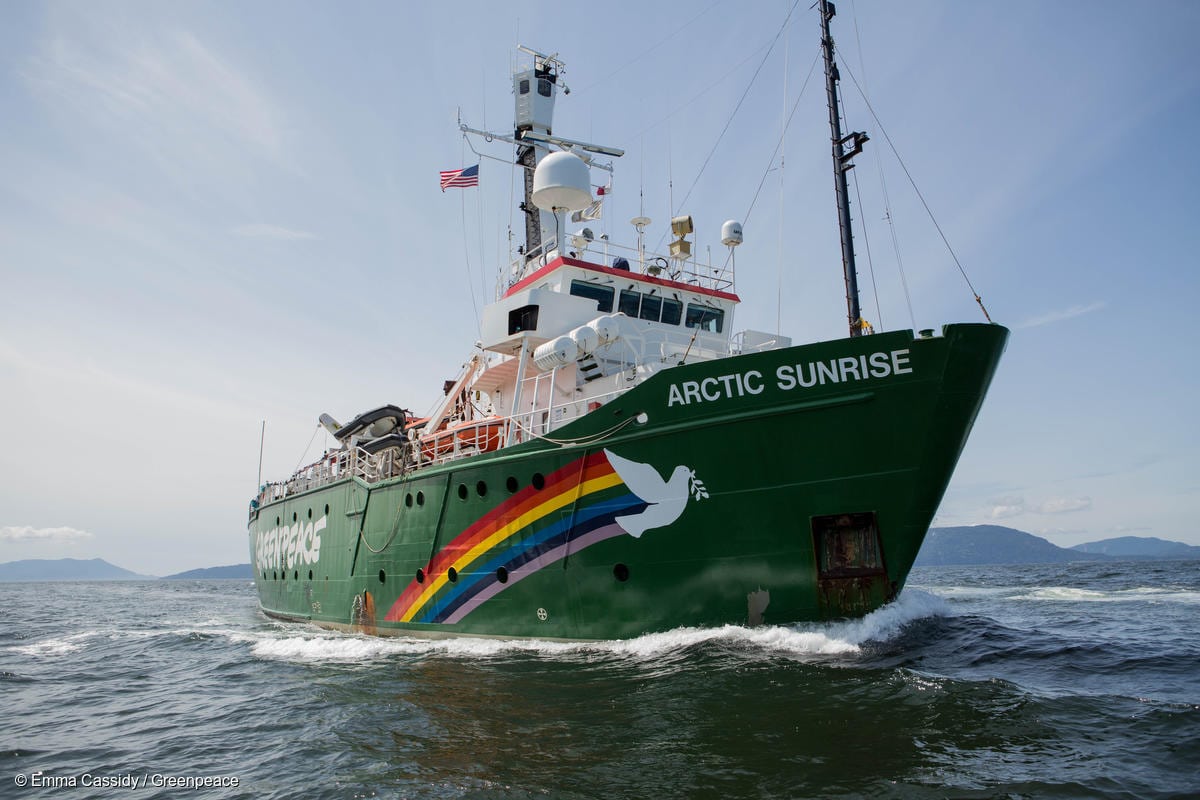
the Greenpeace ship, the Arctic Sunrise, which laid a
65-foot floating net banner with the message "Keep It Wild - No
Fish Farms" next to fish farm pens in the Broughton Archipelago.
The Archipelago has one of the highest concentrations of fish farms
in the world, many of which are placed on vital migratory routes
for wild salmon.
In 2002, close to four million wild pink salmon died after
contracting lethal levels of sea lice from fish farms in the
Archipelago - the largest single collapse of a fishery in B.C.'s
history. At the end of April 2004, juvenile pinks were seen with
deadly numbers of sea lice, higher than in 2002. Many of these fish
had more than 60 lice on them.
Applications have been made for three Canadian fish farm sites
near Alaska. One at Anger Anchorage has been approved, and the
others, at Petrel Point and Azimuth Island, are pending review.
"We are watching a storm move closer, a Canadian-made storm that
threatens to wipe out our traditional way of life and our
livelihoods in Alaska," said A. Webster Denmert, president of the
Klawock Cooperative Association, an Alaskan native commercial
fisheries group that took part in the protest. "We are here to ask
all Canadians to put a stop to this reckless endeavor."
"What is happening in the Broughton - the eradication of a major
wild salmon run - is bound to happen on the north coast toward
Alaska where the B.C. and federal governments are now expanding
fish farms," said Catherine Stewart of Greenpeace Canada. "Canada's
fish farm expansion shows a complete disregard for the lifeblood of
the entire west coast: the wild salmon."