Skip navigation.
Keystone Forest: Florida Panhandle

Red denotes forested BLM and national forest lands; green is forested national parks and forested wilderness areas; yellow is miscellaneous forested public lands and private preserves. View the PDF version for more details.

Enlarge Image

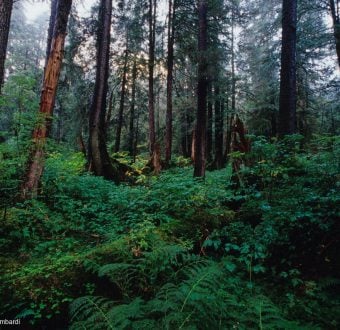
The Florida panhandle, centered on the Apalachicola River Basin and part of the larger Southeastern Conifer forest ecoregion, is a well-known hotspot for biodiversity. It is home to the richest endemic plant life in the south and 75 percent of Florida’s plant species. These longleaf pine forests and their wiregrass understory also provide habitat for a host of rare species, including 36 federally threatened or endangered species such as the red-cockaded woodpecker, Eastern indigo snake, gopher tortoise and flatwoods salamander. Other rare species, including Florida black bear, striped newt, Apalachicola king snake and Sherman’s fox squirrel, are found here. Tree diversity and endemism is among the highest of any North American forest, with more than 190 tree species and 27 endemics. The wiregrass community contains some of the most diverse herbs in the world, with a single stand containing as many as 200 species.

KEYSTONE FORESTS
The forests and numerous rivers of the Florida panhandle provide recreational opportunities for hunters, fishermen, hikers, boaters and canoeists. In addition, the nutrient-rich fresh river water of the Florida panhandle makes the bays and estuaries along the Gulf Coast some of the most productive in the world. In fact, 10 percent of all the oysters harvested in the United States come from Apalachicola Bay.

Threats
The longleaf pine forests that once cove red approximately 90 million acres from Virginia to Texas have been reduced to fewer than three million acres. Until very recently, the Florida panhandle had escaped the development pressures seen in the rest of the state. However, the largest landowner in the Florida panhandle, the St. Joe Company (formerly the St. Joe Paper Company), has recently decided to commercially develop the region and has begun selling off a significant portion of its one million acres to land prospectors. Another threat to the longleaf pine ecosystems has been forestry practices on both public and private lands that have replaced the native longleaf pine forest with fast-growing slash pine plantations that retain only a fraction of the land’s original biodiversity. Fire, a natural regeneration process for the wiregrass community, has been suppressed. On public lands, largely unregulated off-road vehicle use is also increasing.

Efforts to Increase Protected Areas
The Nature Conservancy has a 6,000-acre preserve along the Apalachicola River and has recently signed a Memorandum of Partnership with the state of Florida and the U.S. Department of Defense to establish a 100-mile protected corridor that connects Eglin Air Force Base and the Apalachicola National Forest.

Written by Brett Paben
WildLaw
www.wildlaw.org

Download the PDF version of this page (743 KB) >>

Go back to the main page >>

Learn more
Global warming
Oceans
Forests
Nuclear
Toxics
Staff blog
Media center
Press contacts
News releases
Bloggers Center
Experts
Photos
Videos
Get involved
Take action
Jobs
Greenpeace Organizing Term
Greenpeace Student Network
Donate
Tax-deductible giving

702 H Street, NW, Suite 300, Washington, D.C. 20001 (202) 462-1177