[Tainan, October 20, 2026] Greenpeace held a press conference today at the Tainan City Council and released a flooding risk study on Tainan, a cultural capital with 142 historical sites. The results show that under current conditions and a future 2°C warming scenario, several iconic historical sites along the Anping Canal face flooding risks during short-duration heavy rainfall, which could impact the local tourism economy.
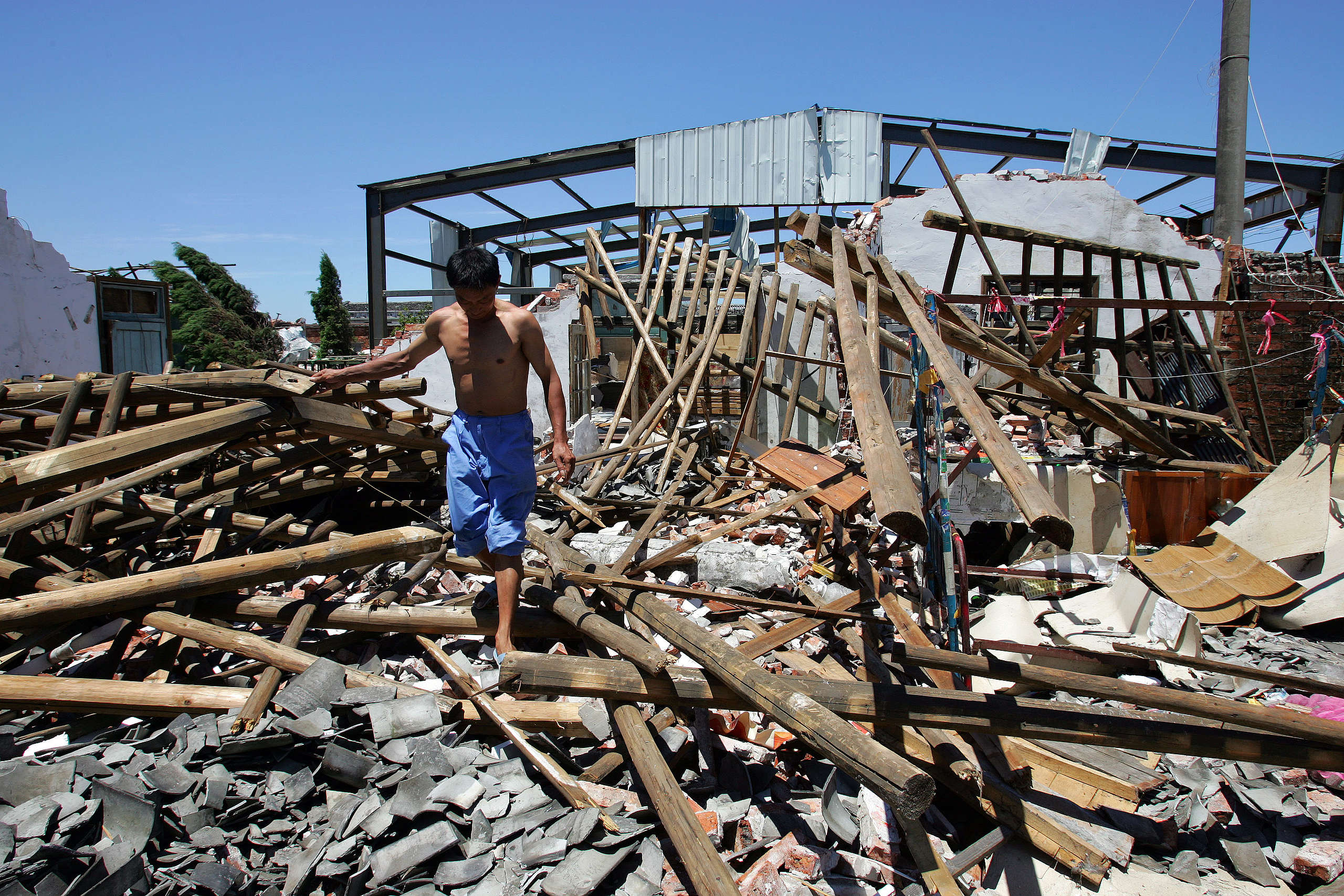
Greenpeace Climate and Energy Project campaigner Yi-Hsin said: “ “Last year, Typhoon Danas caused the collapse of the archway at Nan Kun Shan Dai Tian Temple(南鯤鯓代天府) in Tainan. This August, the southwestern monsoon brought short-duration heavy rainfall, causing the collapse of the East Gate wall(東大門城). These historical sites are the lifeline of Tainan citizens’ lives, faith, and local economy. Tainan is the only local government in Taiwan to independently include ‘cultural asset / historical site protection’ in its climate change adaptation plan, yet it has invested zero budget. We must increase the budget for historical site restoration, strengthen prior prevention, and work with local residents to discuss solutions in order to truly protect Tainan’s unique cultural assets.”
Based on all 142 historical sites citywide, Greenpeace conducted public data analysis, field visits, and on-site inspections. The results show that:
From 6-hour short-duration heavy rain to 24-hour continuous heavy rain, under current and global 2°C warming scenarios, parts of the Anping historical sites may face water accumulation and flooding risks:
Former Tainan Anping Customs House (Riverside Cafe): Estimated flooding depth in some areas can reach 1–2 meters.
Eternal Golden Castle: Estimated flooding depth in some areas can reach 1–2 meters.
Anping Small Artillery Battery: Estimated water accumulation/flooding depth in some areas can reach 0.5–1 meter.
Anping Lu Jing-tang Ancestral House: Estimated water accumulation/flooding depth in some areas can reach 0.5–1 meter.
Impact on Anping Tourism and Livelihoods
These well-known historical attractions in Anping are not only the collective memory of the people of Taiwan but also important assets for Tainan’s local tourism value. Greenpeace estimates that historical attractions along the Anping Canal generate approximately NT$2.06 billion in direct annual tourism consumption. When extreme rainfall causes canal overflows, surrounding roads flood, and historical park areas are damaged, it directly blocks traffic routes into old streets and historical clusters.
Tainan Climate Change Policy Public Opinion Survey
To understand citizens’ true feelings about extreme weather, Greenpeace conducted a telephone poll from September 5 to 6 targeting registered voters aged 20 and above in Tainan City. A total of 1,068 valid samples were completed. With a 95% confidence level, the sampling error is ±3.00%.
Climate Threat is Citizens’ Concern: Among usual concerns, “economic livelihood” ranked highest at 47.9%, followed closely by “issues such as high temperatures and heavy rainfall flooding” (41.3%), surpassing current political events (29.3%) and international trends (25.2%).
85.8% of Citizens Agree to Make Climate Crisis a Policy Priority: 85.8% of Tainan voters agree that the next mayor should put the people first and list solving the threat of extreme weather as a policy priority.
Climate Policies Increase Voter Intention: If mayoral candidates Chen Ting-fei and Hsieh Lung-chung promise to create “people-first” climate adaptation policies if elected, up to 66.8% of respondents said it would increase their willingness to vote for those candidates.
Greenpeace’s Calls to Action:
- Implement a “community-based” climate adaptation plan, prioritizing the inclusion of the Anping historical living circle as a demonstration community.
- Increase the budget for community adaptation and historical site/cultural asset protection, allocating at least 10% of dedicated funds for community regular operations and construction.
- Prioritize the protection of climate-vulnerable groups, inventorying population structures, establishing high-temperature warning notification systems, and providing cooling resources for vulnerable groups such as solitary elderly people, farmers, fishermen, and children.