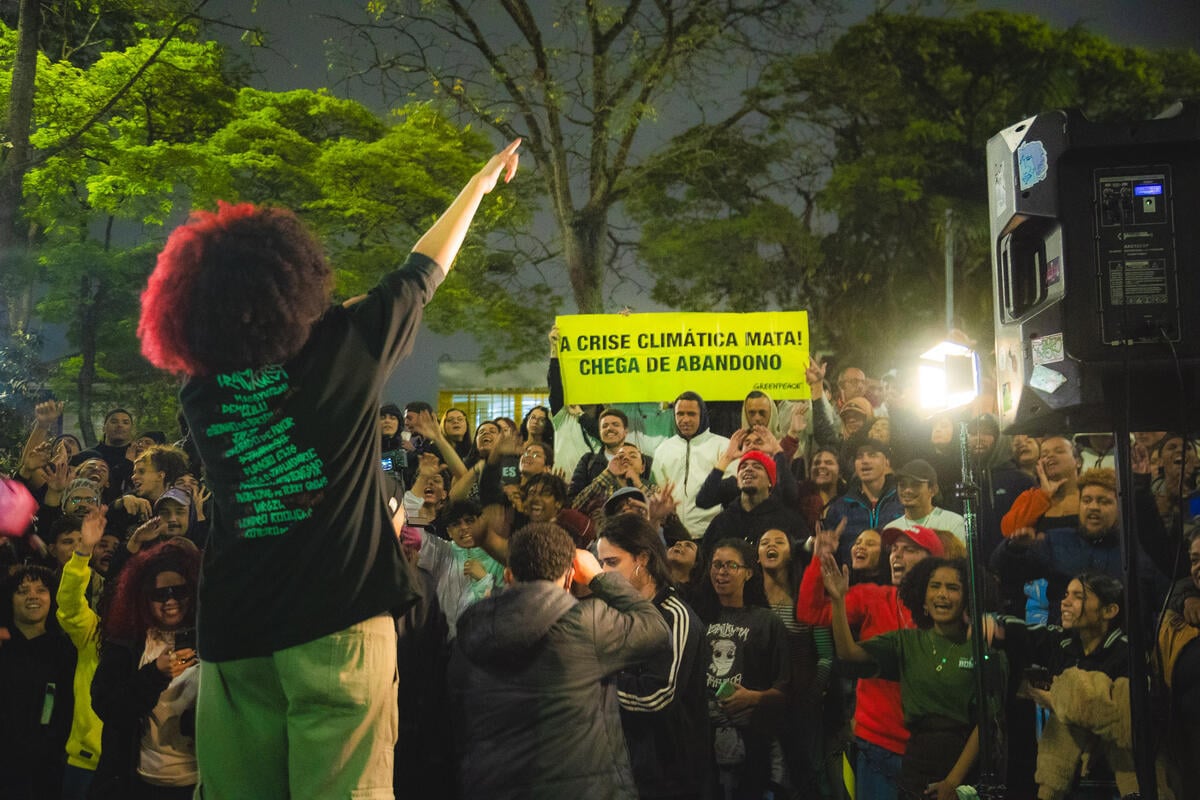
One year ago, I went for the first time to Batalha da Matrix. “Batalha” is a lyrical and performance competition between two or more performers (MCs), where they improvise rhymes (freestyle) live and are evaluated by judges and Batalha da Matrix is one of the most traditional, historic, and influential in the state of São Paulo and in Brazil.
The goal of Greenpeace Brazil was to familiarise itself with a territory where communities already make politics through rap and slam. That is how Corre de Quebrada was born: a project that promotes encounters in spaces of cultural expression, such as rhyme battles, poetry circles, but also through debate meetings and conversation circles – and in doing so, unites art to climate justice, to recognise the role of urban populations on the front lines of socio-environmental risks.

Culture from historically under-resourced communities is one of the main forms of expression and transformation of reality. Through art, daily life becomes a narrative, activism and mobilisation. Through that experience of those living in these communities, injustice gains visibility, and collective action gains strength. In this sense, culture is not a complementary element of the strategy, it is the path itself to build engagement, belonging, knowledge, and action.
What we see in a rhyme battle is the concrete expression of the thoughts and feelings of those who know up close the worst impacts of the climate crisis and inequality. According to research by Teto Brasil, 86% of favelas and communities faced at least one extreme climate event in 2025. Communities who are forced to face these challenges and build solutions based on knowledge need to be valued by public authorities in the construction of policies that are mean to work for them.
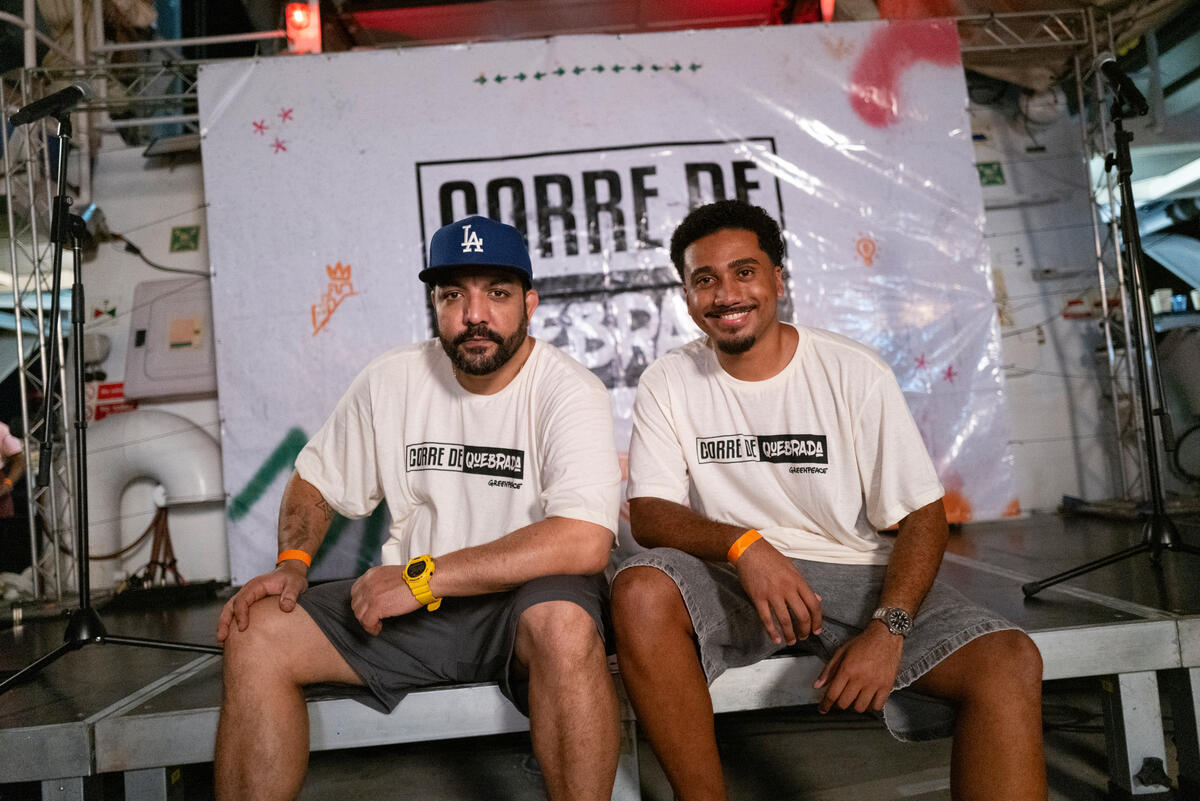
“The rhyme battle is where we organise our anger, our revolt, where youth show themselves to be catalysts for solutions for the place where they live”, Gaio Jorge, cultural producer and organiser of Corre de Quebrada in Rio de Janeiro, told me. These young people ask that public policies consider their voices, for basic sanitation, safe territories when the rains fall, and not having their studies disrupted or their employment threatened when the streets flood.
Greenpeace Brazil held rhyme battles in five cities in Brazil: São Bernardo do Campo, Belém, during COP30, João Pessoa, Rio de Janeiro, and Recife. The last two battles took place on the Rainbow Warrior ship.
To celebrate one year of the project, we launched a video with big names in Hip-Hop, slam, and community leaders, joining our voices to denounce environmental racism and affirm culture as a legitimate space for political formation and citizenship.
Since we started, we receive daily testimonials that move me deeply because I see that we are building a relationship of exchange, learning, and, above all, trust. “I understand now that it has everything to do with what I live”, MC Magrão told me.
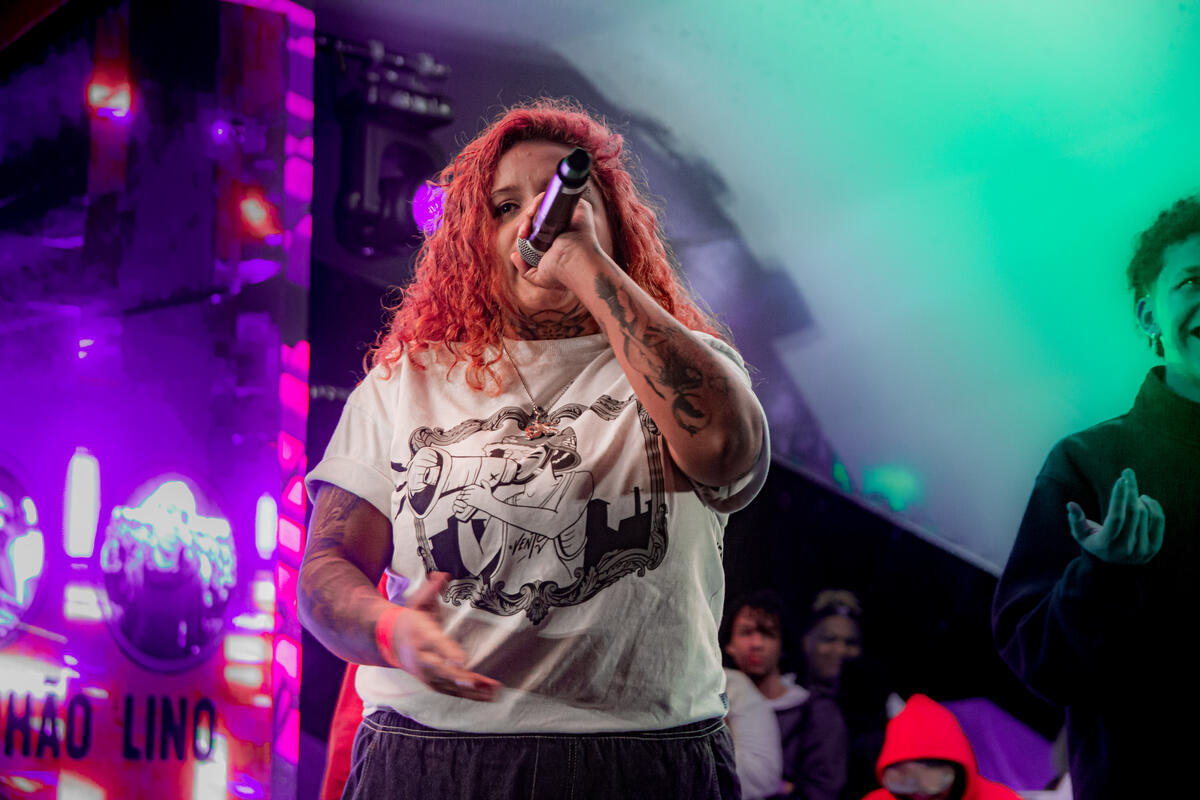
“I became a climate activist. I always experienced these issues, but I only associated everything I experienced to the climate agenda and to the lack of access to rights that guarantee a dignified life, and that we must demand, after I started participating in Corre de Quebrada”, says the MC Mileny, three-time champion of the Brazilian Slam Championship.
To speak of climate justice is to guarantee that the right to dream does not continue competing for space with the daily struggle for survival. And this is only possible when those who feel the impacts of environmental racism stop being seen merely as a statistical data point and start being recognised as leaders of the solutions.
Corre de Quebrada is the construction of this belonging. It is the faces, the voices, and the diversity of each neighborhood in Brazil united to say that the future will not be decided without us. Corre is a living network that refuses to be silenced.
Share the video! Support Corre and help these voices reach far.
Camila Doretto is Engagement Analyst for the Climate Justice campaign with Greenpeace Brazil.