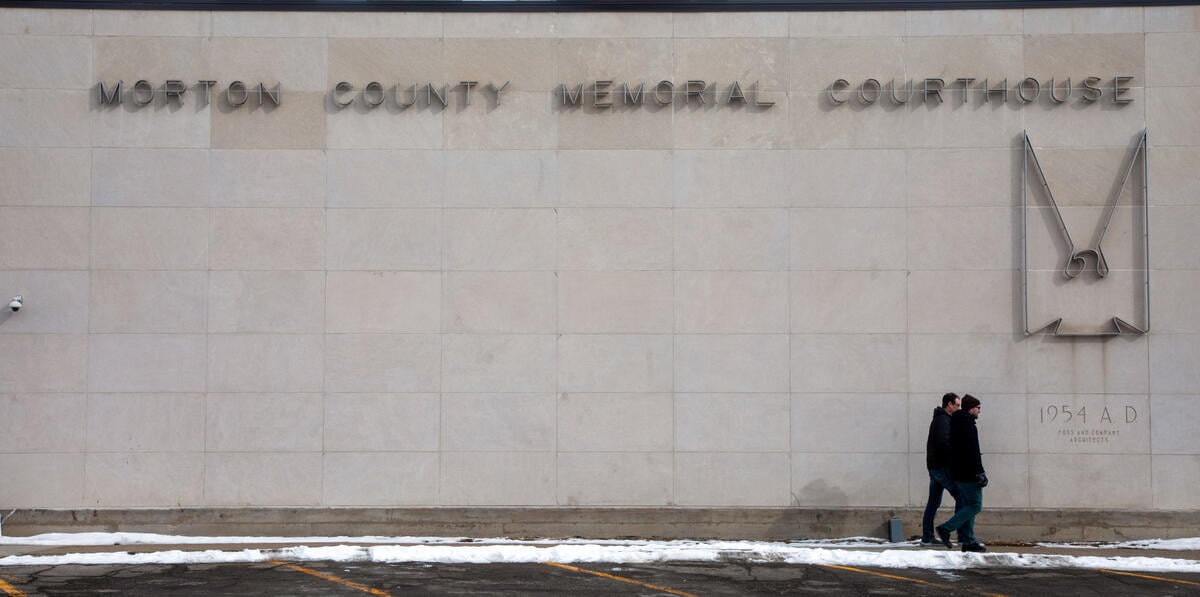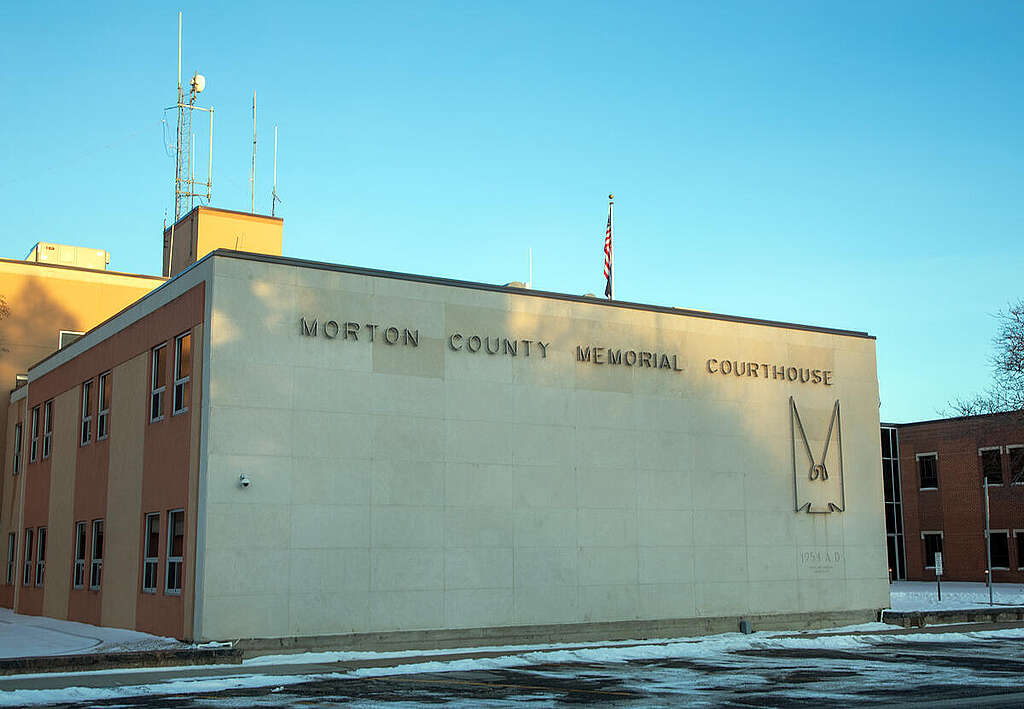
MANDAN, North Dakota (November 2, 2026) — Greenpeace organizations in the US and Greenpeace International are preparing to appeal the unjust $345 million judgment in Energy Transfer’s abusive SLAPP lawsuit after the North Dakota District Court denied a motion for a new trial. From a biased jury through a flawed verdict form, the trial in Morton County has been called by legal experts “one of the biggest and most flawed trials in North Dakota’s history”. The proceedings have faced scrutiny by experts and observers due to numerous legal missteps.
Marco Simons, Greenpeace Inc. and Greenpeace Fund General Counsel, said:
“Speaking out against harm does not violate the law — but denying a new trial after receiving a damages award with no evidentiary basis, absolutely does. The law is on our side. Our commitment to protecting people and the planet is stronger than ever, and we will challenge this unjust and unfounded damages award at every opportunity. So long as the courts apply the law, we will prevail.”
Greenpeace International General Counsel Kristin Casper said:
“We continue to demand accountability for one of the largest miscarriages of justice in North Dakota’s history. Since the District Court refuses to right the wrongs committed at trial, we will next appeal the many wrongly decided and unresolved errors in the case to the North Dakota Supreme Court. We will never stop trying to ensure the rights and freedoms promised under the US constitution are protected.”
The Energy Transfer lawsuit is an attempt to rewrite the actual history of the Dakota Access Pipeline protests by erasing the leadership of Indigenous water protectors. While Greenpeace is proud of the solidarity displayed with the Standing Rock Sioux Tribe, the protests were convened and organized by Indigenous leaders, whose sacred sites and water supply were actively compromised by the Dakota Access Pipeline. These SLAPP lawsuits are attempts to erase that Indigenous leadership, punish solidarity, and intimidate activists from speaking out.
Among the egregious flaws documented in the trial:
- The Greenpeace defendants could not receive a fair and impartial trial in Morton County, where a pre-trial survey estimated 97% of local residents indicated they could not be fair and impartial.
- The Greenpeace defendants had moved to strike seven of the nine empaneled jurors for cause, as they had clear ties to the fossil fuel industry and/or direct experiences with the protests.
- Despite evidence identifying numerous other causes unrelated to the Greenpeace defendants, the jury and the court assigned nearly 100% of the claimed damages to Greenpeace without allocating fault to any other actor.
- The jury’s verdict was contrary to the evidence on each count.
- The jury verdict was tainted by the court’s admission of inadmissible, prejudicial information.
- The jury was improperly prevented from hearing relevant, admissible evidence favorable to the Greenpeace defendants.
While Energy Transfer’s unfounded lawsuit continues, the Standing Rock Sioux Tribe also continues to challenge the legality of the Dakota Access Pipeline. The pipeline operated without a federal permit for years, until a new permit was only granted by the Trump Administration in May 2026. The Tribe filed a new lawsuit challenging that permit on October 9, 2026 alleging violations of numerous federal laws protecting Native tribes and the environment.
Contact: Madison Carter, Greenpeace USA National Press Secretary, [email protected]
For more than 50 years, Greenpeace USA has responsibly practiced peaceful protest to expose global environmental problems and promote solutions essential to a green, just, and joyful future for people and the planet. In 2017, Energy Transfer, the company behind the controversial Dakota Access Pipeline (DAPL), sued Greenpeace entities (U.S.-based Greenpeace Inc. & Greenpeace Fund,and Greenpeace International) for $300 million in federal court, alleging that the entities violated the Racketeer Influenced and Corrupt Organizations Act (RICO) — a federal statute originally designed to eliminate mob activity. Specifically, Energy Transfer falsely accused the entities of organizing the historic #NoDAPL resistance at Standing Rock — a racist claim that attempts to undermine tribal sovereignty. This case has been widely recognized as a Strategic Lawsuits Against Public Participation (SLAPP), a tactic used by corporations to silence constitutionally protected free speech and advocacy in the United States. In 2019, a federal judge dismissed the federal claims, prompting Energy Transfer to refile a nearly identical case in North Dakota state court — one of only 17 states with no anti-SLAPP protections. The lawsuit went to a trial in February 2025 before a jury of North Dakotans, resulting in an unjust verdict that awarded Energy Transfer over $660 million in damages. On October 29, 2025 North Dakota District Court Judge James Gion reduced the damages to $345 million before finalizing the judgment on February 27, 2026 – nearly one year after the trial concluded. Currently, the Greenpeace entities are planning to appeal this decision to the North Dakota Supreme Court.