WASHINGTON, D.C. (Oct. 28, 2026) – A new Greenpeace Germany analysis exposing the scale of fossilflation shows the rise in oil prices accounted for around 75 percent of the total increase in U.S. overall inflation for 2026. The report details how fossil fuel dependence leaves households exposed to price shocks, which in turn ripple through the wider economy.
U.S. consumer price inflation rose from 2.4 percent in January 2026 to 3.4 percent in July (peaking at 4.3 percent in May). Without the War on Iran and the oil crisis defined by the closure of the Strait of Hormuz, July’s inflation would have only risen to 2.6 percent.
John Noël, Greenpeace International Campaigner, said: “The problem is bigger than any single conflict or oil price spike. Our economies remain tied to volatile fossil fuel markets, so disruptions repeatedly feed through into household costs. Governments must protect people from fossilflation by replacing the fossil fuel system with decentralized renewable energy and electrification.”
Since the pandemic, energy prices accounted for 88 percent of fluctuations in U.S. inflation, while non-energy components contributed virtually nothing to them.
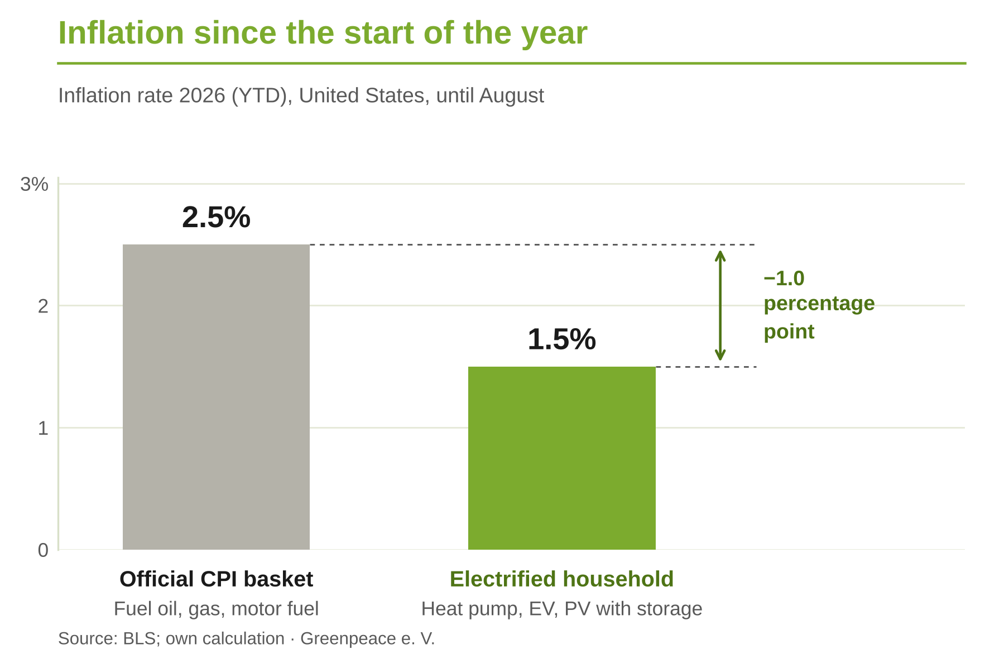
The analysis also found households can reduce exposure by switching to renewable energy and electrified technologies. For example, a simulation of an electrified household – using a heat pump, electric vehicle, rooftop solar with battery storage, and 70 percent self-consumption – shows that it would face a year-to-date price increase of 1.5 instead of 2.5 percent this year: 1 percentage point lower.
Noël continued: “While fossil fuel companies are making obscene profits, people are increasingly struggling to make ends meet. Renewable energy can effectively protect households and give them more control over their bills. Rooftop solar, batteries, electric vehicles, public transport and heat pumps can reduce countries’ exposure to volatile fossil fuel markets. This is why central banks need to recognize fossil fuels as an economic risk and governments must accelerate the shift to decentralized renewable energy systems that protect people and local businesses from recurring price shocks, rather than leaving them exposed.”
Greenpeace USA is calling on governments to speed up the shift from fossil fuels to decentralised renewable energy and electrification, which can be funded by introducing permanent taxes on oil and gas companies’ profits. Replacing dependence on volatile international oil and gas markets with clean energy generated closer to home would help protect household budgets from future price shocks while cutting climate pollution.
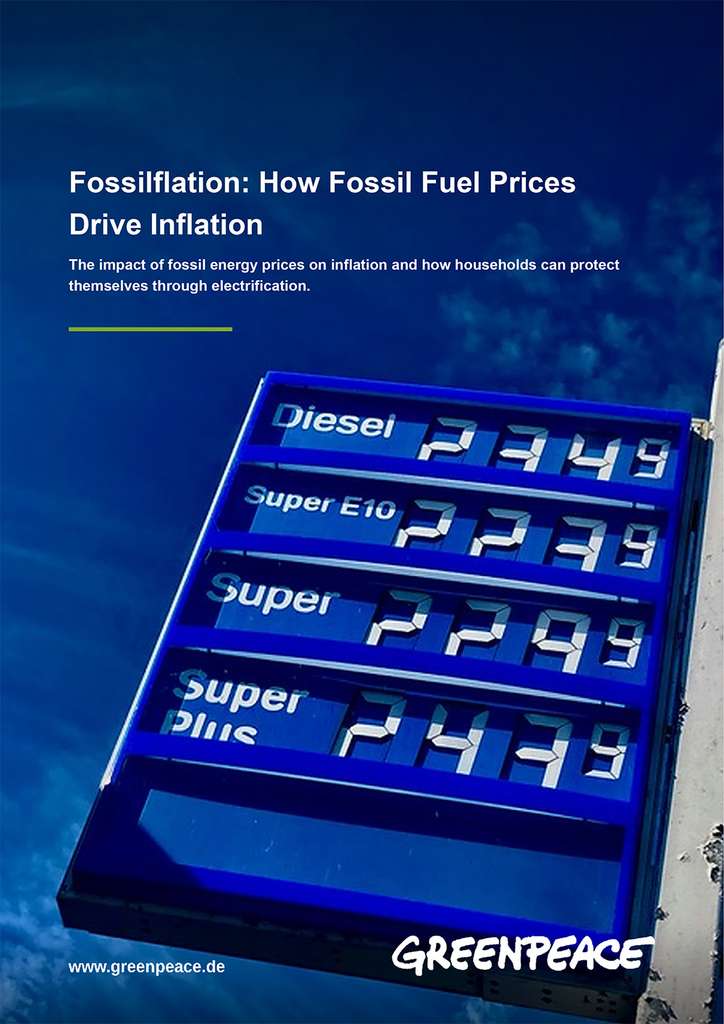
You can read the Fossilflation: How Fossil Fuel Prices Drive Inflation report here.
Contacts:
Madison Carter, National Press Secretary, Greenpeace USA, [email protected] 703-554-4842
Greenpeace USA Press Desk: [email protected]
Greenpeace USA (inc.) is part of a global network of independent campaigning organizations that use peaceful protest and creative communication to expose global environmental problems and promote solutions that are essential to a green and peaceful future. Greenpeace USA is committed to transforming the country’s unjust social, environmental, and economic systems from the ground up to address the climate crisis, advance racial justice, and build an economy that puts people first. Learn more at www.greenpeace.org/usa.