Feature story - March 6, 2006
Recently, the world marveled at the so-called "Lost World" that was discovered in Papua New Guinea. Deep in the heart of the jungle, an international team of scientists stumbled upon an area that is home to dozens of never before seen animal and plant species. It's lucky that the team planned its expedition when it did. At the rate that the Paradise Forests are currently being logged, a few years from now, they will be gone along with the wildlife they support - whether they've been discovered yet or not.
The Paradise Forests stretch from Southeast Asia, across the islands of Indonesia, Papua New Guinea and the Solomon Islands in the Pacific. Much of the large, intact forest landscapes have already been cut down - 72 percent in Indonesia and 60 percent in Papua New Guinea. Studies show that for every tree that is intentionally cut by industrial loggers in Papua New Guinea, 17 other trees are destroyed.
Under Papua New Guinean law, 97 percent of the land is recognized as being owned by the customary landowners who live there, but many tribal boundaries have never been officially recorded. Until this is done the land is effectively up for grabs - and the loggers are the ones doing all the grabbing.
A Rainbow in Paradise
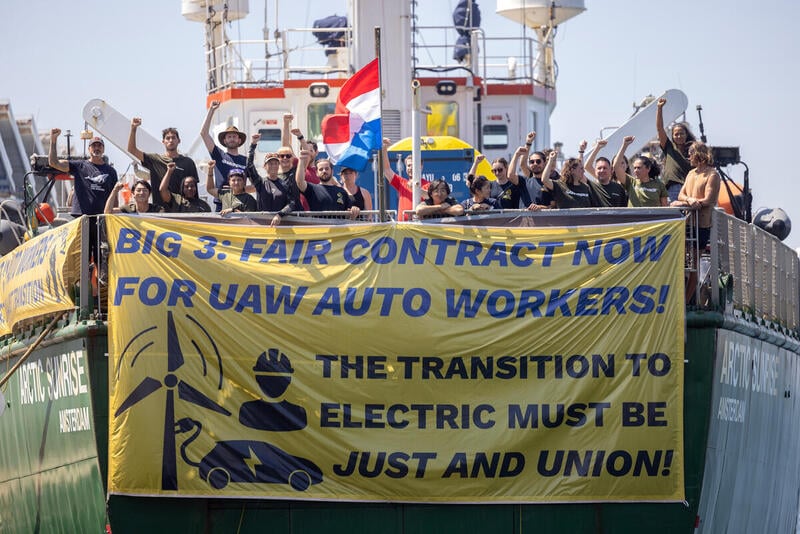
Local communities have asked for our help as they regain control of their land, and we rushed onto the scene. Our ship, the Rainbow Warrior, arrived on February 28 and activists quickly established a Global Forest Rescue Station in the Paradise Forests.
The rescue station will serve as a base camp, allowing activists to help landowners mark out nearly 750,000 acres of their land by the end of May. Boundary marking is the first step in allowing the local communities to use the forest in ecologically sustainable ways that doesn't destroy the forest.
Boundary marking alone won't stop the loggers. We're calling on governments to:
- establish a global network of protected forest areas
- ban the import of illegal timber and timber products and
- promote socially and ecologically responsible forest management worldwide