Feature story - May 26, 2005
While the heated debate on energy legislation rages in Congress, there’s one aspect of it that is quietly emerging as a serious threat to marine life in our oceans.
On May 26, the Senate Environment and Natural Resources
Committee voted 17-5 to allow an offshore oil and gas inventory to
be conducted on the Outer Continental Shelf (OCS) of the U.S.
coast. This represents the first step to undermining and then
removing the 24-year bipartisan offshore drilling moratorium that
protects America's most sensitive coastal national treasures. In
2003, a marked up Senate bill also included an OCS inventory but
eventually was dropped.
On Tuesday the full US Senate will now vote on whether or not to
allow our coastline to be surveyed for oil and gas drilling, using
dangerous seismic blasts.
At what cost?
The total cost of such a survey would approach $50 billion
dollars for the entire OCS including Alaska and $20 billion for the
continental United States alone(though many seismic surveys have
already taken place in the Western Gulf of Mexico). This represents
a huge subsidy for big oil that will benefit from the information
that the government will fund.
The inventory would be conducted using destructive seismic
survey ships which tow airguns that emit underwater explosions over
thousands of miles along the coast. These airguns have been
implicated in causing permanent damage to the hearing of fish and
mammals.
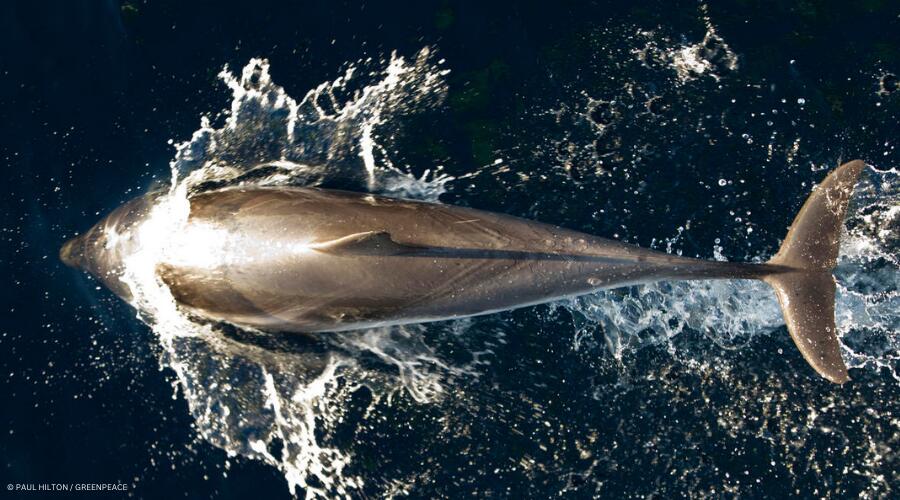
The Impact to the Creatures and Ecosystems Offshore
We've calculated how many seismic air cannon blasts it would
actually take to survey the entire U.S. Outer Continental Shelf
with 3-D seismic technology. We found that surveying of the Outer
Continental Shelf would result in millions of seismic cannon blasts
into our coastal waters from testing vessels. The damage to marine
mammals, fish, turtles and other sea creatures could be
immeasurable.
Our research found that an average modern 3-D seismic survey
requires a blast every 25 meters or every few seconds as the ship
cruises along. Calculations based on this rate of seismic blasts
find that it would take at least 285 million seismic blasts to
inventory the entire OCS including Alaska, which would require 176
million blasts alone. Surveying the Pacific Coast OCS would take 40
million blasts, the Atlantic Coast OCS would require 43 million
blasts and Florida's Gulf of Mexico coast OCS would take 12 million
blasts.