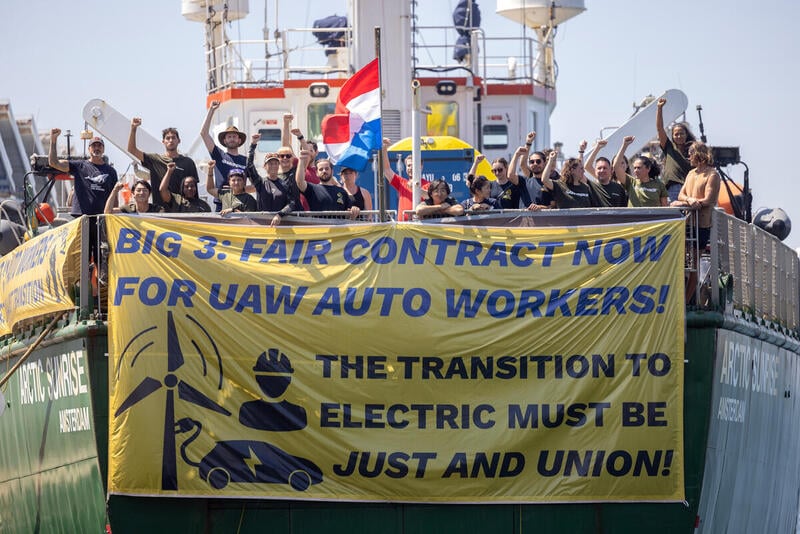
Greenpeace is calling for renewed leadership from President
Obama and Congress following the release of the drastically
weakened Waxman-Markey climate and energy bill today. The American
Climate and Energy Security Act (ACES) was already in need of
improvement when first released as a discussion draft in March, and
has become severely worse as members of the House Energy and
Commerce Committee actively worked to weaken the bill on behalf of
fossil fuels industries and other corporate polluters.
Following the release of the legislation, Greenpeace USA
Executive Director Phil Radford issued the following statement:
"Despite the best efforts of Chairman Waxman, this bill has been
seriously undermined by the lobbying of industries more concerned
with profits than the plight of our planet. While science clearly
tells us that only dramatic action can prevent global warming and
its catastrophic impacts, this bill has fallen prey to political
infighting and industry pressure. We cannot support this bill in
its current state. We call on President Obama and leaders in
Congress to get back to work and produce a bill, based on science,
which presents a clear road map for significantly reducing
greenhouse gas emissions, transforms our economy with clean,
renewable energy technology, generates new green jobs and shows
real leadership internationally."
Emissions targets miss the mark
To avoid the worst impacts of global warming, science tells us
that the United States and other developed nations must
collectively achieve emissions cuts of at least 25-40% below 1990
levels by 2020 and 80-95% by 2050. But ACES, as it currently
stands, only sets a domestic target of approximately 4 percent
below 1990 levels by 2020. Even with additional measures elsewhere
in the legislation, the U.S. effort would still fall far short of
the emissions cuts that climate scientists say are necessary.
Rapid emissions reductions in the short-term are critical to
avoiding the worst effects of global warming because rising
temperatures have already triggered a series of negative feedback
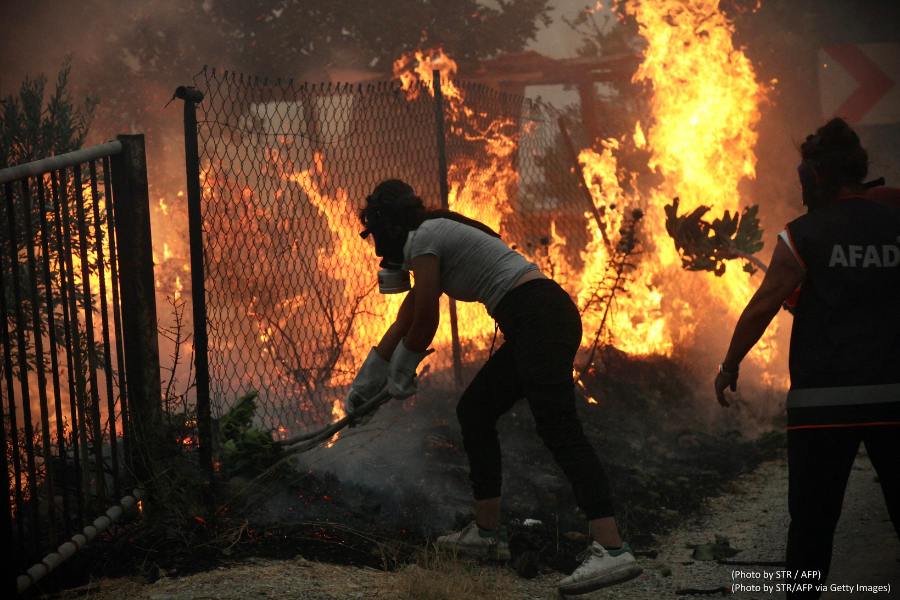
loops - such as Arctic melting in the North and raging wildfires in
the South - that are accelerating the crisis. With the weak start
oulined in this bill, achieving the needed emissions reductions
would be impossible.
Polluters to get massive giveaways, federal renewable standards
insufficient
Even while it sets out drastically low emissions targets, ACES
would give corporate polluters hundreds of billions of dollars in
subsidies in the form of "allowances" - or free pollution credits -
rather than making them pay the true costs of their businesses.
Worse, a vast array of carbon offsets will also be offered to
polluters, allowing them to effectively sidestep the need to make
real reductions in their emissions for perhaps as long as the next
decade.
Worst of all, ACES would support the creation of a new
generation of dirty coal-fired power plants through $10 billion
worth of ratepayer subsidies for carbon capture and sequestration
(CCS), a technology that has not yet been proven or even tested at
large scales. You can read more about why CCS is a dangerous
distraction that will not mitigate global warming impacts in our
report, "False Hope: Why carbon capture and storage won't
save the climate."
The renewable electricity standard set forth in the bill is
woefully insufficient. It calls for just 20% renewables by 2020,
and gives states the option to lower that to 12% renewables in
their energy but make up the other 8% with efficiency measures.
This would actually achieve lower rates of renewable energy usage
than states are likely to achieve on their own, however.
A much bolder renewable electricity standard is needed in order
to create a clean energy economy in America. Our report, "Energy [R]evolution: A Sustainable USA Energy
Outlook," provides a blueprint for how this can be done without
using new nuclear or coal-fired plants.
New leadership needed domestically and internationally
New information about the threat global warming poses to the
world is reported on a near-daily basis. The World Bank, for
example, just released a report that shows increased flooding due
to global warming has put 52 million people in coastal areas
throughout the developing world in danger and poses a $122 billion
risk to the GDPs of these nations.
Despite the clear and present danger posed by global warming,
there is precious little leadership on the issue here in America
and abroad.
If America does not meet its responsibility to control
greenhouse gas emissions, it could be an invitation to developing
countries that they, too, can shirk their responsibilities - all
but guaranteeing catastrophic climate change. America needs to have
a strong climate bill in place heading into the UN climate talks in
Copenhagen this December in order to lead the world in implementing
true solutions to global warming. As it is currently written, the
Waxman-Marky bill is not the legislation we need to lead the global
response to global warming.
Share