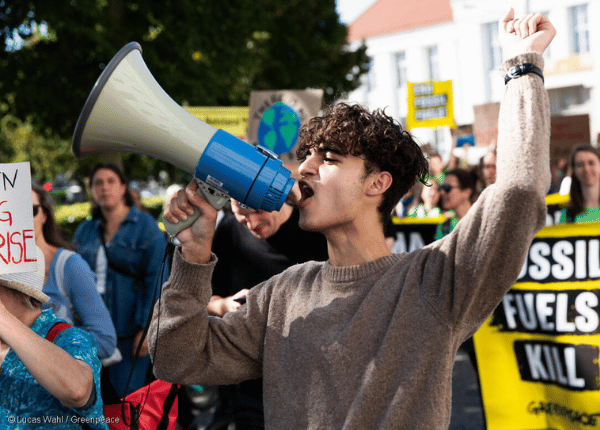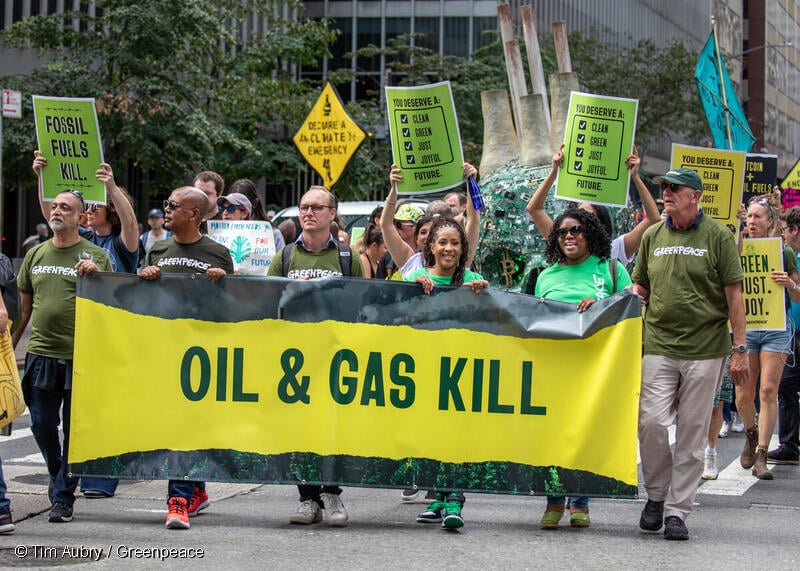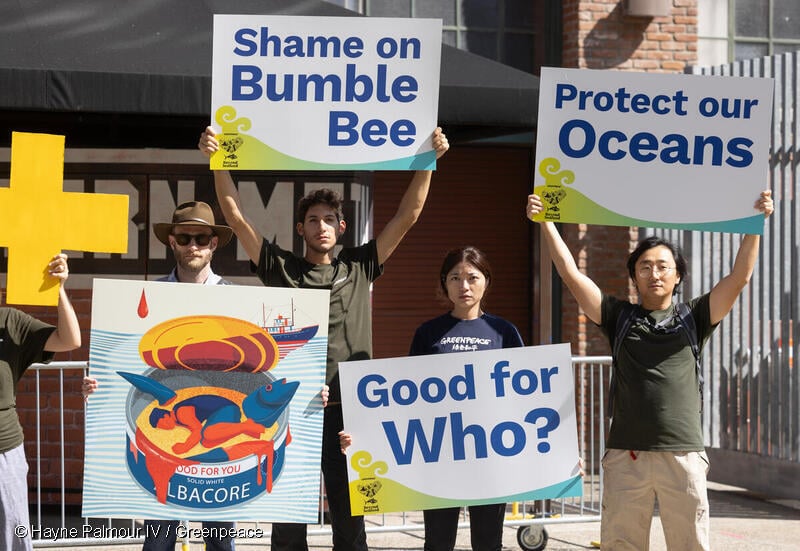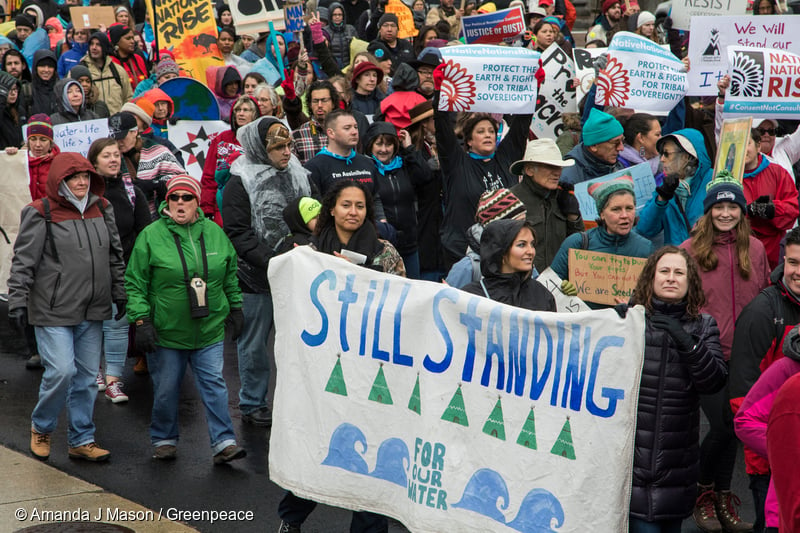
On July 23, fishermen, scientists and local residents gathered in sailboats, canoes and kayaks to spend a beautiful Saturday with us on the Chesapeake Bay. But we weren’t at our nation’s largest estuary to work on our suntans; we were protesting a very big company, which is causing an even bigger problem in our waters.
Activists protest in front of Omega Protein's fish processing facility on Cockrell's Creek.
Throughout the Chesapeake Bay and surrounding Atlantic waters,
there lives a fish near the bottom of the food chain called the
menhaden. It may not be as glamorous or beautiful as whales or
dolphins, but this tiny creature supports an entire food chain and
it is disappearing.
One company is to blame for the population's decline: Omega
Protein. Omega is a Houston-based company that makes fishmeal, and
is responsible for catching 70 percent of menhaden in the entire
country. Omega's state-of-the-art factory ships locate and catch
such large quantities of the tiny menhaden, that the impacts are
being felt throughout the entire ecosystem.
We called for a halt to overfishing at Omega Protein's fish
processing facility. Omega's employees couldn't miss our 20-foot
banner with the message "Omega: Factory Fishing is Overkill."
All of the states along the East Coast couldn't agree more.
Over the years, all but North Carolina and Virginia have put a halt
on industrial fishing of menhaden. In fact, the Omega Protein
factory on the Chesapeake Bay is the last remaining menhaden
operation on the East Coast.
The menhaden is a tiny example of an enormous problem. It's time
to stop letting corporate giants like Omega decide the future of
our oceans. If we don't stop unsustainable fishing now, all of our
ocean's creatures could suffer the same fate.
Update! Big News for a Small Fish
For the first time ever, the Atlantic States Marine Fisheries
Commission has decided to limit factory fishing for the menhaden in
the Chesapeake Bay.
On August 17, the commission met to decide the fate of the
menhaden. Things began with a rocky start as Jack Travelstead -
chairman of the commission - announced that there would be no
public comments allowed despite allotted time on the agenda, but
permitted Omega to speak at length with the commission. He added
that any discussion of a moratorium would be ruled "out of order."
Silly us - we thought chairmen were suppose to be impartial.
Omega then proposed a voluntary cap on itself to the
commission. However, the 131,000 metric ton "limit" is actually 30
percent MORE than what Omega currently catches. Fortunately, that
proposal failed and the catch limit was set at 105,000 metric
tons.
The commission's decision was clearly influenced by the
outpouring of public support. Nearly 16,000 activists wrote the
commission calling for an end to Omega's destructive practices, and
our two protests on the Chesapeake Bay highlighted the importance
of this issue.
This cap is a step in the right direction, but the fight is far
from over. We're not letting Omega off the hook that easily.
Take Action!
Tell Omega you're not buying into its rotten practices.