Greenpeace in the Arctic
This past summer, Greenpeace explorers succeeded in making the
first summer trek to the North Pole to document the impacts of
global warming firsthand and to call attention to the plight of the
polar bear. As part of the expedition, the explorers also collected
data on ice thickness, snow cover and snow density and took snow
samples for scientists at NSIDC.
NSIDC's satellite data analysis shows that Arctic perennial sea
ice, which remains all year-round, has shrunk by 14 percent between
2004 and 2005. These changes in Arctic sea ice are being linked to
global warming and changes in wind patterns. The overall decrease
in winter Arctic perennial sea ice totals 280,000 square miles - an
area that is the size of Texas!
What this means for the polar bear
Around the world, researchers have been documenting the retreat
of ice in the Arctic and the threat this poses for the polar bear.
Scientists are predicting an ice-free Arctic Ocean in summer by as
early as 2050, which could quite possibly spell doom for this
magnificent creature. If we don't take action on global warming
now, the polar bear could be facing extinction.
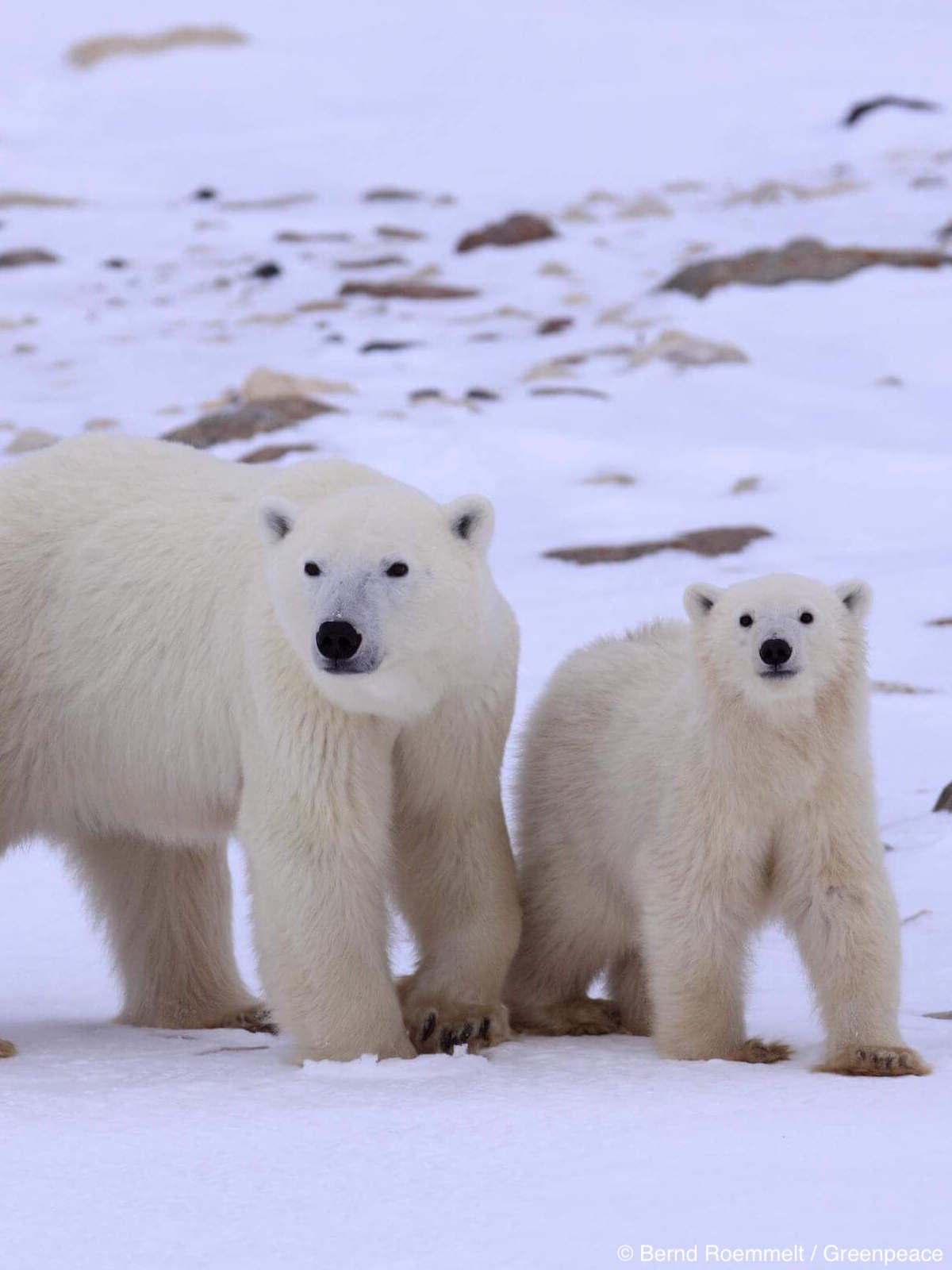
Polar bears live only in the Arctic, and they depend entirely on
the pack ice - the frozen surface of the Arctic Ocean - as a
platform to breed, raise their young, hunt and travel.
This January, the U.S. Fish and Wildlife Service announced that
it would open the formal process to list polar bears as officially
'threatened' due to the meltdown of their sea-ice habitat caused by
global warming. The Endangered Species Act would provide broad
protection to polar bears, including a requirement that all federal
agencies make sure that any action carried out, authorized, or
funded by the government will not "jeopardize the continued
existence" of polar bears, or adversely modify their critical
habitat. This action comes in response to a December
lawsuit filed under the federal Endangered Species Act by
Greenpeace, Center for Biological Diversity, and NRDC. Stay tuned,
we expect to hear if the administration plans to protect the polar
bear late this coming December.
The good news is, scientists say we can avoid the worst if we
act now. That's why we're putting Congressional candidates in the
hotseat. Find out more about how you can get involved here.
Learn
more about Greenpeace's partnership with NSIDC for Arctic Field
Measurements.
Read the announcement from NASA and NSIDC.