Obama, McCain, and Other
Contenders
The Issue: Chemical Security
Across the country, chemical plants produce lethal poison gas
chemicals that have the potential to inflict massive casualties
through accidents, during transport, or by terrorist attack. Safe
alternatives do exist, so we wanted to know where the candidates
and their potential running mates stand on this key issue.
The Results:
The results are in from former presidential candidates
Senator John Edwards (D-NC),
Senator Hillary Clinton (D-NY) and current democratic
frontrunner Senator Barack Obama (D-IL). [Click on their
names to read individual responses.] We're pleased that all three
of them support chemical security legislation that would require
the use of safer technologies to reduce or eliminate catastrophic
risks.
Unfortunately, John McCain and the other Republican candidates
refused to respond to our questionnaire. Instead we looked up his
response to another questionnaire, that asked a similar question.
Here's what we've found:
McCain said that implementing life-saving regulations around
chemical plants would lead to excessive red tape and paperwork. In
fact, here's an excerpt from what Senator McCain told the League of
Conservation Voters (LCV) in their 2007 questionnaire,
"A government controlled chemical substitution program or
approaches such as requiring the thousands of facilities across the
country that use or store chemicals to prove to the government that
safer materials don't exist could become exercises in excessive
bureaucracy and paperwork..." For his complete answer go to: http://presidentialprofiles2008.org/McCain/tab1.html
So we wrote Senator
McCain a letter and reminded him that "excessive bureaucracy
and paperwork" is an over used excuse by special interests who want
to avoid any new regulations. In this case, the use of safer
technologies would actually reduce a chemical plant's regulatory
obligations. But even if more paperwork were required, it's a small
price to pay to eliminate catastrophic risks to millions of
Americans.
We reminded him that time is now running out in this
Congress thanks in part to a $12 million dollar lobby campaign led
by chemical manufacturers to thwart any legislation in 2007. We
also pointed out to Senator McCain that one of his lead campaign
staffers, John Green, was officially registered to lobby against
strong chemical security this legislation in 2007. Green and four
others in his firm, Ogilvy Government Relations, represented the
American Chemistry Council, the trade association of Dow, Dupont
and other major chemical manufacturers. Our full report on this
lobby to stall chemical security legislation in 2007 is at: http://research.greenpeaceusa.org/
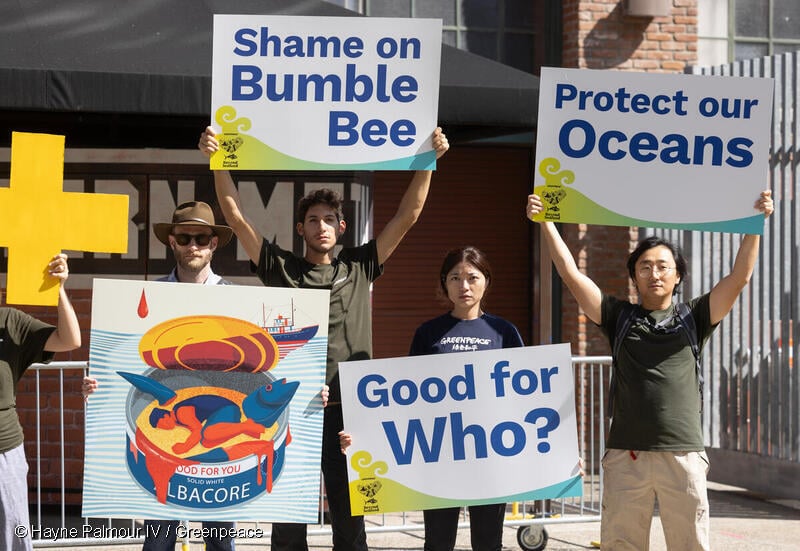
The Issue: Our Oceans
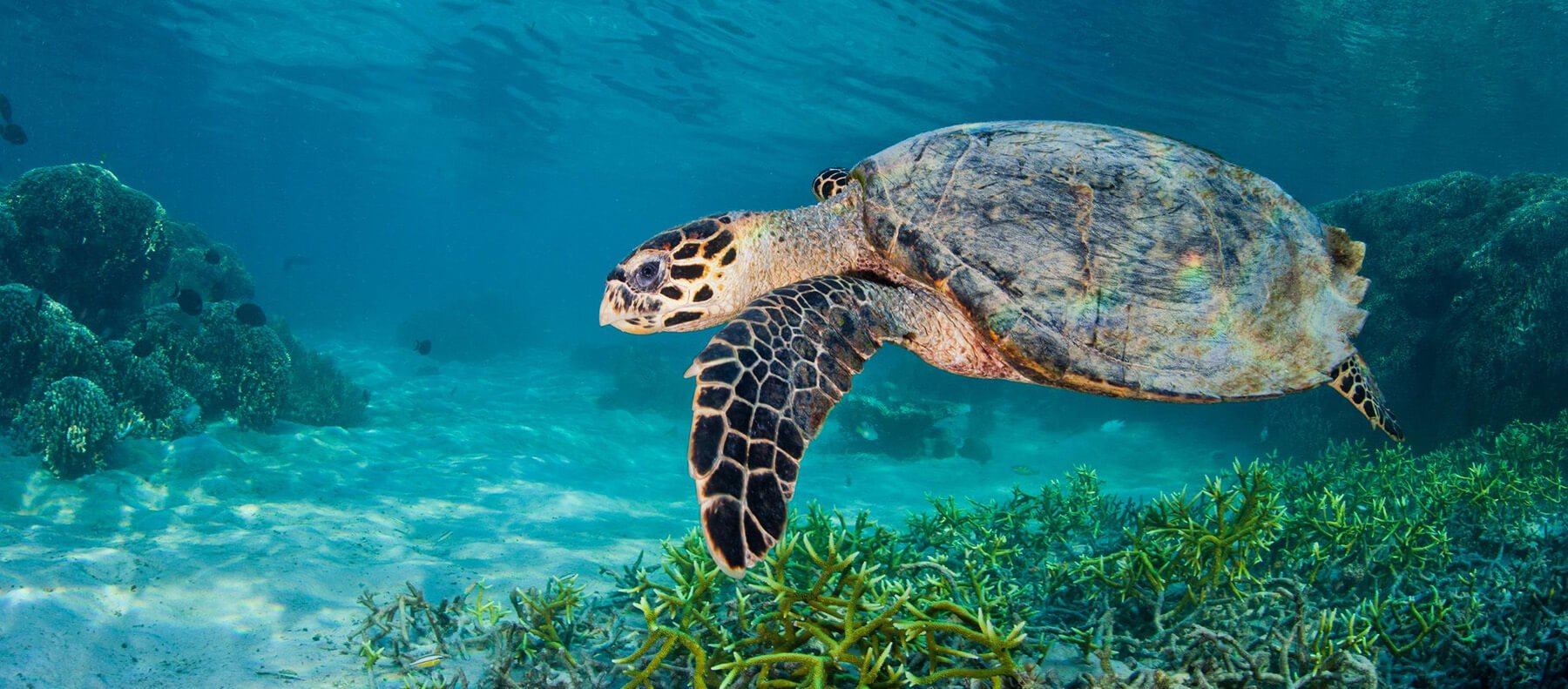
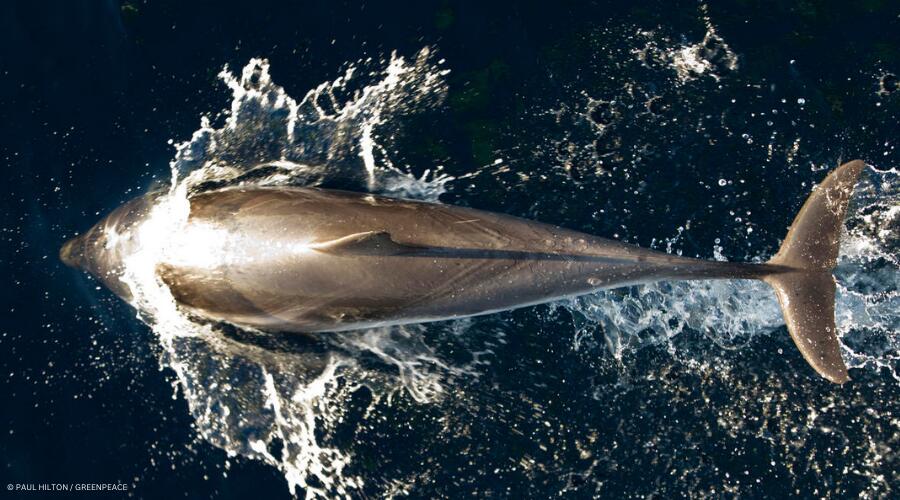
Our world's oceans face a number of threats, from overfishing to
pollution, to the illegal hunt of some of its most majestic
creatures: whales.
The Results:
Senator Barack Obama is on the record as saying that his
administration will play a leading role in whale conservation.
Greenpeace welcomes his commitment on behalf of the whales.
In Senator Obama's response to Greenpeace's questionnaire about
ocean management issues and protecting the marine environment he
went on to say "sound science - not ideology or profits - will
guide federal environmental policy," a position long endorsed by
Greenpeace.
Like Senator Obama, Senator McCain is also on the record as
saying that his administration would take a leading role in whale
conservation. Again, we welcome his commitment on behalf of the
whales.
Senator McCain responded to a LCV questionnaire with a strong
statement about the need to protect coral reefs, while also
mentioning that he would take "stakeholder needs" into the
decisions about ocean policies. Deferring to "stakeholder needs" is
one reason so many of our fisheries have been overfished and are in
need of rebuilding from their current depleted status back to
healthy population levels. Senator McCain did say he would defend
the rights of states like California and Florida to determine
whether or not oil and gas drilling should be allowed off their
coasts.
The Issue: Nuclear power
Nuclear power undermines our national security and the security
of the planet. And, if a meltdown were to occur the accident could
kill and injure tens of thousands of people, leaving large regions
uninhabitable. After the events of September 11th, the risk of a
nuclear reactor meltdown must encompass not only the potential for
an accident but also the very real possibility of sabotage.
The Results:
Senator McCain talks of supporting nuclear power. He is quoted
as saying, "Right now safe, climate-friendly nuclear energy is a
critical way both to improve the quality of our air and to reduce
our dependence on foreign energy sources."
When it comes to storing nuclear waste, McCain is on the record
for supporting the use of Yucca Mountain in Nevada as the nation's
high level nuclear waste dump. Since then he has reiterated his
support for sending nuclear waste to Yucca Mountain.
He has said that, "I support Yucca Mountain once it goes through
all the processes it needs to go through." "But I also support
reprocessing. A little straight talk, we have to do both."
However, perhaps now that Nevada is a potential swing state in
November, Senator McCain has also stated that he would seek to dump
nuclear waste at some unknown "international" site. We hope Senator
McCain will rethink his stance on nuclear waste and expanding
nuclear plants in the United States.
Senator Obama responded to our questionnaire by saying that he
does not support storing nuclear waste in the Yucca Mountain. His
response went on to say that, "Despite the fact that our government
has spent billions of dollars on Yucca Mountain, it is not clear
that nuclear waste can be safely stored there. I believe we should
redirect spending to alternatives, such as improving the safety and
security of spent fuel at plant sites around the country. At the
same time, we should continue looking for a safe, long-term
disposal solution based on objective, scientific analysis."
Congress and Chemical Security
The good news is that the "Chemical Facility Anti-Terrorism Act
of 2008" (H.R. 5577) was adopted in a bi-partisan vote in the House
Homeland Security Committee on March 6th. This bill makes sure the
high-risk plants meet the highest security standards, including the
implementation of widely available safer chemicals or processes.
Such a program could virtually eliminate the consequences of a
terrorist attack or accident at a chemical plant in big cities and
about 100 chemical plants each put a million or more people at
risk.
Why shouldn't Congress pass a bill that Greenpeace, the United
Auto Workers, United Steelworkers, Communication Workers of
America, United Food & Commercial Workers, Sierra Club, the
U.S. Public Interest Research Group, Center for American Progress,
Physicians for Social Responsibility, American Nurses Association
and the Association of American Railroads (AAR) all support?
In February the AAR said it very well, "It's time for the big
chemical companies to do their part to help protect America. They
should stop manufacturing dangerous chemicals when safer
substitutes are available. And if they won't do it, Congress
should do it for them in the Chemical Facility Anti-Terrorism Act
of 2008."
While the Senate is far behind the House in moving legislation
the House still needs to get H.R. 5577 to the House floor and it is
currently stuck in the Energy and Commerce Committee. That means
that all members of Congress need to hear from you. We
also wrote to Representative Gene Green (D-TX) the new chair of
the Energy and Commerce Subcommittee urging speedy action in the
House.
Take Action
Protect Americans from Chemical Threats