Strongest warning on climate change demands action
The latest report on the science of climate change from the
Intergovernmental Panel on Climate Change (IPCC) meeting in Paris,
concluded that continuing polluting business-as-usual practices is
likely to increase global average temperatures between 1.1°C and
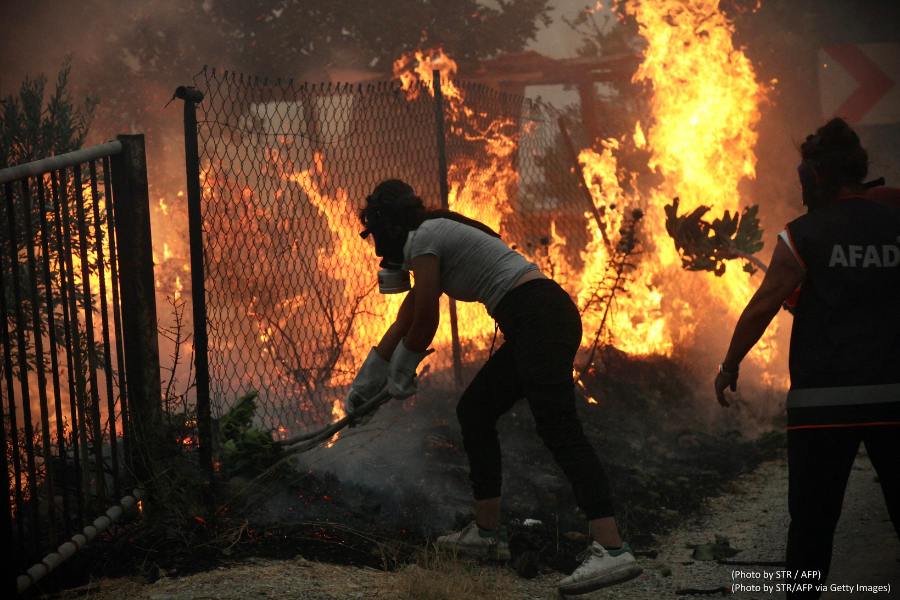
6.4° C above 1980-1999 levels by 2095, leading to more droughts,
heatwaves, floods and stronger hurricanes, rapid melting of
ice-sheets and rapidly rising sea levels.
Stephanie Tunmore, Greenpeace climate campaigner who was at the
meeting in Paris said, "The good news is our understanding of the
climate system and our impact on it has improved immensely. The bad
news is that the more we know, the more precarious the future
looks. There's a clear message to Governments here, and the window
for action is narrowing fast. If the last IPCC report was a wake up
call, this one is a screaming siren."
The main findings of the IPCC report are summarised below.
Further reports will follow this year on at the probable impacts of
climate change, options for adapting to those impacts, and possible
routes to reducing emissions of greenhouse gases.
What's a few degrees?
While temperature increases of a few degrees might not sound so
dramatic it will have dramatic effects on our climate. That's why
is vital that action is taken now to reduce emissions and keep
warming below 2°C to prevent catastrophic climate impacts.
Fortunately, there is a blueprint for how to do this - the
energy (r)evolution. It shows how to cut global CO2 emissions
in half by 2050, using existing technology and still providing
affordable energy and economic growth. In short - a revolution in
energy policy and an evolution in how we use energy.
Read more about the energy [r]evolution here.
We can have reliable renewable energy, and use energy more
smartly to achieve the cuts in carbon emissions required to prevent
dangerous climate change. Crucially, this can be done while phasing
out damaging and dangerous coal and nuclear energy.
As the science of climate change becomes ever more clear and
alarming, public concern is increasing rapidly. One of the few
things not matching the warning is the scale of real action from
governments to reduce emissions. If this stark warning goes
ignored, future generations will be enduring a warmer world of our
own making and will not look kindly on lack of action at the start
of the 21st Century.
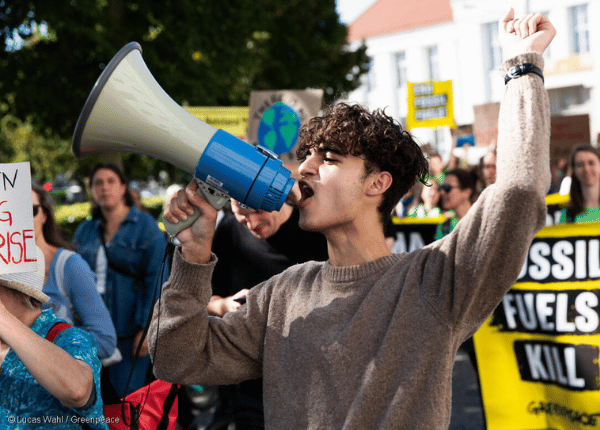
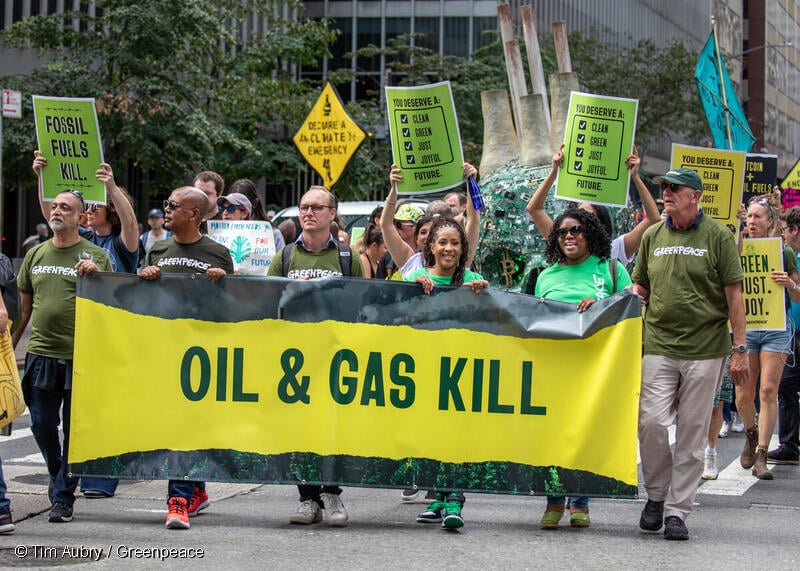
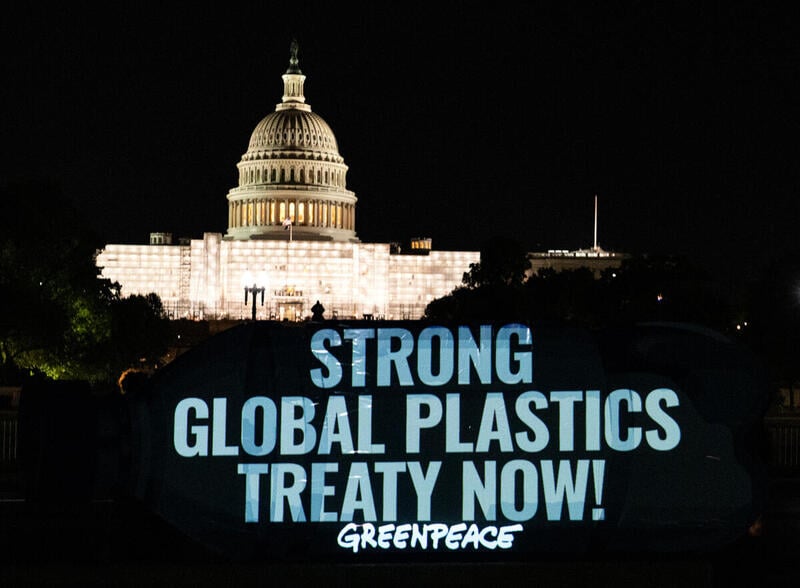
Greenpeace activists having been taking action to send a clear
message to governments that the window for action is narrowing
fast.
View the photos
here.
Summary of major findings of the IPCC
report
- Human impact on climate has now been attributed with a 90
percent confidence, higher than in earlier assessments, and has
been found in all world regions.
- An increase in the theoretical climate 'sensitivity', i.e., how
the climate will respond to a doubling of greenhouse gases in the
atmosphere compared to pre-industrial levels. Previously, the best
estimate for warming in relation to GHG doubling was 2.5 degrees
celsius, and now that has increased to 3 degrees celsius.
- Broad confirmation that the range of warming expected by 2100
if emissions are not reduced is 1.1°C and 6.4°C by 2095 over
1980-1999 levels.
- The intensity of tropical storms is likely to increase, a
finding that was not possible in the Third Assessment Report (TAR).
Observed increases in intensity are highly correlated with
increased sea surface temperature.
- The Antarctic and Greenland ice sheets contributed a
substantial amount (around 15 percent) to the observed increase in
sea level over the 1993-2003 period. However, the models say that
the Antarctic ice sheet should in fact be growing, due to increased
precipitation, meaning that as yet the models cannot explain the
increase in the discharge of ice especially from Antarctica, and
don't fully account for the rapid melting and discharge of ice from
Greenland. So, while it's known that sea-level rise will probably
be greater, it is still difficult to quantify precisely by how
much.
- A warming of 1.9 to 4.6°C above pre-industrial levels, (well
within the range expected for the 21st century) would lead to the
virtual elimination of the Greenland ice sheet, if that warming is
sustained for thousand years or more. That would raise sea level by
between 6 and 7 metres. The report also found that future
temperatures projected over Greenland are comparable to those from
a warm period 125, 000 years ago, when sea levels were 4-6 meters
higher than they are today.
Take action
It's time to tell Congress renewable energy and energy efficiency can be the heart of solutions to global warming.