That's My Planet You're Burning

American students intervene at decisive moments in global warming negotiations

Feature story - November 20, 2000
"I'm going to The Hague to make sure my future and my children's future is not sacrificed by political cowardice and the desire to protect the fossil fuel industries that are damaging our climate." Carolyn Kousky, 20, Stanford University

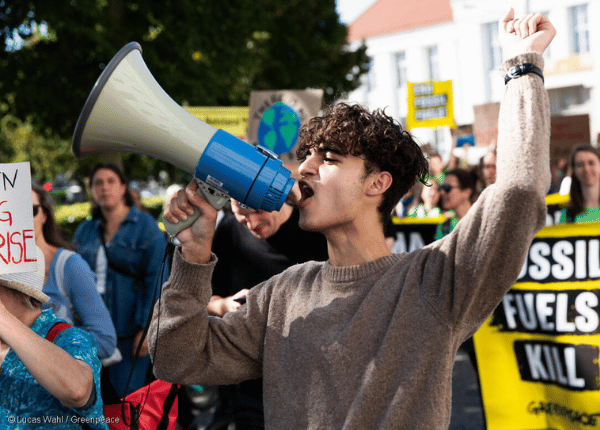
Greenpeace recruited nearly 225 university students to be advocates for future generations at critically important global warming negotiations that took place in The Hague, Netherlands between November 13th-24th. The students traded the chance for a long Thanksgiving weekend at home for the opportunity to attend the negotiations as officially accredited delegates. During their time at the negotiations the students pressed for a strong, enforceable international treaty that would slow global warming and the severe impacts already wreaking havoc with the planet's climate.

The undergraduate and graduate student delegation came from a broad range of disciplines ranging from biology, environmental engineering and physics to political science, international relations and economics. The students were motivated by the knowledge that The Hague negotiations were probably the "make or break moment" for a strong global warming treaty, the vital first step required to address this pressing environmental threat.

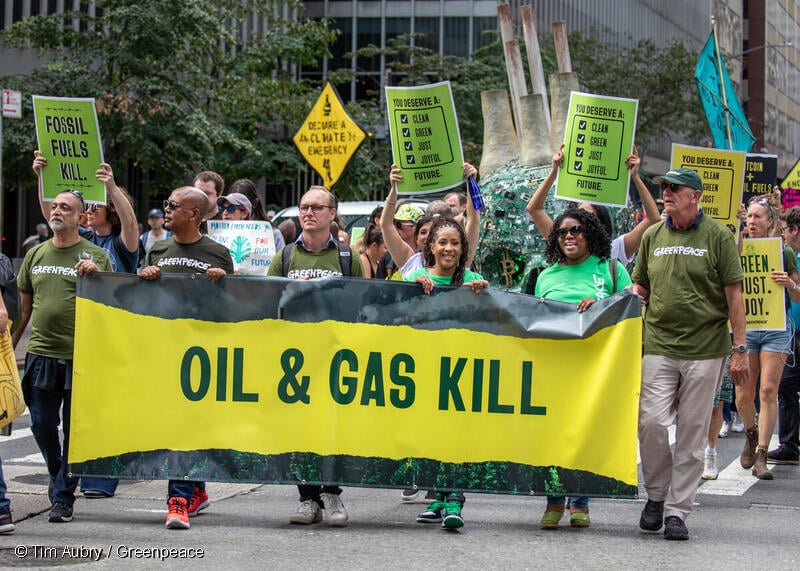
On November 18th, thousands responded to a call from Friends of the Earth to demonstrate the public concern over climate change. Using five thousand sandbags they built a wall four feet high around the conference center, hammering home the message of countries at risk from sea level rise. View the video.

On November 20th, students delivered a declaration to the U.S. negotiators calling on the U.S. to "...rise to the challenge of curbing global warming now." Read the declaration.

While in The Hague the students will unite with other activists around the world to:

Pressure the U.S. negotiating team - Although the United States is the world's largest global warming polluter in the world, the Clinton/Gore administration's negotiating team, along with OPEC country negotiators and multinational corporations, are collectively weakening the treaty making global warming pollution cuts less likely. One reason the Kyoto Protocol, the framework for negotiations, is as strong as it is goes back to 1995 negotiating session in Berlin when a student in tears stood up on stage and challenged U.S. negotiators who were trying to kill the process. Who knows what 225 students will be able to do?

Hold corporate lobbyists accountable - The Hague will be packed with hundreds of corporate lobbyists representing industries like oil, coal and automobile manufacturers which contribute to global warming pollution. The students will tackle these lobbyists head on, making sure the public and the media understand their corporate agenda.

Watch out for loopholes - Self-interested parties, including the U.S., are pressing for a wide range of "cheating" mechanisms that would allow them to side-step real pollution reductions. These include emissions trading schemes that would, for instance, allow the United States to get credit for an energy project in China instead of cleaning up cars and power plants here in the U.S; or seeking credit for management of forests (which absorb carbon dioxide) instead of reducing global warming pollution; and promoting environmentally unsound technologies like hydro-electric dams and nuclear power to developing countries.

Bring public attention to the Kyoto process - Corporate lobbyists and U.S. negotiators would prefer to do their business behind closed doors. During their time in The Hague, the students will shine the spotlight on what is going on behind the scenes and if necessary engage in civil disobedience to draw attention to the proceedings.

Build bridges to other youth groups - The Hague will be a melting pot for youth activists from around the world. Together they will rally in the streets, learn from each other and build networks for future activism.

Check out the online media coverage of the students' efforts