Feature story - September 11, 2003
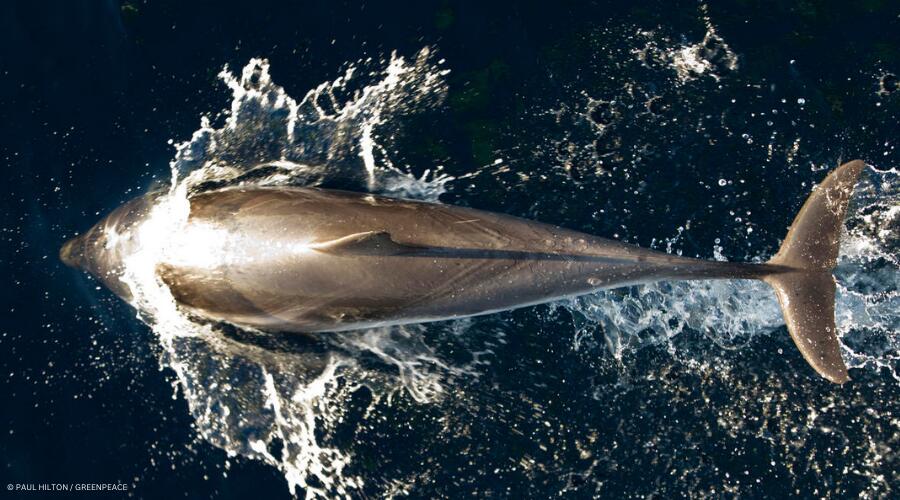
The sound energy from seismic testing is potentially damaging to many species of marine life, including whales, dolphins and seals. The ocean is an acoustic environment, not a visual one and marine mammals rely heavily on sound for their survival. Without their heightened sense of hearing, marine mammals cannot find food, avoid predators or communicate with each other.
Seismic testing is an exploration
technique used by oil and gas companies to explore the ocean for
oil and gas sediments. In order to measure these sediments, large
ships fire high-intensity air guns deep into the ocean. The sound
energy from these air guns is potentially damaging to many species
of marine life, including whales, dolphins and seals.
The blasts from seismic air gun can reach volumes of 260
decibels (anything above 180 decibels is believed to be harmful to
marine mammals). The injuries that may be caused by sounds at this
level include permanent hearing loss, disorientation, brain
hemorrhaging and death.
The ocean is an acoustic environment, not a visual one and
marine mammals rely heavily on sound for their survival. Without
their heightened sense of hearing, marine mammals cannot find food,
avoid predators or communicate with each other.
Because whales have a very slow reproductive process, they are
particularly vulnerable to human threats. Continued commercial
whaling, entanglement in fishing gear and ship collisions kill
thousands of whales and other marine mammals each year. Seismic
testing should not be allowed to endanger them further.
Currently, seismic testing is occurring in the Gulf of Mexico
and the Beaufort Sea north of Alaska. Greenpeace is asking the U.S.
government to take steps to reduce the amount of seismic testing in
U.S. waters and to support clean energy alternatives to oil and
natural gas, such as wind and solar power.
Facts about Seismic Testing
- In the last year, whale deaths believed to be related to noise
pollution have occurred off of Baja California, the Canary Islands,
and the San Juan Islands.
- Seismic explosions typically reach 260 decibels but scientists
believe marine mammals are injured by volumes higher than 180
decibels.
- Physical impacts of seismic survey noise on marine mammals are
believed to include auditory masking or confusion, temporary
hearing loss, brain hemorrhage and even death.
- The Gulf of Mexico is saturated with oil and gas development.
Currently, there are an estimated 4,000 platforms offshore and
seismic exploration is expanding into more biologically significant
areas.
- The resident Gulf of Mexico population of sperm whales only
numbers 530. There are also 5 other endangered species of great
whales that migrate in the Gulf of Mexico.
- In the most recent congressional debate over energy
legislation, pro-drilling legislators attempted to include a
provision for an offshore seismic inventory of the entire US Outer
Continental Shelf which would have required several million air gun
blasts in areas inhabited by marine mammals.
Read the Greenpeace
report offering data on seismic testing and its impacts on
marine life.