What's that? You don't celebrate World Oceans Day? Dear friends, the ocean gave us life. Not celebrating World Oceans Day is as bad as missing Mothers' Day, Fathers' Day, and Earth Day combined.
In fact, there aren't many days dedicated to taking action to save one of our planet's life support systems. Millions of people depend on the oceans for their livelihood, their food, or both. It's estimated that the oceans absorb 30-50 percent of the carbon dioxide our fossil-fueled civilization emits. The oceans produce half of the oxygen we breathe. Quite literally, if the oceans die, our planet dies.
So how do we treat this living, breathing set of planetary lungs? We poison it with oil and toxic effluents. We use destructive fishing methods to scrape the seafloor clean of centuries-old coral and other living things in search of a few premium species. We kill whales in the name of fake science. We strip the fins from sharks. We send more and more boats out chasing fewer and fewer fish. We build super-destructive fishing vessles with the capacity to remove thousands of tons in a single trip -- more fish than entire countries can fish out in an entire year. And we ignore the warnings of scientists when they recommend we cut back on fishing for bluefin, yellowfin, and bigeye tuna.
Not the sort of situation you can address like Secretary's day, with a bunch of flowers and a card to say how much we appreciate all the oceans do for us and we're sorry for all the destruction.
In the United States
What's needed is action. President Bush is thinking about designating sizeable portions of U.S. territorial waters as marine protected areas. In 2006, Bush brought large-scale ocean conservation to the U.S. by establishing a Marine National Monument in the Northwestern Hawaiian Islands, the world's largest fully protected marine reserve.
We need to encourage President Bush to follow through and make this a reality!
Most U.S. waters remain unprotected from destructive fishing practices, so additional steps are urgently needed to help reverse the alarming decline of the health of our oceans.
We need more marine reserves because they help restore marine biodiversity and put endangered species and habitat on the road to recovery. They provide a safe haven for marine life, enabling populations to re-build and re-seed surrounding areas. Marine reserves also can help us understand the changes caused by global warming, even as the reserves help increase marine ecosystems' ability to withstand these new climate stresses.
Take Action!
In the Pacific
Over the last two months, the Greenpeace ship Esperanza has been highlighting the overfishing of bigeye and yellowfin tuna and defending the international waters between the Pacific island countries as no-take marine reserves. During their time at sea, the activists have taken peaceful direct action against fishing fleets from Taiwan, Korea, Spain, the U.S. and the Philippines. And they're getting results. Nine Pacific island states have declared their support for the Greenpeace plan, and introduced a form of local licensing enforcement: if you want to fish their national waters, you have to agree to leave those high seas areas alone. That's a big step toward declaring the Pacific Commons, as we call them, the first high seas marine reserves in the world. In anticipation of winning this campaign, we've even run a contest in the Pacific to name the three areas we're highlighting -- results to be announced Friday, June 6th, as a kick off to World Oceans' Day weekend.
On land
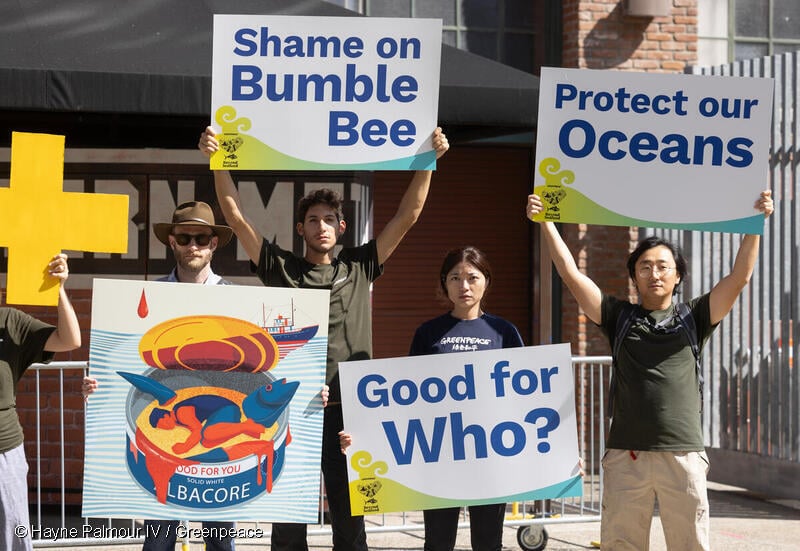
In May, 80 activists from 15 countries shut down five tuna suppliers at the Brussels Seafood Expo, demanding that suppliers and retailers take steps to ensure that the fish they sell comes from legal and sustainable sources. More and more fish purchasers are responding to our call for better labelling so consumers are not making uninformed choices, traceability so retailers know the fish they buy was caught legally and fairly, and for retailers to agree not to buy or sell species that are endangered or dangerously depleted. And as the Pacific island countries move toward protecting the Pacific Commons with marine reserves, we're asking seafood retailers and suppliers to do their part -- by not buying or selling tuna sourced from the Pacific Commons.
In the Mediterraanean
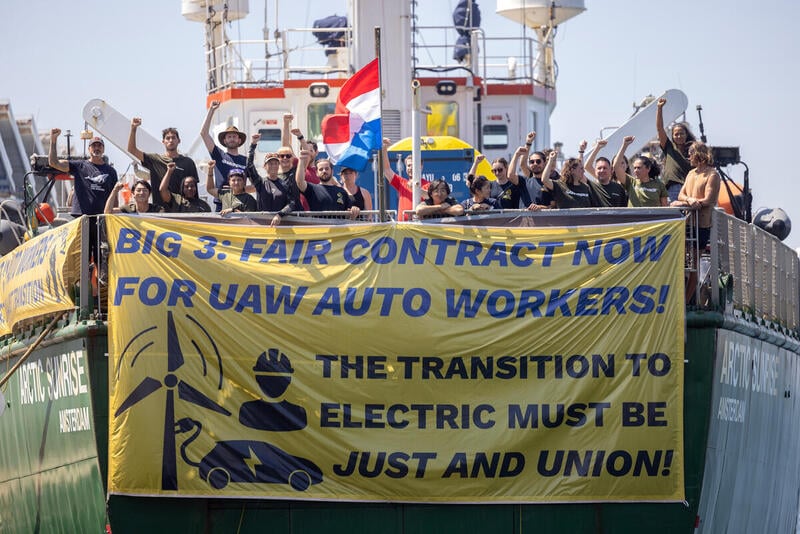
Meanwhile, the Greenpeace ship Arctic Sunrise is in the Mediterranean tackling the critical overfishing of northern bluefin tuna. Unsustainable management and illegal overfishing have brought this fishery to the brink of collapse. Greenpeace is calling for a complete closure of the fishery until proper management and enforcement are in place, including marine reserves for the Mediterranean breeding areas of the bluefin tuna. In Turkey, that call has led to confrontation as three tuna seiners surrounded the Arctic Sunrise, the crew of one of them attacking the ship with lead weights which disabled our onboard helicopter. What we failed to impress upon them is a point made by Marine Biologist Callum Roberts: "The fishing industry doesn´t realise that Greenpeace is their best friend." And it's true. We're calling for marine reserves today, to ensure the world has fish tomorrow. And so that those who make their living from fish, like our Turkish friends, have jobs in the future.

The oceans will be on our minds on Sunday. Spare a thought for them yourself. Take a moment to tell President Bush that we need more marine reserves -- if you're not decking the halls with strands of kelp, it's really the least you could do for your former home, and the creatures who live there now.
Take action
We need more marine reserves in the ocean to restore biodiversity, help endangered species and provide a safe haven for marine life. And, we need to encourage President Bush to make this a reality by designating more marine reserves here in the United States!