Bering Witness - Overview

The Bering Sea hangs in the balance due to harmful fishing practices such as bottom-trawling and a single-species management approach that fails to consider the impact of removing billions of pounds of fish on the rest of the ecosystem. Populations of many commercially important fish and crabs have begun to decline.

Where Have the Fish Gone?

The Bering Sea is one of the wildest regions in the world and the source of half the seafood caught in the United States. Excessive fishing is threatening the food supply for marine mammals, birds and Native communities who depend on a healthy marine ecosystem for their survival.

Although, Alaska's billion-dollar fishing industry is one of the most closely monitored in the world, there are several causes for concern. The poster child of U.S. fisheries management is in need of a major makeover.

By demonstrating that Alaska fisheries management - the poster child of  "sustainable" fisheries - is failing, and by working to improve it, we can raise the bar for ocean stewardship worldwide.

Going Deep

The Bering Sea is home to some of the largest submarine canyons in the world.  These unique habitats are likely to be home for creatures that have yet to be seen with human eyes.  In fact, due to their geographic isolation, there are believed to be species living in the depths of the canyons that can be found nowhere else on earth. Find out more about the deep-sea canyons of the Bering Sea >>

Native Traditions under Threat

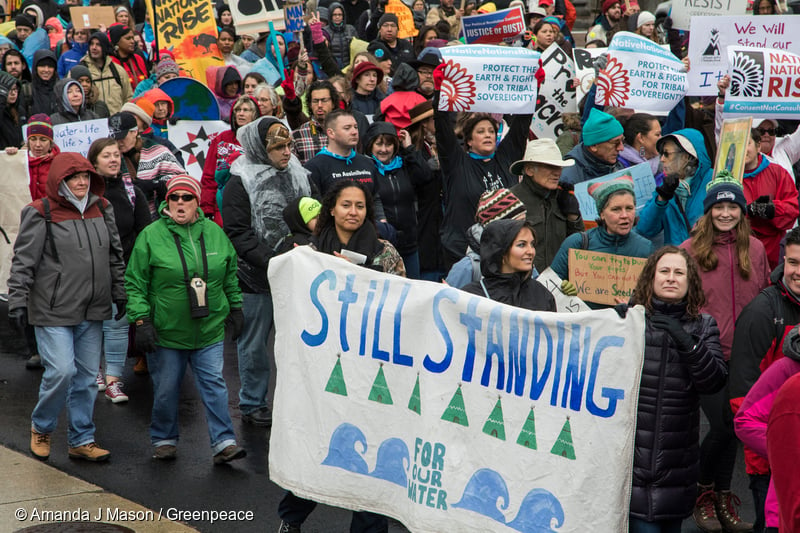
Alaska native culture is inextricably tied to subsistence harvest.  When traditional foods are no longer available, the traditions themselves begin to die out.

Greenpeace is pushing for the creation of Marine Cultural Heritage Zones in the Bering Sea. These areas give fishing dependent communities the ability to ensure that their traditional and subsistence needs will be met.  The future of many native cultures and traditions is dependent on the continued health of the Bering, and the creation of Marine Cultural Heritage Zones can help to ensure both.

Learn more about Native communities in the Bering Sea >>

Our Roots

Greenpeace's very first protest took place in the Bering Sea in 1971. A handful of determined activists leased a small fishing vessel, called the Phyllis Cormack, and set sail from Vancouver for Amchitka Island in Alaska. Their mission was to protest U.S. nuclear testing off the coast of Alaska with a brave act of defiance: to place themselves in harm's way. Despite being intercepted by the U.S. Coast Guard, these daring activists sailed into history by bringing worldwide attention to the dangers of nuclear testing.

As we continue our work in the Bering Sea, we are still committed to using creative means and modern technology to defend our oceans for the benefit of future generations.

The latest updates


What About the Canyons?

Feature story | February 10, 2010 at 18:00

When members of the North Pacific Fishery Management Council looked out their hotel and around the meeting rooms and sessions, they were reminded of the deep sea canyons that they're failing to protect. Greenpeace reminded them on newspapers,... Read more >

Too Little, Too Late for Largest U.S. Fishery

Feature story | October 1, 2009 at 14:53

Decades of mismanagement, overfishing and refusing to create marine reserves may have unfortunately caught up with the Alaska pollock fishery. The billion dollar fishery is the largest in the United States, producing a large number of breaded... Read more >

Alaska Pollock Fishery on the Verge of Collapse

Feature story | October 8, 2008 at 18:00

The world’s largest food fishery is on the verge of collapse. Pollock, used to make McDonald’s fish sandwiches, frozen fish sticks, fish and chips, and imitation crabmeat, have had a population decrease of 50 percent since last year. Read more >

Aaptos kanuux, New Species of Sponge Discovered

Feature story | April 27, 2008 at 18:00

It may look slimy and slightly alien, but this newly discovered species of sponge is an ambassador for undiscovered critters living in the nooks and crannies of our magnificent planet. Damaging human activities, like bottom trawling in the oceans... Read more >

1 - 5 of 28 results.

Topics