[2024 Annual Report] A life of true abundance is an ‘undisposable’ life

この投稿を読むとわかること
- Disposable cups and packaging at convinience stores and cafes—investigating and analysing the amount consumed and the impact on the environment
- Reusable systems opinion poll
- Renewal and relaunch for zero waste shopping map
- Domestic and global campaigning for an ambitious Global Plastics Treaty
- Engaging diverse stakeholders and stimulating domestic discussion—we hosted a symposium attended by industry/government/academia, and founded a youth initiative
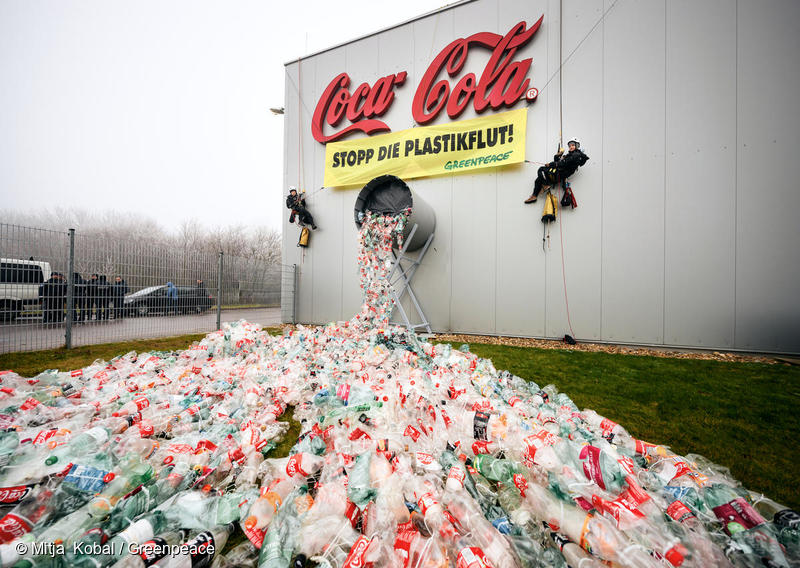
Our lives are filled with plastic. This useful and ubiquitous material is quietly contributing to three environmental crises: climate change, the loss of biodiversity, and pollution. If we continue with business as usual, the amount of plastic waste in the world will have increased three fold by 2060, and it won’t be long before the amount of plastic that has leaked into the oceans will be more than the number of fish. At Greenpeace we are working to resolve the plastics issue by promoting the creation of international regulations, and putting pressure on corporations to make a shift towards environmentally friendly systems.
Disposable cups and packaging at convinience stores and cafes—investigating and analysing the amount consumed and the impact on the environment
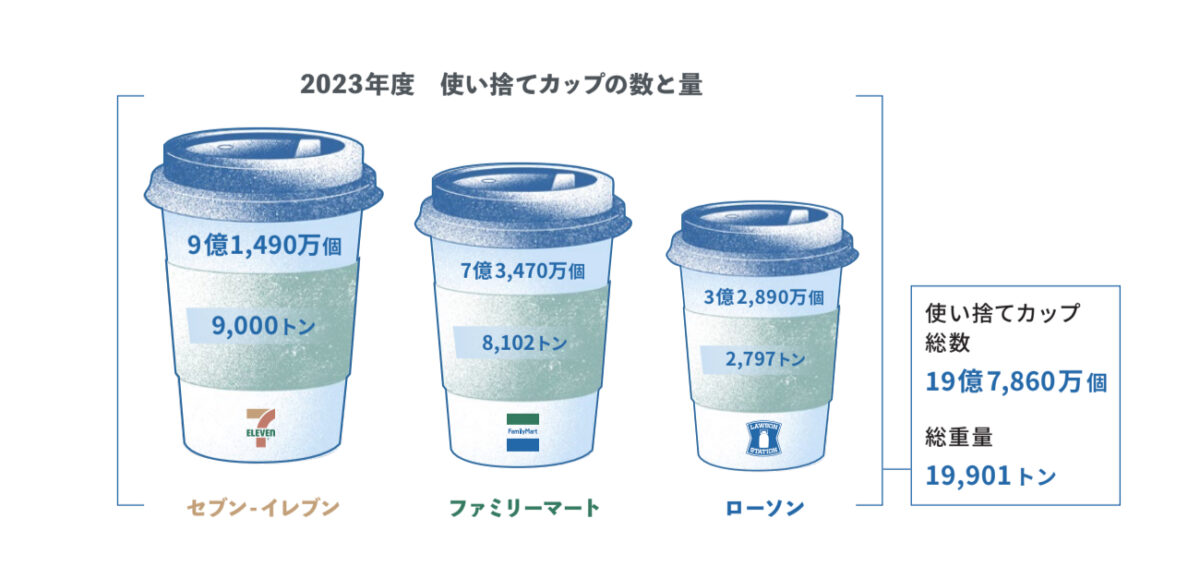
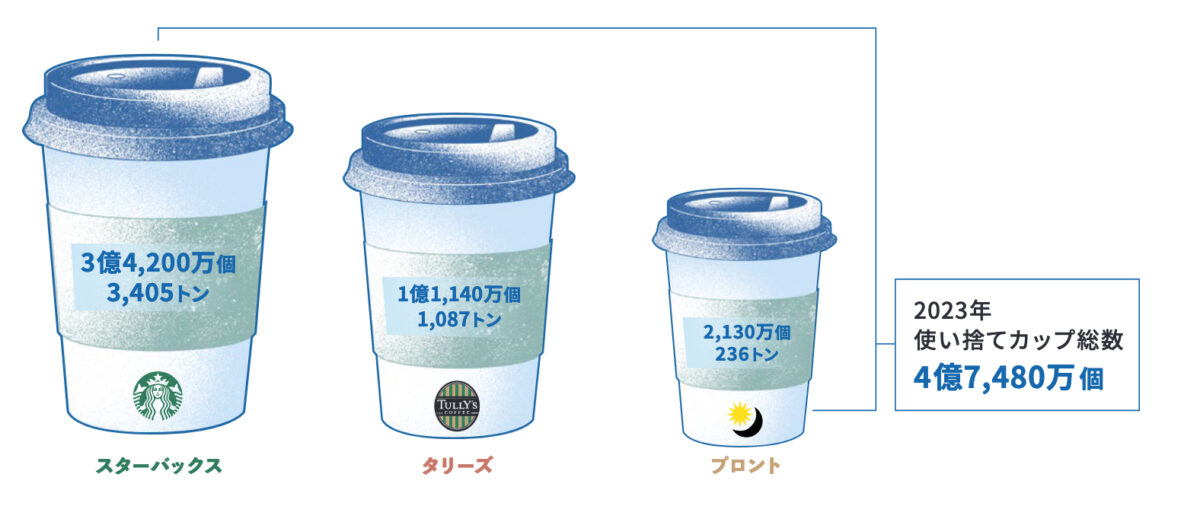
We investigated the amount of disposable packaging used by major café chains (Starbucks, Tully’s, Pronto) and convenience stores (Seven Eleven, Family Mart, Lawson) in Japan. Our research revealed that the three café chains combined used a total of 474 million disposable cups, while the three convenience stores combined used a total of 1.978 billion disposable cups in a year.
We also used a Life Cycle Analysis (LCA) to quantify how much these companies could reduce their environmental impact by introducing reusable cup systems. This analysis revealed that using reusable cups for all take-away drinks served over a day, would lead to a 57% reduction in CO2 emissions, a 36% reduction in water used, and a 62% reduction in fossil fuels used, per cup. We published our findings in a report, and demonstrated that if companies that use large amounts of disposable packaging made a shift to reusable systems, this would have a positive effect on the environment.
Through our work, we have succeeded in building strong relationships with convenience store and café chains, thus enabling us to propose concrete solutions to these corporations. As a result, multiple companies have conducted trials and considered implementation of reusable systems.
Reusable systems opinion poll
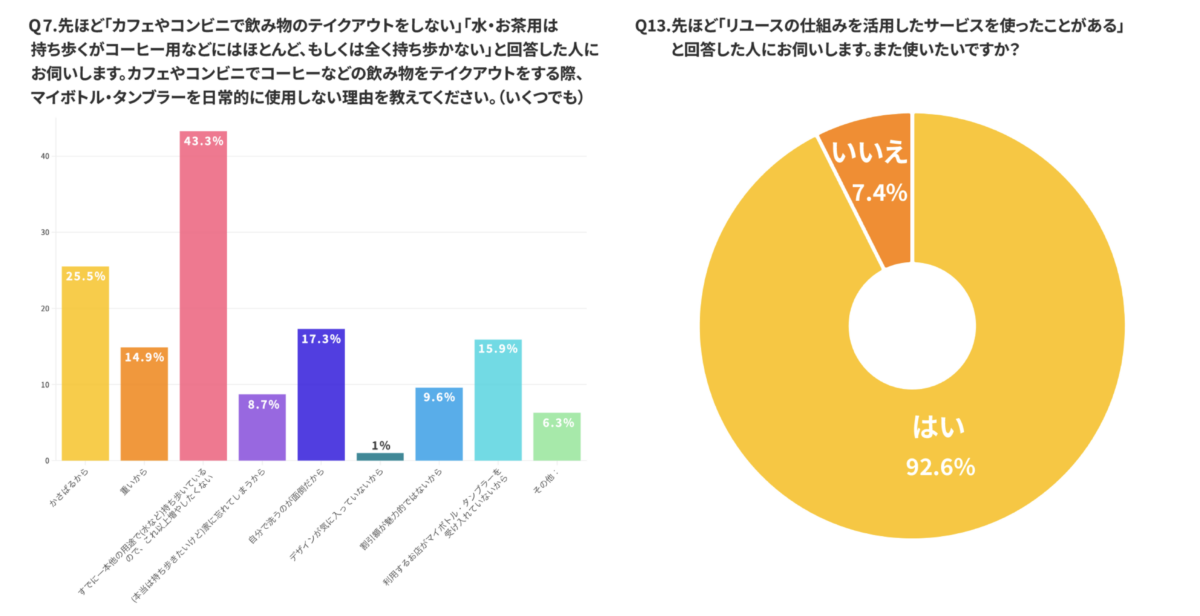
We conducted an opinion poll of people who own flasks or tumblers and reusable systems. The results of the survey revealed that usage rates of flasks or tumblers for takeaway drinks in cafes or convenience stores remains low, and also highlighted the limits and disadvantages of bringing your own flask or cup. On the other hand, it also showed that a reusable system where companies provide, collect, and wash reusable cups would overcome these disadvantages. Our research demonstrated that there is a limit to how much consumers can do on their own to address issues such as climate change or environmental pollution, and highlighted the need for more effective reusable systems.
Renewal and relaunch for zero waste shopping map
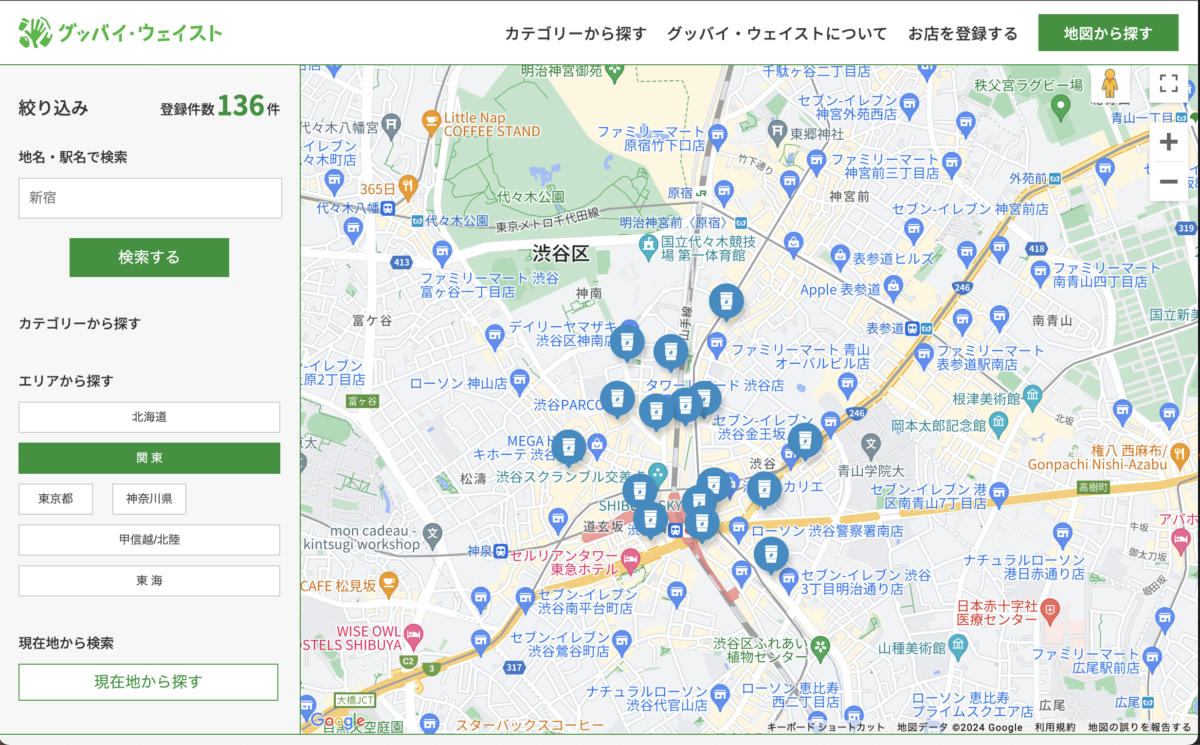
We renewed and relaunched the Goodbye Waste web map, which people can use to discover where they can shop without creating any waste from single-use packaging. The map on the site can be used to search for businesses that provide reusable packaging, and also provides information about the services provided by each business, as well as updates about reusable systems both inside and outside of Japan. It clearly demonstrates the importance of reusable systems by businesses, while also providing a visualization of existing reusable systems all over Japan. Please check it out!
Domestic and global campaigning for an ambitious Global Plastics Treaty
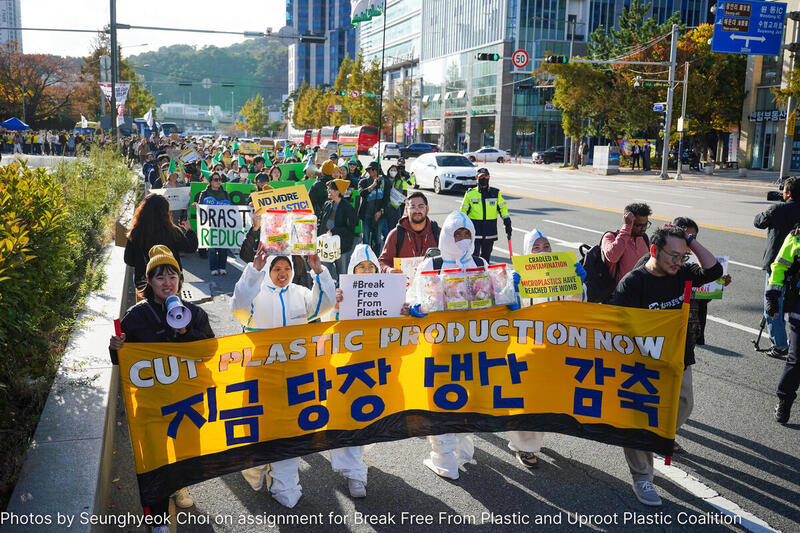
We are reaching an important stage in the establishment of a global treaty to get rid of plastic pollution. Greenpeace offices around the world are working together on international policy advocacy to make sure that an ambitious treaty, that limits the production of plastic and promotes reusable systems, is established.
In advance of the intergovernmental treaty meeting that was held in Busan in South KoreaI, we conducted research that revealed that Japan, South Korea, and Taiwan have a combined annual plastic production capacity of over 41.99 million tonnes, and published these findings in a report. This means that if the treaty does not include limits on production, these three markets alone have the capacity to produce what would be equivalent to 99.93 million tonnes of CO2.
Staff from Greenpeace Japan also participated in this treaty meeting. Before the start of the meeting an international network calling for a strong plastics treaty, of which Greenpeace is a member, held a parade around the meeting venue. Approximately 1,500 people participated, sending a strong message of “No Plastic Pollution!” to political decision makers.
While the meeting fell short of producing a finalized treaty, by working with organizations from all around the world, we were able to prevent the adoption of a treaty full of loopholes. Instead, meaningful progress was made—strengthening the groundwork for future negotiations.
Engaging diverse stakeholders and stimulating domestic discussion—we hosted a symposium attended by industry/government/academia, and founded a youth initiative
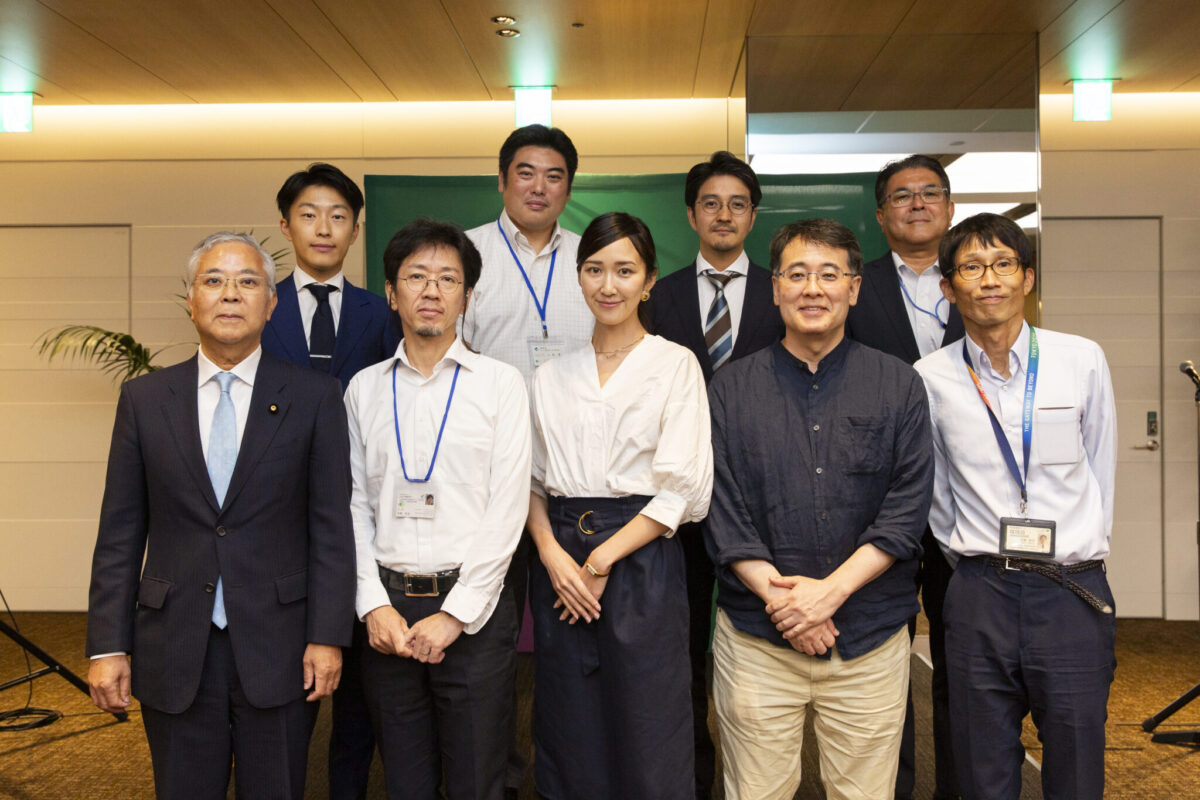
Prior to the intergovernmental meeting in South Korea, Greenpeace and ICLEI Japan co-hosted a Global Plastics Treaty Symposium. This was the second symposium, following last year’s. Approximately 100 people attended the event where speakers from the ministry of the environment, corporations, civil society organizations, and research institutions discussed and shared information.
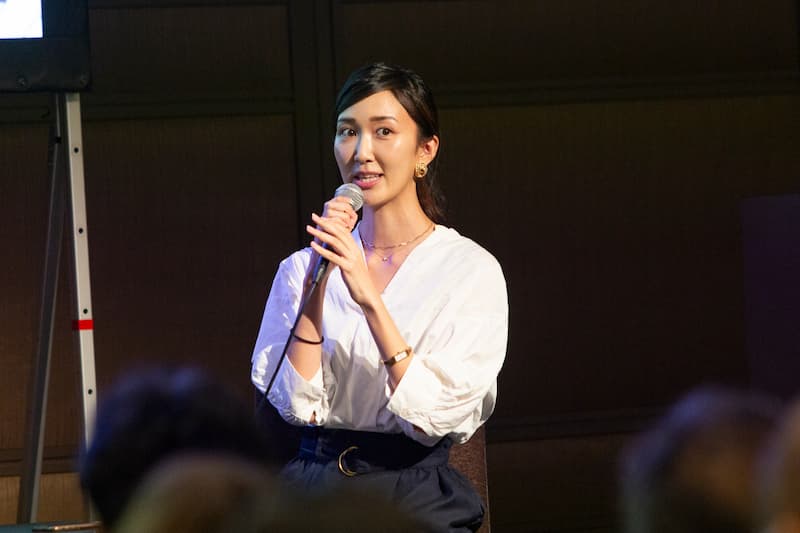
In comparison with COP, there were not so many opportunities for youth participation in the Global Plastics Treaty process. In order to change this, and to make sure that the voice of the future generation is also reflected in the treaty, we founded the “Global Plastic Treaty Youth Initiative”. Approximately 50 young people from all over Japan, aged from 13 to 30, with a common interest in the plastics issue, joined the initiative. The youth initiative conducted interviews with experts and related ministries and agencies, and drafted a proposal based on these interviews. Through this initiative, Greenpeace worked with the younger generation to build a vision for the future. We made sure their voices are heard by industry, government, and academia by delivering their proposal to the relevant ministries, agencies and political parties.
Open letter signed by 350 companies worldwide—building global momentum
The Champions of Change initiative was founded by Greenpeace in collaboration with other organizations. The initiative is an open letter project calling on governments around the world to adopt a strong global plastics treaty. It’s a global movement, signed by 350 corporations worldwide, including 3 reuse companies from Japan, and is a joint effort to build global momentum by businesses and civil society.