Communities on the frontlines of floods, extreme heat, droughts and rising seas demand legal, financial and political accountability from major fossil fuel polluters
Colombo, Sri Lanka, 12 October 2026: From fisherfolk and farmers to street vendors, gig workers, construction workers and coastal communities, people living on the frontlines of the climate crisis have come together in Colombo today with workers’ groups, lawyers, scientists, climate advocates and human rights experts with one clear message: those responsible for driving the climate crisis must pay for the damage it is causing.
The Global Convening of Climate Impacted Communities, Workers Groups, Legal and Climate Experts, organised by Greenpeace South Asia, brings together voices from Sri Lanka, India, Bangladesh, the Philippines, Papua New Guinea, Senegal, Africa, the Pacific and other regions ahead of COP31.
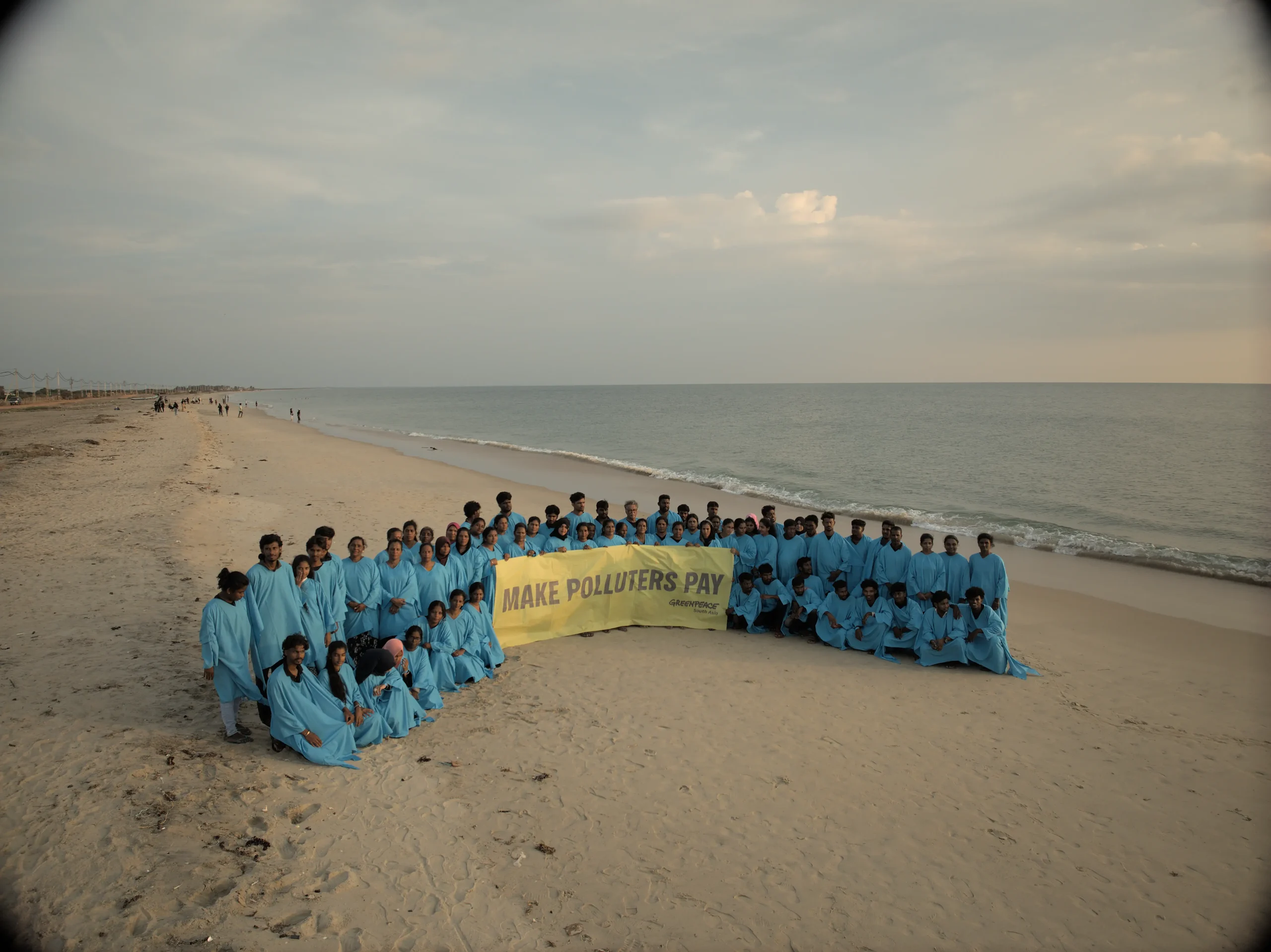
The gathering followed The Arising: Witnessing the Evidence gathering in Mannar on 10 October, where climate-impacted communities and allies came together to participate in a large-scale community art action for climate accountability.

A central focus of the convening was how the experiences of climate-impacted communities can be transformed into credible evidence that can support legal, scientific and political action. Participants shared experiences of extreme heat, floods, changing rainfall, sea-level rise, declining fish catches, water insecurity and growing threats to livelihoods.
Community-led climate registers and heat diaries were highlighted as important tools for documenting these impacts and ensuring that the voices of affected people become part of the evidence base for climate accountability. From workers facing dangerous heat in South Asian cities to fishing communities experiencing changes in marine ecosystems, participants emphasised that climate impacts are already affecting health, income, safety and the ability to sustain livelihoods.
The convening also brought together climate scientists and legal experts to explore how attribution science can connect specific climate impacts to human-driven climate change, and how emerging legal pathways can strengthen demands for responsibility and remedy.
Workers are on the frontline of the climate crisis
Workers’ groups at the convening highlighted the growing risks faced by outdoor and informal workers, including construction workers, street vendors, farmers, fishers and other workers whose livelihoods depend directly on environmental conditions. Extreme heat and climate-related disasters are increasingly creating unsafe working conditions, income losses and displacement, while many workers remain without adequate social protection or workplace safeguards.
Participants called for climate policies to recognise workers not simply as victims of climate change, but as central voices in shaping solutions and demanding accountability.
The convening strengthened calls for a coordinated Global South movement around the principle of Make Polluters Pay. Participants discussed the need to challenge a system in which communities that have contributed the least to the climate crisis are forced to bear its greatest costs, while fossil fuel companies continue to make enormous profits.
The discussions explored potential pathways through national courts, human rights institutions, international legal processes, climate science, policy advocacy and community-led evidence gathering. The convening also discussed the importance of building stronger collaboration between communities, workers, scientists, lawyers, campaigners and policymakers so that climate accountability becomes a sustained global effort rather than a series of isolated actions.
The Colombo gathering concluded with a shared commitment to strengthen cooperation across countries and movements and to build an evidence-based case for climate accountability.
Participants called for governments and institutions to:
- Recognise the lived experiences and evidence generated by climate-impacted communities;
- Strengthen legal and human rights mechanisms to address climate-related harm;
- Protect workers facing dangerous heat and extreme weather;
- Increase access to finance and remedies for communities facing climate impacts;
- Strengthen the use of climate attribution science in accountability efforts; and
- Make major fossil fuel companies and other major polluters contribute fairly to the costs of climate damage.
The climate crisis is no longer a future threat. Communities and workers are already paying its price through extreme heat, floods, loss of livelihoods and worsening insecurity. What was discussed in Colombo communicates a clear message: frontline communities do not want sympathy. They want accountability. Those who have profited most from fossil fuels must be held responsible for the damage they have helped create.
Media Contacts:
Nibedita Saha | [email protected]
Shanuka Kadupitiyage | [email protected]