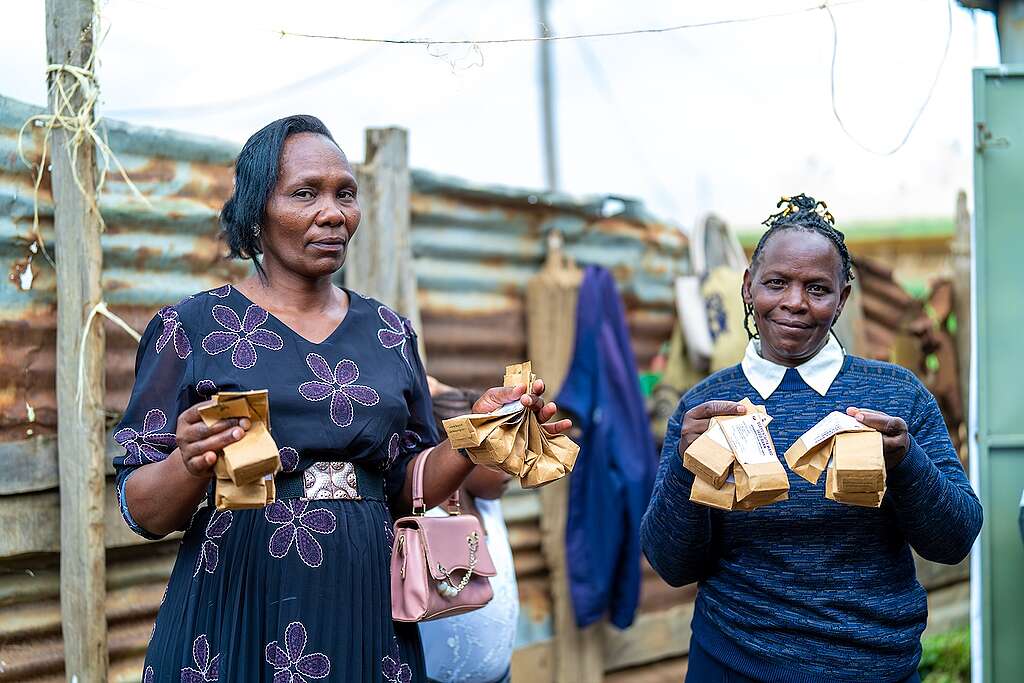
Eden Indigenous Seed Bank was started in 2016 and registered in 2022 by five community-based organisations: Makongo Farmers Network, Taka Wema Network, Elementaita Dairy Goat Group, Muriricua Farmer Network and Destiny Njogoo Welfare. Currently conserving 125 varieties of locally adapted seed species.
Today, the seed bank serves as a central seed bank for Elementaita Ward, coordinating 20 community seed banks across five villages. Its main purpose is to help community members save, conserve and share indigenous seeds, while also making these seeds available beyond its member communities and to other parts of Kenya.
Eden conserves a range of locally adapted and indigenous crops, including common beans, pigeon peas, millet and sorghum, among others. But these seeds hold value beyond their role in food production. They also carry cultural knowledge, memories and traditions that have been passed down through generations. Some varieties are associated with childbirth and wedding ceremonies, while millet, for example, has traditionally been used in beer making during different ceremonies, as highlighted by the Eden team lead.
For farmers, seed banks provide an important safety net. As the Eden team lead explains, they act as a “backup” when seeds planted by farmers are lost, dry up or are destroyed. By providing another source of seed for regeneration, seed banks help farmers return to production and strengthen food security.
Making locally adapted and indigenous seeds accessible within communities reduces farmers’ dependence on commercially purchased seed. Instead of having to rely entirely on buying seed from agrovet shops, farmers can access, save and share seeds within their own communities. This in turn reduces the costs associated with purchasing seed and other external inputs, helping strengthen farmers’ economic resilience and supporting more affordable and sustainable food production.
What your contribution is making possible
This initiative will help Eden Seed Bank strengthen its seed conservation efforts by equipping the seed bank with modern storage facilities. As the team lead explains, the project will support improvements to the seed bank’s storage and preservation capacity, helping ensure that seeds can be safely conserved and remain accessible to the farmers who depend on them.
This support extends beyond the seed bank itself. By strengthening a community-managed seed system, the contribution will benefit farmers who rely on these seeds to feed their families and earn a decent income.
Why seed banks matter
Seed banks are more than places where seeds are stored. They are community-led spaces where seed diversity, farmer knowledge and local food traditions can be protected and passed on. By conserving and making locally adapted seeds accessible, they help farmers maintain their ability to produce food, respond to changing conditions and reduce dependence on costly external inputs.
Supporting community seed banks is therefore an investment not only in seeds, but in the farmers and communities who safeguard them. It helps strengthen local food systems, protect agricultural diversity and keep the knowledge and resources needed to grow food in the hands of communities for generations to come. Your support helps strengthen these community-led systems and supports the people keeping our seeds and our food future in their hands.