Before the paint, before the colour, it was just another surface holding the weight of passing days. Now it holds stories. This mural began with listening. Listening to each other and listening to nature.
Mannar is a place shaped by the sea and by resilience. A narrow stretch of land where wind moves freely, where salt lingers in the air, where lives are closely tied to water, land, and each other. Fishing, small trades, care work, migration, memory. The rhythms here are not easy, but they are deeply rooted. Communities carry histories of conflict, displacement, and return, alongside everyday acts of survival and rebuilding.
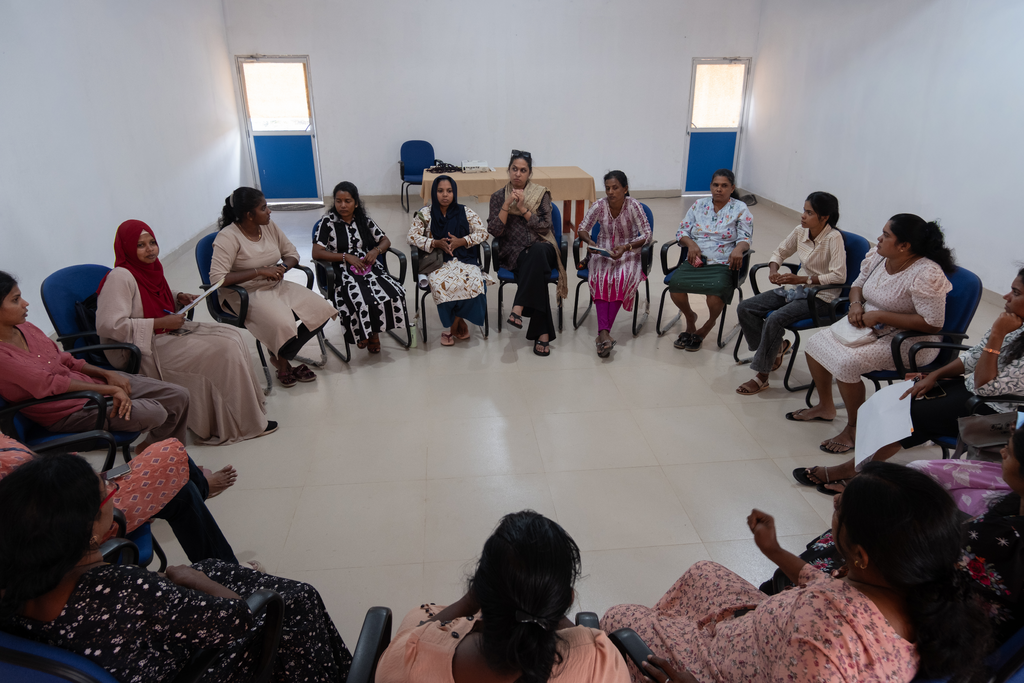
This is where our mural began. Not on the wall, but in the voices. Women gathered in circles, speaking their truths. Stories of labour, care, survival, and strength.
Women came together across villages. They were joined by two artists, Vicky Shahjehan and Fathima Sahana, both visual artists from outside Mannar who have been creating murals across Sri Lanka.
In groups, they drew the Mannar they know. The sea, the palmyrah, the land, the homes. Alongside it, the realities they face. Environmental loss, extractive industries, shifting coastlines. Social pressures, labour, migration, and the weight carried by women, often quietly.
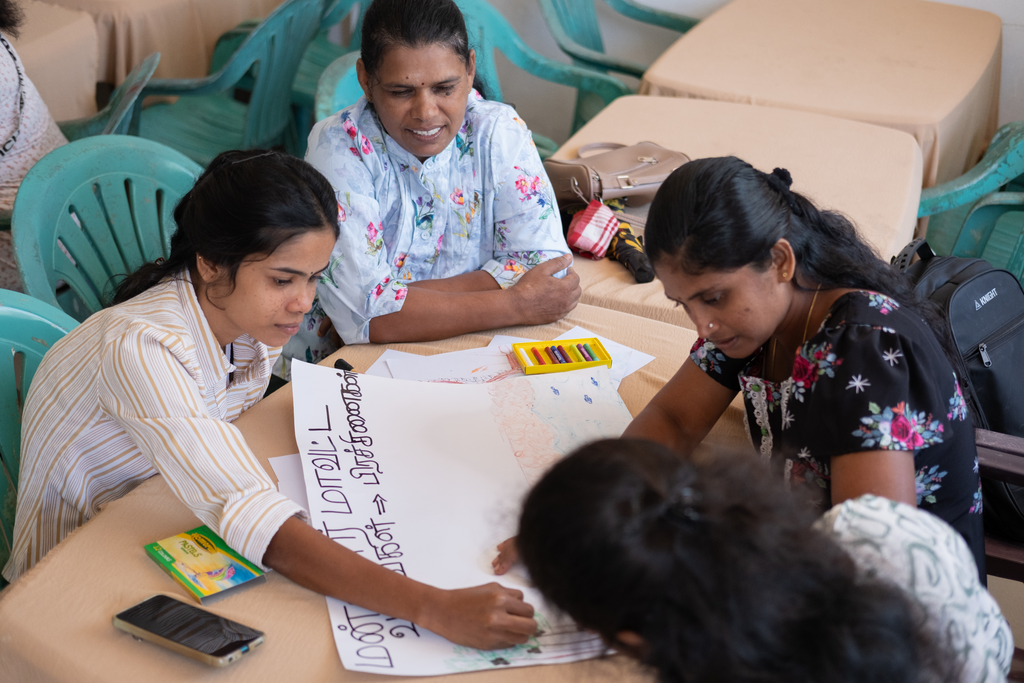

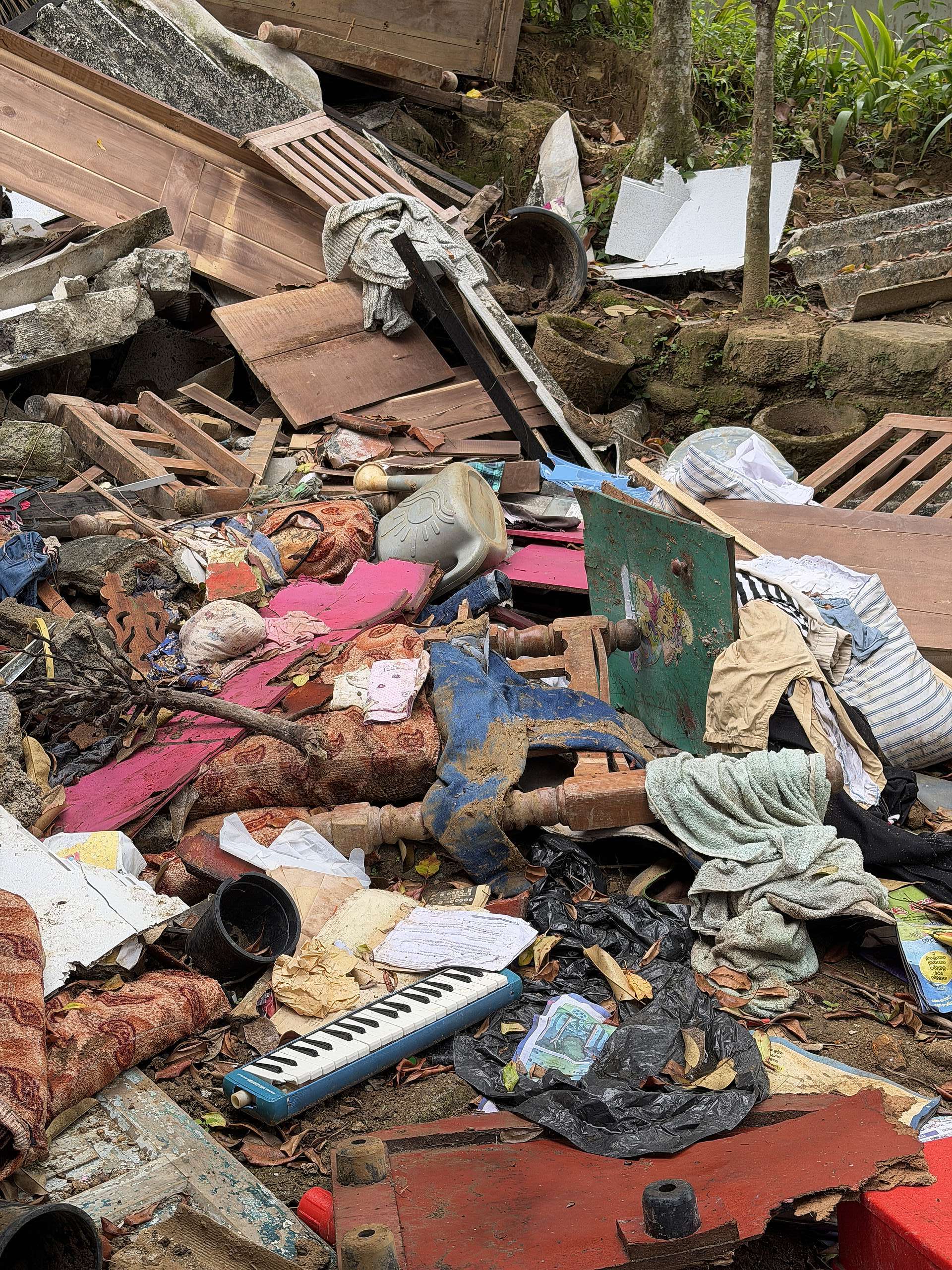
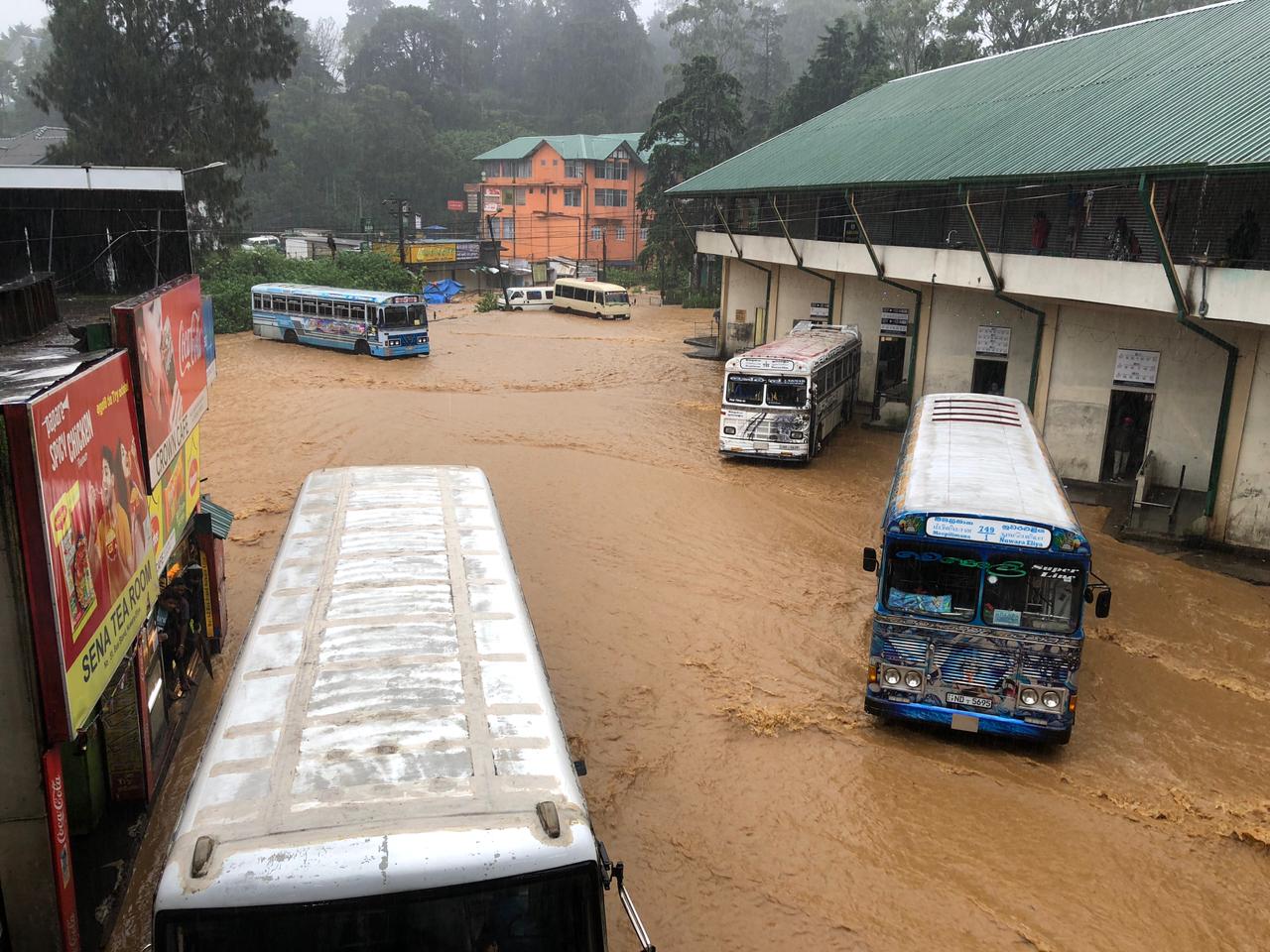
The conversations moved between the personal and the collective. Between what is visible and what remains unspoken. Stories of flooding. Homes lost overnight. Children falling sick in temporary shelters. Livelihoods disappearing with the rain. Incomes that never returned.
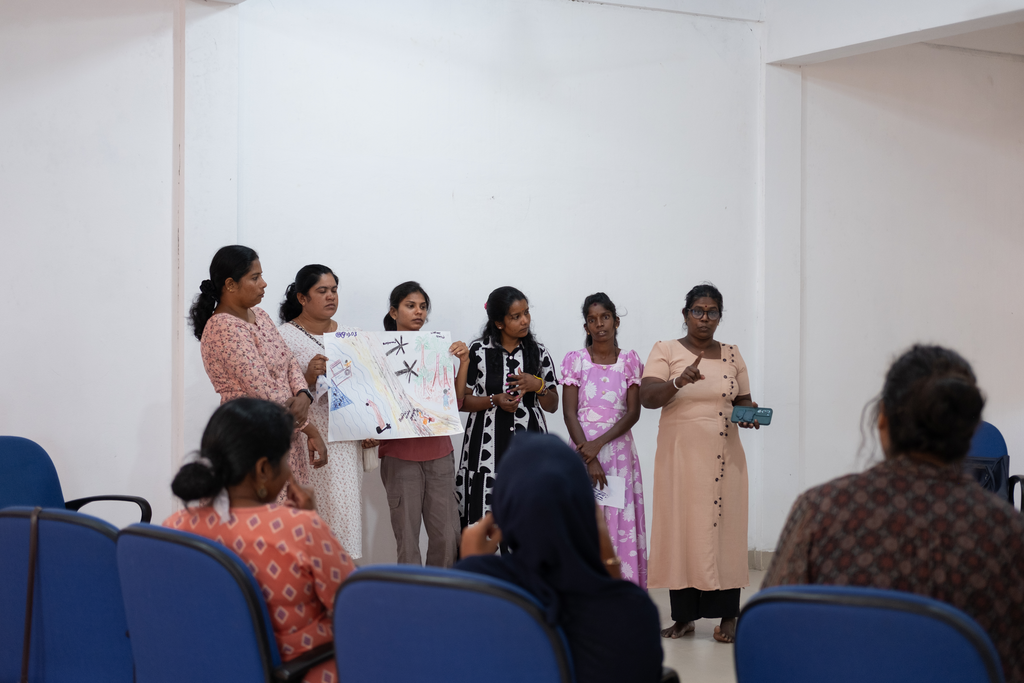
And stories of women holding everything together. Waking before dawn. Working through the day. Caring, managing, carrying what cannot be seen. There were also stories of resistance. Women supporting one another. Quiet leadership. Communities stepping in when systems did not. Choosing to stay. To rebuild. To continue.
What emerged was not just a set of issues, but a deeper understanding. Climate justice here is not separate from daily life. It is tied to work, to bodies, to survival. And women are already at the centre of holding, protecting, and sustaining what remains.
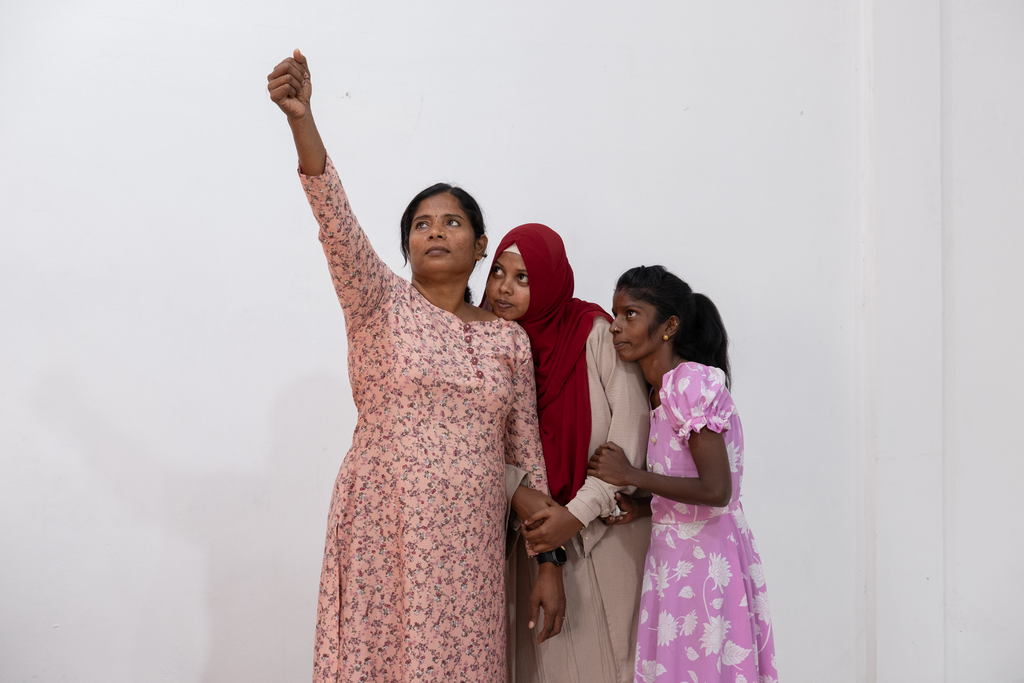
From the conversations, the work moved into image. Artists began capturing portraits of women from the space. Women who work, rebuild, and carry both visible and invisible labour. As the portraits formed, the women began to see themselves in the work. Not as subjects, but as part of it.
This began in a room, shaped by listening and trust. It opened a way to see Mannar through the eyes of those who live it every day.
Edison Marynathan, a naturalist from Mannar who works closely with communities on environmental conservation, led the second day. Having grown up in a place shaped by both rich biodiversity and the impact of war, his work now focuses on protecting the fragile ecosystems that hold this region together.
Before the heat settled in, the women travelled out together to Vankalai Bird Sanctuary. This time, not to sit in circles, but to step into the land itself. The light was still soft when they arrived. Flamingos stood in the distance, scattered across the water like quiet markers.
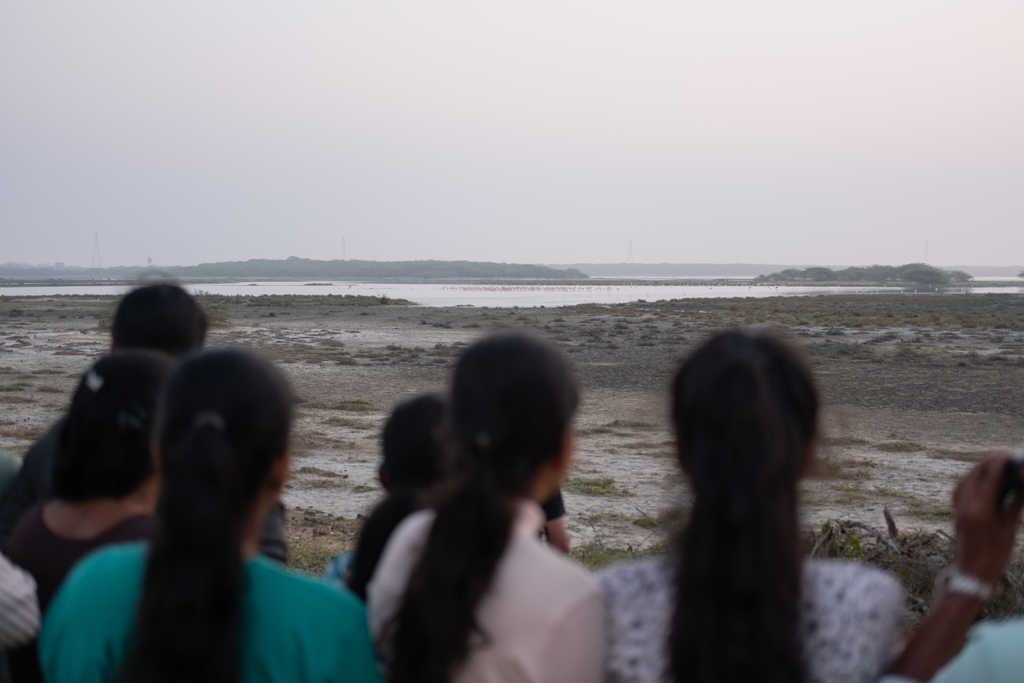
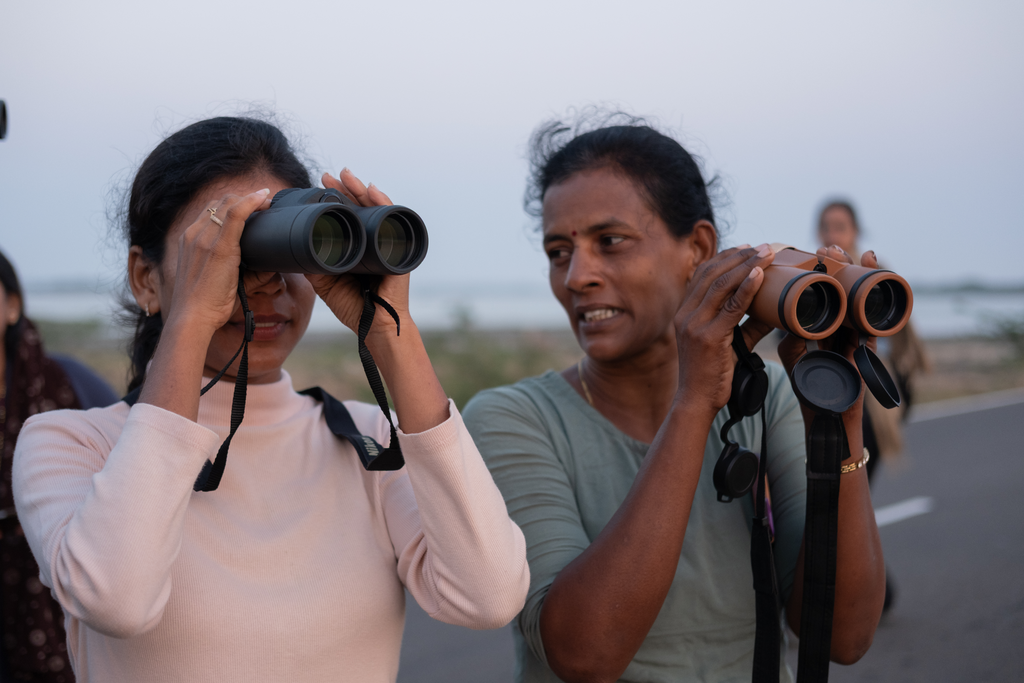
The women stood together, watching, learning how to observe, how to read movement, how to stay with the moment. For some, it was the first time seeing them like this.
Later, they walked through mangroves, along the edges of water and land, as Edison spoke about what holds Mannar together. How these systems protect the coastline. How they sustain life. And how they are changing.
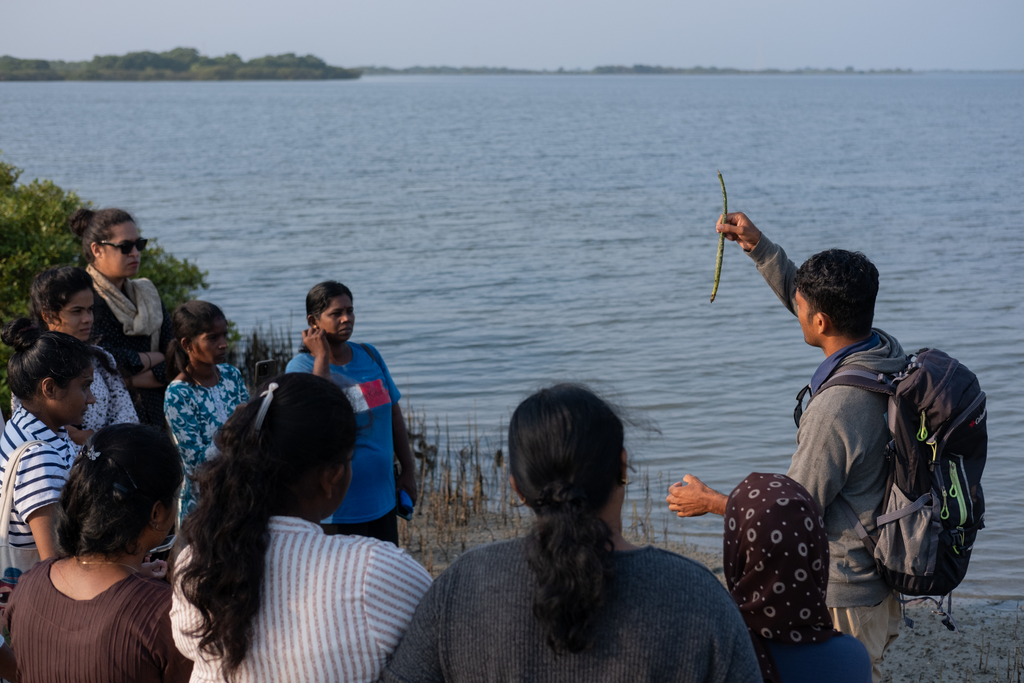
For many of the women, this was not unfamiliar land. It was part of where they live, where they pass, where they work. But this way of seeing it was different. To slow down. To notice. To understand the connections.
Following this experience, the artists returned full of ideas. That very same evening, they sat with everything that had been seen, heard, and felt, and brought it into a final design for the mural.
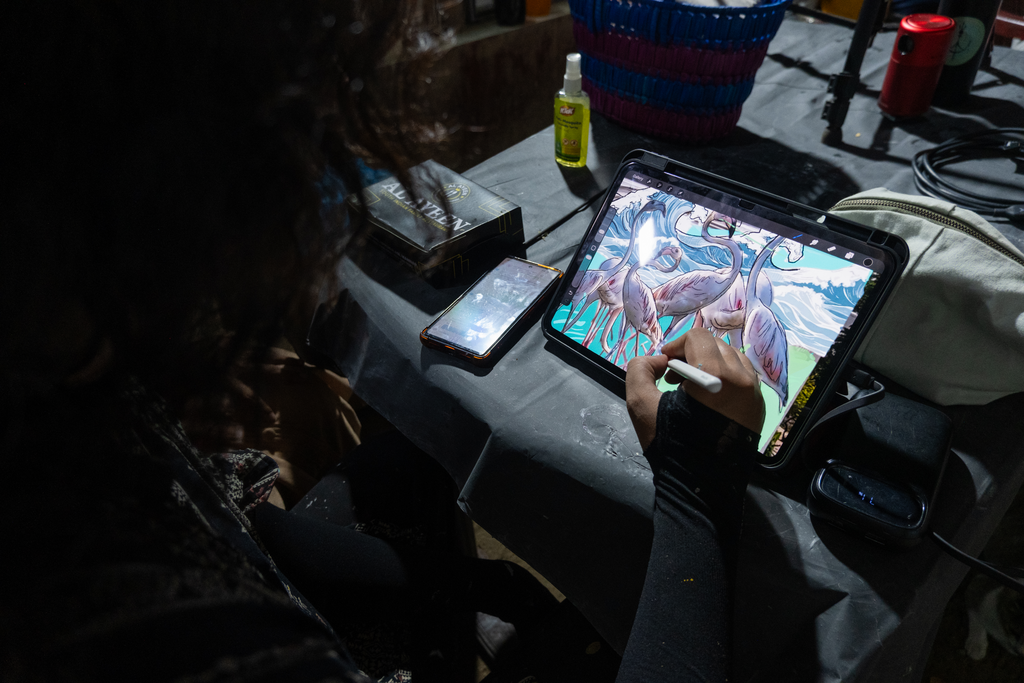
And then, the work returned to the wall. The first marks felt small against its scale. But slowly, the surface began to change. Lines turned into forms. Forms into figures. The portraits found their place.
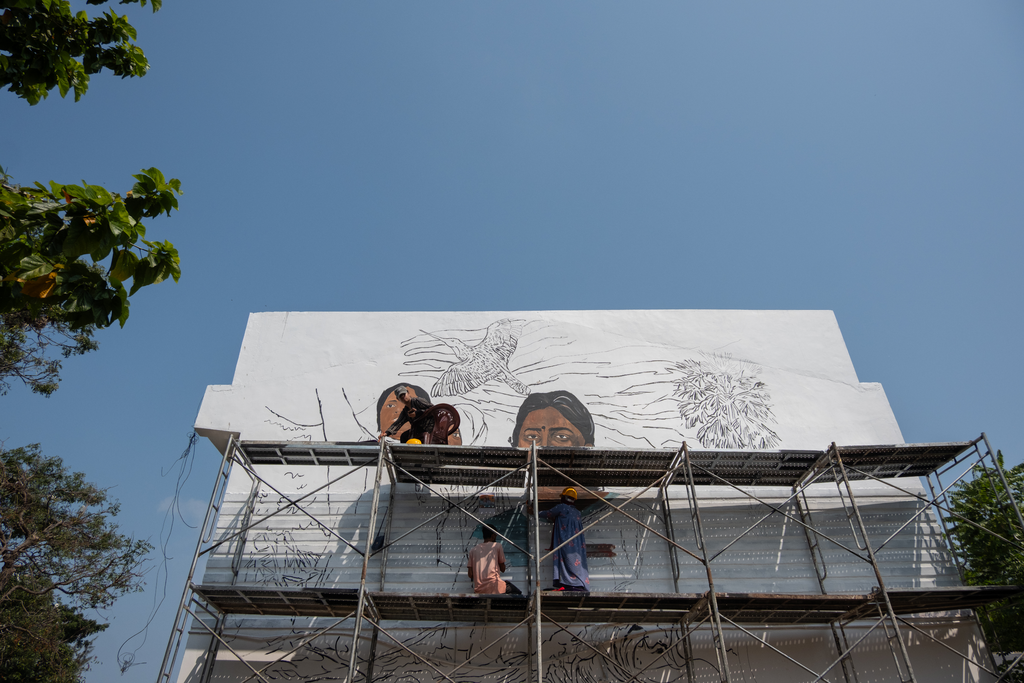
Women climbed to the top of the wall. Passed brushes. Mixed colours. Worked side by side.
For many, this was something entirely new. Some had never painted before. Some had never imagined seeing themselves on a wall. But they stepped in, learning as they went, supporting one another, building confidence with each stroke.
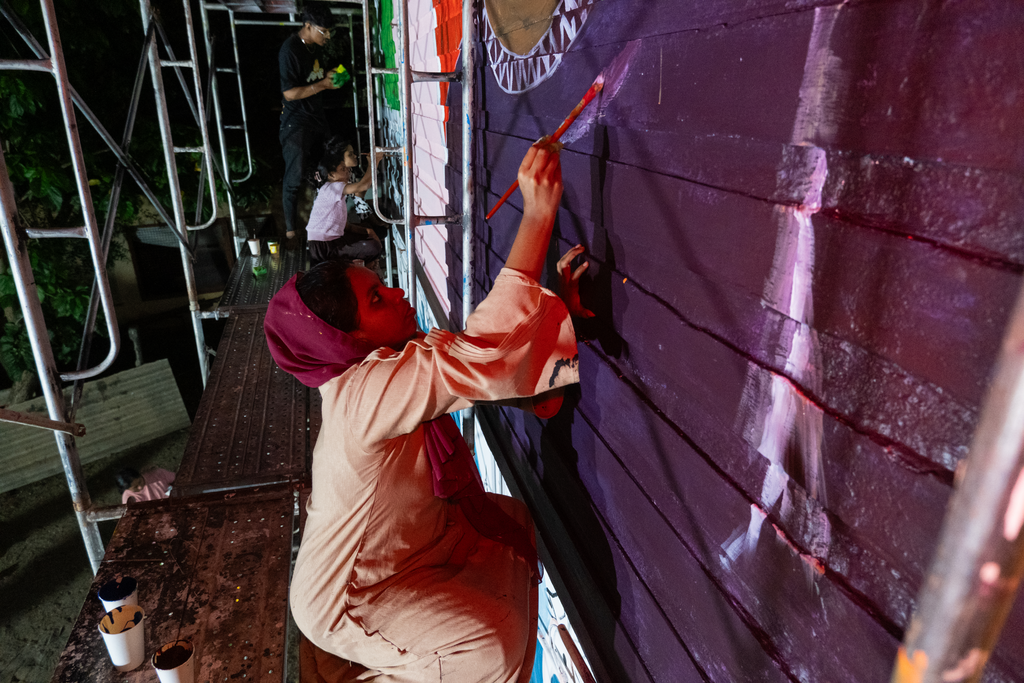
They were joined by a group of incredible youth volunteers and the Greenpeace team, who stayed with the process for hours, working alongside the artists, painting, filling, and holding the pace of the wall. The wall became a place of gathering. People stopped to watch. Children stood close. Conversations continued in paint.
The process was not separate from the community. It belonged to it. A powerful reminder that when a community comes together, something larger begins to take shape.
It was an intense two full days of work to bring the mural to completion.And on the final day, on International Women’s Day, the space shifted once again. A day rooted in the long history of women coming together, speaking out, and demanding visibility, rights, and justice.
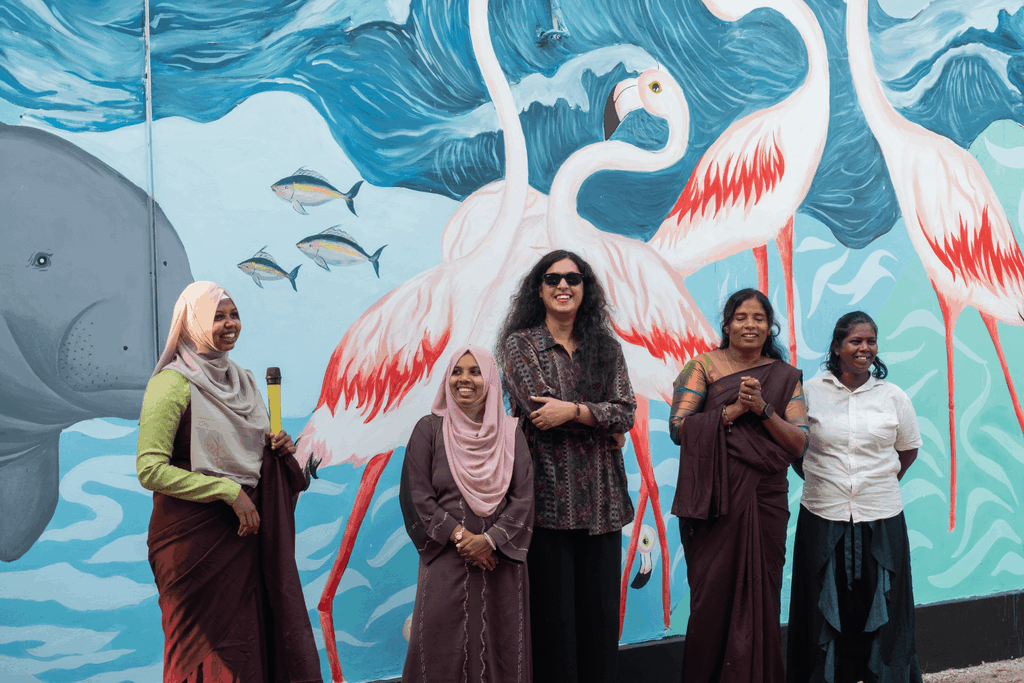
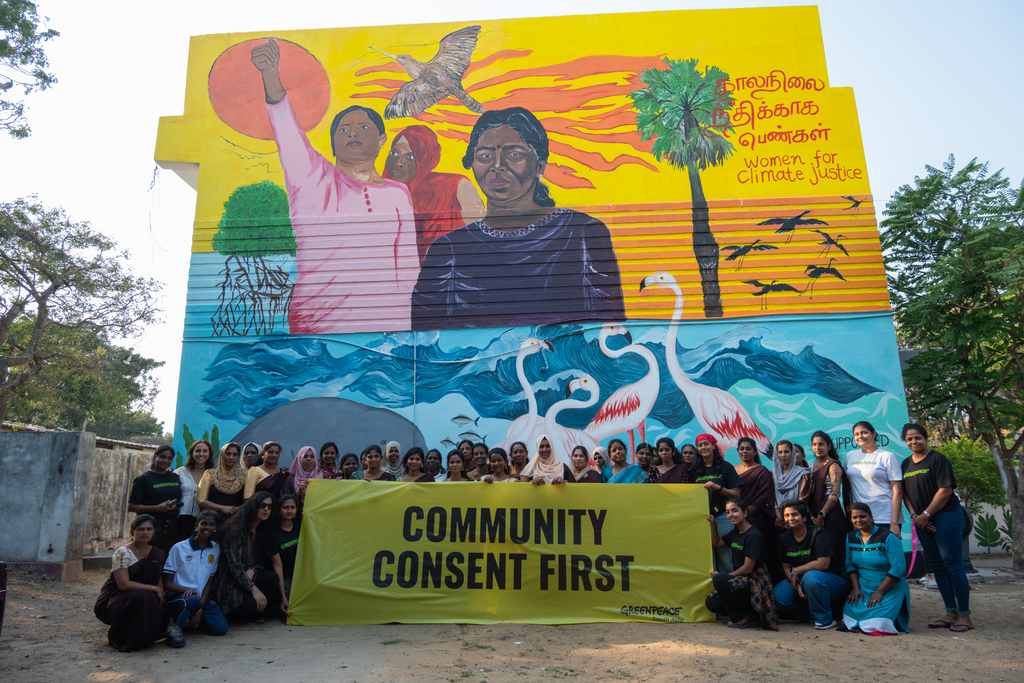
The women and the wider community gathered, not just to mark the day, but to celebrate what had been created together.
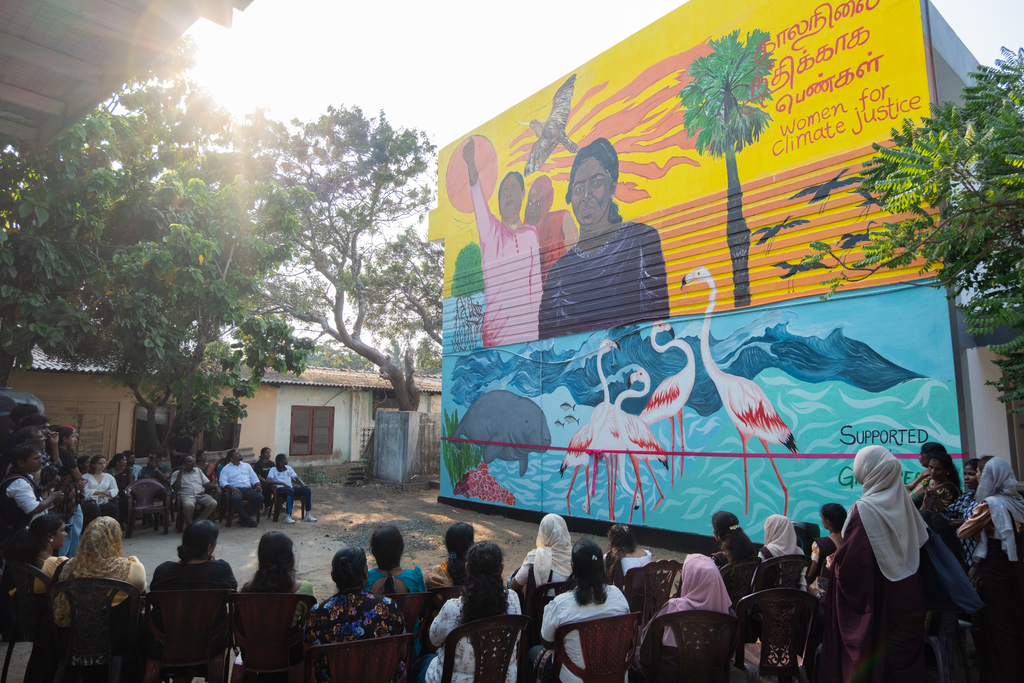
And once again, they listened to one another. The mural began to hold what had been shared. Women in dialogue. Women in labour. Women connected to land and sea. Mangroves, birds, palmyrah, water. Not as decoration, but as life.
There was pride in seeing it take form. In recognising faces, stories, fragments of their own lives reflected back. In being visible, not as background, but as presence. This was not just an artwork. It was a translation. Of voices into form. Of lived experience into something visible.
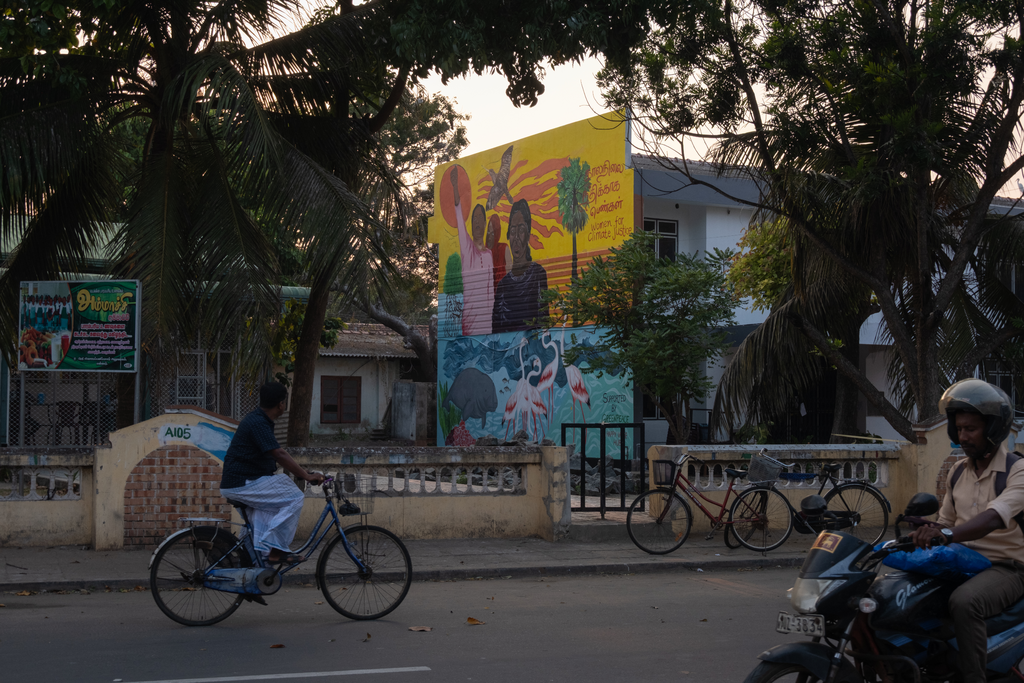
The wall stands strong at the public library in the centre of Mannar city, where people pass by every day. On their way to work, school, markets, home. Some pause, some don’t. But it stands there regardless, visible, holding stories that cannot be ignored.
Ruvin de Silva
[email protected]