There are places where nature speaks rather than just existing. Mannar is one such place. Swept by wind, rimmed by salt and silence, and animated by wings in motion, it holds a hidden power that reveals itself slowly to those who pause long enough to observe.
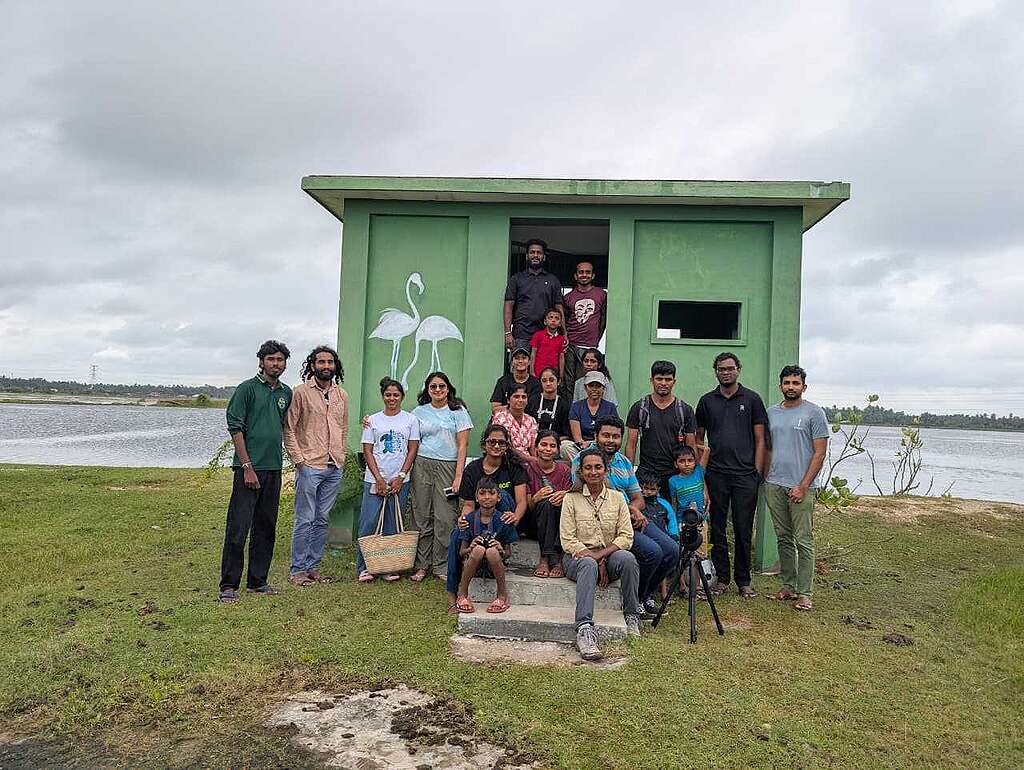
Greenpeace South Asia recently had the pleasure to join and support an inspiring initiative by the Mannar Bird Club titled “Birds, Brushes, & Binoculars.” In collaboration with the team, we mobilized a small group of volunteers to support the activity, especially for the creation of wall art inside and outside the bird blind at the Koraikulam Bird Observatory.
The intention was simple yet successful. It was to bring the local community closer to birds and their habitats by combining their creativity, observation, and shared experience. Together, the participants worked to paint the walls of the bird blind, turning it into a vibrant space that captures the essence of the surrounding wetland.
At the same time, binoculars and spotting scopes provided by the Mannar Bird Club allowed participants to observe birds across the waters of Koraikulam Tank, one of Mannar’s most important wetlands.
Many of those who participated had never experienced birdwatching before. Yet they were instantly fascinated. Children, youngsters from Mannar and Colombo, medical professionals, hoteliers, non-governmental organizations, and members of the local community came together side by side to paint, observe, listen, and learn. Participants were carefully guided by bird experts as they identified species, explained their behaviors, and highlighted the importance of wetlands.
Koraikulam Tank is more than just a body of water. It is known as a premier birdwatching location, which serves as a seasonal refuge and resting site for thousands of birds. Tens of thousands of waterbirds, such as ducks, waders (sandpipers, stilts, plovers, etc.), terns, and other migratory species heading along the Central Asian Flyway, can be seen here during the most active migratory seasons. This tank is an essential stopover spot in northern Sri Lanka because of its open waters and nearby mudflats, which provide perfect conditions for feeding and resting for birds. On the A32 highway, Koraikulam is located close to Tharapuram, roughly 10 kilometers north of Mannar town.
While standing inside the bird blind and watching flocks rise and settle across the water, one becomes acutely aware of how delicate and precious these habitats are. What made this program special was not only the birds but also the people. By combining art, observation, and learning together, this event created an accessible entry point for individuals who are new to engaging with nature. Here, the creativity fostered curiosity. Curiosity led to appreciation, and we believe that appreciation is often the first step toward protection.
By working together, we were able to improve our connections with local conservation groups, encourage community-led engagement, and help create examples in which people could relate to birds and wetlands on an emotional level and absolutely not as abstract concepts, but as actual, living neighbors. Our hope is to see these experiences pique lasting interest, encourage stewardship, and serve as a reminder that Mannar’s wetlands are not just habitats for birds but shared spaces that hold stories, ecological memories and livelihoods. It is not just about meeting conservation goals when protecting these habitats. It is about preserving such wonders of nature for our future generations.
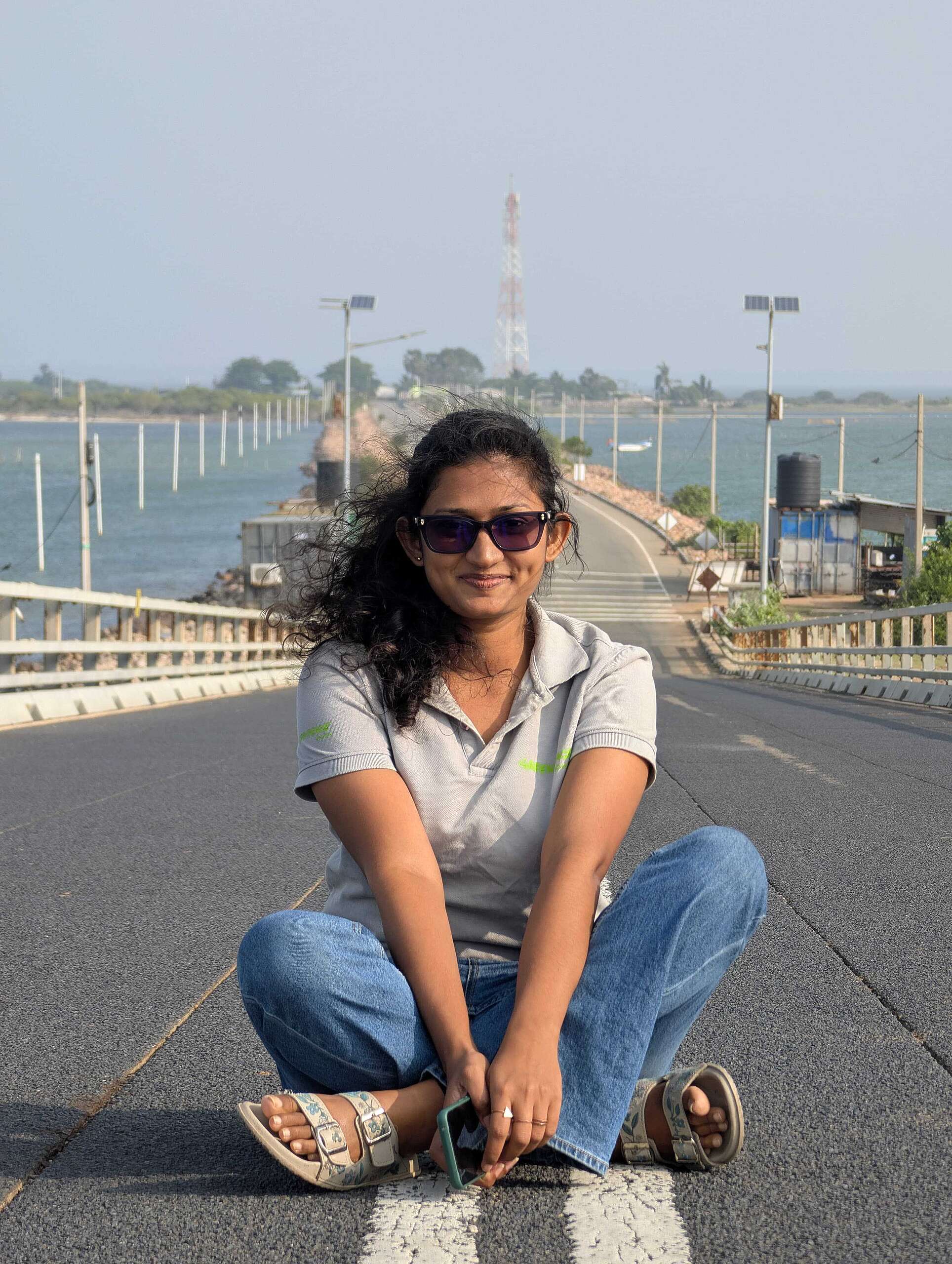
Author
Cherika Ranasinghe
Cherika works with the Campaigns Team at Greenpeace South Asia, bringing together her background in Fisheries and Marine Science and her experience in environmental advocacy to highlight the importance of biodiversity conservation through informed storytelling.