Standard Page - 2010-07-15
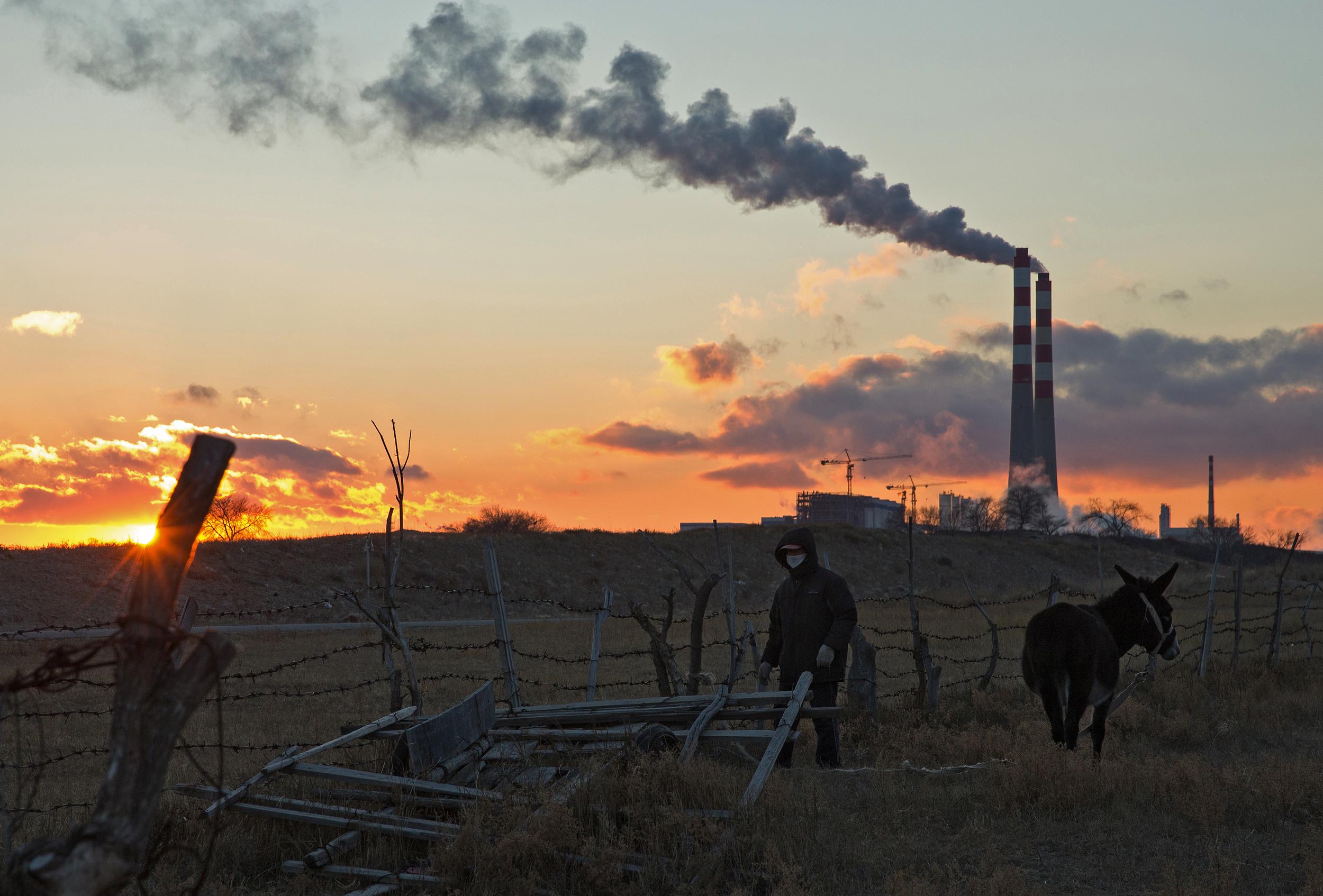
Coal-fired power plants are the biggest source of human-made carbon dioxide emissions. This makes burning coal the single greatest threat facing our climate.
Eighty percent of China's carbon dioxide emissions come from burning coal. It supplies more than 70% of the country's energy needs and 80% of the country’s electricity. If we are to stop climate change, then China must move away from coal to renewable energy.
Coal-fired power plants are the biggest source of human-made carbon dioxide emissions. This makes burning coal the single greatest threat facing our climate. 80% of China's carbon dioxide emissions come from burning coal. It supplies more than 70% of the country's energy needs and 80% of the country's electricity. If we are to stop climate change, then China must move away from coal to renewable energy.
Apart from climate change, coal also causes irreparable damage to the environment, people's health and communities around the world. From mining to combustion, coal is the dirtiest fossil fuel on the planet, producing air and water pollution and liquid and solid waste.
Environmental and Health Impacts
While the coal industry itself isn't paying for the damage it causes, the world at large is.
- Coal is the single biggest source of climate-changing pollution.
- Coal mining destroys ecosystems and releases toxic levels of minerals and gases into water and air (including the potent greenhouse gas methane)
- For each tonne of coal produced, 2.5 tonnes of water are polluted. This leads to ecosystem degradation, land slumping and land erosion.
- Burning coal releases particulate matter into the air, which causes respiratory ailments – especially long-term or chronic health effects.
- Another by-product of coal burning is mercury, which infiltrates the food chain and attacks the nervous system. Young children and babies, whose nervous systems are still developing, are particularly vulnerable.
- The impacts of air pollution are far reaching: for example, mercury pollution from coal-fired power plants can travel thousands of kilometers.
- Coal mine accidents kill thousands of people around the world every year. Mining exposes miners and nearby residents to coal ash and other toxins.
- Burning coal creates millions of tonnes of waste products that contain toxic levels of heavy metals and minerals. These mostly end up in landfill sites or impoundments, and pose a threat to our health and environment.
In China, coal burning is responsible for:
- 85% of sulfur dioxide (SO2) emissions
- 67% of nitrogen oxides (NOx) emissions
- 70% of particulate matter emissions
- 80% of carbon dioxide emissions
- Coal mining uses a great deal of water: 71% of China's 96 major state-owned coal mines face water shortages, 40% of them severely.
- 12 million tonnes of food supplies polluted by heavy metals
- 375 million tonnes of coal ash each year. Coal ash is the solid waste left behind after coal combustion and contains some 20 heavy metals and other toxic chemicals. It is estimated to concentrate 40% of the arsenic and 70% of the lead present in raw coal. China's single largest source of solid waste, coal ash is a also a light particle that spreads easily through wind, water and air.
- 700,000 hectares of land subsidence by 2006, damaging roads, railways, bridges, and electricity lines
- 30% of China affected by acid rain
- 3.6 gigatonnes of coal tailings and gangue produced by the coal industry by 2007 –accounting for 40% of solid waste in the country
- 500,000 deaths from illnesses related to air pollution in 2008
- Respiratory disease, pneumonia, bronchitis and mortality from cardiovascular disease
- Emissions of polycyclic aromatic hydrocarbons (PAHs), which are closely linked with birth defects and lung cancer, the single biggest cause of deaths from malignant tumors in China
The True Cost of Coal
How much does coal burning cost China?
- In 2007, every ton of coal burned cost China RMB 150 in environmental damages
- Total external cost of coal – including all damages to infrastructure, health and environment – in 2007 was RMB 1.7 trillion, or 7.1% of annual GDP.
- In 2003, air pollution cost RMB 157.3 billion in losses associated with premature death and illness (1.16% of annual GDP)
- In 2005, every ton of coal burned cost RMB 44.8 in health costs (49% of the total environmental cost of coal combustion)
- By 2006, land subsidence from coal mining cost RMB 50 billion in damages
In addition, chronic respiratory diseases, linked to air pollution, have become one of the leading causes of death in China. Without significant action, by 2020 air pollution could cost China US$390 billion dollars per year through disease, illness and premature deaths.
Quit coal for real solutions
China has vast potential for renewable energy, which could be realized with sufficient investment and effective government policies. We need an energy revolution that replaces dirty energy sources like coal and other fossil fuels with clean energy solutions: wind and solar energy, as well as energy efficiency and other modern technologies.
Read our following in-depth reports:
The True Cost of Coal
The True Cost of Coal: Air Pollution and Public Health
The True Cost of Coal: An Investigation into Coal Ash in China
The True Cost of Coal: Coal Dust Storms and Toxic Wind
For e-mail updates on quitting coal: subscribe here.