u003cstrongu003eDemand the Tanzanian government protect the rights of the Maasai, stop these evictions and prioritise real solutions to the climate crisisu003c/strongu003e.
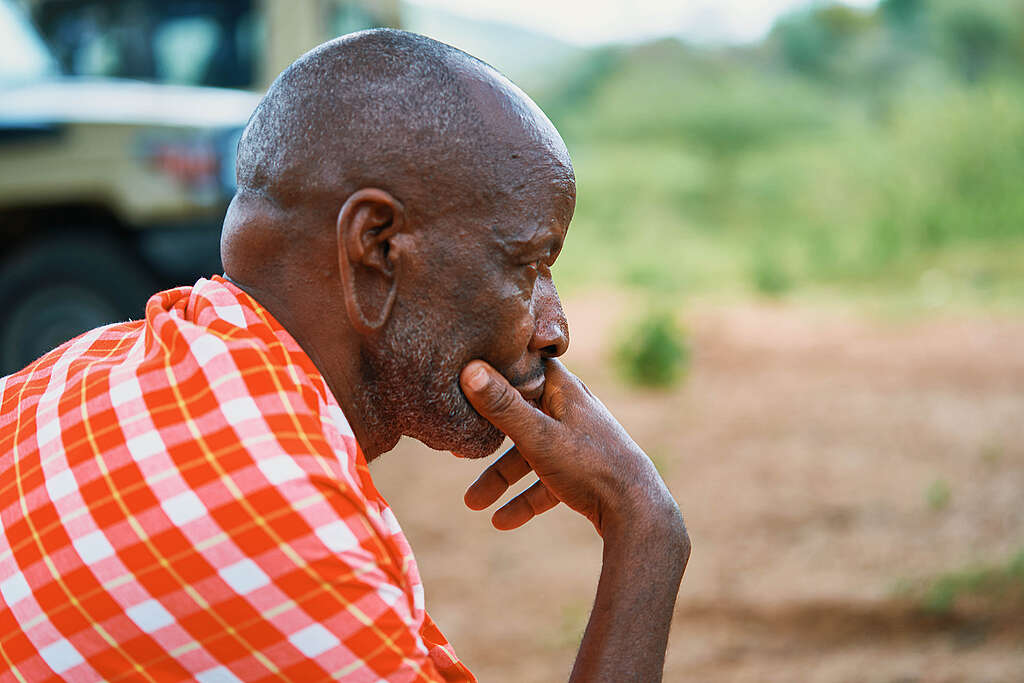
SIGN NOWSomewhere in northern Tanzania, a Maasai elder knows the name of every ridge on the rangeland his cattle have grazed for decades. He knows which valleys hold water in a dry season, which corridors to follow when the rains fail, which months to move and which months to stay. That knowledge, accumulated across generations, written into the land through practice rather than paper, is precisely what makes the Longido and Monduli rangelands ecologically valuable.
It is also precisely what is being erased.
Soil carbon credits are a type of carbon offset. The idea is straightforward: if you change how land is managed, you can store more carbon in the soil rather than releasing it into the atmosphere. Project developers sell that stored carbon as credits to corporations, who use them to claim they have offset their emissions. On paper, everyone wins. The corporation gets to call itself carbon neutral. The developer earns from the credits. And the community on whose land the project sits is supposed to benefit from a share of the revenue. In practice, the system has repeatedly failed the communities it claims to serve, and the science underpinning soil carbon sequestration in dryland environments remains deeply contested.
The Longido and Monduli Rangelands Carbon Project, run by Soils for the Future Tanzania and backed by Volkswagen ClimatePartner, is on the verge of being formally registered in Verra’s carbon credit registry, the world’s largest certifier of voluntary carbon credits. Once approved, it will begin issuing credits, meaning corporations thousands of miles away will be able to declare their emissions neutralised by land in Tanzania they have never seen, tended by communities they have never genuinely consulted.
Nearly 970,000 hectares of Maasai rangeland. Locked into contracts for 40 years. Grazing schedules were redesigned not around survival, but around carbon accounting. Where Maasai herders have moved their cattle freely across vast landscapes for centuries, following rain, grass, and instinct, this project would lock them into rigid 14-day rotational cycles. Under the project’s design, livestock would be grouped and moved according to fixed schedules, dividing the rangeland into timed blocks so that carbon levels in the soil can be measured and verified. The logic is carbon accounting, not pastoral survival. For communities whose entire way of life depends on reading the land and moving when conditions demand it, being told when and where your cattle can graze is not a minor operational adjustment. It is an attack on the knowledge system that has kept both people and ecosystems alive for generations.
Communities received contracts without legal advice, without translation, often without meaningful participation from women or young people. According to a March 2025 investigation by the Maasai International Solidarity Alliance (MISA), the two competing projects rushed to secure signatures for project approval without ensuring the conditions for free, prior and informed consent existed at all.
Then the response came, and it was extraordinary by any standard. Community members flooded Verra’s public comment window with over 100 submissions, more than any carbon project validation on record according to long-standing observers of the voluntary carbon market, the majority from people directly affected by this scheme. It is also almost meaningless, because the Maasai only learned the window existed shortly before it closed. One month to object to a 40-year contract on your own land. That is not consent. That is a deadline disguised as a process.
This is not the first time. Across East Africa, the story repeats. Contracts signed in languages communities don’t speak. Grazing corridors that have sustained pastoralist life for centuries redrawn to satisfy a carbon model. Revenue that flows overwhelmingly to project developers, while communities receive as little as US $2 per hectare under deals whose credits can fetch up to ten times that amount on global markets. In Kenya’s Kajiado and Laikipia counties, new soil carbon projects are already being quietly brokered, following the same template, under the same banner of green growth.
We have been tracking this. We named the Longido and Monduli project by name in November last year. We documented the failure of free, prior and informed consent, not as a technicality, but as a lived reality for communities whose land is being signed away while they watch. We called it what it is: carbon colonialism. Dispossession with a sustainability logo.
And now Verra is being asked to certify it anyway.
The pressure on the project assessor to overlook those 100 comments and approve compliance will be enormous. The financial stakes are high. The corporations waiting on the credits are large. And this is where the story turns, because those corporations have names, and they are names you know.
Netflix. Apple. Shell. Delta Airlines. Air France-KLM. Nespresso. Meta.
The corporations using carbon credits on African Indigenous land to make sustainability claims are not abstract entities, and the sums involved are not trivial. Netflix, Apple, Shell, Air France-KLM, and Nespresso are among the top global companies buying Kenya’s voluntary carbon credits, according to a World Bank report. Nespresso alone bought 192,000 tonnes of carbon equivalent jointly from Kenya, Zimbabwe, and the DRC in 2021. The Northern Kenya Rangelands Carbon Project has sold over six million credits worth between $42 million and $90 million, with both Netflix and Meta among its buyers. Delta Airlines bought 12 million carbon credits worth $137 million in 2021 alone, later facing a class-action lawsuit alleging its carbon neutrality claims were false and misleading and relied on invalid offsets. Volkswagen’s investment in the Longido and Monduli project is believed to run to several million dollars. Every dollar spent on these credits is a dollar that allows a corporation to keep polluting while communities absorb the cost.
Your Netflix subscription does not come with a carbon credit in the small print. But it does come with a company that has used Indigenous land in East Africa to claim it is net neutral. That is worth knowing.
Meanwhile, MISA and Survival International have jointly submitted a formal objection to Verra, urging the body not to certify the project. Their submission identifies the fundamental problems as structural, not incidental: non-additionality, leakage, monitoring uncertainty, and a governance model that raises serious human rights concerns. MISA has also called for a five-year moratorium on all soil carbon projects in pastoral rangelands in northern Tanzania. These are not fringe demands. They are the documented conclusions of the communities whose land is at stake.
Greenpeace Africa is adding its voice to theirs. This is what needs to happen.
Verra must halt the registration of this project until a genuine, independently verified FPIC process has been completed, one that gives communities real time, real information, and real power to say no.
Corporations profiting from carbon credits on African Indigenous land, including Volkswagen, Netflix, Apple, Shell, Meta, Delta Airlines, Air France-KLM, and Nespresso, must conduct immediate due diligence on every East African carbon project they fund, and publicly commit to pulling out of any project facing unresolved FPIC violations. More fundamentally, they must stop hiding behind carbon credits altogether. Offsetting emissions through land deals on other people’s territory is not a climate solution. It is a delay tactic that allows corporations to keep polluting while communities pay the price. The only credible path to addressing the climate crisis is reducing emissions at source, and the corporations named here have the resources and the responsibility to do exactly that.
The Tanzanian and Kenyan governments must put binding protections for communal land tenure in place before a single further carbon contract is signed on pastoral land.
The Maasai submitted over 100 objections through the channel Verra created for that purpose. They did everything right. The only question now is whether the certification system they were asked to trust will honour what they said, or whether a hundred voices will be processed, filed, and overruled in the time it takes to stream a season of television.
Sherie Gakii, Communications and Story Manager