
25 Years of Hope in Action
Join us as we celebrate resistance, renewal, and the people-powered fight for our planet.
Hope becomes real when we rise together for people and planet
— Veerawit Tianchainan, Executive Director at Greenpeace Southeast Asia
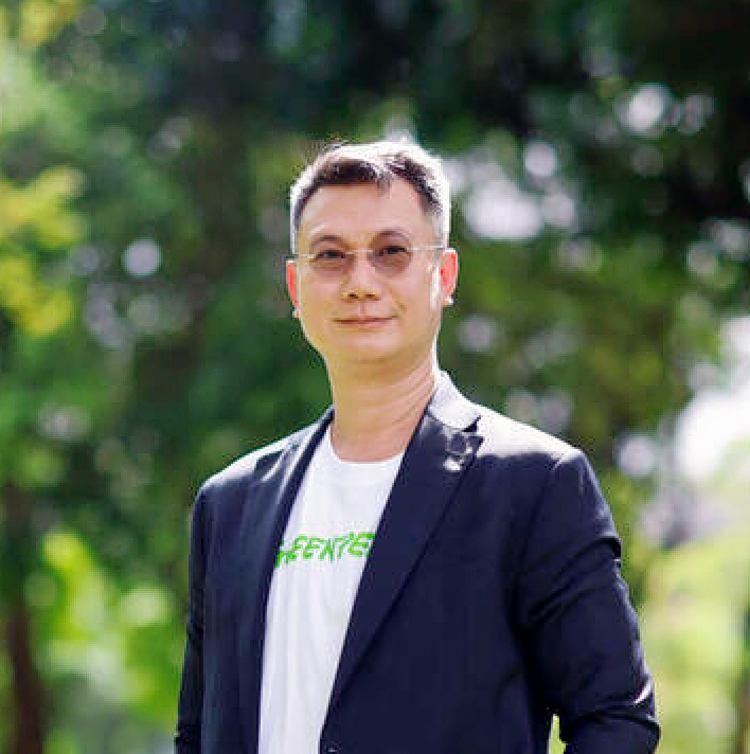
For 25 years, Greenpeace Southeast Asia has stood alongside the people of our region to defend forests, protect oceans, and challenge those who put profit before the planet. This milestone is not only about our campaigns, but about the courage of communities, volunteers, allies, and supporters who prove that hope can become action, and action can create change.
Every day, we see people rising with courage: youth demanding climate justice, coastal communities safeguarding their seas, and Indigenous Peoples protecting their ancestral lands. They are the heartbeat of our movement and the reason we believe a green and peaceful future is possible.
As we celebrate 25 years, we also look ahead. The crises we face, from the climate emergency to biodiversity loss, are immense, but so is our collective power. With your support, we will continue to hold polluters accountable, champion solutions, and stand shoulder to shoulder with those on the frontlines.
Together, we will transform hope into action and action into lasting change.
In 2000, Greenpeace Southeast Asia opened its first office. Today, with four offices across the region, our fight for forests, oceans, climate, and human rights continues stronger than ever. This timeline reflects 25 years of milestones where people power created lasting change.
2000

Making a Toxic-Free Future Possible
The first of many bold actions to be mounted by a group of fearless Greenpeace staff, volunteers, and crew from the Greenpeace Rainbow Warrior at the US Embassy in the Philippines. This peaceful protest was to draw attention to the toxic wastes left behind by US troops at Clark Air Base in Pampanga when they vacated in 1991.
2001

Coal-fired Power Plant Projects Halted
Thailand’s government cancelled its 1400-megawatt coal-fired power plant projects in Ban Krut and a 700-megawatt project in Bo Nok following Greenpeace Southeast Asia’s concerted efforts with community partners in Ban Krut (Bang Saphan District), Bo Nok (Ku.i Buri District), and Prachuap Khiri Khan province to stop coal operations in these areas.
2003

An Energy Revolution in Southeast Asia
Greenpeace Southeast Asia was a trailblazer in promoting renewable energy solutions in Thailand and the Philippines. In 2003, Greenpeace spearheaded several coalition efforts to create a stronger network of like-minded organisations and community groups working to promote renewable energy solutions.
2004

Protecting the Region’s Marine Biodiversity
Greenpeace Southeast Asia lobbied for the protection of whales, white sharks and the Irrawaddy dolphins at the Convention on International Trade in Endangered Species of Wild Fauna and Flora (CITES) in Bangkok in 2004. A win for sea creatures big and small!
2005

Corporate Engagements Begin
Greenpeace Southeast Asia engaged with big tech companies like Sony Ericsson and Apple for the launch of a consumers’ “Green Guide” to Electronics in the region. Greenpeace also confronted multinational company Unilever over its links to deforestation and unsustainable palm oil in Indonesia.
2007

A Campaign Against Coal Energy
In 2007, an action by Greenpeace Southeast Asia and allies took place in Bali during the largest coal industry gathering in Asia organised by G8 and Coal Trans. In Manila, we mounted an action at the Asian Development Bank’s (ADB) Manila Headquarters calling on the bank to stop funding coal-energy projects in the region. This prompted ADB to start a USD1billion clean energy fund.
2008

The Renewable Energy Bill is Switched On
The Renewable Energy Bill was finally signed into law in the Philippines as a result of consistent public pressure and policy lobbying by Greenpeace Southeast Asia. The law is intended to accelerate the development and utilisation of renewable energy sources in the country, such as wind and solar power, ensuring energy security and helping to combat the devastating impacts of climate change.
2009

We Say No to GMOs
Greenpeace Southeast Asia’s supporters, volunteers joined farmers to plant organic rice in a bid to create the first ever ‘rice art’ in the fields of Ratchaburi Province in Thailand. The 1.6-hectare rice field showed images of farmers wearing straw hats and using sickles to harvest organic rice – Thailand’s most important produce – which was under threat from the entry of genetically modified organisms (GMOs) into the country.
2011

Forest Protection Work
After vigorous campaign by Greenpeace Southeast Asia and other Indonesian environmental NGOs, Indonesian President Susilo Bambang Yudhoyono pledged to protect the country’s most important ecosystems as he announced a moratorium to prohibit the conversion of natural forests and peatlands for palm oil, pulpwood and logging concessions. This measure was to reduce carbon emissions from deforestation.
2012

Saving Tigers and Orangutans from Extinction
After vigorous campaign by Greenpeace Southeast Asia and other Indonesian environmental NGOs, Indonesian President Susilo Bambang Yudhoyono pledged to protect the country’s most important ecosystems as he announced a moratorium to prohibit the conversion of natural forests and peatlands for palm oil, pulpwood and logging concessions. This measure was to reduce carbon emissions from deforestation.
2014

Detoxing the Fashion Industry
Greenpeace Southeast Asia launched a major report that found alarming levels of toxicity in some of these world’s most renowned garment brands. This followed tests on products sold by Adidas, Burberry, Disney, American Apparel, GAP and Nike. Under the Detox campaign, Greenpeace was able to forge an alliance of 18 fashion brands, including Mango and H&M, which promised to completely abandon the use of toxic chemicals in their products by 2020.
2015

Fisheries Code Amended
Greenpeace Southeast Asia worked tirelessly with fisherfolk allies in the Philippines to help turn the tide against oceans destruction and illegal fishing activities in the country. In 2015, the Fisheries Code was amended (RA 10654) to have more mechanisms to combat Illegal, Unreported, and Unregulated Fishing – a law that benefits the whole fisheries industry and includes provisions for fish workers.
In the same year, Greenpeace Southeast Asia, along with 14 civil society organisations based in the Philippines, filed a petition to the Philippines’ Commission on Human Rights (CHR) calling for an investigation into the responsibility of 47 of the biggest fossil fuel and cement companies (aka the Carbon Majors) for human rights violations due to climate impacts. This was the first ever climate petition to be filed before a human rights body.
2016

Stopping the Haze
300,000 Malaysians signed a Greenpeace Southeast Asia petition demanding corporate accountability from business giant Industrial Oxygen Inc (IOI) for its links to forest destruction in Indonesia and air pollution in the form of haze. A year later IOI, committed to addressing deforestation and exploitation throughout its supply chain. A great start for the new Malaysian office and its young staff and supporters!
In Indonesia, Greenpeace Southeast Asia launched and deployed the Forest Fire Prevention (FFP) team – composed of young volunteers and former victims of forest fires and haze, who bravely stepped up to help fight the fires and reduce the risk of haze in the peatlands of Riau.
2017

Securing Forest for Indigenous Communities
Since 2009, Greenpeace Southeast Asia and Bentara Papua have been working alongside indigenous communities to analyse the forest landscape, and develop a plan for proper land usage. After struggling for nearly a decade, the Manggroholo and Sira communities in Sorong were awarded the first ‘village forest’ in Papua, with a total area of 3,545 hectares and a permit from the Government of Indonesia.
2018

Breakthrough Moment to End Deforestation for Palm Oil
Through a series of investigations by Greenpeace Southeast Asia, and aided by a global petition signed by 1.3 million people, we were able to move palm oil giant Wilmar International to launch a ground-breaking plan to map and monitor all of its suppliers and to stop buying from forest destroyers. Wilmar supplies palm oil to major consumer brands such as Colgate, Mondelez, Nestlé and Unilever which, in turn, have pledged to clean up their supply chains by 2020.
2019

A Climate Justice Milestone
Four years after Greenpeace Southeast Asia began the groundwork for climate litigation, the Commission on Human Rights of the Philippines (CHR) declared that the world’s biggest fossil fuel companies can be held responsible for human rights violations and threats arising from climate impacts. This was the first time that a human rights body has affirmed that fossil fuel companies can be found legally and morally liable for harms linked to climate change.
2020
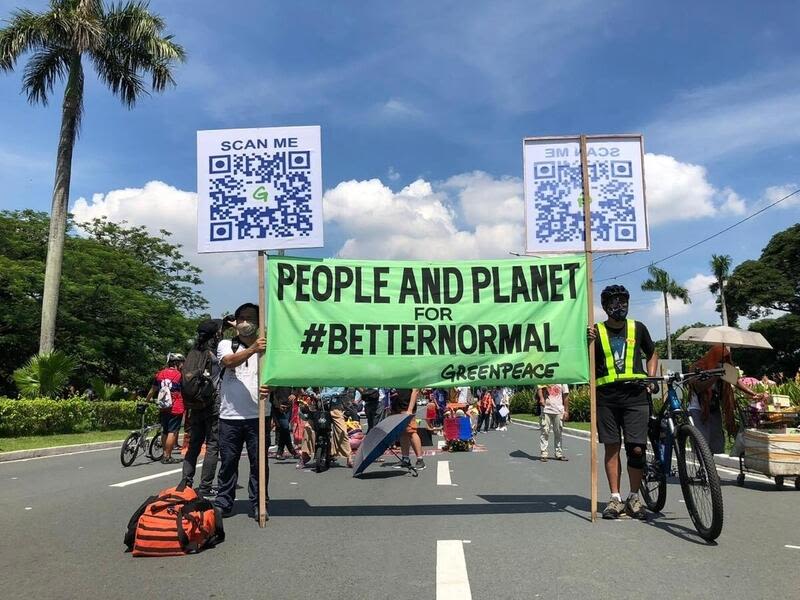
Adapting Through Crisis & Inspiring Hope
Greenpeace Southeast Asia marked our 20th year amid the onset of the COVID-19 pandemic. Forces of hope emerged as climate advocates revived the region’s pioneering spirit through marches and innovative public actions demanding systemic change and a “Better Normal.”
2021
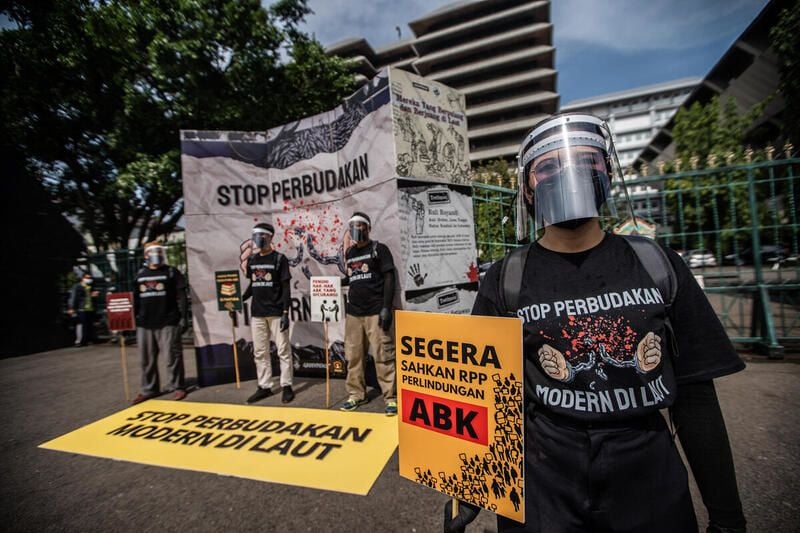
Rising Resistance, Defending Nature
Momentum grew across the region: in the Philippines, Greenpeace joined movements resisting the Pasig River Expressway; in Indonesia, the fight to end slavery at sea pushed toward the ratification of ILO Convention 188; and in Thailand, the long-running #RightToCleanAir campaign intensified, taking the government to court for failing to protect public health from toxic PM2.5 pollution.
2022
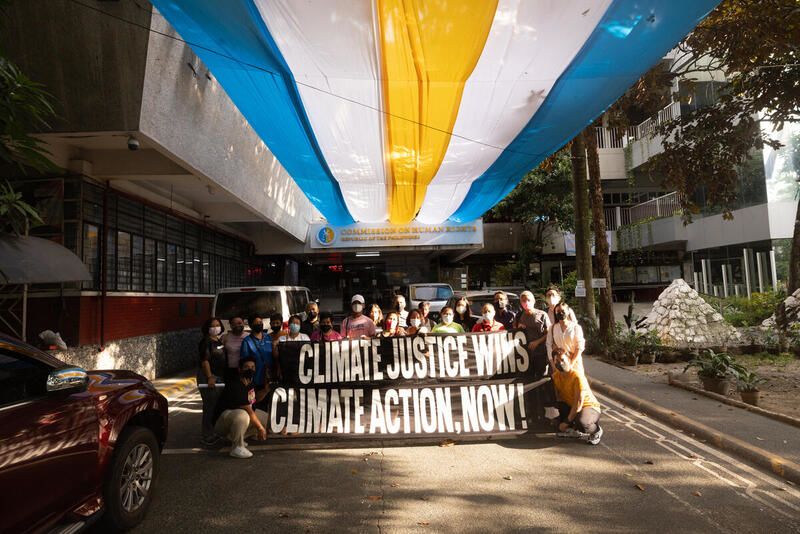
Landmark Victory in Global Climate Equity
The year marked landmark wins. In the Philippines, the National Inquiry on Climate Change concluded, holding 47 fossil fuel corporations accountable for human rights harms caused by climate change: a world-first victory for climate equity. Meanwhile, Thailand’s pressure led to the long-awaited revision of PM2.5 air quality standards to align with WHO guidelines, while Malaysia advanced public recognition of clean, haze-free air as a human right with strong backing from Parliament and SUHAKAM.
2023

Youth and Communities Lead the Way
From the forests of Papua to the streets of Jakarta, 2023 showed the power of people rising to defend their rights and the planet. In Papua, over 100 Indigenous youth gathered for the first Forest Defender Camp, equipping a new generation to protect their ancestral lands and call for stronger recognition of Indigenous rights. At the same time, Indonesia’s Supreme Court upheld Greenpeace’s third win in the Jakarta air pollution case, forcing the government to act on deadly smog.
2025

Powering Change, Together
Today, Greenpeace Southeast Asia and our allies are pushing harder than ever for clean energy, climate accountability, and Indigenous land protection. Each victory builds toward a future where justice, dignity, and a livable planet are non-negotiable.
Explore More
-

Hope in Action: 25 Years of Greenpeace Southeast Asia
It began with a spark—an act of hope in the face of crisis.
-

Hope in Action: 2024 Recap
Here’s a look back at some of the most impactful moments in 2024, captured in pictures.
-

Hope in Action: A Deep Dive into Atiqah’s Why
For Atiqah, snorkelling wasn’t just a fun leisure activity. It became a turning point. She could have walked away feeling helpless. Instead, she chose hope.