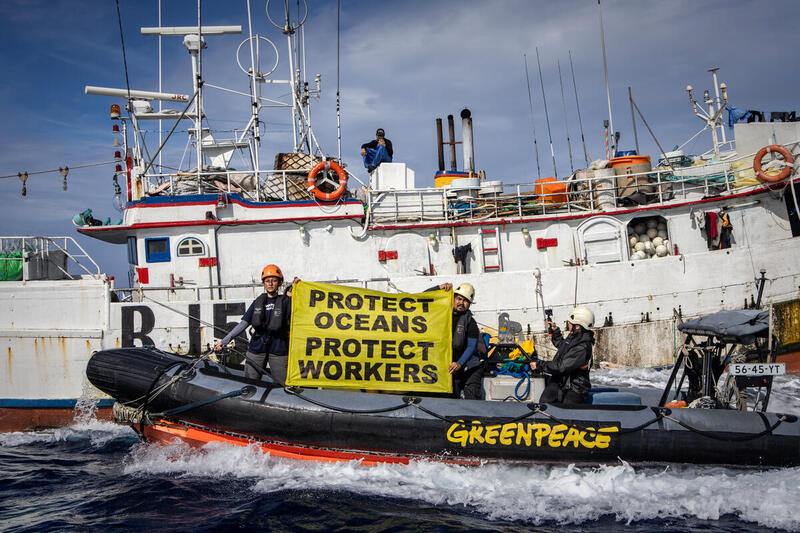
Canberra, Australia, March 3, 2026 – Twenty five (25) Indonesian fishing boat crew — onboard 17 Indonesian tuna fishing vessels and allegedly involving five Indonesian seafood companies that supply their tuna products to the Australian market — reported to have experienced forced labour. These indications were analysed in a new report by Greenpeace Southeast Asia in collaboration with Uniting Church in Australia, Synod of Victoria and Tasmania. Among the 11 International Labour Organisation’s (ILO) forced labour indicators analyzed, the crew most frequently encountered abuse of vulnerability (56%), debt bondage (56%), and deception (40%). [1]
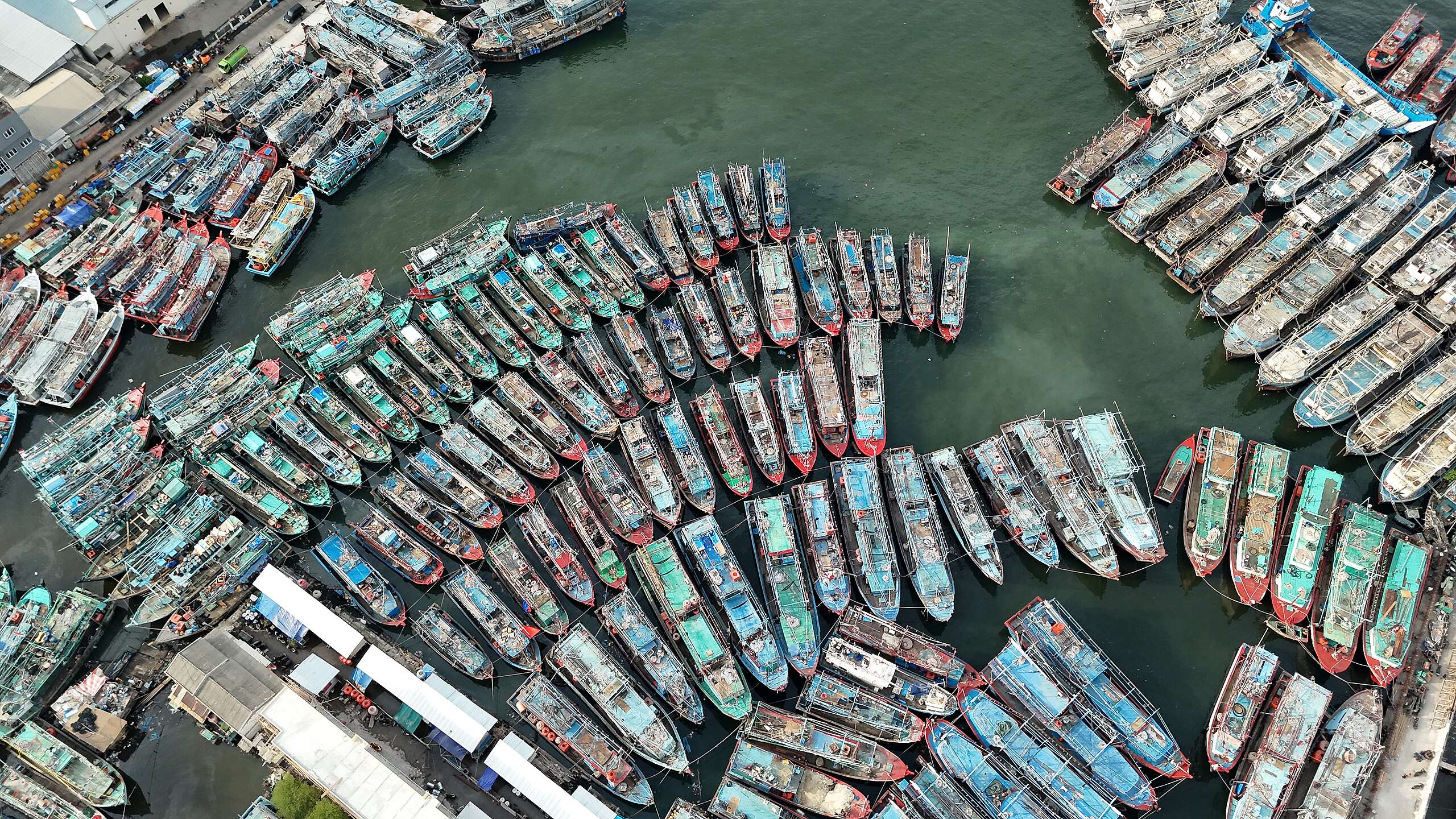
The report, “Forced to the Bottom: Squeezing Indonesian Fishers and Oceans for Dirty Tuna Profits”, looked at Fishery Improvement Project (FIP) vessel lists and found that the 17 fishing vessels suspected to supply five processing companies in Indonesia, namely PT Aneka Tuna Indonesia, PT Samudera Mandiri Sentosa, PT Sinar Pure Food International, PT Pahala Bahari Nusantara, and PT Intimas Surya. Trade analysis suggests that these companies export to 10 Australian seafood companies, including brands such as Sirena, Safcol, and JFC Australia.
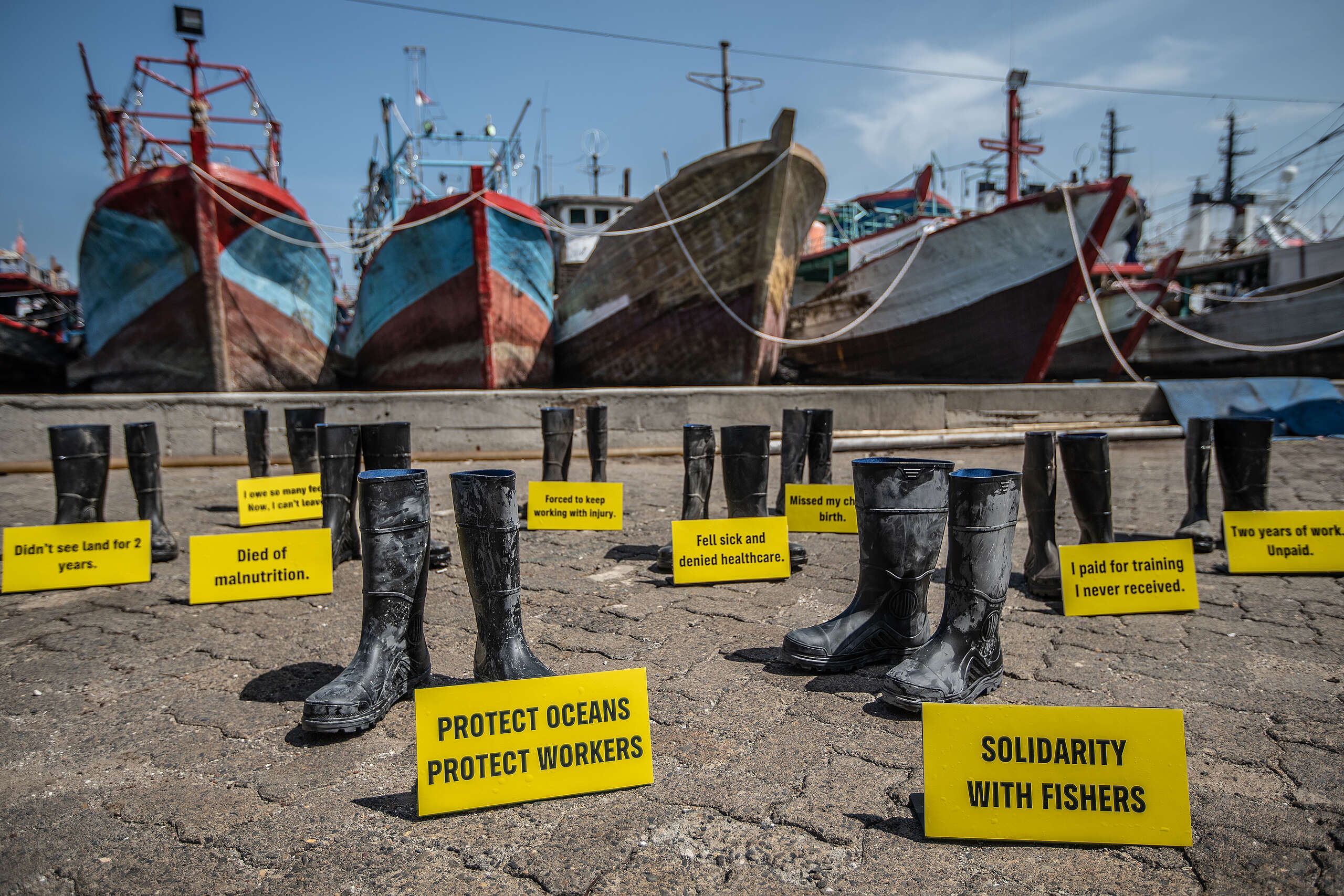
The alleged indications of forced labour were found throughout all employment stages. Based on the fishers or crew members’ testimonies, employment brokers (calo) lured them with promises of big salaries and flexible advance loans upon recruitment. But then the calo charged illegal fees and withheld the fishers’ identification documents and personal belongings, to assert their total control towards the fishers. At sea, fishers reported excessive working hours — up to 21 hours a day, often without proper rest, pay, or access to communication. Some of them were out at sea for 10–18 months without a port visit. Salary was paid at the end of each trip, with profit-sharing schemes that are unjustly designed to suppress the fishers’ income.
“The testimony of the crew on Indonesian tuna fishing boats is a clear signal that the Australian Government needs to require businesses importing goods from high-risk sectors to have to properly check that modern slavery is not being used in the production of the goods. The vast majority of Australians want to be sure the goods they are buying have not involved suffering and exploitation of the people involved in producing them,” said Mark Zirnsak, Senior Social Justice Advocate for Uniting Church in Australia, Synod of Victoria and Tasmania.
The indications of Illegal, Unreported, and Unregulated (IUU) fishing practices were also found. Companies allegedly push fishing vessels and crew to engage in banned practices, such as shark finning and deploying illegal fish aggregating devices (FADs). The link between labour abuses and environmental crimes underscores an extractive system that externalizes human and ecological costs to sustain profit margins.
Arifsyah Nasution, Senior Oceans Campaigner for Greenpeace Southeast Asia, said:
“The governments and industries across the markets and supply chains must be accountable to ensure the seafood harvested ethically and sustainably. The progressive and actionable commitments for transparency and accountability needed to tackle both IUU and the modern slavery practices in the global seafood value chains. No place for seafood sourced from unethical and unsustainable practices on consumers’ dining tables,” said.
Elle Lawless, Senior Ocean Campaigner, Greenpeace Australia Pacific, said:
“Industrial fishing abuses human rights at sea while simultaneously stripping life from our oceans, pushing marine wildlife toward collapse. Destructive industrial fishing, like longlining and bottom trawling, continues to pillage, destroy and industrialise the ocean.”
The Australian Government is on the cusp of ratifying the Global Ocean Treaty, allowing governments to create high seas ocean sanctuaries free from industrial fishing. High-quality ocean sanctuaries are good for the ocean and good for people. Governments must work together to protect the high seas, and make sure industrial fishing is not allowed within protected areas.
“Forced to the Bottom: Squeezing Indonesian Fishers and Oceans for Dirty Tuna Profits” is Greenpeace Southeast Asia’s first report that brings to light the direct link between alleged indications of forced labour and IUU fishing practices in the Indonesian fishing industry and the Australian tuna market.
The Greenpeace global network’s Beyond Seafood Campaign has called for concerted action by all stakeholders and governments along the seafood supply chain to end isolation at sea. This includes:
- Free, accessible, and secure Wi-Fi on all fishing vessels to allow fishers to have contact with their families, unions, and governments.
- Capping time at sea at three months to reduce the risk of human rights abuse, forced labor, and human trafficking.
- 100% human or electronic observer coverage to ensure vital data on catch composition, bycatch, interactions with protected species, and overall fishing practices are reported by independent and impartial parties.
ENDS
Download full report here
Photos can be accessed in the Greenpeace Media Library
Notes to Editor:
[1] ILO Forced Labour Convention, 1930 (No. 29)
Contacts:
Mark Zirnsak, Senior Social Justice Advocate, Uniting Church in Australia, Synod of Victoria and Tasmania, [email protected], +61 409 166 915
Vela Andapita, Communications Coordinator for Beyond Seafood Campaign, Greenpeace Southeast Asia, [email protected], +6281-7575-9449