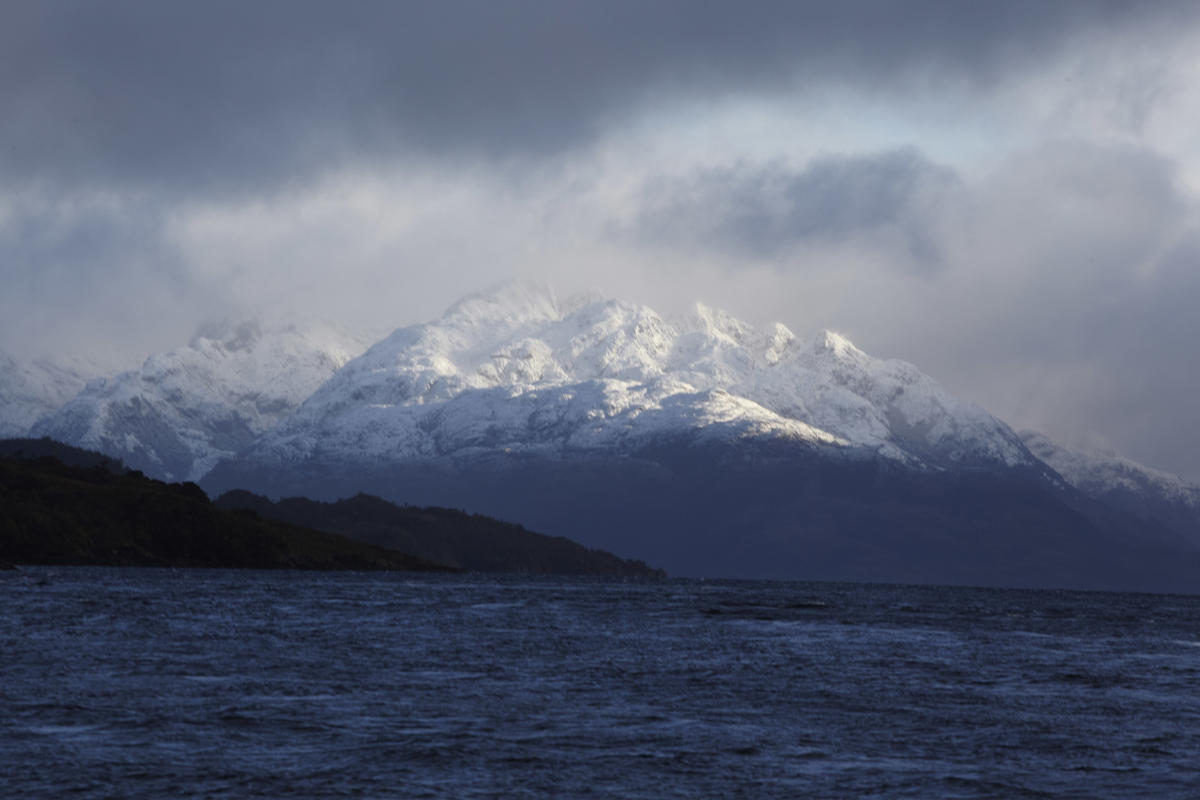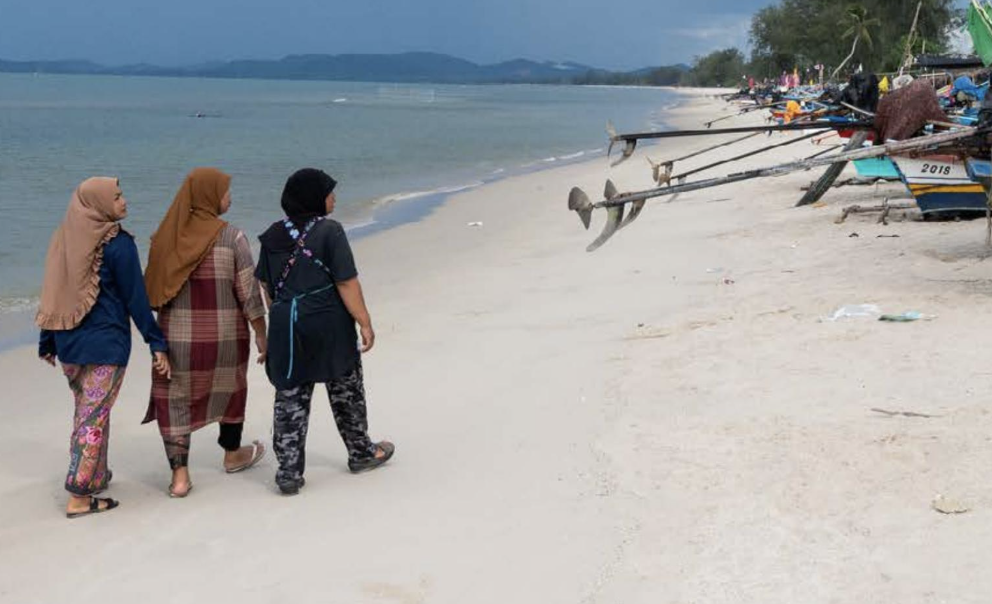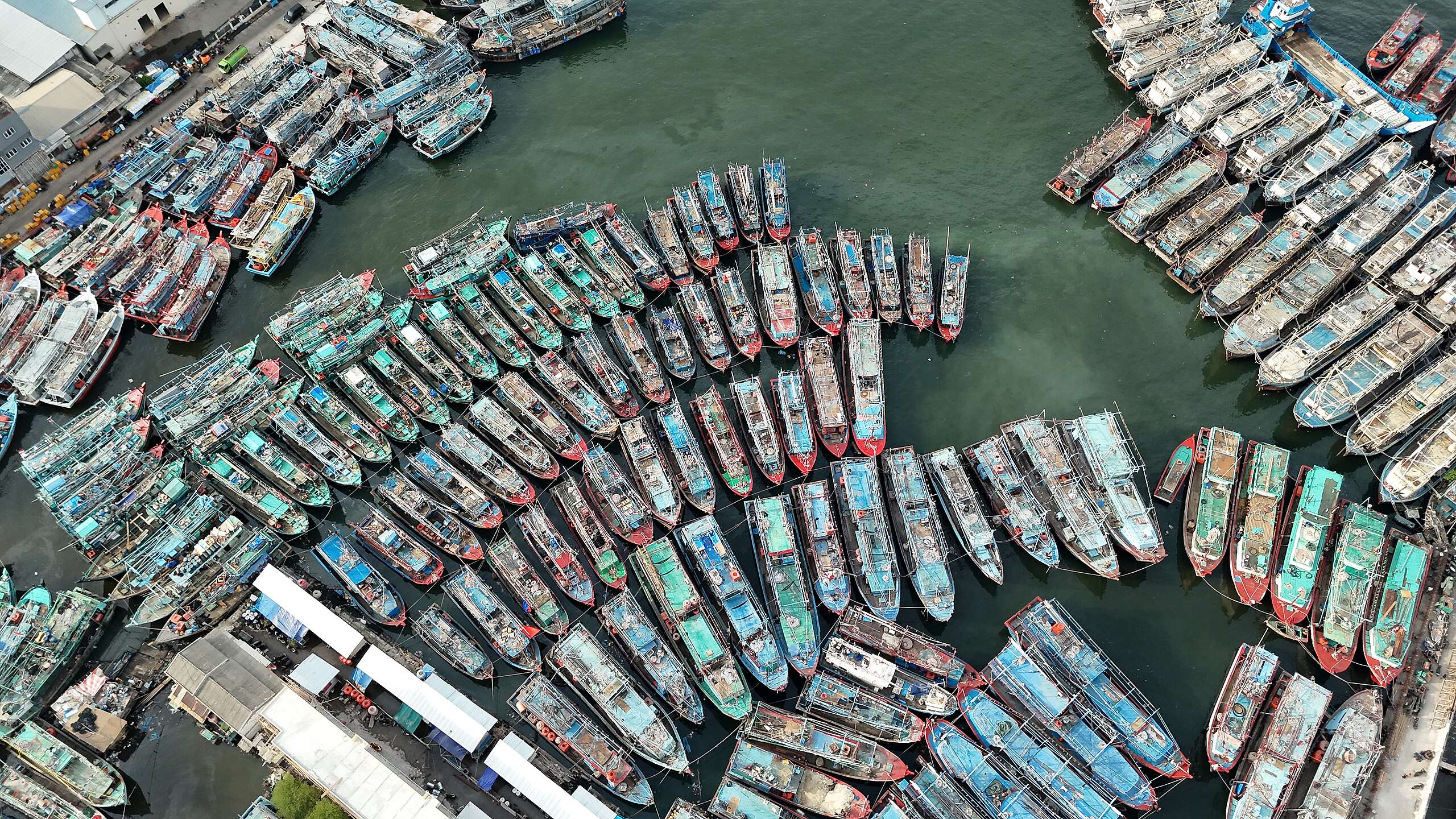
Fishing vessels are some of the most isolated workplaces on the planet. Even the astronauts on the ISS can call home or be sent back to earth if there is a medical issue. But the young men who sign contracts promising training, wages, and a certain number of months at sea may still be out in the middle of the ocean eight, twelve, or over twenty-four months later. With no contact with the world beyond the fishing vessel. With no one to know what is happening to them, no one to tell if they get sick or injured, no one to tell if they are hauling in sharks and being ordered to fin them, no one to tell if they are hauling in sharks or sea turtles, no one to tell this “bycatch” might be the only non-rotten food they get.
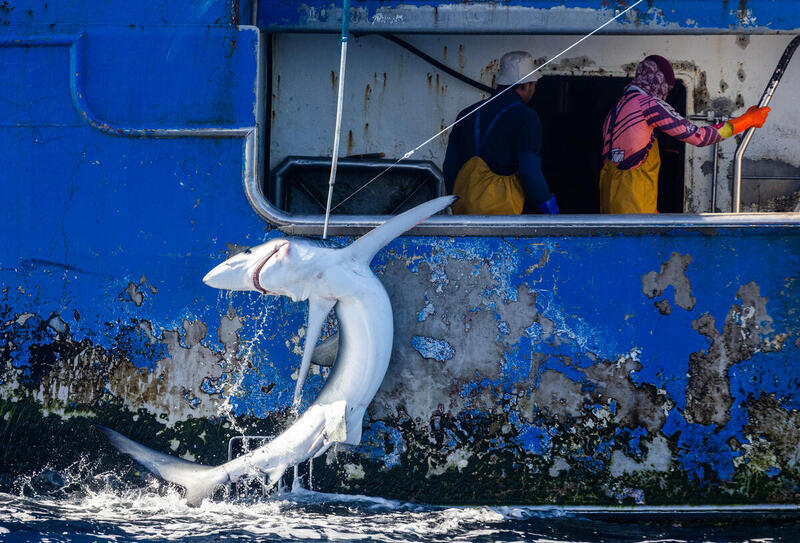
What is happening out on the high seas on many tuna vessels is often as shocking as it is unacceptable: plunder of our oceans for tuna; modern slavery at sea for workers trapped for months or years at a time; life-altering injuries or even death from preventable disease; and hook after hook with sharks, rays, sea turtles, and birds. In short, rampant exploitation of our oceans, of marine life, and of workers. All in the service of short-term profits.
We’ve all heard about Big Pharma, Big Ag, and Big Oil. Big “whatever” is a great shorthand to describe a small number of players who hold enormous power and have a huge impact not only in their own industry but our society and environment/world. And not for the better. In the over $350 billion seafood industry, it is sadly no different with Big Seafood. Here there are a number of key players across the global supply chain that set the standard not only in terms of what ends up on supermarket shelves, fish counters, pet food, or in your maki roll, but also in terms of human rights standards and environmental impact.
Isolation exacerbates the unbridled exploitation of workers, marine life, and our oceans. With the pressure to keep costs down, dwindling fish populations, and rising costs, vessel owners and captains are almost incentivised to engage in IUU and other illegal practices. End buyers, from brands like Chicken of the Sea to retailers like Costco or Walmart, benefit from these artificially low prices. While avoiding taking responsibility for their role in the twinned issues of environmental and human exploitation in the seafood supply chain, they only take in the profits.
A seafood industry that is free of modern slavery and environmental devastation is possible and necessary. Greenpeace USA, Greenpeace Southeast Asia, and Greenpeace East Asia, along with allies and workers, are calling for action. We are demanding that Big Seafood end this unfettered exploitation, that Big Seafood ends isolation at sea. This includes:
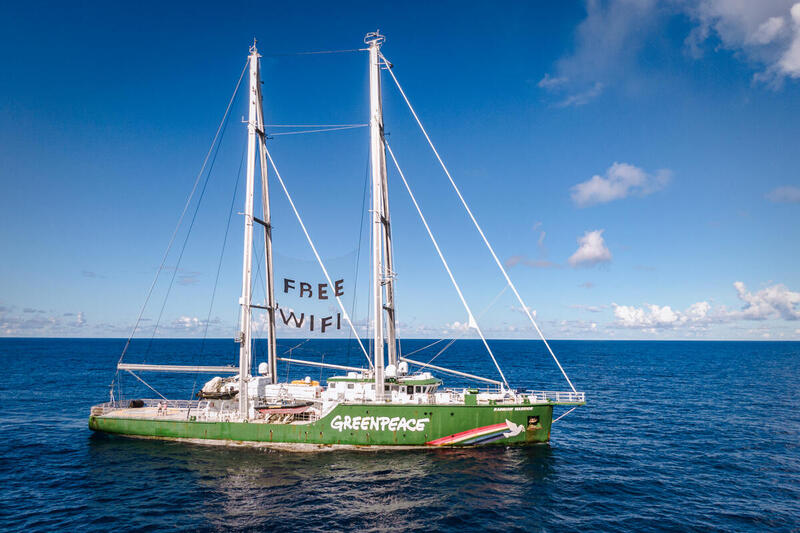
- Free, accessible, and secure Wi-Fi on all fishing vessels to allow fishers to have contact with their families, unions, and governments.
- Time at sea being capped at three months to reduce the risk of human rights abuse, forced labor, and human trafficking.
- 100% human or electronic observer coverage to ensure vital data on catch composition, bycatch, interactions with protected species, and overall fishing practices are reported by independent and impartial parties.
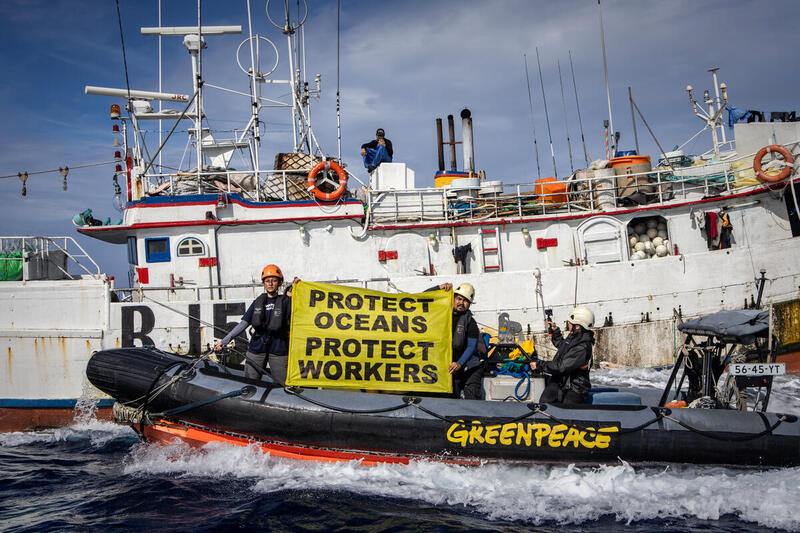
Freedom of association and access to unions for workers are key enabling rights to ensure a strong worker voice and protections across the various stages of the supply chain. It is essential to have accessible, secure, and responsive grievance mechanisms, including those available at sea. These mechanisms should allow workers to raise issues as they arise, and companies must respond promptly, providing remedies and directly addressing the root causes of the problems.
Taken together, these measures enable fishers to stay connected and to flag issues as they occur and, with the support of their unions or worker associations, seek redress or remedy as needed. Extended time at sea is only possible with the help of transshipment, the practice of moving fish from one vessel to another, which can obscure catch data and traceability. With time at sea, meaning time between port visits, at maximum three months, not only are fishers able to disembark and address any issues or needs that arose, but it also means that port inspections on the fishing hauls can be done with more accuracy with vessels not having to rely as heavily on transshipment.
For more detail on why wi-fi at sea, capped time at sea, 100% observership coverage, and freedom of association and union access are essential enabling factors to address both the human and environmental exploitation on the high seas, read the below. To take action now, sign this petition calling on Big Seafood to End Isolation at Sea Now and and watch this powerful documentary to see the stories of fishermen isolated at sea.
Three months at sea
Time at sea is a key indicator linked to an increased likelihood of forced labor conditions by the ILO. The ILO’s Towards Freedom at Sea: Handbook for the detection of forced labour in commercial fishing states that “in most contexts, 3 months between port stops can be considered a warning sign of forced labour and 6 months or more between port stops a strong warning sign.” Despite this, it is relatively common. A 2023 Oceana study found more than 2,700 fishing vessels that spent over 180 days at sea, with nearly 23% of fishing vessels covered in the report staying out at sea for over a year.
Capping time at sea, also referred to as time between port visits, is a demand from unions, like the International Transport Workers’ Federation (ITF), which represents nearly 150,000 fishers globally. Extended time between port visits is facilitated by transshipment-at-sea, the practice of moving fish stock, fuel, or even people between vessels while at sea. While some Regional Fisheries Management Organizations (RFMOs) are stepping up transhipment tracking and observer coverage, this is still largely untracked. Even data from AIS, the automatic identification system that transmits a vessel’s location, is only able to give an indication due to the not uncommon practice of vessels going dark (turning AIS off). In addition, transshipment can “obscure the origin of the catch and mask illicit practices,” making traceability more difficult. Any allowance of transshipment at sea creates risk and it should be phased out.
There are some claims that transshipment-at-sea is better for the environment as it means that the fishing vessels do not have to travel back and forth as much. However, evidence is scant. The UN Food and Agriculture Organization did comment that it “maximizes effective fishing time of fishing vessels and thus the economical performance,” which helps explain the main driver: not the environment nor worker safety, but profit maximization.
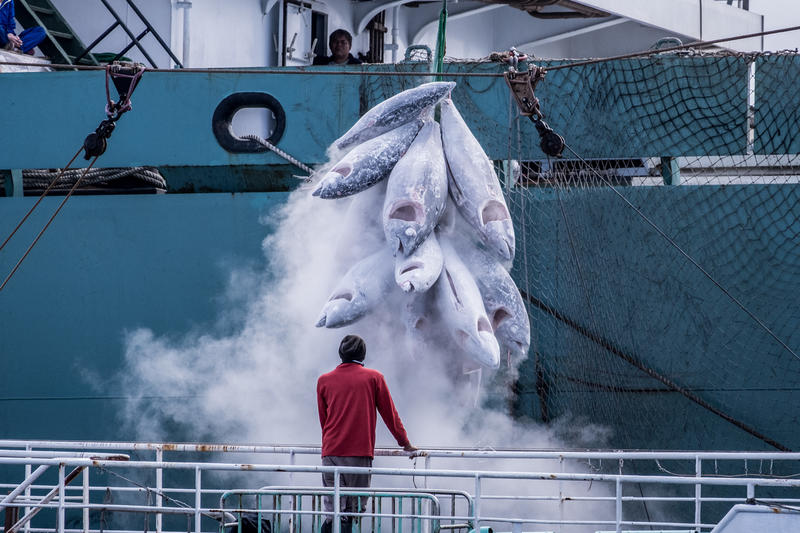
While the ILO’s Maritime Labour Convention, 2006, as amended (MLC, 2006), also known as the seafarers’ bill of rights, caps time without leave at 11 months, the MLC explicitly does not apply to fishing vessels. It is important to recognize that while many, especially larger, vessels run on shift work with clear breaks, fishing vessels run on production, or catches. This often means the fishers working excessive and irregular hours. Time-at-sea is not mentioned in the ILO’s C188 – Work in Fishing Convention, 2007 (No. 188). C-188’s omission of time-at-sea is a loophole that allows ‘compliant’ vessels to become floating prisons.
Capping time at sea to three months allows for the crew and captains to come back to port at intervals that allow for issues to more readily be addressed, or mitigated all together. This also means that port inspectors can better monitor for signs of IUU or of excessive bycatch, helping countries in their fight against IUU. With the aforementioned gaps in international treaties, the global Greenpeace network’s Beyond Seafood Campaign’s advocacy for a three month cap is a necessary fix to ensure that corporate commitments actually translate into physical freedom for the crew.
Free, accessible & secure Wi-Fi
Wi-Fi at sea is essential for fishers, and not only to be able to check in with family and friends back home during rest hours. Wi-Fi can also be a lifeline for fishers. If and when accidents or illness happen on board, fishers must have a way to contact the authorities, their unions, and their families. The current reality is that young men are dying aboard vessels, with their bodies buried at sea, sometimes from preventable disease or an untreated injury, only for their families to not know for months simply cannot continue.
Being able to connect with family also means the fishers are able to confirm that the expected payments are being received, instead of finding out only once they are back on land or even back in their home country. Wi-Fi is also a key tool in ensuring and protecting the fundamental right to a union.
“Fishers are perceived to be particularly vulnerable to deceptive and coercive employment practices for a number of reasons. Fishing vessels, especially in the long-distance fishing fleet, can stay in remote areas of the sea for several years at a time, and transship fuel, stores, crew and fish at sea. Fishers aboard these vessels will find it difficult to report abuse, injuries, and deaths and seek assistance for their own protection.” International Labour Office, 2013.
Having Wi-Fi enabled on a vessel is not enough, it must be accessible, free to use, and secure. GLJ’s Wi-Fi guidelines detail what is needed to ensure wi-fi access for fishers’ rights.
Wi-Fi can be a lifeline to those at sea, enabling them access to their unions to be able to raise any issues or concerns if there are accidents or medical emergencies. It also means being able to communicate with loved ones back home, instead of their fate being unknown while on the fishing vessel as is now often the case.
100% observership
One of the key challenges for both environmental and human protection at sea is how hidden from the world the vessels and their catches can become once leaving port. This is where the role of observer coverage comes in. Observers, whether human observers or electronic monitoring (EM), track and record catch data such as the fishing activity, catch composition, bycatch rates and species, and of transshipment activity. Transshipment-at-sea can muddle the traceability of catch (legal or otherwise), and there has been a move for some businesses to only source transshiped fish if there was an observer as well as from some RFMOs to only allow transshipment-at-sea if there is observer coverage. However, when it comes to observer coverage outside of this specific activity, the requirements for longline vessels are unhelpfully low with many large RFMOs requiring only 5%.
Due to the nature of their work and the fact that they are also isolated at sea, being a fishing observer is a very dangerous job. It is estimated that since 2009, at “least one observer has died under suspicious circumstances every year.” It is essential that human observers on board are given the highest protections, with swift and serious consequences for any issue they face. Wifi on board and cameras can provide this to some extent, but flag-states need to be ready to investigate any suspected wrongdoings as well. To learn more about fishing observers and the risks they face, we recommend this documentary: Fatal Watch.
Increasing the use of EM covers much of the research and monitoring that is done by human observers, without the associated dangers. Initiatives like the Tuna Transparency Pledge are moving industry actors to commit to 100% observer coverage on their fleets or the vessels they source from by 2027. With lower costs and more pilots being rolled out, there is progress being made in the adoption of EM in both the industry and RFMO spaces.
Having eyes on board, helps increase compliance and, with human experts, gather important scientific data. A combination of human observers and EM coverage on longline vessels is critical in gathering accurate data, informing fishing management strategies, and maintaining compliance on bycatch and fishing methods.
Unions & right of association
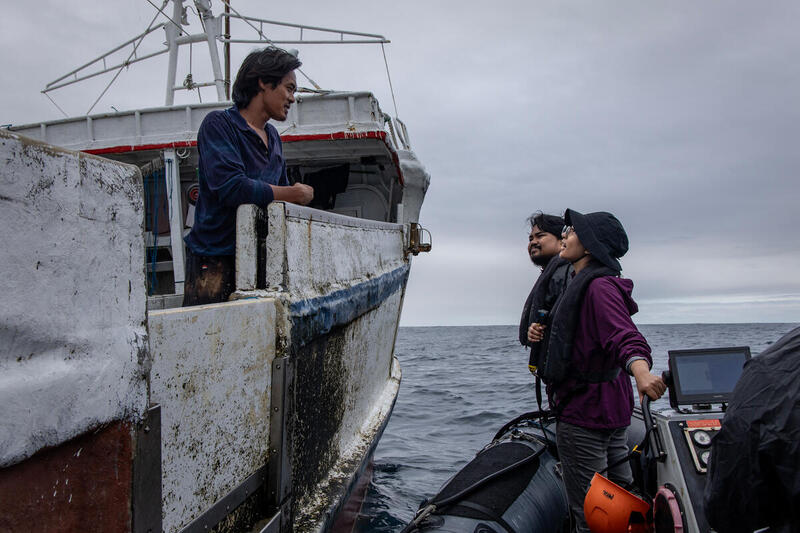
Strong worker voice across the various stages of the supply chain is key to ending isolation at sea. Protecting the right of association for workers is enshrined in international declarations, and a minimum standard that needs to be upheld. Mechanisms for workers to flag issues if and as they occur at sea, as well as grievance mechanisms that are accessible, secure, and responsive, are basic essentials. This enables workers to raise issues directly and/or with the support of their union and creates a pathway for companies to then respond to them promptly, providing remedy, and addressing the root causes directly.
The right to form and to join trade unions is enshrined in the UN’s Universal Declaration of Human Rights. The challenges in having a workplace that moves through the oceans or those unique to migrant workers does not void this right. As it is evident, these migrant workers on fishing vessels need workers’ associations and unions to protect and enforce their basic rights.
Union engagement is critical and may take different forms depending on the country and stage of the supply chain. Binding agreements with brands or retailers, or collective bargaining agreements in workplaces support longer-term and worker-forward relationships between those creating the products and the supermarkets, restaurants and pet food stores that ultimately sell them.
Oceans free of environmental devastation and modern slavery
To end isolation at sea, to make real and concrete progress towards ending modern slavery at sea and environmental devastation of our oceans, these demands must be taken together. This is a complex issue, one that spans geographies, languages, and species, and there is no single silver bullet. These demands are not done at the snap of a finger, and require multiparty engagement and investments, however, they are also doable. Just a few years ago, Wi-Fi availability was seen as technologically and politically unrealistic, this has changed on both fronts. Technology, and external pressure, have also enabled more interest in EM pilots.
There is no future in an industrial fishing industry that continues as it does now, there is simply no space in our oceans for infinite appetites/expansion. Nor should there be any space for patience from policymakers, businesses, consumers, or anyone to allow this exploitation to continue unchecked.
These measures are necessary, overdue, and within reach. Join us in calling on Big Seafood to act now to End Isolation at Sea.
Charli Fritzner is the Interim Global Lead for Greenpeace Network’s Beyond Seafood campaign