Port Louis, Mauritius — Greenpeace Africa has officially launched its Mauritius office, the Greenpeace Africa Foundation, marking a strategic expansion into the Indian Ocean region and a long-term commitment to work alongside Mauritian communities and partners to protect marine ecosystems, strengthen enforcement of environmental laws, and advance ocean justice.
The launch coincides with a pivotal moment in global ocean governance: the UN High Seas Treaty (Global Oceans Treaty / BBNJ) becomes operational this week.
Dr. Oulie Keita, Executive Director, Greenpeace Africa said:
“This day is a significant milestone. Opening an office in Mauritius represents a commitment that Greenpeace Africa is making to the Indian Ocean, to island nations, and to the millions of Africans whose livelihoods depend on healthy marine ecosystems. We are here because the ocean does not recognise borders, and neither does environmental injustice. What unfolds in island states such as Mauritius will have a lasting impact on the future of ocean protection and climate action, far beyond these shores.”
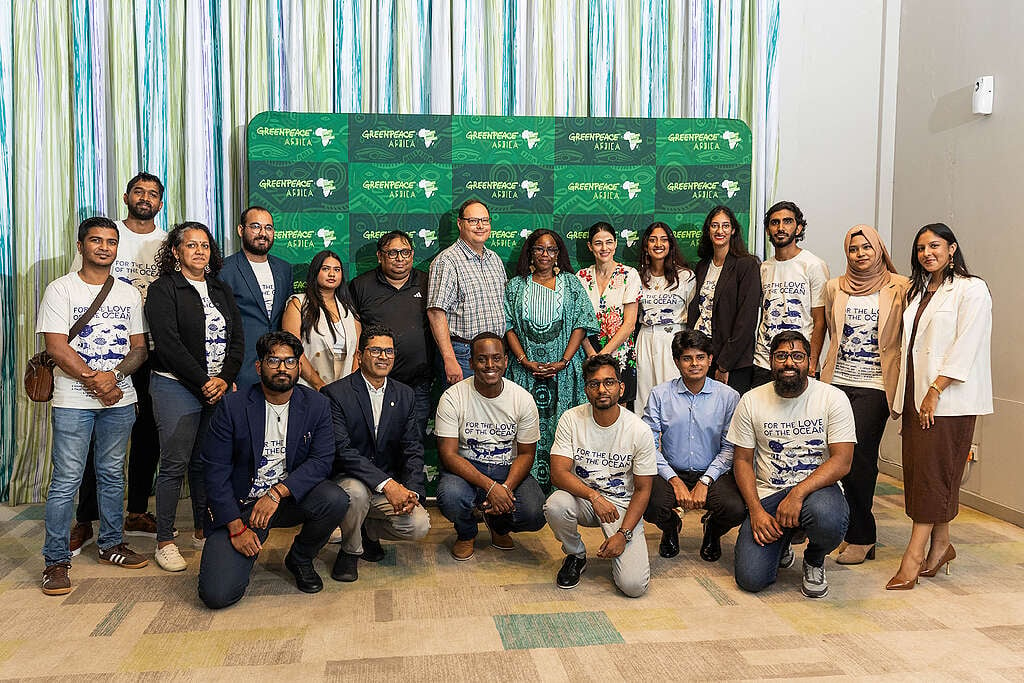
Dr Keita was speaking at the formal launch event held at Hennessy Park Hotel, Ébène. In attendance were Junior Minister of Environment, Joanna Berenger, who was accompanied by other senior government officials. Newly inducted Mauritian Greenpeace Africa volunteers were also present, as were GPAf staff and environmental partners.
The UN High Seas Treaty offers countries a legal framework to cooperate in creating and enforcing protections for biodiversity in areas beyond national jurisdiction. For Mauritius, an island nation whose economy, food security, and climate resilience depend fundamentally on ocean health, this represents a historic opportunity.
“For the first time, we have a legal mechanism to challenge deep-sea mining and hold governments accountable for what happens beyond their territorial waters. Mauritius gives us a platform to pilot Treaty implementation strategies that we can replicate across the Western Indian Ocean and beyond. What we learn here scales continentally,” said Dr. Aliou Ba, Oceans Campaign Lead, Greenpeace Africa’s Programmes Director.
“The Government of Mauritius welcomes partnerships that strengthen our capacity to protect our marine heritage and advance a resilient Blue Economy. The operationalisation of the Global Oceans Treaty represents a significant opportunity for Mauritius to exercise leadership in regional ocean governance. We are committed to ensuring that international commitments translate into practical protections that benefit Mauritian communities and ecosystems for generations to come,” said Joanna Berenger, Junior Minister for Environment, Mauritius, in her keynote speech.
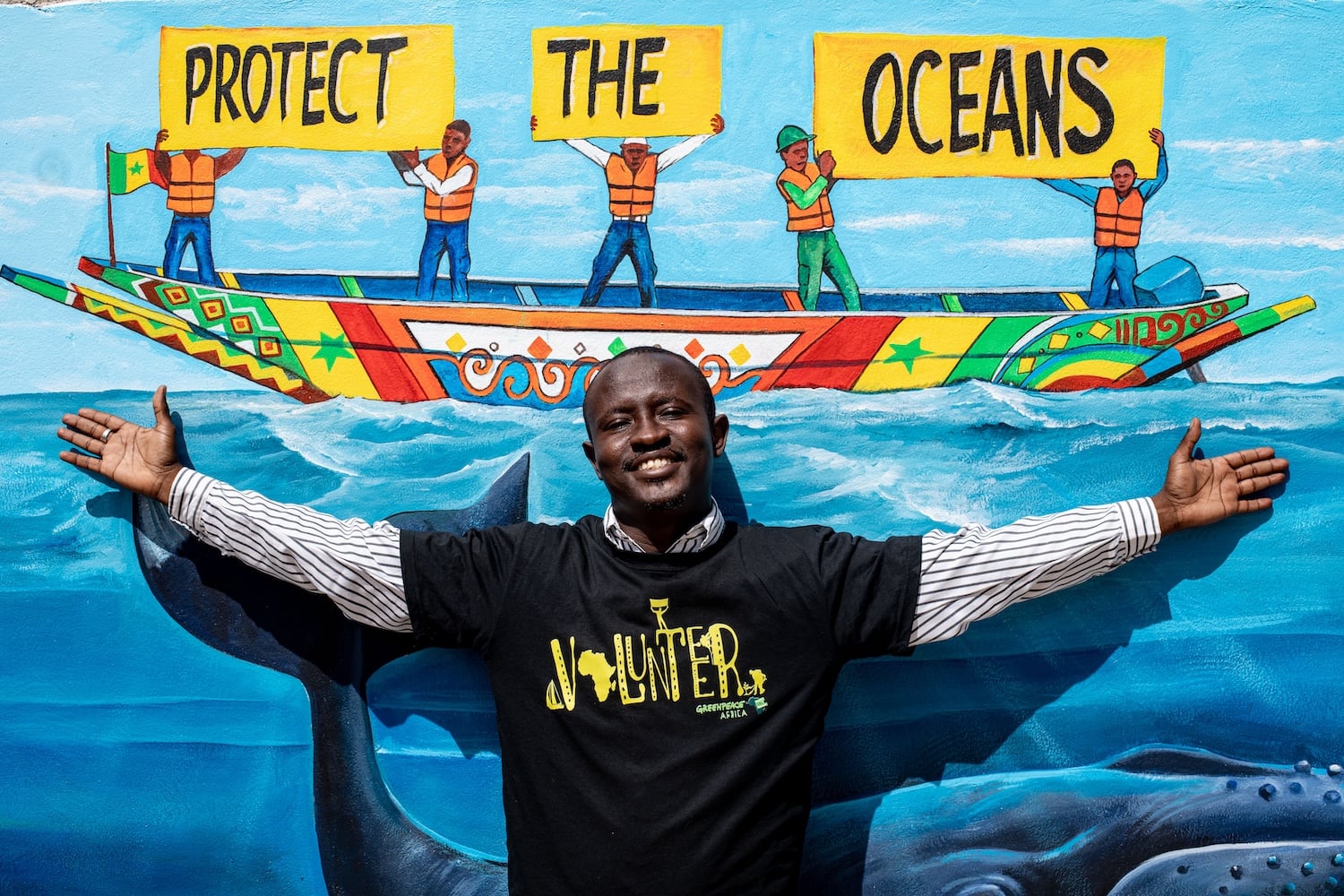
The launch event included a formal ceremony and a public cultural activation at the Port Louis Waterfront, where renowned Mauritian mural artist Daphne Doomun unveiled an artwork designed to mobilise public support for marine sanctuaries.
“Art tells stories that statistics can’t. This mural is my love letter to the ocean that feeds us, cools us, and connects us. It’s also a warning: we’re losing it, and we need to fight back, ” reflected Daphne.
Nearly a quarter of Mauritius’s GDP depends on healthy oceans. Yet marine ecosystems face escalating threats: plastic pollution, warming waters, illegal fishing, and the looming spectre of deep-sea mining. The Global Oceans Treaty provides a new legal pathway to protect ecologically significant areas on the high seas, including the Saya de Malha Bank on the Mascarene Plateau, home to the world’s largest seagrass meadow and a critical carbon sink.
Shumirai Zizhou, Responsive Campaigner, Greenpeace Africa, said;
“The gap between policy and reality is where environmental destruction thrives. Mauritius has excellent laws on paper. Our job is to make sure they’re enforced in practice – and that the corporations profiting from pollution finally pay the price. We’re going to name names if necessary”.
The Mauritius office will serve as Greenpeace Africa’s Indian Ocean hub, working in partnership with the government and local civil society to enforce environmental laws, advocate for Marine Protected Areas, and hold extractive and polluting corporations accountable.
Media Contact:
Marie-Noelle Elissac-Foy, Consultant Press Attache, Email: [email protected],
Phone/Whatsapp: +230 57196702
Ferdinand Omondi, Communication and Storytelling Lead, East and Southern Africa, Email: [email protected], Phone/Whatsapp: +254 722 505 233
Greenpeace Africa Pressdesk: [email protected]
Notes to Editors
- Greenpeace Africa is an independent, African-led environmental organisation headquartered in Johannesburg, South Africa. The organisation campaigns on oceans, climate, forests, and environmental justice across the continent.
- Adopted in 2023 under the UN Convention on the Law of the Sea (UNCLOS), The UN High Seas Treaty (formally known as the Agreement on the Conservation and Sustainable Use of Marine Biological Diversity of Areas Beyond National Jurisdiction, or BBNJ) is a legally binding international agreement that enables countries to cooperate in establishing Marine Protected Areas, environmental impact assessments, and international cooperation in the high seas (waters beyond national jurisdiction). The treaty enters into force on 17 January 2026 and underpins the global goal of protecting 30% of the ocean by 2030.
- Extended Producer Responsibility (EPR) is a policy framework that makes producers responsible for managing their products at end-of-life, including collection, recycling, and disposal costs, incentivising companies to reduce packaging waste and shift to reusable systems.
- The Saya de Malha Bank is a submerged plateau on the Mascarene Ridge in the Indian Ocean, located between Mauritius and Seychelles. It contains the world’s largest seagrass meadow, spanning approximately 40,000 square kilometres, and serves as a critical habitat for marine biodiversity and a significant carbon sink.