From farms and rural communities across Africa to the United Nations General Assembly (UNGA), women farmers are calling for food and climate policies built on rights, ecological resilience, and their lived realities.
African women are growing food under increasingly difficult conditions. Rainfall patterns are becoming less predictable. Droughts and floods are intensifying. Agricultural land is degrading, the cost of inputs is rising, and corporate influence over seeds and food systems is expanding. In the face of this they are not giving up, they are fighting back – restoring soils, conserving crop diversity, managing water and preserving agricultural knowledge that strengthens climate resilience.
The United Nations designated 2026 as the International Year of the Woman Farmer to draw attention to the contribution women make across agri-food systems and to the inequalities that continue to limit their work. It presents an opportunity to move the discussion beyond recognition and towards the policies, resources and rights that women farmers have consistently demanded. Despite their central role in food production, they remain underrepresented in decisions concerning land, seeds, finance, climate investment, restricting their productivity, income and ability to recover from failed harvests.
This is the message Greenpeace Africa Executive Director Dr. Oulie Keita is taking to the UNGA – women farmers’ experience must inform how governments approach food security, climate adaptation and agricultural development. They are fed up with being left out of the global conversation.
Women’s contribution and the cost of inequality
Women account for approximately half of the agri-food systems workforce in sub-Saharan Africa, yet unequal access to land, finance, technology and decision-making increases their vulnerability to climate shocks. The consequences of this inequality are measurable. FAO’s 2024 report, “The Unjust Climate: Measuring the impacts of climate change on rural poor, women and youth”, analysed twenty four low- and middle-income countries, thirteen of them in Africa, and found that female-headed rural households lose, on average, eight percent more income during periods of heat stress and three percent more during floods than male-headed households. Across the countries analysed, these additional losses amount to tens of billions of dollars every year. Yet climate policy has been slow to respond. Of 4,164 climate actions analysed by FAO across national climate plans, only six percent referred to women.
Diane Sibanda, a farmer from Botswana and Chairperson of the Eastern and Southern Africa Small Scale Farmers Forum, argues that women must help shape the policies affecting them.
“Women farmers are responding to climate change every season. Yet resilience cannot depend on women continuing to carry greater responsibilities with fewer resources. Governments must invest in the solutions small scale farmers have developed and include women farmers in the decisions that shape agriculture” said Diane.
Diane’s message challenges a persistent weakness in global food debates. Small scale farmers are frequently described as vulnerable beneficiaries, but rarely treated as experts capable of shaping policy. This makes this year’s UNGA theme “Restoring Trust, Managing Transformation: A United Nations That Delivers for All” especially poignant. Trust has been eroded by the exclusion of African women’s stories and expertise from these very debates. Fulfilling the UN’s promise to deliver for all means recognizing women farmers as the experts they are, not just as beneficiaries.
Resilience begins with control over resources
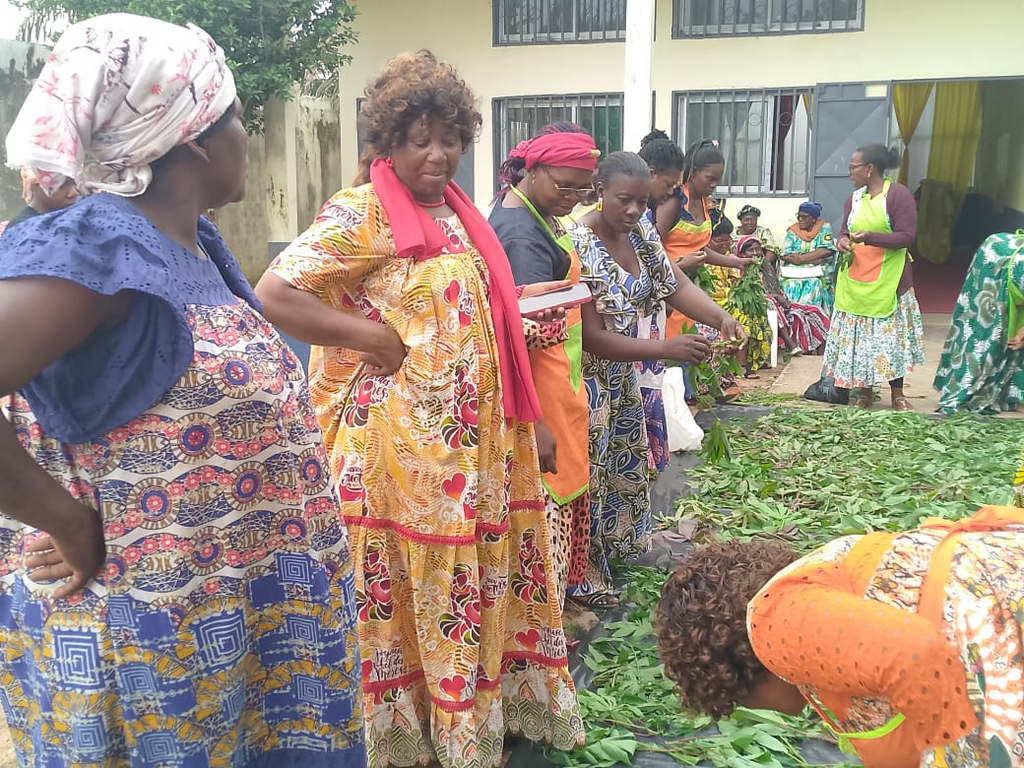
In Cameroon, Réseau des Acteurs du Développement Durable (RADD), has demonstrated the value of organising and investing in rural women. RADD has trained more than 5,000 rural women to process and add value to farm produce, helping them reduce post harvest losses, increase incomes and strengthen their access to markets.
“Women know how to produce food and how to adapt their farming practices. What continues to hold them back is unequal access to land, water, finance and public support. Policies must give women long-term security over the resources they use and a genuine role in deciding how agricultural investment is directed.” said Marie Crescence NGOBO, Executive Secretary of Réseau des Acteurs pour le Développement Durable (RADD)
This is an essential point for governments gathering at UNGA. Farmers are less able to invest in soil restoration, agroforestry, water harvesting or other long-term practices when their access to land can be withdrawn. Secure tenure therefore affects women’s economic position as well as the viability of climate adaptation measures.
Farmers’ seeds and climate adaptation
In Kenya, the relationship between farmers’ rights, agricultural biodiversity and climate resilience became the subject of a landmark constitutional case. Fifteen smallholder farmers supported by Greenpeace Africa challenged provisions of the Seed and Plant Varieties Act restricting the saving, sharing and sale of unregistered seeds. In November 2025, the High Court declared the provisions unconstitutional, finding that commercial plant breeders had received extensive rights without corresponding protection for farmers.
Beatrice Wangui, one of the nine women petitioners, stood alongside other farmers to defend practices that have sustained farming communities for generations.
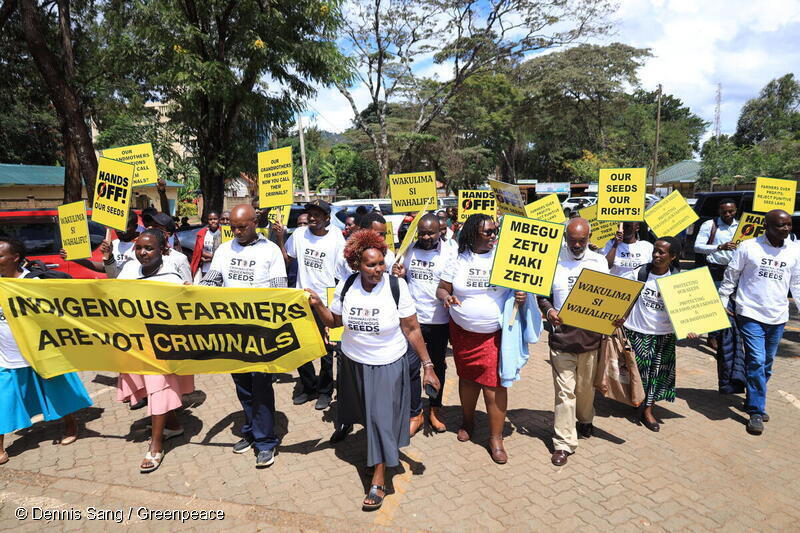
“When I save a seed, I know how it performed, the soil in which it grew and whether it survived a difficult season. That knowledge helps me decide what to plant again. The right to save and share seeds allows farmers to continue selecting varieties suited to their land, climate and food needs” said, Beatrice
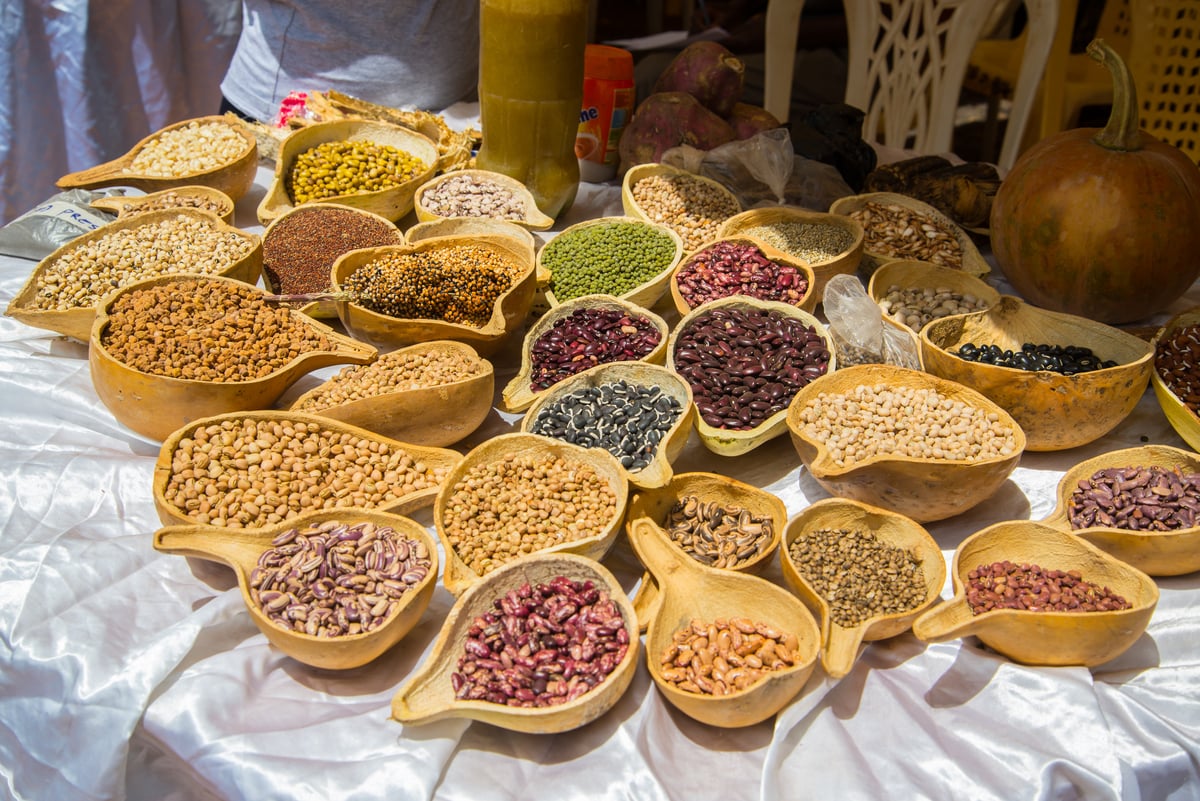
Locally adapted seeds can carry traits linked to drought tolerance, pest resistance and performance under particular soils and microclimates. Policies that favour patented commercial varieties at the expense of this diversity can weaken farmers’ capacity to adapt. Protecting the right to save, use, exchange and sell their seeds must therefore form part of climate adaptation and biodiversity policy.
Agroecology in practice
Although these women farm in different ecological and political contexts, their experiences point towards a common priority: agricultural systems that strengthen farmers’ control over production while restoring the natural resources on which farming depends. Agroecology brings these objectives together. It applies ecological principles to food production through practices such as crop diversification, soil restoration, water conservation, biological pest management and the use of locally adapted seeds. These practices improve the capacity of farms to withstand climatic shocks while reducing farmers’ dependence on expensive external inputs.
This shift is urgent. A 2026 global assessment published in Frontiers in Public Health estimated that 46 percent of farmers and farmworkers experience acute pesticide poisoning each year, with East Africa among the most affected regions. Agricultural policy must support a transition away from highly hazardous pesticides by investing in farmer-led agroecology, guided by women’s knowledge of local crops, soils, seeds and seasons.
What world leaders must hear from African women farmers
As Dr. Oulie Keita, Greenpeace Africa’s Executive Director joins leaders and civil society voices at UNGA, she will carry messages shaped by the daily experiences of women farmers across the continent.
“African women farmers are managing the frontline effects of climate change while sustaining much of the continent’s food production. Their knowledge of soils, water, crop diversity and locally adapted seeds is essential to building resilient food systems, yet it remains undervalued in policy and investment decisions. At UNGA, I will carry a clear message from these women: climate adaptation and food security strategies must secure their rights to land and productive resources, protect farmer managed seed systems and direct sustained investment towards women led agroecology. These are practical, evidence based measures for strengthening Africa’s capacity to feed itself under a changing climate” said Dr. Oulie Keita
The International Year of the Woman Farmer should encourage governments to examine whether their policies and budgets reflect the scale of women’s contribution to agriculture. References to women within political declarations will have little effect if national programmes continue to overlook land rights, seed sovereignty, climate finance and participation in decision – making. Governments should reflect women’s priorities in national adaptation plans, climate finance and agricultural investment. Women farmers already hold knowledge that Africa needs as it confronts climate change, biodiversity loss and growing food insecurity. The question before leaders at UNGA is whether they are prepared to listen, act and place real power and resources behind the solutions growing from Africa’s soil.
Trust isn’t restored with statements, it’s restored with action.