

After four years without any annual meetings, the CECAF (Fishery Committee for the Eastern Central Atlantic) got together. Millions of people depend on fish resources in the region and the common wealth that lies in our ocean ecosystems is being steadily depleted. That shows the urgent need for countries to finally sit together to discuss how to ensure that a regional management framework is put in place.
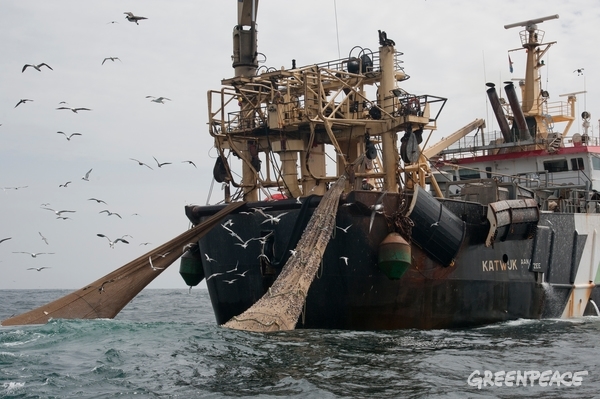
Member countries had four years to come prepared with concrete proposals to try to promote a stronger CECAF. But we haven’t seen any of that. For almost 20 years CECAF has been discussing how to improve its performance. It is not just slow, it is stalled.
Many delegations acknowledged the problems: poor status of the stocks; insufficient resources and funding; lack of attendance to meetings; no implementation of the recommendations…All of it is very well known. An official review of CECAF’s performance had already highlighted these issues. But we have left the meeting without having seen a clear path towards solutions, including in relation to two of the more pressing issues for Greenpeace Africa:
– putting in place measures to manage stocks that are shared among two or more countries and;
– assessing the implementation of CECAF recommendations by CECAF members, in order to push countries to abide by them.
We were concerned by indications that the amount of fish in the region going to fishmeal factories is increasing, potentially impacting access for millions of West Africans to one of the cheapest sources of protein.
Some good news though.
All CECAF subcommittees will conduct scientific studies in the coming months, hopefully helping update existing knowledge about fisheries in the region.
Gambia joined the 25 nations who ratified the Port State Measures Agreement (PSMA). The PSMA is an international treaty adopted by the U.N. Food and Agriculture Organization in 2009. It strengthens and harmonizes stronger port controls to prevent illegally caught fish from entering the global market.
Greenpeace recommendations have been made public and reported by the press (see here articles from AllAfrica, Mauriweb, Cridem, Afrique Presse and RTS1) and on TV/Radio (African Television News, West Africa Democracy Radio and SUD FM). The debate is now open.