This report highlights the growing reliance on Highly Hazardous Pesticides (HHPs) across the continent, particularly in Kenya, Ghana, and South Africa. While these chemicals are often marketed as essential for boosting crop yields, the report argues they are actually “poisoning the foundations of our food systems” by destroying soil health and killing critical pollinators like bees. In these countries, nearly half of all registered pesticides are classified as HHPs, many of which are already banned in the European Union due to their proven risks to human health and the environment.
Evidence from the three case-study countries reveals that HHPs are pervasive in water, soil, and food products. In Kenya, for example, study findings show that 60% of soil samples contained pesticide residues, with many concentrations high enough to harm soil life. Similarly, in Ghana and South Africa, research has detected toxic “cocktails” of multiple pesticides in waterways, which can lead to secondary problems like increased mosquito resistance to malaria control and the fueling of diseases like Bilharzia by killing natural snail predators. The report emphasizes that these chemicals do not stay where they are sprayed; they drift through the air and wash into rivers, even contaminating protected wildlife areas like the Maasai Mara.
To secure Africa’s future, the report recommends a transition toward agroecology: farming practices that work with nature rather than against it. Key recommendations include establishing national phase-out timelines for HHPs, strengthening enforcement of existing bans, and increasing regional coordination. It also calls for better investment in research and monitoring systems for soil health and pesticide residues, alongside providing farmers with training and access to organic inputs. Ultimately, the report concludes that phasing out these toxic chemicals is a fundamental fight for the continent’s health, justice, and long-term food security.
REPORT
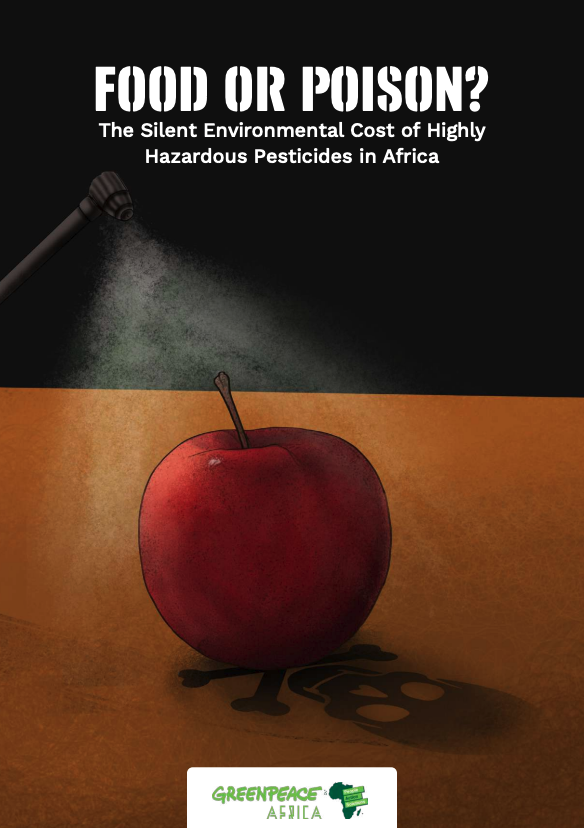
FOOD OR POISON?
The Silent Environmental Cost of Highly Hazardous Pesticides in Africa