Demanding Halt to NT$11 Billion Annual Deficit from New Naphtha Cracker
TAIPEI, Jan. 27, 2026 — Greenpeace today staged a protest outside the headquarters of CPC Corp, Taiwan – a public -owned company. Greenpeace highlighted that despite five consecutive years of deficit and prolonged financial strain, CPC continues to push the “New Fourth Naphtha Cracker” expansion—a project Greenpeace estimates will hemorrhage an additional NT$11 billion annually. Greenpeace called on the CPC to halt this “money pit” expansion, reassess its flawed petrochemical strategy, and draft a transition roadmap to end its reliance on taxpayer-funded bailouts. The “New Fourth Naphtha Cracker” project is primarily intended for petrochemical feedstock production and has been positioned by CPC as part of its equipment renewal and capacity adjustment program. However, Taiwan’s petrochemical sector is already facing oversupply. Using market-based pricing to evaluate CPC’s financial projections, Greenpeace estimated that the project would generate annual losses exceeding NT$11 billion starting in 2030 (see Table 1).
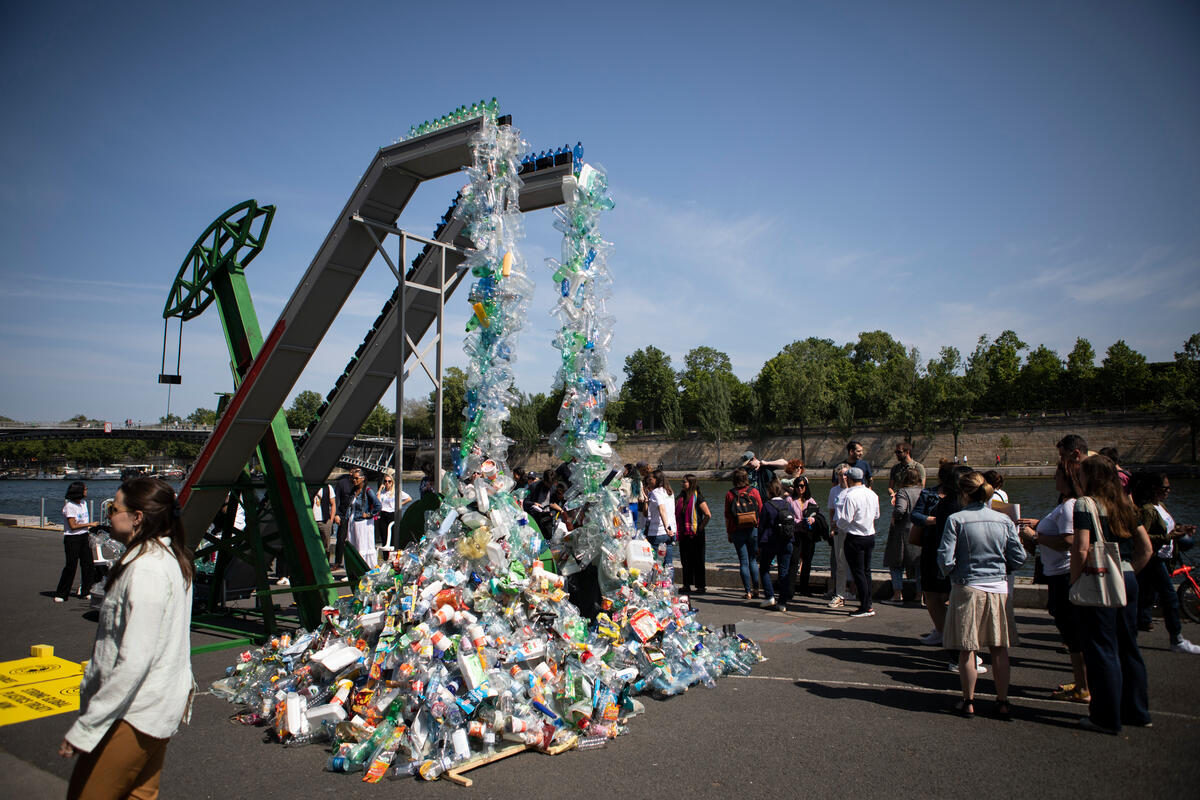
To draw attention to what it called the project’s financial risks, Greenpeace set up a large installation outside CPC headquarters, featuring a mock petrochemical plant and a “taxpayer money pit”, symbolizing the burning of public funds. The activists also brought a homemade mascot, “CPC Dog” to interact with the public, inviting them to toss fake NT$1,000 bills into the pit. Banners at the site read: “Cheers to Annual Loss NTD 10,000,000,000 — hand over the red envelope, mocking the company’s decision to double down on a failing venture.
Greenpeace said the protest was held at CPC headquarters to directly challenge company management and demand that the project be stopped. Citing CPC’s publicly available financial information, Greenpeace said CPC had accumulated losses of about NT$9.3 billion as of November last year (2025), while the previous year recorded losses as high as NT$34 billion, with public subsidies needed to cover the deficit.
Chang Kai Ting (Cony Chang) at Greenpeace East Asia Taipei’s plastics project lead, said CPC’s financial performance reflects structural problems rather than temporary fluctuations.
“CPC’s losses are not a short-term fluctuation— it’s structural,” Chang said. “Pushing forward with the New Fourth Naphtha Cracker project in this context risks creating a financial sinkhole: losses yesterday, losses today, and losses the future.”
Greenpeace said it met with CPC representatives on Jan. 16, during which CPC stated that projected selling prices for products associated with the project were estimated at 1.7 times prevailing market prices, based on expectations that raw material costs would rise, rather than on current market conditions. Greenpeace criticized this as a “financial illusion,” noting that a unilateral 70% price hike ignores the actual absorption capacity of Taiwan’s downstream industries and will likely widen the annual deficit to over NT$10 billion.
Greenpeace warned that proceeding with the project despite clear financial risks is an irrational business judgment. Such a move undermines CPC’s corporate governance, threatens the long-term security of frontline workers and public resources, and has escalated into a major social crisis regarding the governance of state-owned enterprises.
Note 1: According to CPC’s feasibility study report, CPC projects that the average ethylene selling price over the 15 years following the start of operations will be NT$51,000 per tonne.
Note 2: Greenpeace’s estimate is based on CPC’s average domestic ethylene selling price over the past 10 years (NT$29,000 per tonne). This estimate includes ethylene only and does not account for products other than ethylene.
-1.jpg)