| COP30 was meant to deliver for the global south. Instead, blurred finance pathways, vague commitments and delayed adaptation finance targets failed to match the urgency on the ground, leaving MENA countries exposed to worsening climate extremes. |
COP30 in Belém was less about grand new promises and more about testing whether the system can finally deliver for frontline countries, especially for the MENA region. From finance to adaptation, COP30 saw a bumpy process and a complicated outcome overshadowed by voluntary presidency initiatives that do not provide clarity on how they would be embedded into the actual UNFCCC process.
On finance, the headline outcome was the Belém Package and its companion Global Mutirão decision (Mutirão is a Brazilian Portuguese term referring to collective effort). These two sketch a roadmap to mobilise around USD 1.3 trillion a year in climate finance for developing countries by 2035, building on the New Collective Quantified Goal agreed in Baku last year. However, this is a compromised timeline. A core part of this outcome package was text explicitly stating “call for efforts” to at least triple adaptation finance by 2035 compared to 2025 levels.
While this is clearly weak language, it does send an important political signal that the historically mitigation-centric focus of climate finance is starting, at least rhetorically, to move toward a more balanced approach that includes adaptation. However, the package still falls far short of what vulnerable countries and civil society have been calling for. Rather than a binding commitment to triple adaptation finance by 2030, building on the 2025 adaptation finance target of USD 40 billion, Parties only agreed to a voluntary roadmap to reach a tripling by 2035, and from an even weaker baseline. This combination of a diluted starting point and a delayed 2035 horizon means that many frontline communities will not receive urgently needed adaptation support in time, increasing the risk of irreversible climate impacts and escalating loss and damage.
For Arab countries, this matters enormously. The MENA region is already living 1.5°C through lethal heatwaves, water stress and food system shocks. Tripling adaptation finance sounds big, but spread to 2035 and with no hard burden-sharing formula, it risks arriving too slowly for countries like Sudan, Yemen, Syria and Iraq. Civil society across Africa and the Middle East has already warned that delayed timelines, vague grant-to-loan ratios and weak access provisions could “triple the trouble” rather than closing the gap.
COP30 served as the first major checkpoint for countries’ Nationally Determined Contribution submissions (NDC 3.0) – the third generation of climate pledges due in 2025 under the Paris Agreement’s five-year cycle. By the close of Belém, at least eight Arab states had submitted their third-generation NDCs: the UAE (as early as 2024), Morocco, Jordan, Lebanon, Iraq, Yemen, Qatar and Bahrain. Most of these NDCs extend targets to 2035, expand sector coverage (e.g. Industrial Processes, transport, cooling, oil and gas), and introduce more detailed governance and transparency systems. But a common thread runs through them: ambition is heavily conditional on finance and technology transfer. Without real delivery on the new finance goal, countries with limited fiscal space and resources, much of their mitigation and adaptation listed on paper will stay aspirational.
Furthermore, several countries that urgently need to finalize their NDCs to secure support and build synergies are still developing them, as timelines continue to slip.
Adaptation politics also shifted. COP30 formally advanced the Baku Adaptation Roadmap (BAR), setting out work for 2026–2028 to operationalise the Global Goal on Adaptation (GGA) – including indicators, data and support arrangements. However, it also saw significant compromise in the indicators in the GGA decision, especially on indicators tied to means of implementation (a total of 59 voluntary indicators, predominately focused on vulnerability and resilience rather than implementation), which are crucial to measure how much change is actually happening for sectors to become more resilient, and for assessing the scale and use of finance for adaptation. These indicators are intended to inform national approaches to track adaptation action and that these would not create new obligations on developing country parties.
For the MENA region, key discussions around conflict, climate security, agriculture and adaptation are moving too slowly, leaving countries without support or incentives needed to raise their climate ambition. Urgent, targeted action is essential if the region is to meet the escalating climate challenges it already faces, and it is this hope that must carry forward to COP31 in Antalya next year.
For the Arab region, the time is now for regional leadership and progressing a shared regional vision for climate action and adaptation. More now than ever before, we cannot solely depend on the UNFCCC process to get, for example, adaptation support. There is an urgent need to have parallel processes that fasttrack adaptation efforts and finance regionally and nationally, especially in the Arab region. In addition to that, further efforts need to be made to mobilize and raise funds regionally from philanthropic and potential governmental pathways that are yet to be explored to enhance climate action.
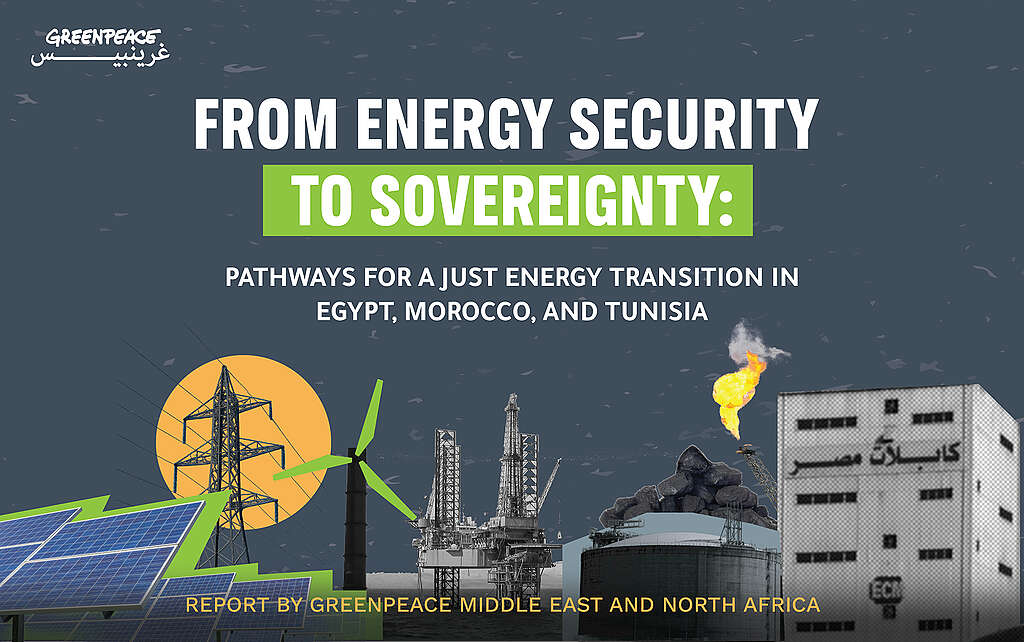
Without reform, North Africa’s energy transition may favor investors over communities
Read The Report