
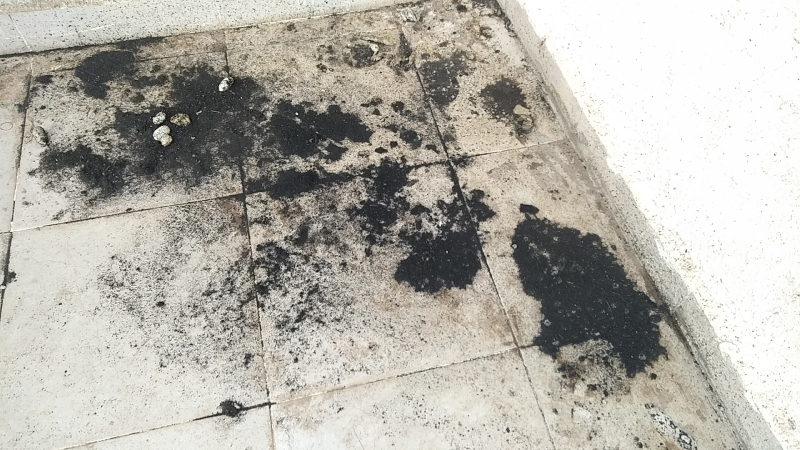
| In the city of Kenitra, Morocco, a scientific report sheds light on the “black dust” phenomenon and reveals concerning findings about its composition, potential sources, and what this may mean for air quality and the health of local communities. |
“The analysis of settled dust particles from the city of Kenitra, Morocco” report is the result of a research partnership between Greenpeace Research Laboratories, Greenpeace MENA, and the Oxygen Association for Environment and Health – Morocco. It aims to contribute to a better understanding of the nature and composition of this potential industrial pollution.
The report was prepared by collecting various black dust particles from multiple rooftops in the city of Kenitra, followed by analysing two samples of settled black dust collected from two different locations in Kenitra on 15 and 16 August 2022, near a power plant that locals report using heavy fuel oil for fuel. The Greenpeace Research Laboratories team used specialized analytical tools to study the properties of these samples, including their physical appearance and chemical composition.
The report represents one of the first scientific efforts to understand the nature and composition of potential industrial pollution in the city. It provides scientific findings that can help open an evidence-based discussion on air quality, the right to a healthy environment, and the need for greater transparency and preventive measures to protect residents.
Although these samples were collected in 2022, the situation in the city of Kenitra has not changed, and black dust emissions are still visible today. The report, therefore, offers an important scientific basis for understanding the nature of the black dust and its potential sources. The potential for this facility to have been the source of the black dust deposited on the rooftops clearly deserves more detailed and urgent investigation.
Key Findings of the Report:
The study found that the black dust had many properties consistent with those of fly ash from heavy fuel oil combustion, raising serious questions about the potential sources of this pollution, including;
- Morphology similar to hollow cenospheres found in fly ash from thermal combustion processes, with particles physically unchanged by heating to high temperature (700°C);
- Elevated concentrations of vanadium and nickel, two elements often found at higher levels in fly ash from heavy fuel oil combustion;
- Carbon content consistent with that of heavy fuel oil fly ash;
- Indications that dust particles contain inert inorganic carbon, with almost no organic carbon.
What Did the Report Find?
Particle Size: What Does It Mean?
The analysis showed that 94–95% of particles were below 355 µm, with the majority ranging between 63 µm and 250 µm, a size range consistent with particles of fly ash generated by combustion processes that settle relatively close to the source.
What Did Scientists See Under the Microscope?
Visual microscopy showed that the dust is composed of hollow cenosphere particles, consistent with the characteristics of fly ash generated through the combustion of heavy fuel oil, especially under sub-optimal combustion conditions.
The particles appeared unchanged after heating to 700°C, consistent with how heavy oil fly ash particles behave under such heating.
What About the Metals Found in the Dust?
The analysis found elevated concentrations of vanadium and nickel, two elements commonly associated with emissions from heavy fuel oil combustion.
By contrast, the levels of other metals, such as arsenic and uranium, were lower than those typically found in coal fly ash.
These findings support the hypothesis of a link between the black dust and heavy fuel oil combustion, without conclusively identifying the source.
Is the Material Hazardous or Organic in Nature?
The samples showed high carbon content (54.6% and 68.1%), while no extractable semi-volatile organic compounds were found, and the pyrolysis products detected included only minor residues of organic chemicals, including benzene and toluene, suggesting that the material is relatively inert and inorganic in nature.
The black particles also remained physically unchanged despite the intense heating to 700°C, supporting this conclusion.
What Do These Findings Mean?
The data suggest a strong link between the characteristics of the black dust and heavy fuel oil combustion. However, these analyses cannot confirm the specific origin of the black dust. Given the proximity of the sampling locations to a power plant that reportedly burns heavy fuel oil, the report raises serious questions about the facility’s potential contribution to these black dust deposits.
Furthermore, although the report indicates that the analyzed material was relatively inert in nature and did not contain significant levels of toxic contaminants, the analysis was limited to dust settled on rooftops, and therefore, the dust collected may represent only a part of the total particulate and chemical loading arising from the source. Larger particles emitted from combustion sources (such as the size in the black dust) tend to settle closer to the source, while smaller respirable particles with known health effects can often be transported further, affecting a wider area. As such, it does not reflect the full picture of air quality or the emissions residents are exposed to on a daily basis.
Furthermore, the black dust is only one part of the overall pollution in the area.
What Does the Report Recommend?
The report calls for broader and more comprehensive studies to determine the source of the black dust and understand the potential health impacts on residents of Kenitra, including:
- Conducting a comprehensive air pollution study in Kenitra through direct air sampling covering different particle sizes and airborne contaminants;
- Modelling emission plumes from nearby industrial sources to understand their potential contribution to pollution;
- Undertaking an independent investigation to accurately identify the sources of pollution and take preventive measures based on the findings;
The right to clean air begins with understanding what we breathe and where pollution is coming from.
Download the full report to read the findings and recommendations.

Be part of the community initiative #Kenitra_Suffocates and support local efforts for cleaner air and better health.
Support Now!