
| A new report by Greenpeace International reveals the presence of plastic particles in baby food products made by two global consumer goods companies, raising urgent concerns about the health of millions of children, especially infants. |
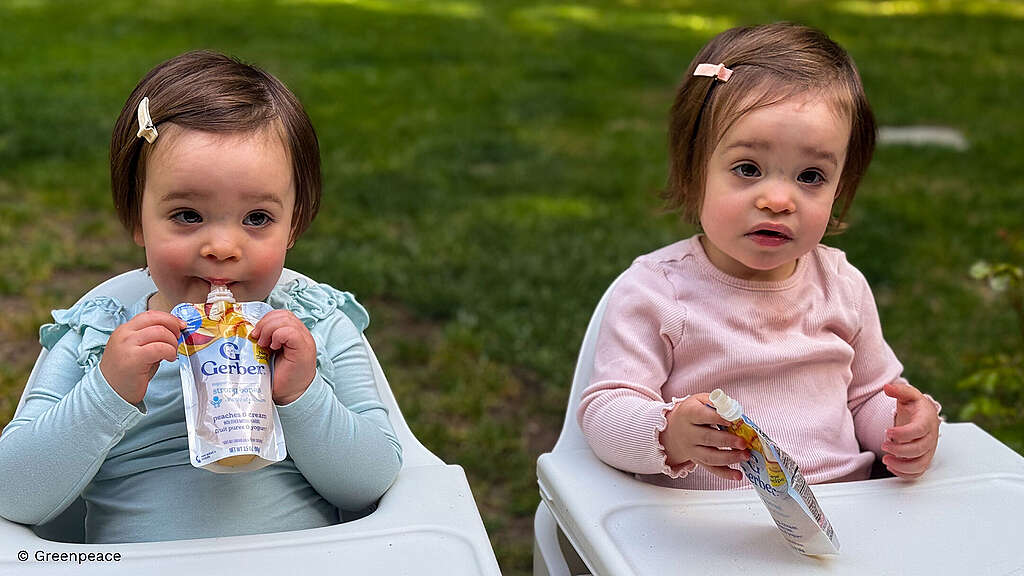
It’s been less than 20 years since baby food in plastic pouches first appeared on supermarket shelves, and the industry is growing in the Middle East and North Africa. Since then, these convenient and popular “squeeze-and-suck” products have become the dominant packaging for baby food, transforming the way that millions of babies are fed around the world. But emerging evidence raises concerns that big food brands are feeding our children plastic pollution with unknown consequences, by selling baby food in flexible plastic packaging.
Testing commissioned by Greenpeace International found plastic particles in the baby food products of two global consumer goods companies – Danone and Nestlé. The study, Tiny Plastics, Big Problem: The Hidden Risks of Plastic Pouches for Baby Food, suggests a link between the type of plastic the pouches are lined with – polyethylene – and some of the microplastics found. Tests also suggest a range of plastic-associated chemicals in the packaging and food of both products.
The findings add to the growing body of work suggesting that babies may be routinely exposed to tiny plastic fragments and a cocktail of packaging-related chemicals. Babies are uniquely vulnerable to these substances due to their developing bodies and organs.
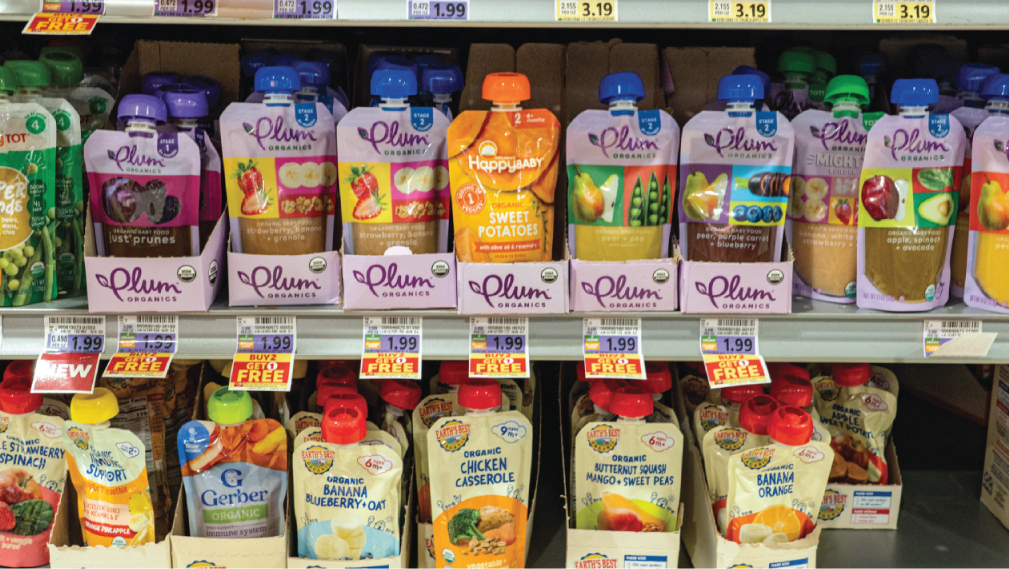
Key findings and takeaways
- A new study by SINTEF Ocean conducted on Danone’s Happy Baby Organics brand and Nestlé’s Gerber branded baby food packaged in plastic spout pouches found the following:
- For each gram of food, there were up to 99 microplastic particles in the Danone Happy Baby Organics branded fruit puree pouches, and up to 54 particles in Nestlé Gerber branded yoghurt pouches on average.
- That’s equivalent to an estimated total of more than 11,000 microplastic particles in each Danone Happy Baby Organics pouch, and more than 5,000 particles in each Nestlé Gerber pouch.
The tests also tentatively identified:
- a link between the type of plastic the pouches are lined with – polyethylene – and some of the microplastics found in the baby food tested;
- a chemical that may be harmful to human health in Nestlé Gerber branded food and packaging; and
- a host of plastic-associated chemicals in the tested packaging as well as in baby food of both brands.
Scientific evidence suggests extensive exposure risk. Studies have also confirmed that microplastics and even nanoplastics can be shed into food from plastic containers under typical usage conditions. One recent study calculated that just 3 minutes of microwaving a plastic container for baby food could release up to an estimated 4 million microplastic particles, while another container released up to 2 billion nanoplastic particles per square centimeter of packaging. Researchers have identified dozens of chemicals leaching from baby food packaging, many of them potentially toxic non-intentionally added substances., Even low doses of endocrine disrupting chemicals at critical developmental stages such as infancy, can have outsized effects on reproductive systems, growth, metabolism, and the future health of babies and children.
Flexible plastic spout pouches now exceed all other types of packaging for baby food, globally, and are the fastest-growing form of packaging at 8.18% year on year up to 2031, making up 37.15% of 2025 global market by volume. In addition, it’s forecast that the market for all types of multilayered flexible plastic packaging – the most notoriously problematic and polluting form of plastic packaging – will grow by 5.3% year on year up to 2035.
Any indication that microplastics and plastic-associated chemicals could be in baby food raises a red flag that requires immediate action to prevent babies from being exposed to these potential health hazards. Nestlé, Danone, and all brands selling plastic food contact products, including the house brands of supermarket chains and other small to medium sized companies, need to investigate further and prove that their products are not exposing their customers to microplastics and plastic chemicals that could risk their health. Baby food sold in pouches and flexible plastic packaging are just one part of the wider plastic packaging disaster that drives about 40% of global plastic production and pollution.
Governments are not acting in line with the precautionary principle. Current scientific evidence on microplastics and plastic chemicals justifies global and national precautionary action to drastically reduce and ultimately eliminate babies’ exposure to plastics-related contaminants. While research on microplastics is still emerging, uncertainty is not safety.
Yet, regulation has not kept pace, and does not protect people’s health from microplastics and hazardous chemicals in food packaging, failing to account for the unique vulnerability of babies in particular. Meanwhile, corporations continue to massively expand their plastic-packaged baby food, with little to no transparency on packaging testing and safety.
As governments negotiate the UN Global Plastics Treaty, Greenpeace MENA urges our region’s leaders to push for a strong, legally binding treaty that reduces plastic production, bans single-use plastics, includes re-use targets and provides robust and equitable financial mechanisms for our countries to support a fair transition to a plastic free future.
Read the full report, Tiny Plastics, Big Problem: The Hidden Risks of Plastic Pouches for Baby Food.
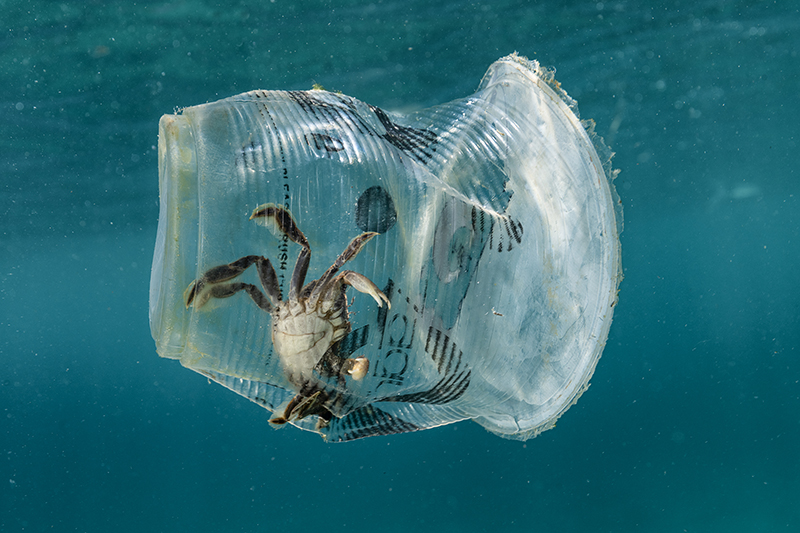
Ask world leaders to support the adoption of a strong global treaty on plastics that addresses the entire life cycle of plastic.
Sign the petition!