

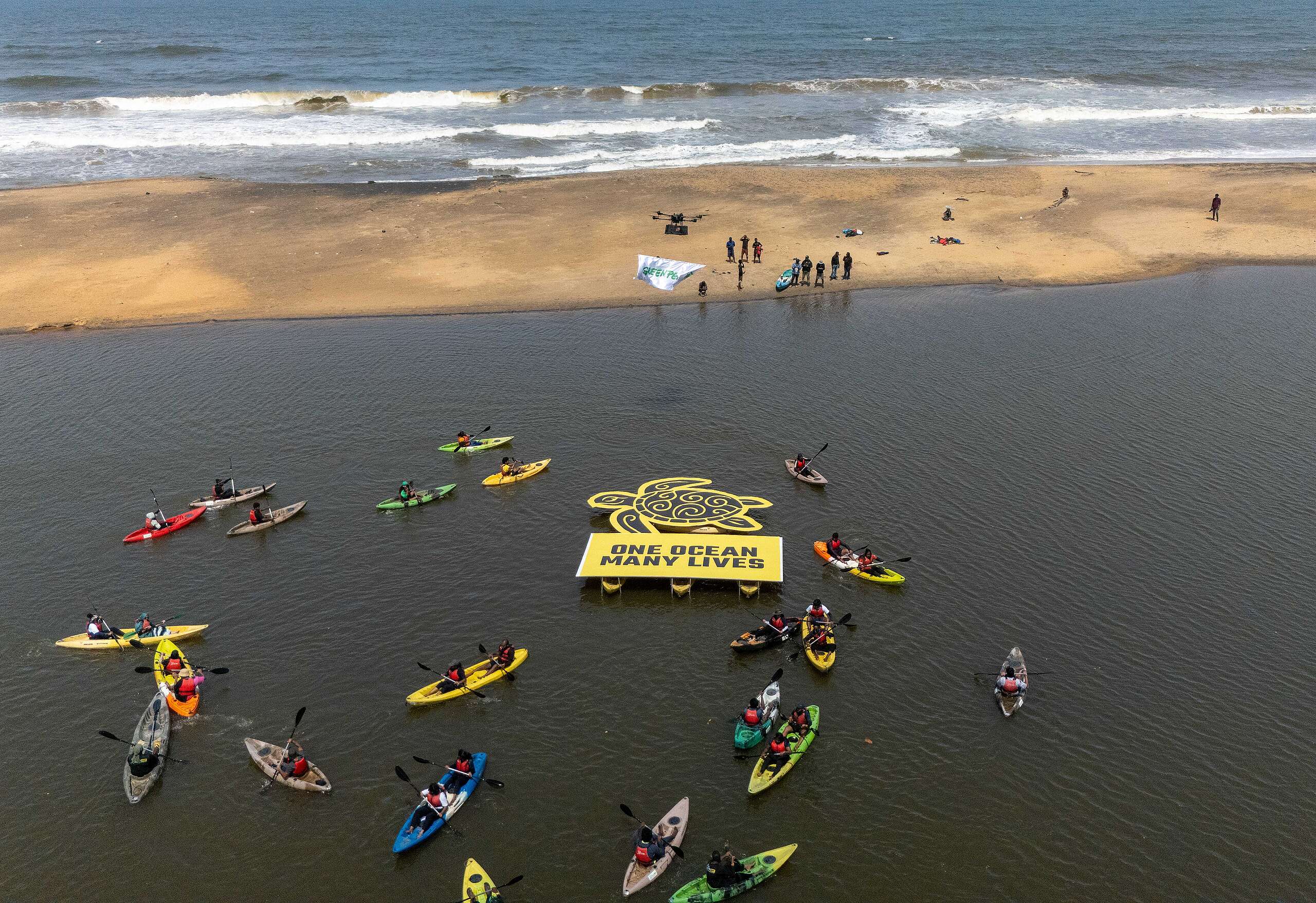
Around the world, Indigenous Peoples and local communities manage extensive areas of the lands and seas most important for global ecosystem protection and restoration. The Kunming-Montréal Global Biodiversity Framework (KM-GBF), adopted in December 2022, includes the strongest recognition to date of Indigenous Peoples’ and local communities’ rights and contributions in a decision text of the UN Convention on Biological Diversity (CBD). However, translating these international commitments into national policies and in-country implementation remains a serious challenge, as exposed in this report.
Drawing on four case studies – Senegal, Thailand, Sri Lanka and Chile – this report highlights how governments are lagging behind in delivering on their international commitments, and most importantly, how governments can significantly enhance realization of their commitments by investing in rights-based and community-led conservation.
Millions of small-scale fishers, Indigenous Peoples, and coastal communities rely on healthy oceans for food, income, and cultural survival. Their traditional knowledge safeguards healthy marine life for a healthy ocean and climate, both crucial for all living beings and future generations to thrive. But as the report exposes, coastal communities livelihoods and marine life are threatened by industrial exploitation of the ocean: from the salmon farms in Kawésqar National Reserve in Patagonia, to the fishmeal plants in West Africa, sand mining in Sri Lanka, and industrial mega-projects in Thailand, industrial exploitation of the oceans is “stripping coastal waters,” turning a source of life into a “liquid desert”. Community-led conservation is a powerful strategy for sustaining coastal livelihoods, marine life, and a healthy climate for all, but it requires more support from governments.
Greenpeace calls on governments to deliver on their global commitments to curb biodiversity loss through a human-rights based approach under the global biodiversity commitments, by:
- Recognising and supporting the rights of Indigenous Peoples and local communities over their territories, lands and waterways.
- Securing full, meaningful participation for Indigenous Peoples and local communities in all levels and stages of marine and coastal protection and management processes.
- Recognising and scaling up Indigenous and local community-led conservation initiatives to progress protected and conserved areas.
- Mobilising adequate and sustainable funds and ensuring direct access to Indigenous Peoples’ and local communities’ coastal conservation efforts.
- Mainstreaming rights-based nature protection as the primary filter through which all industrial and coastal development must pass.
The countdown has started before the 17th meeting of the Conference of the Parties (COP 17) to the Convention on Biological Diversity (CBD). In less than six months, governments will further define how to ensure implementation of the Kunming-Montreal Global Biodiversity Framework by 2030 – including how to deliver 30×30 protection, by whom and who gets funded. Before that, they still have time to set an example at the national level , and the most efficient and logical way for governments to enhance realization of their KM-GBF commitments is by investing in rights-based and community-led conservation.