Executive Summary
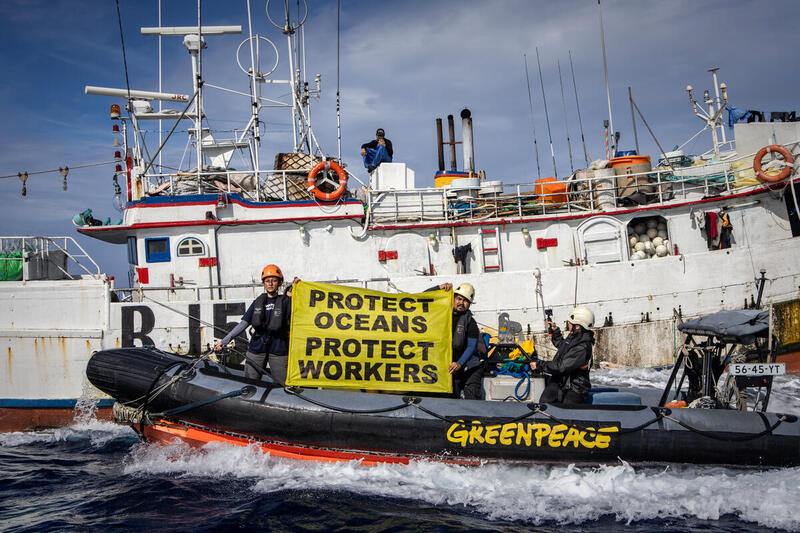
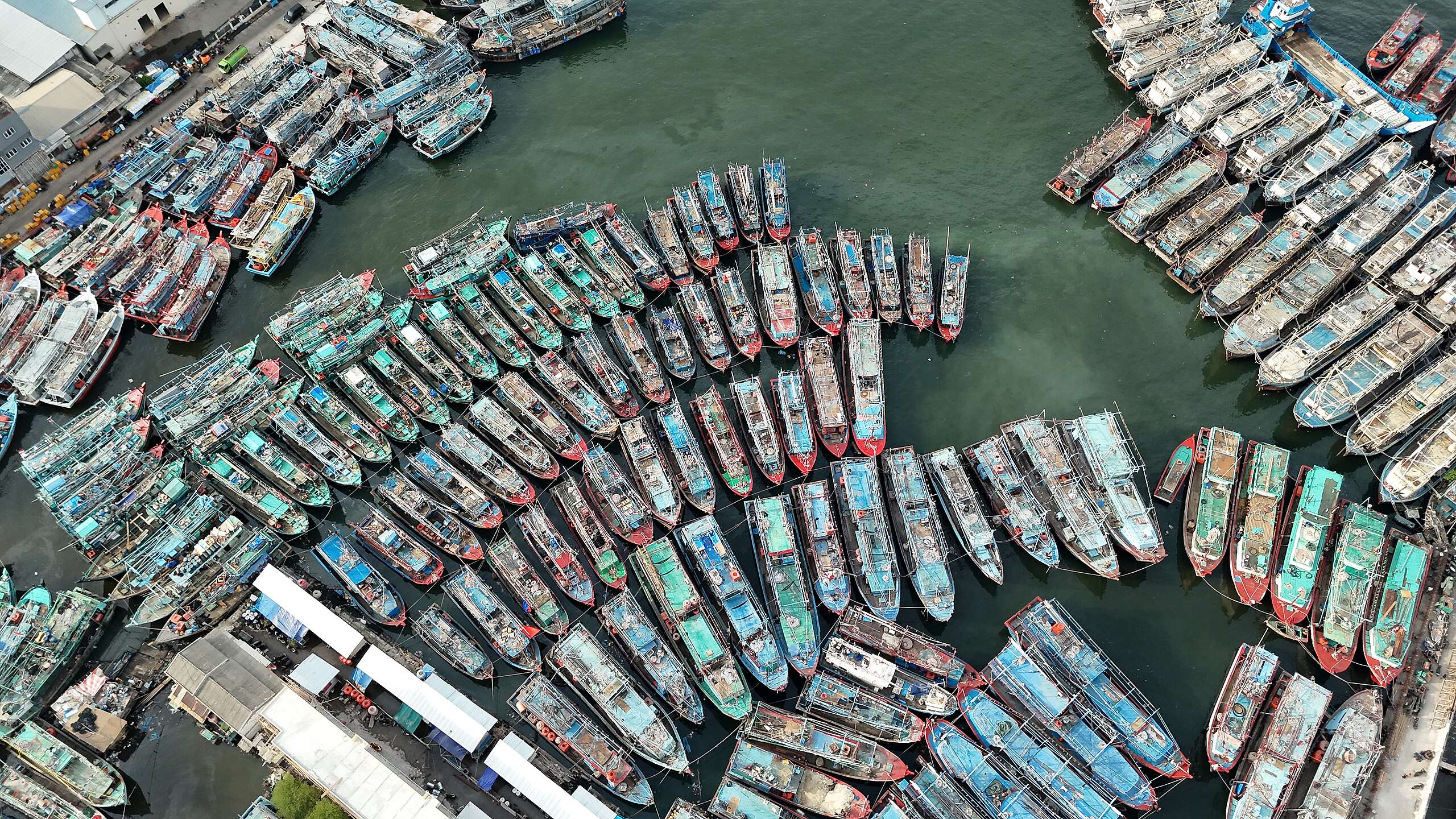
The Indonesian tuna fishing fleet is a major supplier of tuna to premium markets, such as Australia. However, the sector is thriving at the expense of environmentally destructive fishing methods and abusive labour practices, including deception and debt bondage.
A 2025 Greenpeace Southeast Asia investigation, done in collaboration with Uniting Church in Australia, Synod of Victoria and Tasmania, found that 25 fishers onboard 17 Indonesian tuna fishing vessels that supply the Australian market allegedly experienced International Labour Organization (ILO) indicators of forced labour. Among the 11 indicators analyzed, fishers most frequently encountered abuse of vulnerability (56%), debt bondage (56%), and deception (40%).
Based on the investigation team’s analysis of Fishery Improvement Project (FIP) vessel lists, these 17 fishing vessels suspected supply five processing companies in Indonesia such as PT Aneka Tuna Indonesia, PT Samudera Mandiri Sentosa, PT Pahala Bahari Nusantara, PT Intimas Surya and PT Sinar Pure Food International. The trade analysis found the five processing companies export to 10 Australian seafood companies, including brands such as Sirena, Safcol, and JFC Australia.
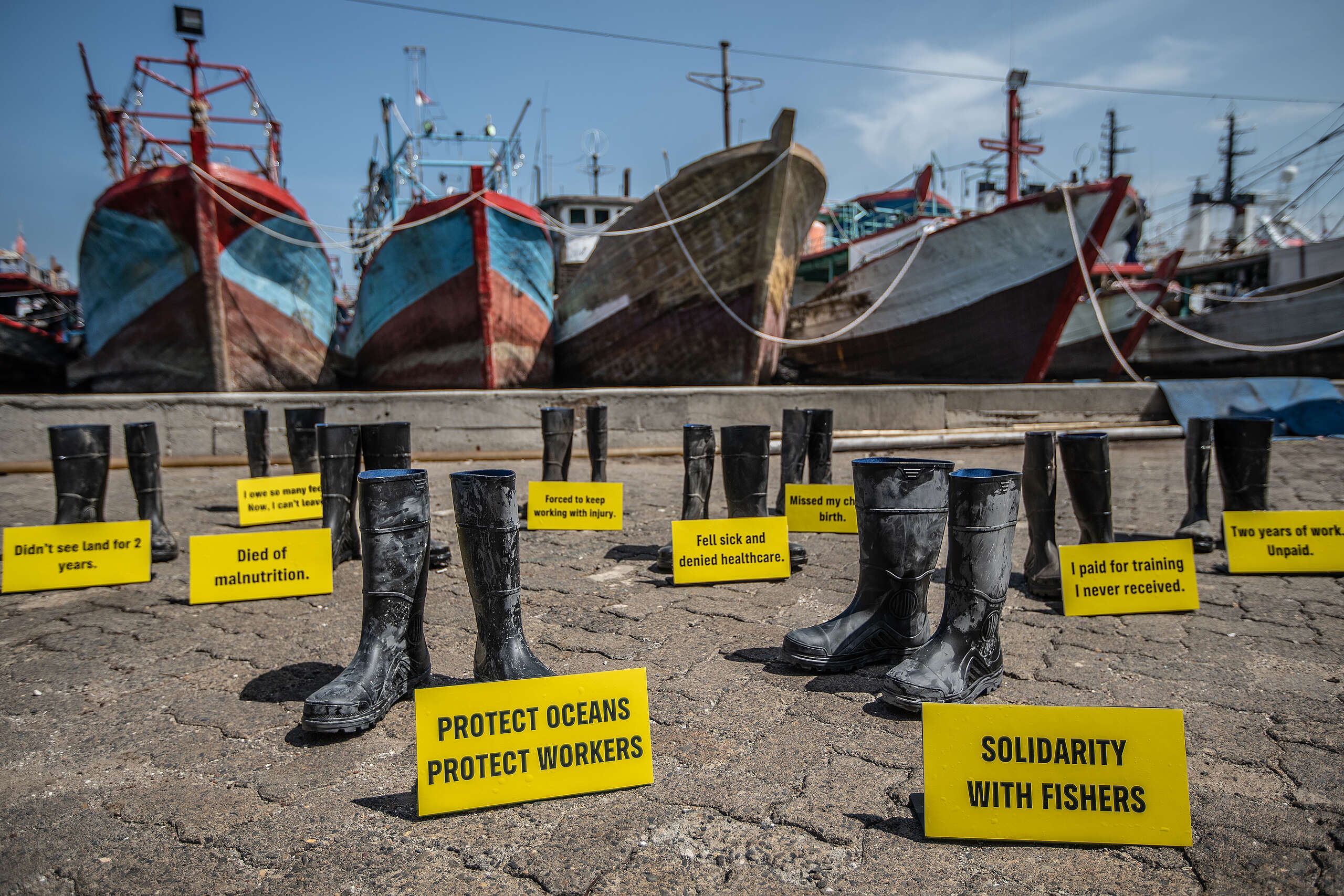
A multi-layered fishers’ recruitment network in Indonesia channels vulnerable people from rural areas into situations of labour exploitation and/or forced labour. Brokers (calo), allegedly collaborate with vessel administrators, and deal with the fishers’ hiring process. According to the testimonies we received, the calo lured fishers with promises of big salaries and flexible advance loans. But then the calo charged illegal and inflated fees for travel, training, and documents. Fishers reported that the calo also withheld fishers’ identification documents and personal belongings upon arrival at port to ensure that the fishers remained under total control once deployed to sea.
Onboard conditions are a further human cost of this system. Fishers report working 15-18 hours a day, often without proper rest, pay, or access to communication. Some of them were out at sea for 10 to 18 months without a port visit. In both distant water and territorial fleets, profit-sharing schemes and wage systems are unjustly designed to suppress the income of fishers.
The situation is exacerbated by Illegal, Unreported, and Unregulated (IUU) fishing. Companies push fishing vessels and fishers to engage in banned practices, such as shark finning and deploying illegal fish aggregating devices (FADs). Most Indonesian fishing vessels participating in FIPs also show weak catch reporting compliance. The link between labour abuses and environmental crimes underscores an extractive system that externalizes human and ecological costs to sustain profit margins.
In order to bring justice to fishers and oceans, Greenpeace Southeast Asia and Uniting Church in Australia, Synod Victoria and Tasmania demand that:
- The Indonesian government enforces decent work at sea policies in line with international standards, including the ethical recruitment and fair wages that protect Indonesian fishers’ rights;
- The Australian government prohibits seafood products linked to labour exploitation and forced labour from entering Australian markets;
- The Indonesian and Australian seafood companies conduct human rights and environmental due diligence within their supply chains.
Unless both Indonesian and Australian regulators enact and enforce binding due diligence and labour protections, the true cost of tuna will continue to be borne by those at the very bottom of the chain, which are the Indonesian fishers trapped in debt and stripped of their rights. There is an urgent need for both governments to establish more accountable, transparent and effective partnership by ensuring the meaningful participation and collaboration with fishers, unions and other key stakeholders in addressing forced labour at sea.
Download the full report HERE
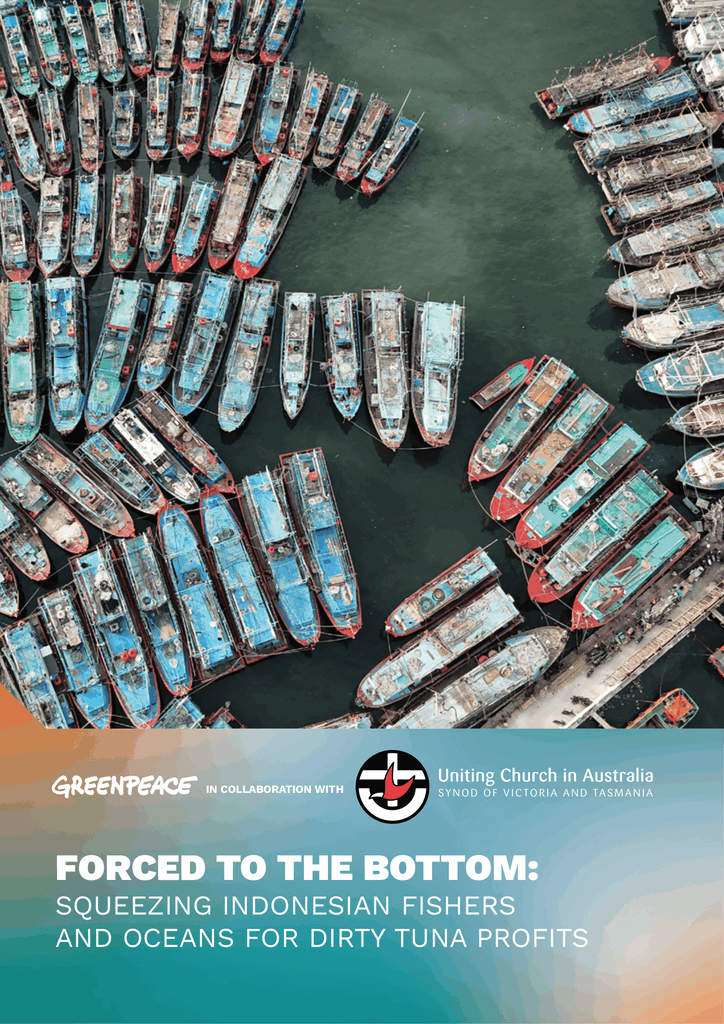
Note: The report was published on 3 March 2026 and updated with several editorial corrections on 13 March 2026.