Jakarta, 2 December 2025. Greenpeace Indonesia offers its condolences over the devastating floods and landslides in Aceh, North Sumatra, and West Sumatra, which claimed the lives of more than 600 people, left hundreds missing, and displaced hundreds of thousands of people. Given the enormous scale of the impact, Greenpeace joins others in urging the government to immediately designate this flood as a national disaster and to deploy rapid and appropriate disaster assistance.
“The enormous floods that hit Sumatra should be the final warning for President Prabowo Subianto’s administration to totally overhaul its forest governance, environmental and climate policies. The great flood signifies one thing: the unavoidable impact of the climate crisis and environmental destruction that has been allowed to worsen for years,” said Arie Rompas, Head of the Forest Campaign Team at Greenpeace Indonesia.
The impact of the climate crisis is evident in increasingly extreme weather, including heavy rain exacerbated by the occurrence of Tropical Cyclone Senyar on November 25-27, 2025, in the Malacca Strait.[1] According to the Indonesian Meteorology, Climatology, and Geophysics Agency (BMKG), the presence of Tropical Cyclone Senyar in the Malacca Strait, impacting the Sumatran mainland at Aceh, North Sumatra, and West Sumatra, is an extremely rare phenomenon given the area’s position within about five degrees of the equator.
“Extreme downpours will continue to haunt us as a direct consequence of the climate crisis. As an archipelagic country prone to disasters, the impact of the climate crisis isn’t just numbers; it threatens lives. We need ambitious climate targets and action. We can no longer rely on mitigation and adaptation efforts that exist only on paper. There can be no more false solutions (such as biofuels) in national climate policy, it must shift from benefiting a few to ensuring livability for all,” said Iqbal Damanik, Climate and Energy Campaign Manager for Greenpeace Indonesia.
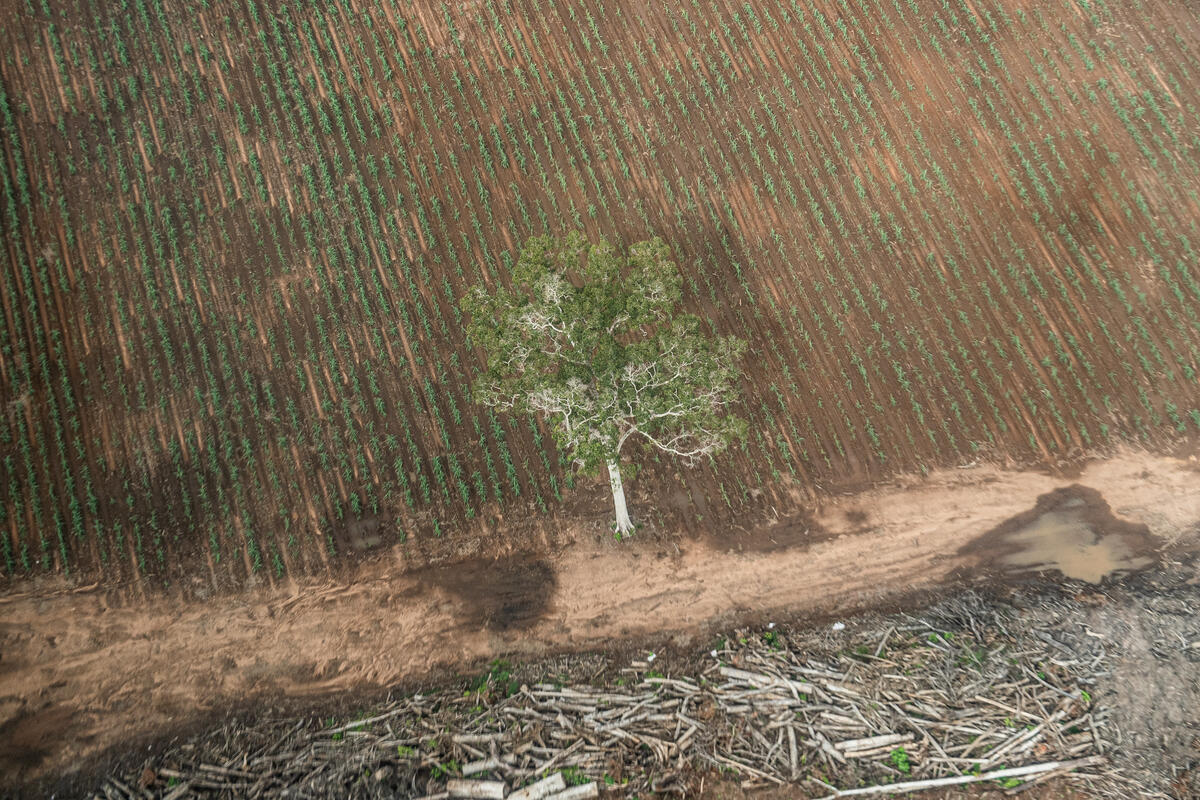
The second factor triggering the massive impact of the Sumatra floods is forest destruction, including in upstream river catchment areas. Greenpeace analysis based on Ministry of Forestry data found that during the period 1990-2024, much of North Sumatra Province’s natural forest was converted into palm oil plantations, dryland agriculture, and pulpwood plantations. A similar situation occurred in Aceh and West Sumatra.
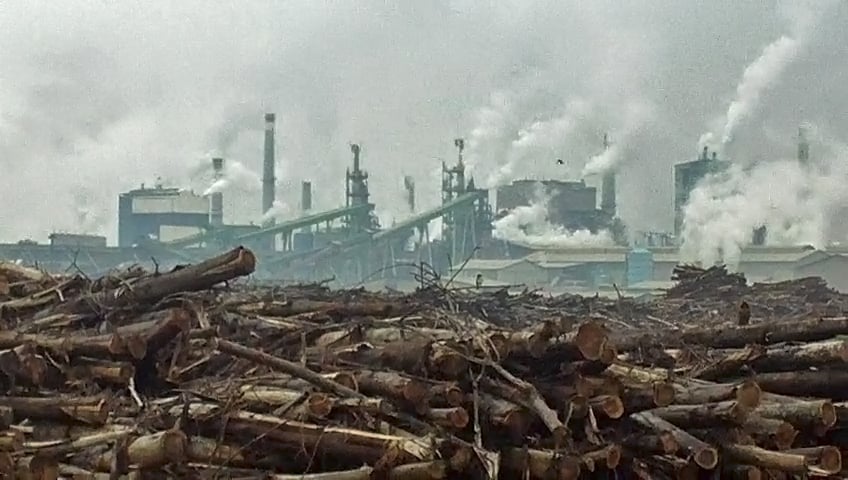
Sapta Ananda Proklamasi, a senior researcher for Greenpeace Indonesia said, “The majority of river catchment areas on Sumatra Island are in critical condition, enjoying natural forest cover of less than 25 percent. Meanwhile, overall, only 10-14 million hectares of natural forest remain, which is less than 30 percent of Sumatra Island’s 47 million hectare area.”
One of the severely damaged river basins is the Batang Toru catchment, which covers North Tapanuli, South Tapanuli, and Central Tapanuli Regencies. One of the last tropical forest areas in North Sumatra, it is burdened with various land-hungry industries, including the Batang Toru Hydropower Plant, which besides destroying forest, also displaces the slender remaining habitat of the newly identified Tapanuli orangutan species. The following are some data points on the Batang Toru catchment:
- Between 1990 and 2022, 70 thousand hectares or 21 percent of the catchment area underwent deforestation. Now only 49 percent remains forested.
- Areas licensed for extractive and land-based industries cover 94 thousand hectares, making up 28 percent of the total catchment area. Most of this consists of permits for forestry, mining, and palm oil.
- Estimated total annual erosion potential is severe at 31.6 million tons, with approximately 56 percent of the catchment prone to annual erosion rates of over 180 tons per hectare.
- The upstream section has been converted into dryland agriculture, while the downstream section has been converted into oil palm plantations. The remaining natural forest is primarily located in the middle section of the Batang Toru catchment.
The Indonesian government must seriously overhaul its overall land and forest governance policies to save nature and the public from climate-driven disasters. With the climate crisis worsening, deforestation and drastically reduced environmental capacity will guarantee increased devastation during extreme weather events.
“The government must admit that they have been wrong in their forest and land governance. As a result of corporate greed and government mismanagement, Sumatra’s once-great forests are severely depleted, and now the people of Sumatra face the unbearable cost of this ecological disaster. Prabowo and some of his ministers have indeed touched upon deforestation, but they seem to imply that the forest damage in Sumatra is due to illegal logging. In fact, besides illegal logging, massive deforestation for industry is legalized by the state, from one administration to the next,” said Arie Rompas.
“In addition to evaluating permits in Sumatra, the government must also halt forest destruction in other regions. Halt the forest destruction occurring in Raja Ampat and other small islands hollowed out by nickel mining, as well as massive planned deforestation in Merauke, West Papua, under the false guise of biofuel production and industrial agriculture estates. The 8 percent economic growth that Prabowo aspires to will never be achieved if the environment is trashed and climate disasters threaten us all.”
Note to editors:
[1] The IPCC Special Report on Global Warming of 1.5°C says that even relatively small incremental increases in global warming (+0.5°C) cause statistically significant changes in extremes on the global scale. In particular, this is the case for temperature extremes, and the intensification of heavy precipitation including that associated with tropical cyclones.
Media Contacts:
Igor O’Neill, Greenpeace Indonesia, [email protected] +61 414-288-424
Arie Rompas, Greenpeace Indonesia, +62 811-5200-822