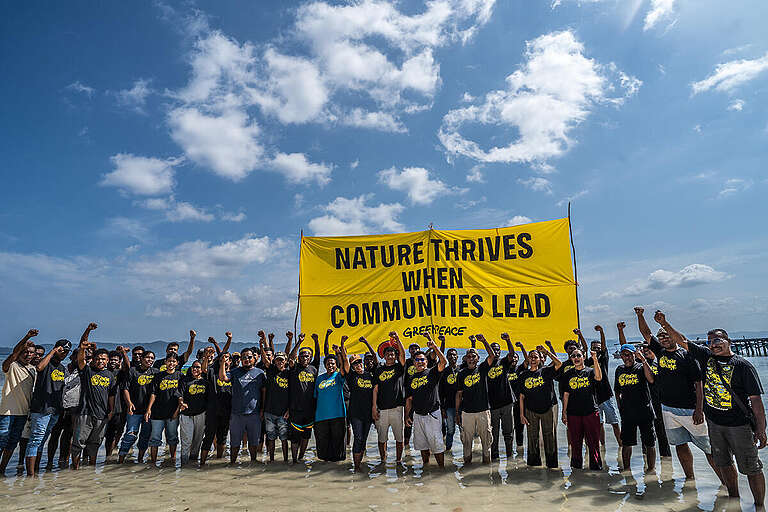
Jakarta, 21 September 2026. The Jayapura State Administrative Court (PTUN Jayapura) announced its decision on September 18 to dismiss a lawsuit challenging the environmental permit for the 135-kilometer road development in Merauke, West Papua. The lawsuit was filed by five Indigenous Malind People in Tanah Papua—Simon Petrus Balagaize, Sinta Gebze, Liborius Kodai Moiwend, Kanisius Dagil, and Andreas Mahuze.
Simon Petrus Balagaize has expressed deep disappointment over the verdict, saying that no law guaranteed Indigenous rights. “Neither with a lawsuit nor with facts on the ground, the law is not on our side.”
Tigor Hutapea of Pusaka Bentala Rakyat, also a member of the advocacy team, said, “It is a poor and unfair decision. The judges didn’t take into consideration any evidence, along with witnesses and experts presented from our side, that conveyed solid proof that the road development has caused numerous violations of Indigenous rights. The plaintiffs have chosen a difficult path by going to court, yet they got only unfairness.”
The five Indigenous Malind People filed the lawsuit in March 2026 to challenge an environmental permit issued by the Merauke Regent for the 135km roadway construction in the regency. The Indonesian government is building the roadway to support its controversial food and energy projects in southern Papua, where 2.7 million hectares of land and forest are targeted for conversion into rice paddy fields, sugarcane, and palm oil. This is the biggest planned deforestation in the world with an unprecedented scale of military involvement.
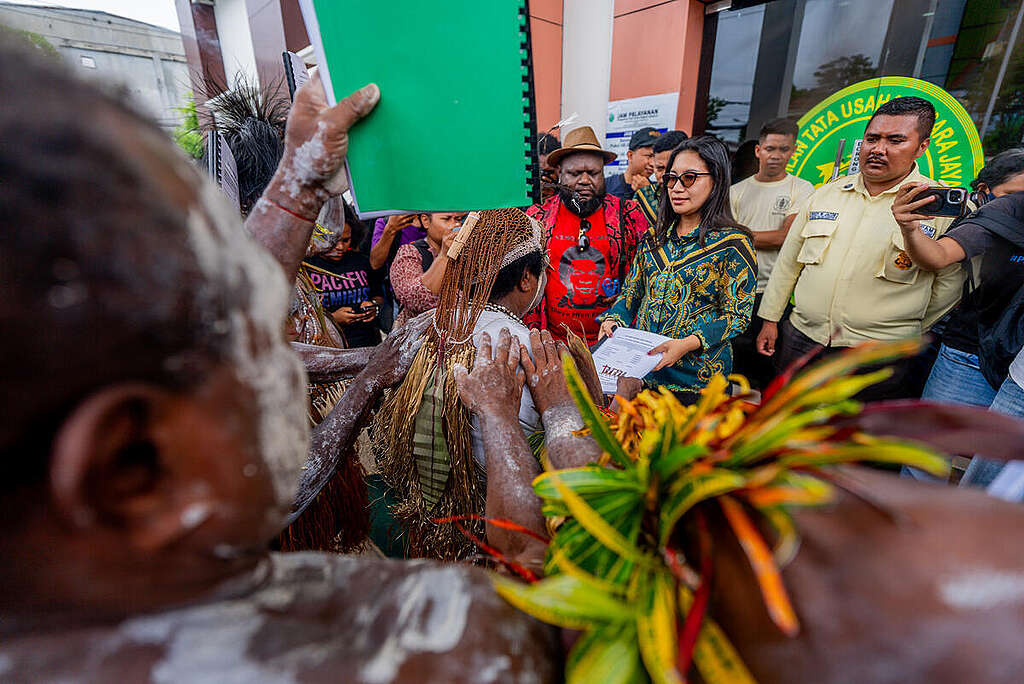
Although the environmental permit was issued in September 2025, land clearing and roadway construction began in August 2024. According to the plaintiffs and the advocacy team, no free, prior, and informed consent (FPIC) process was conducted. Some clans from the Malind Indigenous People expressed their disagreement through protests, such as by setting up blockades or erecting red crosses, but they were ignored.
Despite all the evidence, the judges decided that the permit issuance was lawful and included public consultation.
Asep Komarudin, a member of the advocacy team from Greenpeace Indonesia, said, “The judges’ reasoning in this ruling fails to address substantive issues raised by the witnesses that we presented. Their considerations did not adequately address testimonies about the road construction process, impacts on Indigenous communities and the environment, and other issues. The ruling appears merely to reiterate administrative evidence—deeming it sufficient—without directly examining the actual situation on the ground.”
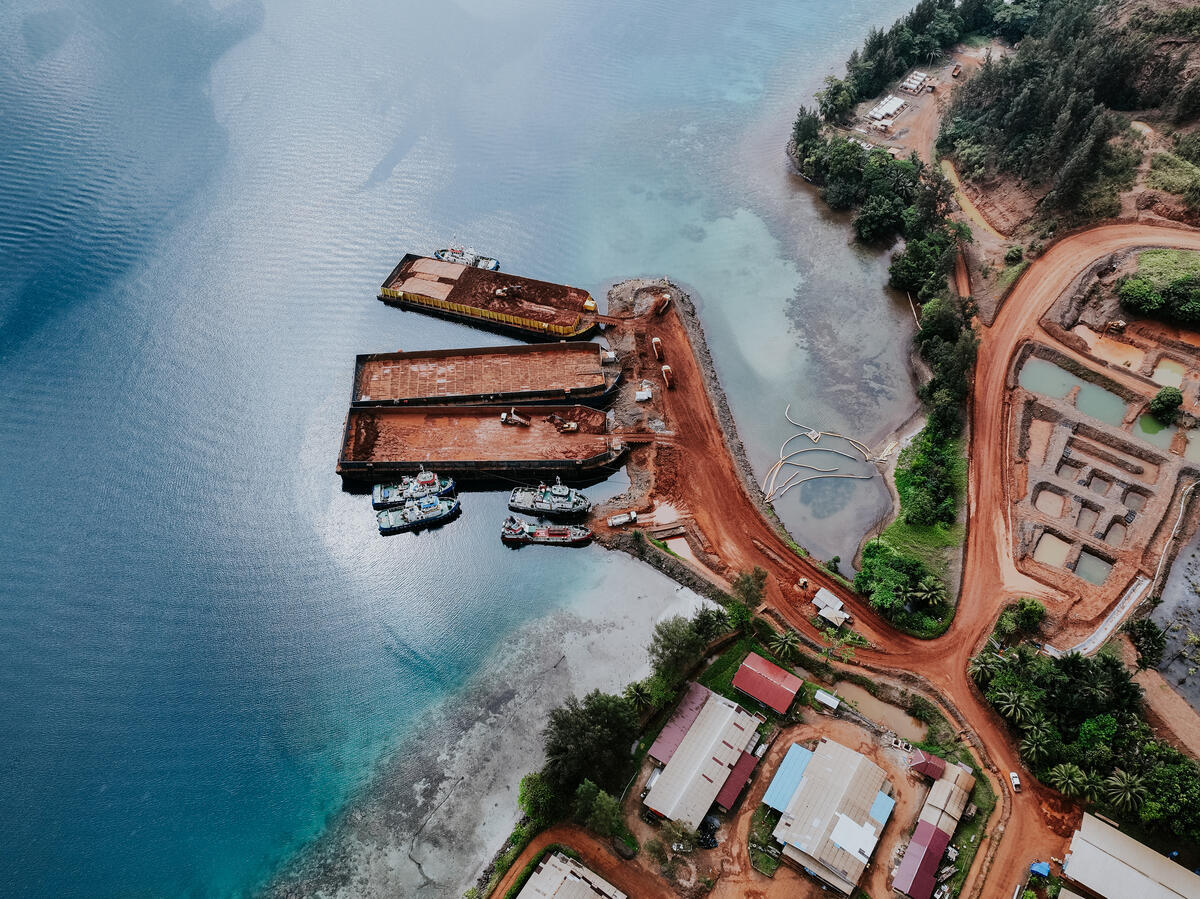
In Merauke, the roadway construction continues despite being challenged in court. In fact, on June 9, the presiding judge, Merna Chintia, ordered the defendant to halt the construction. However, satellite imagery analysis found that the road network now spans 135 km.
The roadway development has directly affected the Malind Indigenous group. It has destroyed their customary forest, depriving them of their source of livelihood. Environmental impacts have emerged, such as rising temperatures, dusty air, and declining water quality. Moreover, the Indigenous community members have also experienced various intimidation from the military.
Despite being disappointed by the court ruling, Simon Balagaize said that the fight is not over. “We will continue to fight for and defend our customary lands. We believe that the truth will be on our side: the Papuan. This lawsuit is not the only way; there are thousands of other ways.” [END]
Media Contact:
Budiarti Putri, Greenpeace Indonesia, [email protected], +62 811-1463-105
Tigor Hutapea, Pusaka Bentala Rakyat, [email protected], +62 812-8729-6684