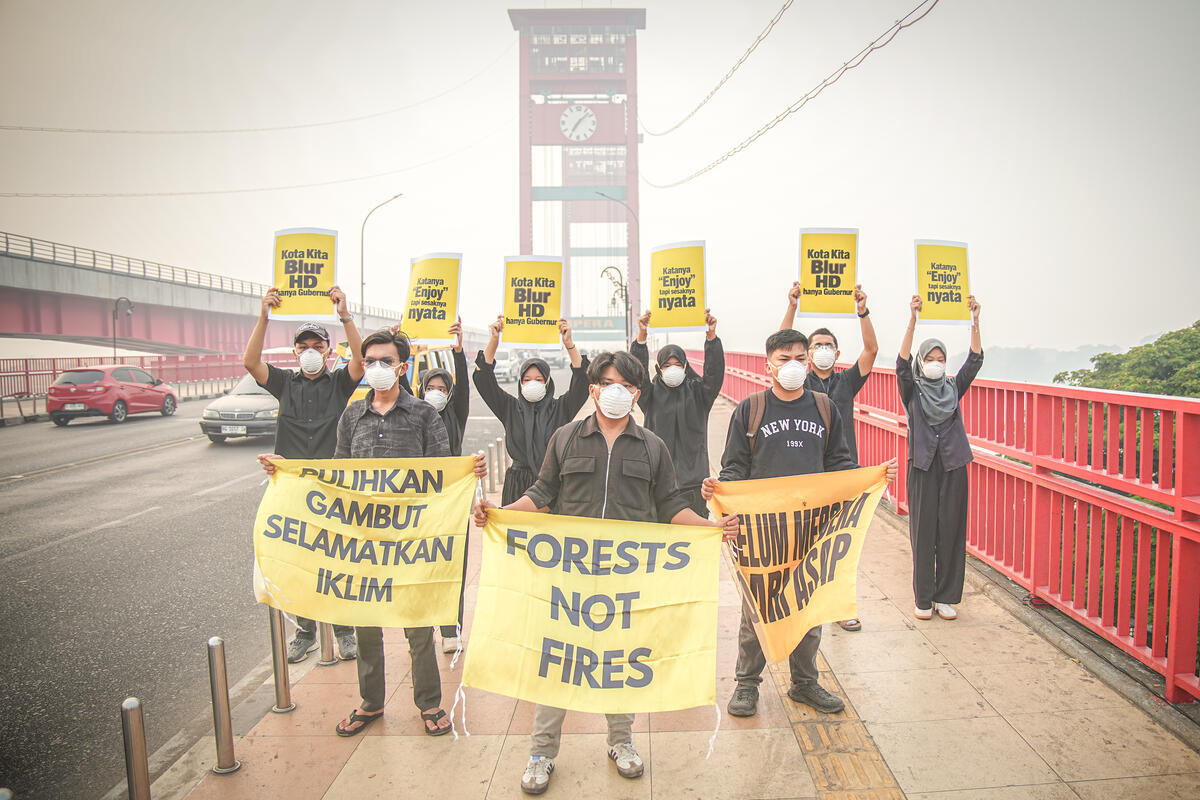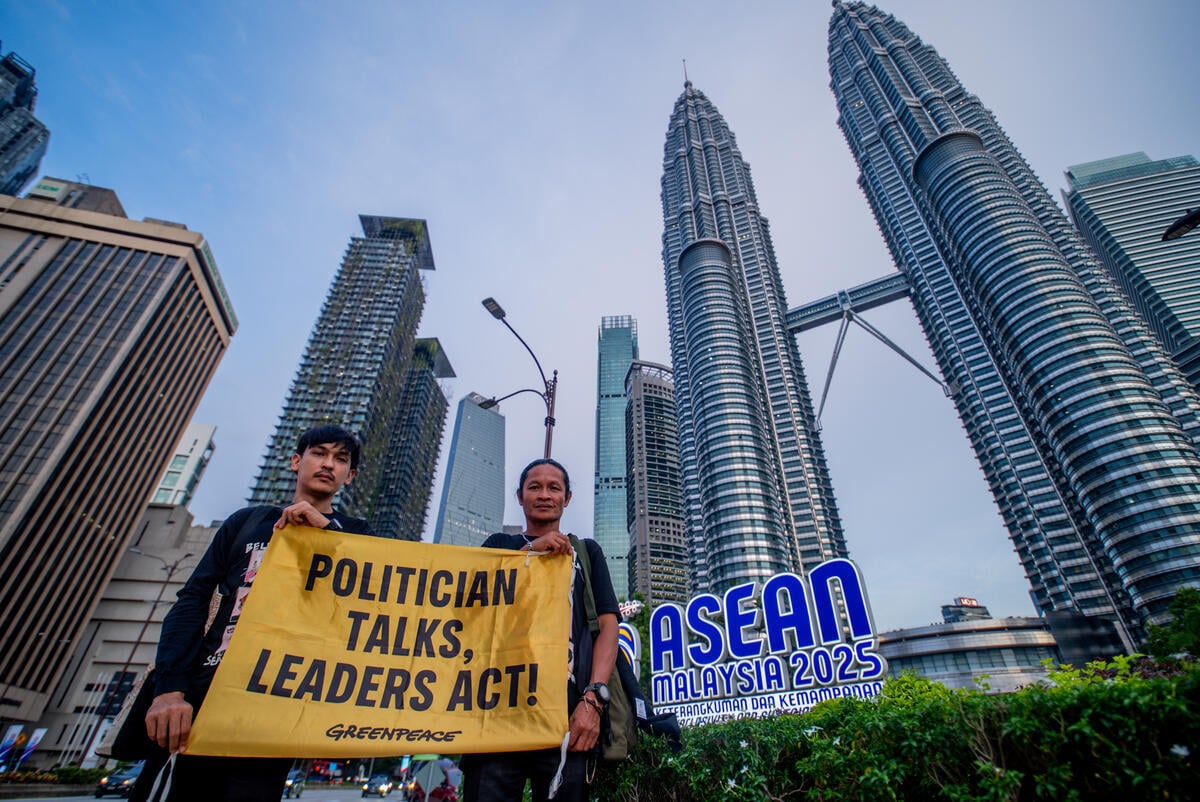
Jakarta, 20 October 2026 – Various disasters driven by the climate crisis have marked the first two years of the Prabowo–Gibran administration, from forest and land fires that have caused prolonged haze to extreme weather threatening people’s lives. Amid the celebrations marking two years in office, millions of people are struggling to cope with the impacts of an increasingly tangible climate crisis, while the cost of living continues to rise.
Behind the anniversary celebrations of the Prabowo–Gibran administration lies the struggle of Indonesians to survive as living costs continue to climb. The climate crisis is one of the factors driving this hardship. Greenpeace Indonesia’s newest research, “Tomorrow, Prices Will Rise!: An Overview of the Climate Crisis’s Impact on Workplaces, Dining Tables, and Homes,” reveals that the climate crisis is not only destroying the environment but also eroding the purchasing power of low- and middle-income groups. The findings show that the crisis is disrupting workers’ livelihoods and finances, with fishers and gig workers, including ride-hailing drivers and freelancers, among the groups most severely affected.
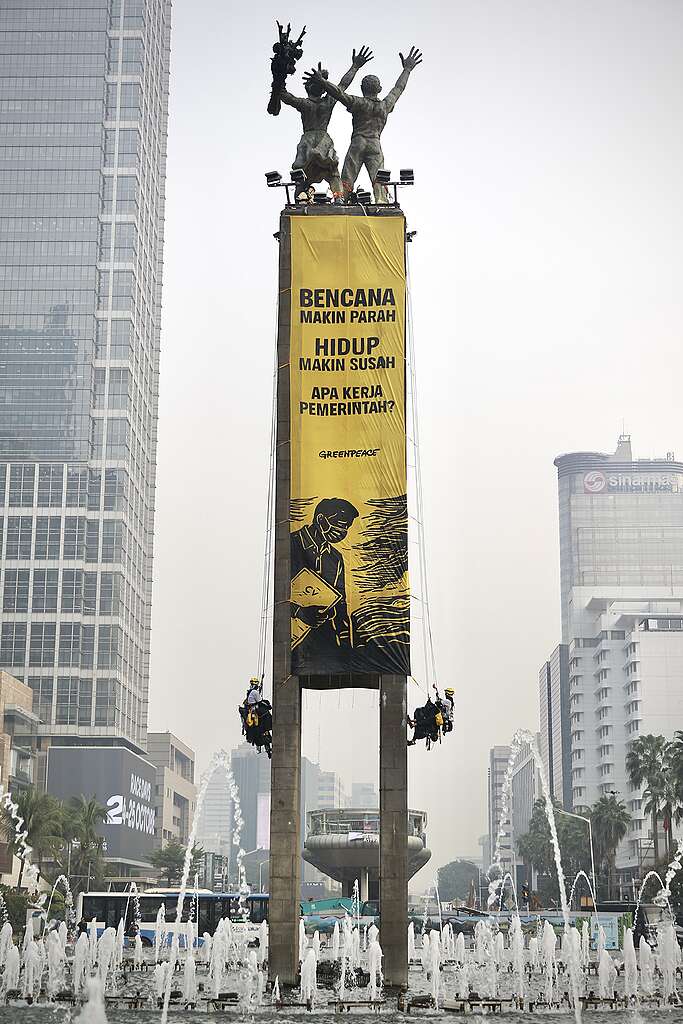
Marking the second anniversary of the Prabowo–Gibran administration, Greenpeace Indonesia staged a peaceful, nonviolent protest at the Hotel Indonesia Roundabout in Central Jakarta, urging the government to take the climate crisis more seriously as it increasingly threatens people’s quality of life.
During the creative protest, several Greenpeace Indonesia activists unfurled two giant banners from the top of the Welcome Statue at the Hotel Indonesia Roundabout, Central Jakarta. One banner, reading “Take Action on the Climate Crisis, Bring Down the Cost of Living” faced north toward the Presidential Palace. The other, reading “Disasters Are Rising, People Are Struggling, What Is the Government Doing?”, faced south across the roundabout.
“Greenpeace Indonesia continues to amplify the voices of the people, urging the Prabowo-Gibran administration to wake up to the climate crisis, which is increasingly undermining people’s quality of life. The impacts are felt most severely by workers living in economically vulnerable conditions. Extreme weather and ecological disasters not only threaten public safety and health, but also disrupt livelihoods, reduce incomes, and drive up food prices. Prolonged haze is one clear example of how the ecological crisis burdens people’s lives, causing everything from health problems to disruptions in daily economic activities. Amid this situation, people are increasingly squeezed by rising living costs and job insecurity, including waves of layoffs. Yet the Prabowo-Gibran administration has pledged to prioritize job creation, food and energy security, and improvements in people’s welfare. The findings of our latest research, however, reveal the opposite. The government has failed to provide solutions to the impacts of the climate crisis, which are becoming increasingly evident in people’s everyday lives,” said Jeanny Sirait, Climate Justice Campaigner at Greenpeace Indonesia.
The report ‘Tomorrow, Prices Will Rise!’ reveals how the impacts of the climate crisis affect the quality of life of eight community groups across three metropolitan areas on the island of Java: Greater Jakarta, Greater Bandung, and Greater Yogyakarta). The findings show that the climate crisis has the greatest impact on consumption patterns and food costs (41%), followed by productivity and income (39%). Meanwhile, 20% of respondents reported impacts on housing access and transportation costs. These findings demonstrate that the climate crisis is no longer merely an environmental issue, but also an economic one that directly affects people’s ability to meet their basic needs.
Atha Rasyadi, Head of the Social & Economic Campaign Team at Greenpeace Indonesia, questioned President Prabowo Subianto’s claim during the 2026 Annual Session of the People’s Consultative Assembly (MPR), House of Representatives (DPR), and Regional Representative Council (DPD) that Indonesia’s economy grew by 5.45% in the first half of 2026.
“The President claims this is the highest economic growth rate in the past 13 years, but who is actually benefiting from it? The reality is that ordinary people are not feeling this growth. While the government continues to boast about economic growth and recklessly sacrifices the environment, it is ultimately the people who have to bear the consequences. We cannot remain silent when economic growth only enriches a handful of people, especially when it is driven by the greedy exploitation of nature, while ordinary people are forced to struggle on their own just to survive,” Atha said.
Amid economic pressures and the impacts of the climate crisis, people are being forced to adopt various coping strategies, from cutting expenses to seeking additional employment. The report found that 57.34% of respondents across different community groups had to cut non-essential spending, saving approximately IDR 50,000–1,000,000 (around US$3–60) per month. Meanwhile, 38.78% of respondents chose to grow their own staple foods at home, helping them save approximately IDR 80,000–500,000 (around US$5–30) per month. To supplement their income, 56.79% of respondents took on side jobs or started new businesses, generating an additional IDR 500,000–2,500,000 (around US$30–150) per month. Meanwhile, the remaining 17.73% expanded their own food production, growing vegetables and producing items such as eggs and milk, generating an estimated IDR 5,000–500,000 (around US$0.30–30) per month. These efforts demonstrate people’s resilience in coping with mounting economic pressures. However, they also highlight how the burden of adapting to the climate crisis is increasingly falling on individual households.
This burden becomes even heavier when communities are also forced to contend with climate-related disasters. For those affected by disasters, the crisis means additional expenses for daily necessities, as well as threats to their health and their children’s access to education.
Meanwhile, the government is prioritising state spending on programmes that exacerbate these burdens amid the climate crisis, such as the Free Nutritious Meals (Makan Bergizi Gratis) programme, which has contributed to food price inflation, and cuts to disaster management budgets as Indonesia faces a series of disasters. Once again, ordinary people are being left to bear the burden alone.
“The findings and recommendations in the ‘Tomorrow, Prices Will Rise!’ The report can serve as a reference for the government in developing climate policies that put people first. The government cannot simply boast about economic growth figures while people continue to struggle to meet their basic needs and bear the impacts of the climate crisis on their own. If people are left to shoulder the impacts of the climate crisis and disasters, which drive up the cost of living, then what exactly is the government doing?” Jeanny concluded. [END]
*) US dollar equivalents are approximate, based on an illustrative exchange rate of IDR 16,700 to US$1. Actual amounts may vary depending on the exchange rate.
Editor’s Note:
Read the full report, “Tomorrow, Prices Will Rise!: The Impacts of the Climate Crisis on Work, the Dining Table, and the Home.”
Photos and videos are available in this link.
Media Support:
Jeanny Sirait, Climate Justice Campaigner, Greenpeace Indonesia, +62 858-1042-3390
Agnes Alvionita, Communications Campaigner, Greenpeace Indonesia, +62 858-1028-8575