What if your favourite foods suddenly started disappearing from markets and dinner tables? No creamy avocados, fewer juicy mangoes, smaller watermelons, struggling coffee farms, and declining harvests season after season. I know it sounds dramatic but this is the reality we risk when pollinators like bees disappear.
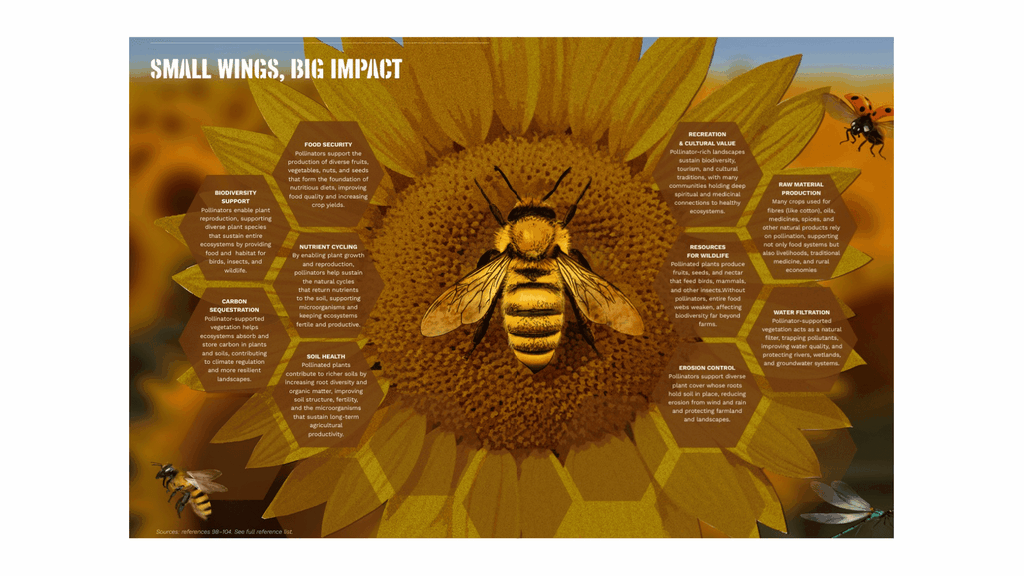
Across generations and civilizations, bees and people have shared a close and evolving relationship, shaped by the ways communities around the world have relied on pollinators for food, livelihoods, culture, and ecological balance. From traditional honey hunting practices to diverse beekeeping systems passed down through communities, bees have long been woven into the social and economic fabric of human life. They quietly sustain biodiversity, support ecosystems, and contribute to nearly 75 percent of increased food production through pollination.
While many of us instinctively jump, scream, or run at the sight of a buzzing bee, these tiny creatures are among the hardest workers on the planet. Bees quietly help plants grow, crops reproduce, and ecosystems survive, supporting food systems, farmer livelihoods, and biodiversity with every flower they pollinate. Even though we rarely think about bees beyond honey or painful stings, they are deeply connected to the food we eat, the environment we depend on, and the future of agriculture itself.
Despite this, the systems meant to feed the world are increasingly threatening their survival. Across farms and landscapes, industrial agriculture built around vast monoculture systems and heavy chemical dependence, continues to impact biodiversity across farming landscapes while increasing reliance on hazardous pesticides. This places immense pressure on pollinators and weakens the delicate relationship between people, food systems, and nature. This has come with a growing ecological cost that can no longer be ignored. The decline of bees and other pollinators is no longer just an environmental concern; it is a warning about the future of agriculture, livelihoods, and food security itself.
The #FoodorPoison report released by Greenpeace Africa earlier this year, raises serious concerns about the growing risks pesticides pose to pollinators and biodiversity across Africa. Findings from the report show that many pesticides currently registered and used across African countries are toxic to bees and other beneficial insects. In Ghana out of the 49% of registered Highly Hazardous Pesticides 28% are toxic to bees, in Kenya, 18% of registered pesticides are toxic to bees and in South Africa 62% are toxic to bees. The report further highlights that approximately 40% of insect pollinators are already at risk, threatening biodiversity, food security, and ecosystem health across the continent. Repeated exposure to chemical pesticides weakens bees’ immunity, disrupts their navigation systems, and threatens the survival of entire colonies. Insecticides such as chlorpyrifos have been linked to severe harm in pollinators, impairing their ability to forage, reproduce, and return to their hives. At the same time, monoculture landscapes continue to reduce the diversity of flowering plants bees depend on for food and habitat.
In the pursuit of short term high yields, modern agriculture is increasingly eroding the very natural systems that make farming possible. Yet the decline of pollinators is not irreversible; agroecology, a system that works with nature while restoring biodiversity, protecting natural habitats, and is pollinator-friendly while promoting integrated pest management is a critical step toward rebuilding healthier and more resilient food systems. Protecting bees is not simply an environmental responsibility, it is an investment in food security; improved pollination not only boosts harvest but also enhances protein and nitrogen contents of crops supporting nutrition and overall food quality, farmer livelihoods, biodiversity, and the wellbeing of future generations. Because when pollinators thrive, ecosystems flourish, farms become more resilient, and communities are better equipped to nourish both people and the planet for generations to come.
The next time you see a bee buzzing past you before you swat it away or run from it, take a moment to appreciate these tiny creatures quietly carrying the weight of the world on their backs ensuring that our plates remain full, diverse and nourishing.
Lynn Cherotich- Food Campaign Intern