
A note on this story series: Political leaders and big business often push the narrative that oil and gas extraction is a development imperative. Travelling between Cape Town and Port Nolloth by bus, minibus taxi and foot, Greenpeace Africa volunteer Milan Burnett and photographer Tom van der Schijff spent 10 days on the West Coast of South Africa, home to many oil, gas and other mining projects, to gather perspectives from coastal communities on this narrative. A huge thank you to Masifundise Development Trust and Protect the West Coast for their help.
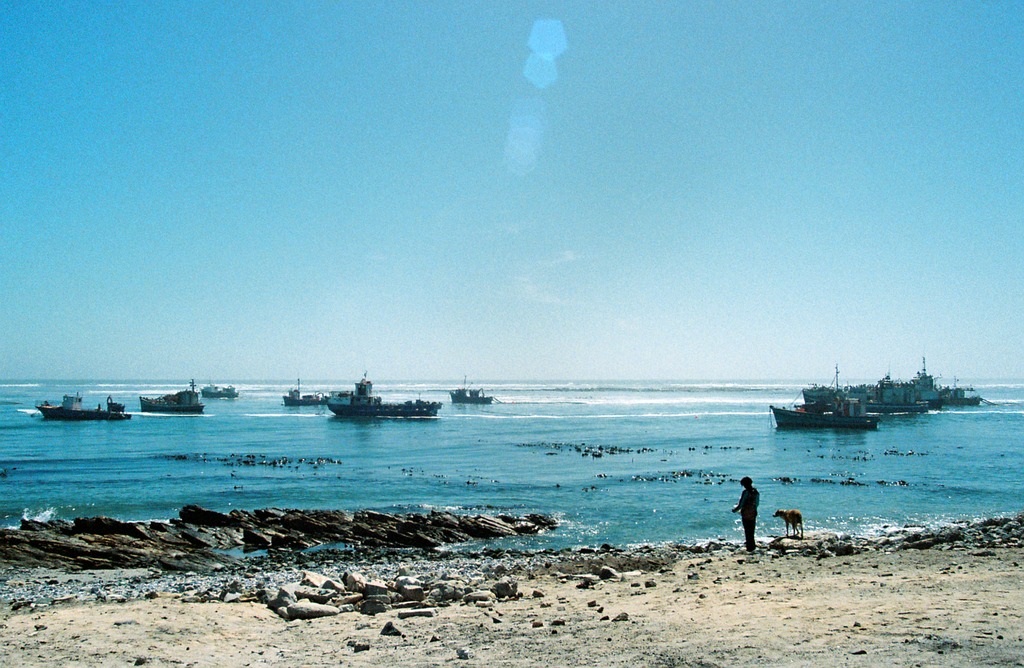
There is a storm brewing on the West Coast of South Africa. This coastline is well accustomed to storms; powerful groundswells brew in the South-West Atlantic and travel thousands of kilometers to reach these shores. For several thousand years South Africa’s indigenous people built lives and cultures on this coast. But today a different storm brews, one that is brewed in boardrooms at the world’s stock exchanges and centres of political power. It is the storm of oil and gas.
“Where there is oil and gas there is war,” says Joe (32), founder of Environmental Traits, a youth group from Port Nolloth. Joe is not his real name; he speaks to us using a pseudonym because he fears reprisals for his activism. “What happens in Africa, look at the Ogoni region in Nigeria, you see that the people suffer a lot, the locals. They suffer through two components; through the Government of the land and the corporations that come to extract the resources of the land, and when the people stand up against those giants, sometimes they get lost, they never get heard from, or seen again.”
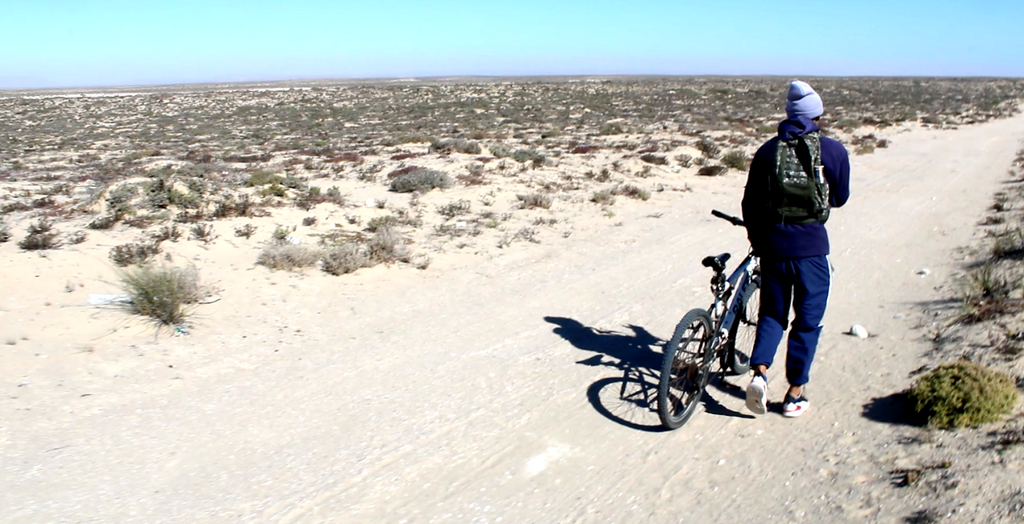
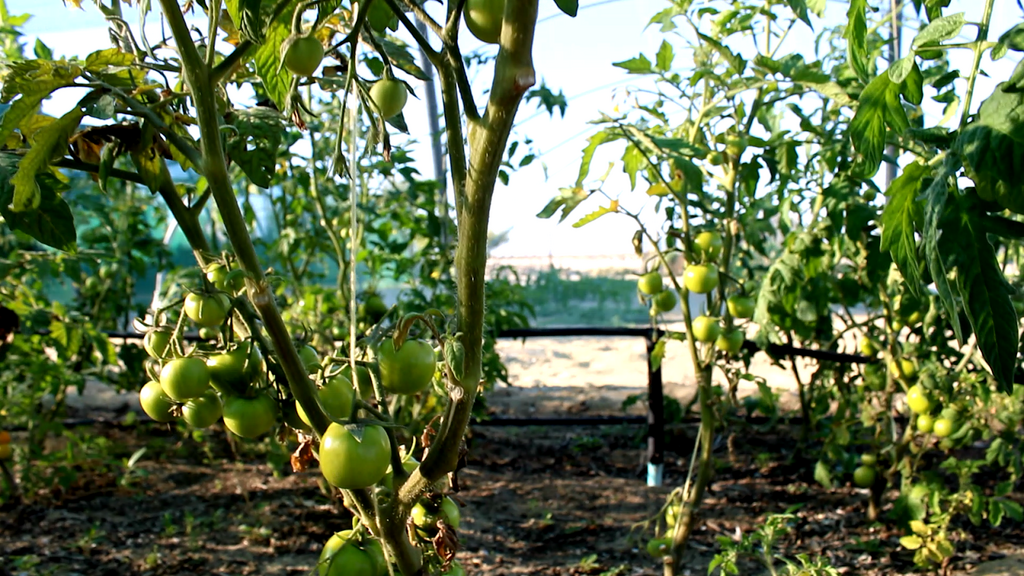
Here, Joe is referring to the activists allegedly murdered with the involvement of Royal Dutch Shell in the Niger River Delta in the 1990s. “So, all I can say is that where there is oil and gas there is war, and if oil and gas comes to our coastline, we know we will get the same war on our coastline. There’s a good example not far from us, in Mozambique, in Cabo Delgado. But do you see the tensions that oil and gas bring? So for all the income they say will be created in South Africa, will actually go to France, or the Netherlands” says Joe. Joe’s comments on Cabo Delgado are referencing TotalEnergies’ involvement in alleged war crimes in Mozambique. Both TotalEnergies and Shell have oil and gas exploration rights near Port Nolloth. Andries Joseph (60), a former mineworker turned activist living in Port Nolloth, agrees with Joe: “They take your resources away, but nothing comes back for the community. All the minerals fly away.”
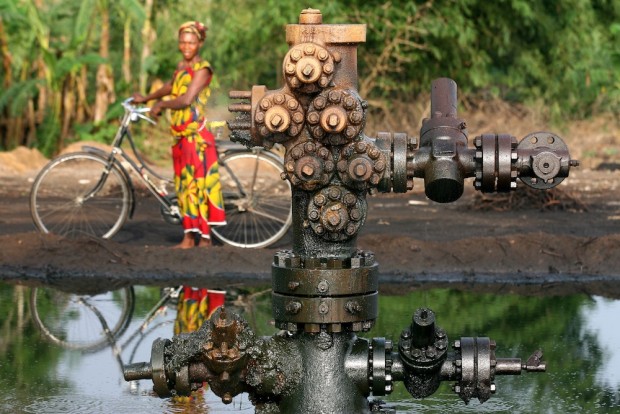
Joe’s voice echoes those from the Niger River Delta: “After 30 years of oil exploration, we still see our people suffering, our children dying day in and day out,” says Grace Ekanum, leader of a women’s movement in Eket, Nigeria. Ekanum’s comments are not hyperbolic; at least 240 000 barrels of crude oil are spilled in the Delta annually, meaning that soil and water are soaked with oil, reducing food security and meaning that newborns in this region are twice as likely to die during the first year of their life.
The synergy between Ekanum’s and Joe’s perspectives is striking: “So tomorrow they come to buy our leaders, so that our leaders can take away the power from our people,” says Joe. “Ultimately, they are just coming to enslave our people again and take the money away like they did before,” says Walter Steenkamp (52), a 4th generation fisherman from Port Nolloth and chairperson of Aukotowa Fisheries Cooperative in Port Nolloth.
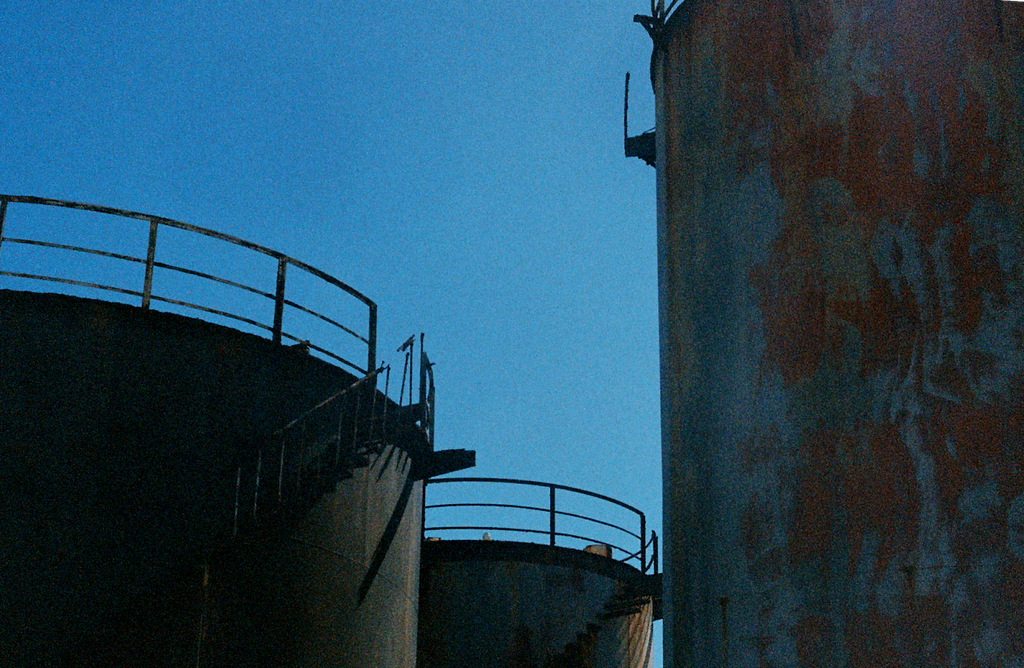
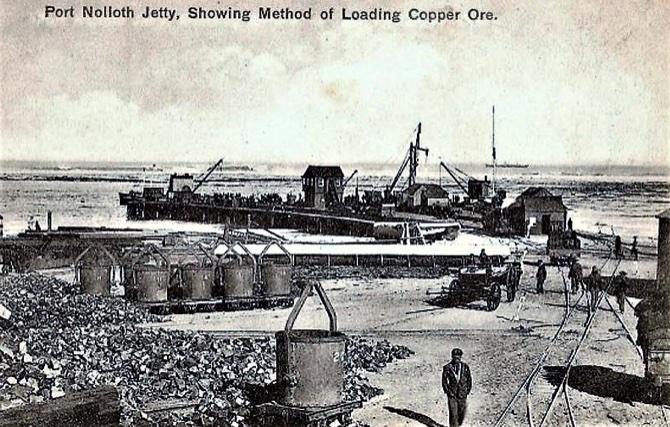
The history Steenkamp mentions contextualises the community’s current struggle with the area’s history of corporate extractivism. South Africa’s long history of mining is intertwined with its history of exploitation; the massive mineral wealth that sustained the Apartheid State simultaneously created huge wealth inequalities from resource extraction. Joseph, Steenkamp, and many others in this community believe that the current oil and gas exploration is a continuation of the extractive economies created under colonisation and continued under Apartheid. This area of Southern Africa first witnessed mining on a corporate scale in the early 1800s; letters between British colonial officials show how foreign interest in this area started with copper mining.
Between 1904 and 1907, the German Empire murdered 80% of the indigenous Herero and Nama people in what is today Namibia. Many of Port Nolloth’s current residents, like Joseph, are descendents of the Nama and Herero who survived persecution. When diamonds were discovered in the early 1900s, resource extraction shifted predominately from copper towards diamonds; the beaches between Doringbaai and the Namibian border bear the scars of onshore diamond mining. Joseph is among many who believe that the communities of the Richtersveld saw almost none of the huge wealth generated from mining. “The development is not intended for our people. The mining companies came, they took the diamonds out and put nothing back for the community, especially for the indigenous people,” says Joseph.
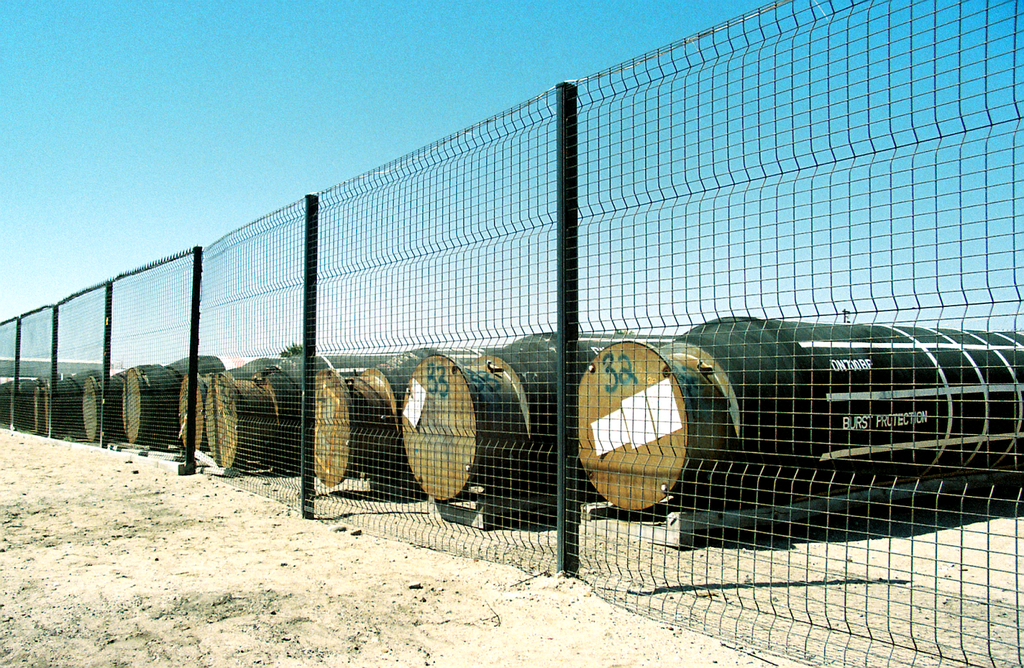
This trend of exploitation was supposed to stop after 1994; Section 24 of South Africa’s Constitution promises to secure “ecologically sustainable development and use of natural resources while promoting justifiable economic and social development.” Similarly, the Mineral Resources Development Act affirms the “State’s obligation to protect the environment for the benefit of present and future generations,” while South Africa’s Constitution enshrines the importance of community consultation and participatory democracy.
However, around 90% of South Africa’s exclusive economic ocean zone is currently leased out for oil and gas production or exploration. Between Cape Town and the Namibian border, most of the onshore mining is for heavy mineral concentrates and diamonds, while most offshore mining is for oil, gas, phosphates and diamonds. The Government’s policy under Operation Phaksia is to “unlock the economic potential of South Africa’s oceans,” through oil and gas exploration and marine aquaculture. Since it was launched in 2014, Operation Phakesia has facilitated massive growth in mining applications.
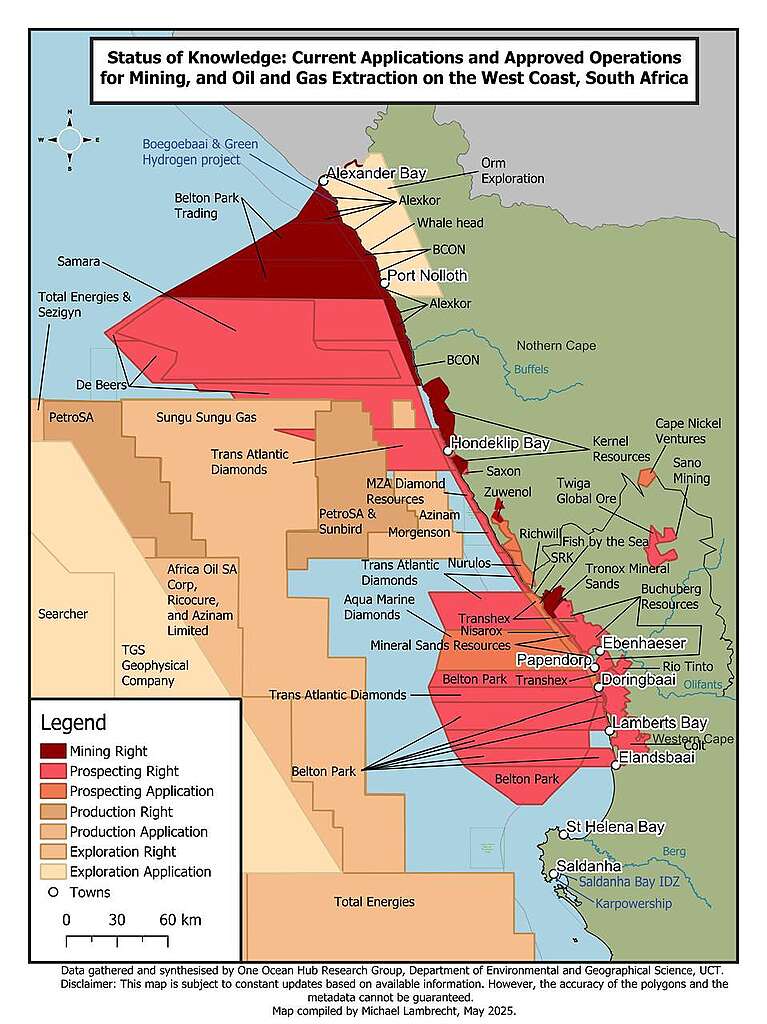
South Africa’s Minister of Mineral and Petroleum Resources, Gwede Mantashe, says that mining is needed for economic growth and job creation. But frontline communities have a different perspective. “I don’t agree with oil and gas, I will never go with them. It’s just a way to leave this community, the Nama people, behind and to oppress,” says Joseph. Steenkamp agrees: “They come to you with words, but actually, nothing happens on the ground.” But Steenkamp says the community is directly affected by the loss of fishing grounds, the resulting decline in the community’s livelihood, and the health impacts from the mines.
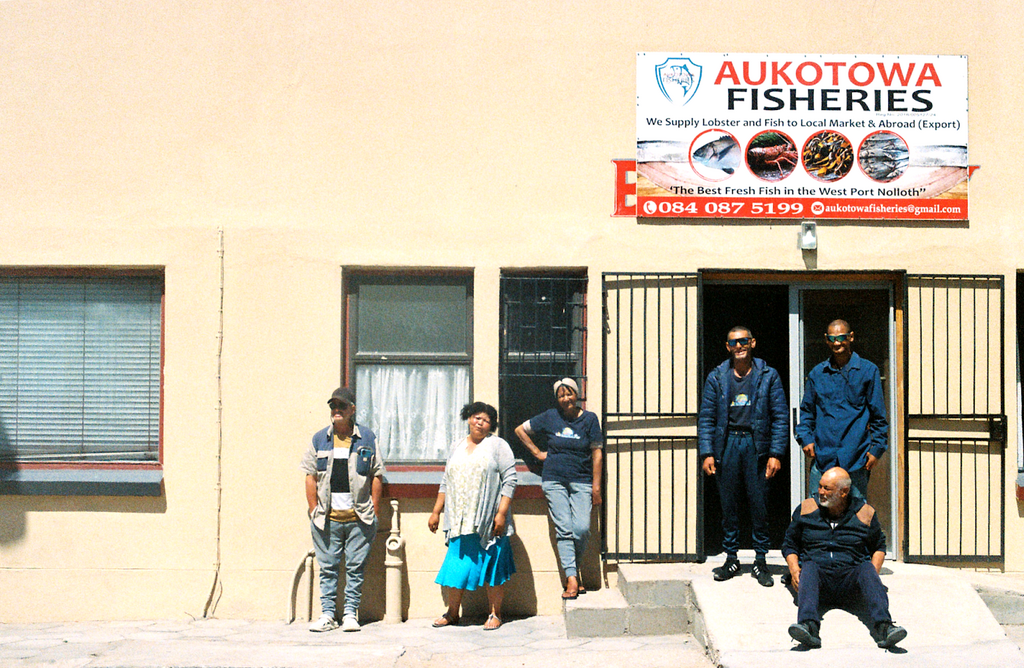
Steenkamp sees that most of the benefits occur outside of these communities, while communities are promised jobs. “What happens in the Richtersveld, contracts are given to big companies from outside and then the big companies come with their workforce, they don’t give jobs to the local people,” he says. Steenkamp explains that promises of job creation never materialise, and that the community has learnt from the area’s history of mining: “I’m not against development, but let the development take place in the right direction, and let the communities get recognised, and don’t do one sided things.” Steenkamp says that the skills needed to gain employment are highly technical, skills not present among the people who need jobs. “Who in our community is educated in that trade? No one. Our people are not trained for that type of work,” says Steenkamp. He continues: “In my experience my people are just used as slaves on the whole final infrastructure to set up. As soon as they put the gate up, as soon as they finish the construction, there’s no jobs for us.”
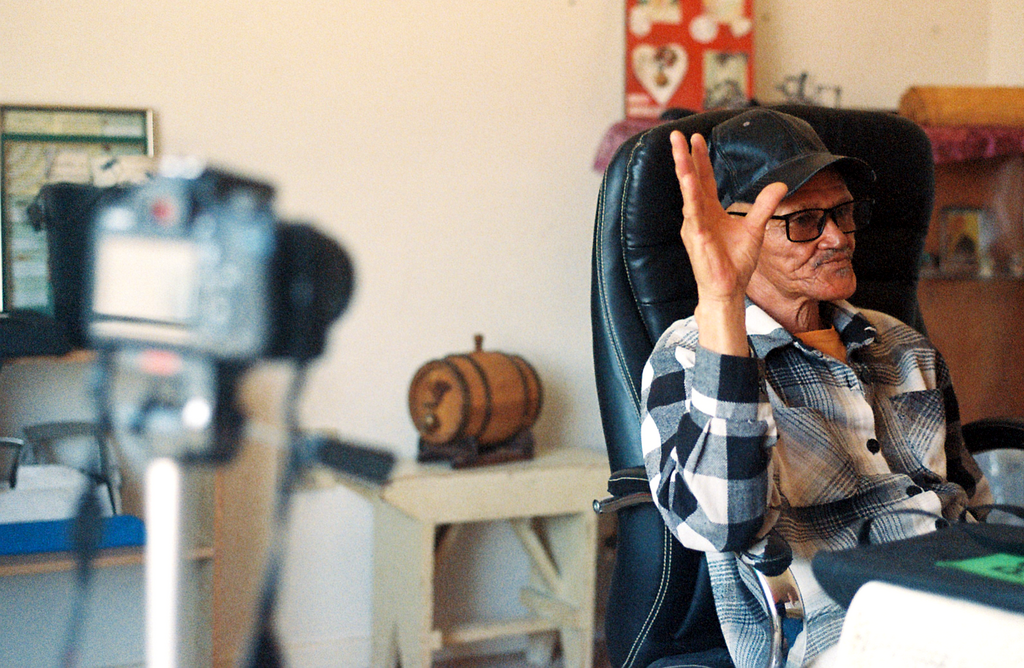
Mantashe and mining companies have stressed the need for inclusive development to replace past exploitation. However, while billions of rands of mineral resources have been extracted from this coastline, Steenkamp says that to anyone visiting Port Nolloth it would be near impossible to make the case that these resources have built an inclusive economy. Available information from local and national governments shows that despite the area’s resource endowments, unemployment and poverty are high. Joseph adds: “There will not be a difference, if I look back at the mining companies, what happened [in the past]. More promises, and the same will happen, empty promises. They come with juicy stories, they come with sweet stories, sappy stories, but if you read the fine print, then you see it’s my biggest mistake I have done here. Before I make that mistake, it will never happen. My answer is no, for oil and gas, no.” Resultantly, many in this community believe that they have been abandoned by the Government; mine workers, fishers and community members interviewed by Greenpeace Africa expressed deep discontent with the political system, believing that the promise of democracy and equitable development was nothing but a lie. This is why “we want a bottom up [development] approach,” says Steenkamp.
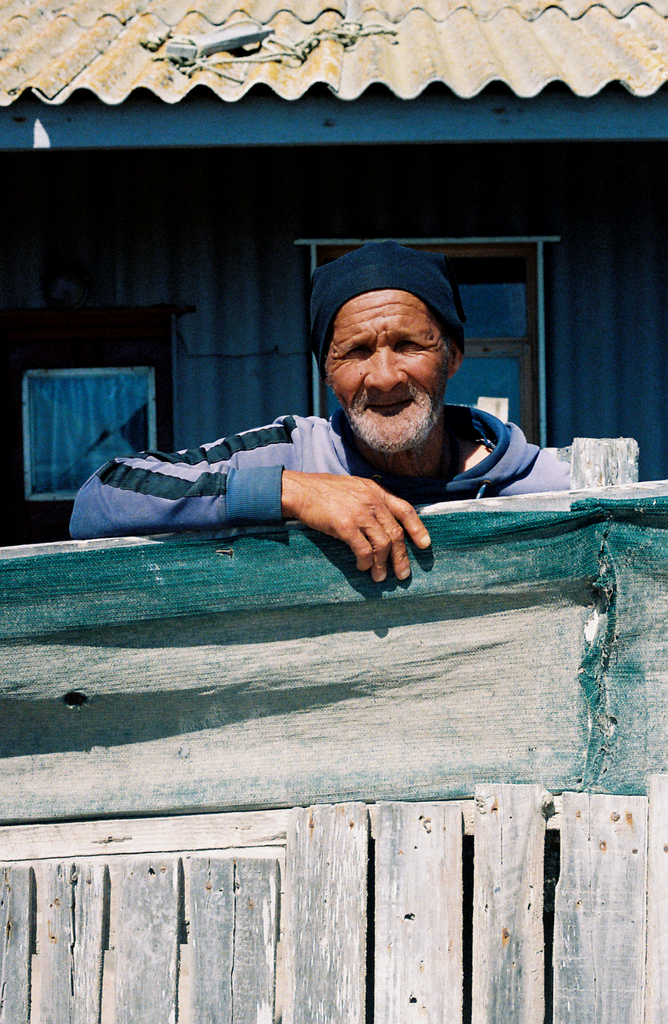
Joseph agrees that those making decisions are completely unaware of the conditions on the ground: “Here live communities, this is not a desert, here lives many communities that stay here on the coastline.” For Steenkamp, for whom the ocean is life, this is what the current paradigm of resource extraction threatens: “My father was a 3rd generation fisherman, so it is hereditary blood that is inside of [me]. I have my mother and my father’s talent, my mother did the same work I am doing, she was also a chairperson of a women’s group. As communities we want, through the years, a sustainable life and sustainable work, that’s where we want to go.” The political disjuncture between local perspectives on the economy and national decision making, for Steenkamp, Joseph, and many others in this area, ignores the voices of the people and the socio-economic interconnectedness of the people with the land and the sea. Steenkamp says that the impacts of this disjuncture leaves little for small-scale fisherspeople who rely on the sea to live. More on this from the community of Doringbaai in part 2 of this series.
Joe’s comparison of the West Coast with other parts of Africa makes this point clear; Governments and leaders must hear the voices of the people and build an alternative to the extractive fossil fuel economy that is making an inclusive economy unattainable. The violent history of the fossil fuel industry in Africa could foreshadow its future on the West Coast, unless these voices are heeded.
PART 2
Fields of gold PART 2: Community voices on extractive economies from Doringbaai
PART 3
Fields of gold PART 3: Voices on extractive economies from Ebenhaeser and Hondeklipbaai


