A note on this story series: Political leaders and big business often push the narrative that oil and gas extraction is a development imperative. Travelling between Cape Town and Port Nolloth by bus, minibus taxi and foot, Greenpeace Africa volunteer Milan Burnett and photographer Tom van der Schijff spent 10 days on the West Coast of South Africa, home to many oil, gas and other mining projects, to gather perspectives from coastal communities on this narrative. A huge thank you to Masifundise Development Trust and Protect the West Coast for their help.
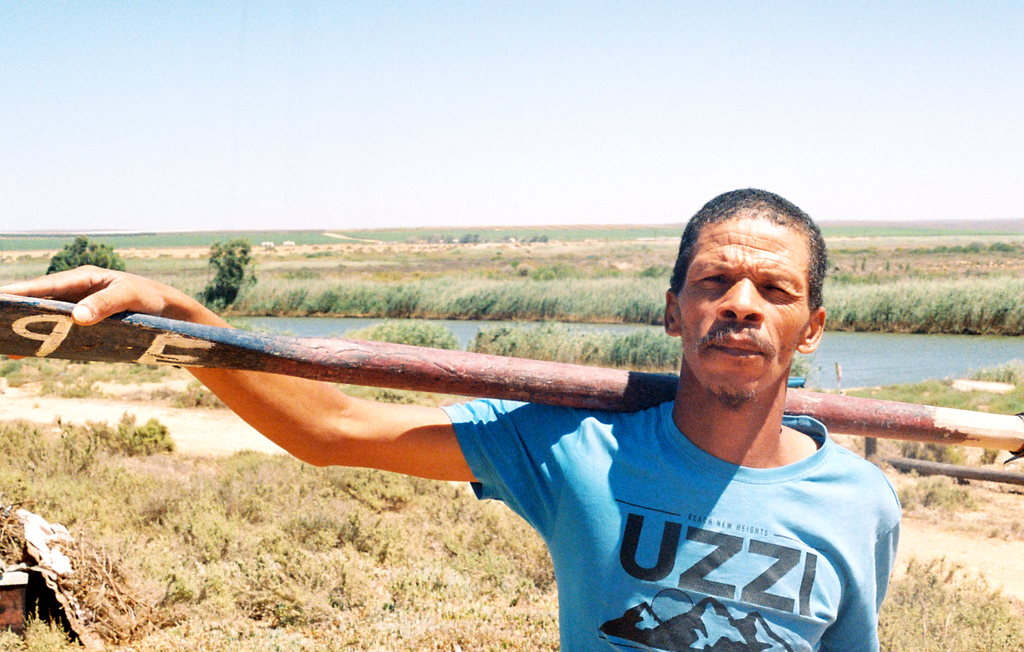
The river starts to gather strength in the Winterhoek mountains around Ceres. From there the water begins a descent to the Atlantic ocean approximately 280 kilometers long. Along the way it is joined by other water sources that unify in their quest to meet the Atlantic ocean at Papendorp. Through that journey the river nourishes the land, bringing life along its banks. Among the lives the river nourishes are those of Rhiaan Coetzee (37) and Sylvester Don (47).
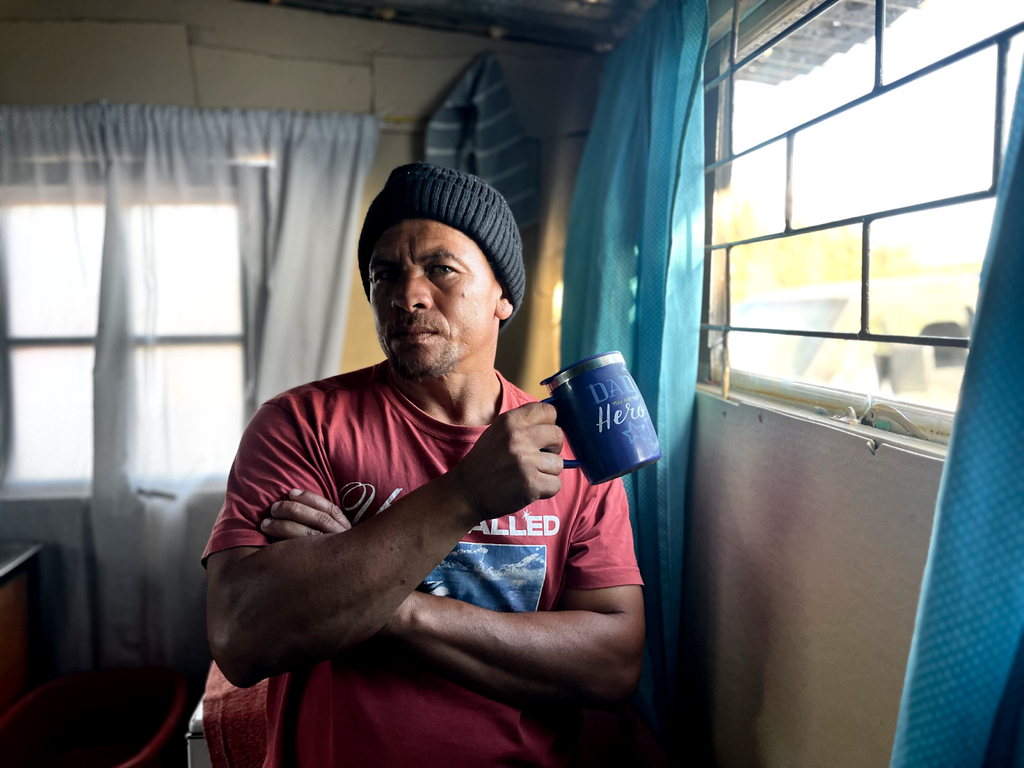
The Oliphants River has nourished the Coetzee family since Rhiaan’s parents moved to Ebenhaeser in 1991. His mother, a forewoman at the Saldanha Bay fish factory, and his father, a fisherman, were brought together by the sea. They met on the docks, 200 kilometers from where we sit, as Coetzee’s father was coming in from the boats: “That’s where their relationship started. My dad worked in Saldanha,” says Coetzee. “When the ship is full you offload, so [when] my dad came in and the boat would dock for 2 days, this is where my dad and my mum met.” Claudine and Jan Johannes Coetzee married in 1975, moving to Ebenhaeser, 16 kilometres from Papendorp, shortly after Rhiaan was born. Meanwhile, Claudine’s sister, a teacher at Doringbaai secondary school, was the secretary at the Doringbaai fish factory in the early 2000s. While Rhiaan’s aunt worked on the land, Claudine’s brother-in-law, a skipper on a fishing boat, worked in the cold Benguela current to bring home snoek, harder, and crayfish.
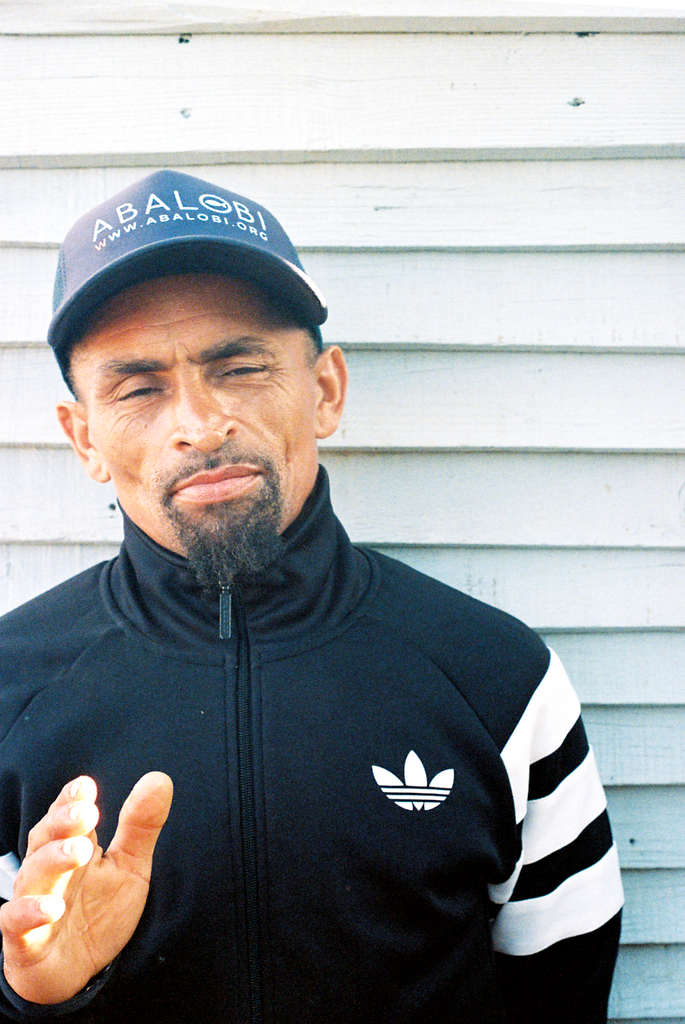
“It’s a tradition from generation to generation, because my grandfather was a fisherman, my father was a fisherman, and I am the 3rd generation in the fishing business in my bloodline,” says Coetzee. Rhiaan, his partner, and their daughter are the third generation of the Coetzee this tradition has nourished. “In the morning the fish comes,” says Sylvester Don, Coetzee’s close friend. “It’s like a happiness, everyone is joyful because here comes money, here comes food, and here comes even a job, because if we have plenty of fish, for instance we have 2000 fish, we must sort the fish, we must scrape the fish, so the fish can go to the marketer. So at that time when you have that fish, you can see the happiness in the face, and the joyfulness in the kids, how they are playing around.” These relationships connect with the food system Deborah Dewee from Doringbaai, whose father fished for 50 years, shared in Part 2 of this series. But just like for Dewee’s family, for Coetzee and Don, the river or the sea is more than food: “Maybe you were stressed,” adds Coetzee, “then you walk to the river and come sit here for an hour or so, then when you go home you come home with a different environment; you connected with nature, you speak to the spirit, and when you go home you go home with a good attitude.”
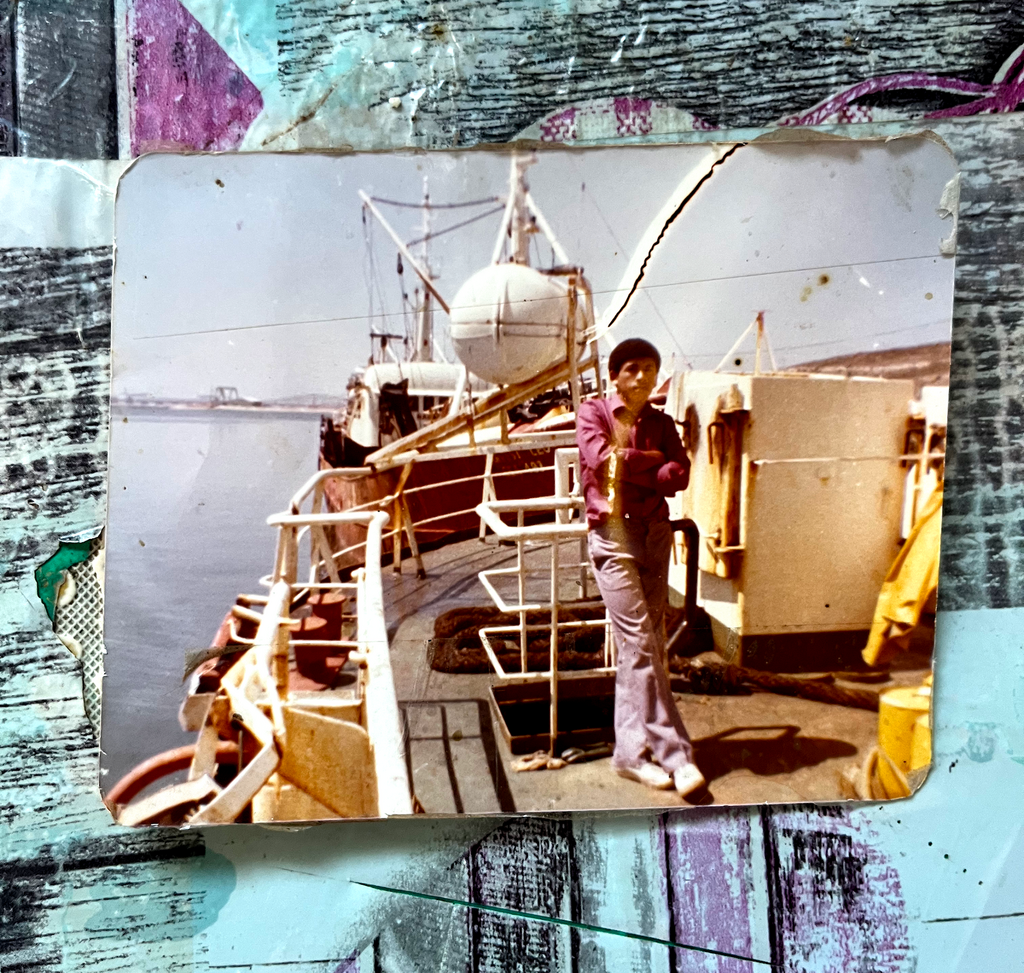
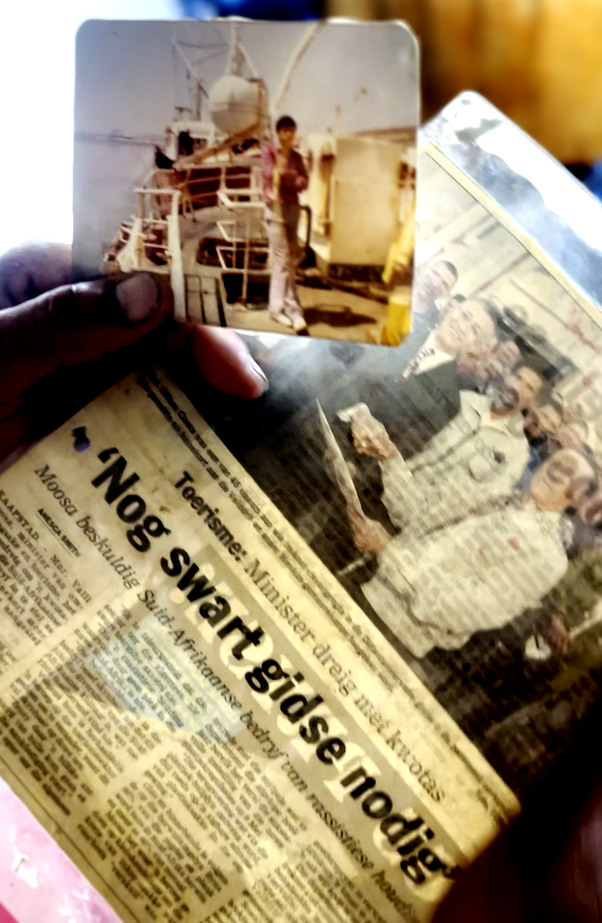
But while this family’s relationship with the sea and the river has remained constant, Rhiaan and his parents have had to fight tooth and nail for it. This fight started with Coetzee’s father in the late 1990s, when fishers across this coast protested the lack of ocean access for fishing communities. The newspaper clipping in Coetzee’s home shows how in 2003, Jan Johannes Coetzee was one of 45 fishermen from this area who took a petition to Parliament to protest the exclusion of these communities to access oceans. The fishermen were received by then Minister of Environment, Valli Moosa. “We are five sons and one daughter, so it was tough, so he had to stand up for his children,” says Rhiaan. A series of court battles followed, leading to the 2007 Equality Court judgement which ordered the Government to develop a small-scale fishing policy that recognised the customary rights of fishing communities to access the ocean. Although the policy was gazetted in 2012, as fishing communities in Part 1, from Port Nolloth, and Part 2, from Doringbaai, expressed, the promise of inclusion in the ocean economy falls far short of the lived reality. Read more about this policy here. “I was there when we wrote the small-scale policy, I was 18 years old. But Government never do it like it’s stated in the policy. We are the 3rd generation, but the 1st generation, the 2nd generation was fighting for development, but still is now my mission too, to fight for development in the fishing industry,” says Coetzee.
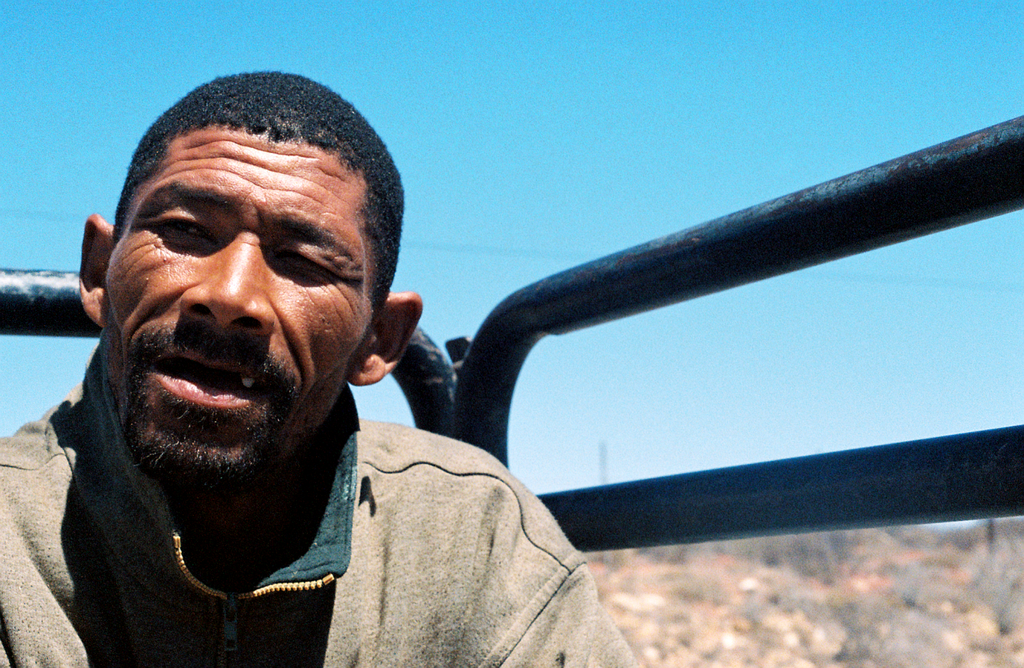
Among the legal frameworks that excludes the Coetzee family from the ocean is the disproportionate percentage of the fishing quota given to the commercial industry: “They cut our quota because they say they need to reduce pressure on the species. But small-scale can’t suppress the species, the [industry] destroys the species. At the end of the day the tradition is coming to an end because how can I practice [my tradition] when I go to sea, when you give the quota to commercial.”
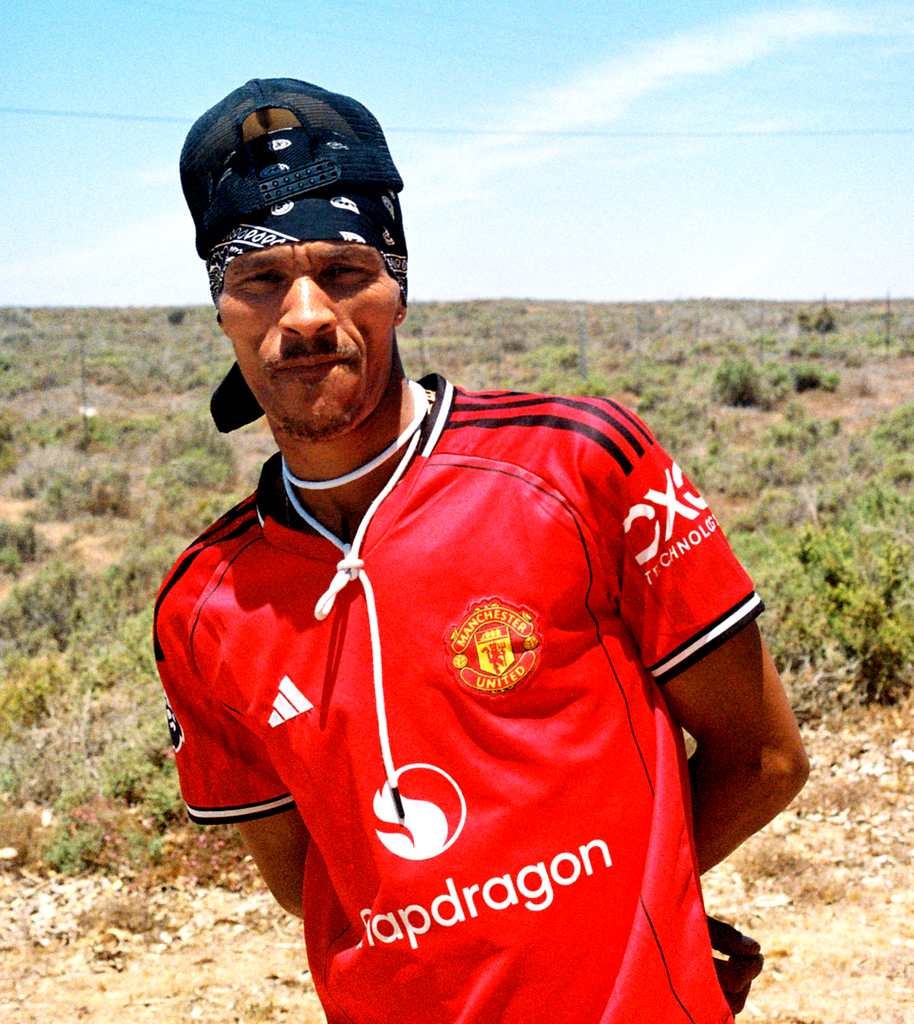
In this context, Coetzee explains that “when the Government comes here they’ve already formed a picture of what we looked like here. For we as fishers there’s no participation in that decisions.” This is why Coetzee says there is a disconnect between how his community lives and Government policy. For example, Coetzee must inform the local fisheries inspector if he wants to go to sea, and says he can only fish during office hours, between 08:00 and 17:00. “I’m not an office man,” says Coetzee. “I’m a fisherman. The conditions say we must go 08:00 to sea, but the morning star is my navigation.” Coetzee says that the Government prioritises commercial fisheries because of the tax revenue it generates. What is missing in this picture, says Coetzee, is considering the impacts of these decisions on communities like Ebenhaeser. Rhiaan explains that if quotas were distributed more equally between commercial and small-scale fisheries, “women and youth can get involved because now it’s just for the men that catch. But the women and youth don’t get enough of the harvest because the quota is too little. They don’t take account of us, and so the women here don’t have work anymore.”
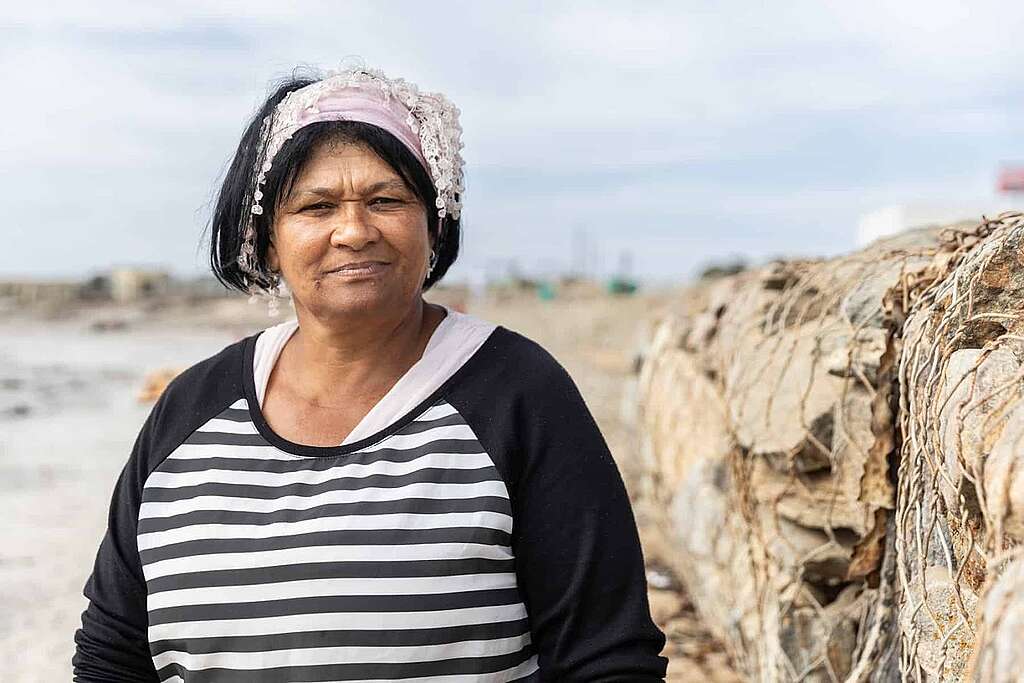
Carisa Soudens, a 4th generation fisher from Hondeklipbaai and a former mine worker, agrees with Coetzee on how the quota system impacts women in the community: “There is a huge impact on women. The woman is there to look after their children but we can’t look after our children.” Read more about Soudens’ experience in the open letter she wrote to the Government on these issues. The bloodline of Soudens runs similarly to Coetzee’s; both are fighting for the inclusion of their families. Soudens’ bloodline in Hondeklipbaai began over 100 years ago. Since then, her family has tended the fish of this coastline generation after generation, building a deep knowledge of the ocean and how to protect the ocean. But just as many people along this coastline have expressed, that bloodline is under threat; fishing rights are just one aspect of that threat, the other is oil, gas, and mining.
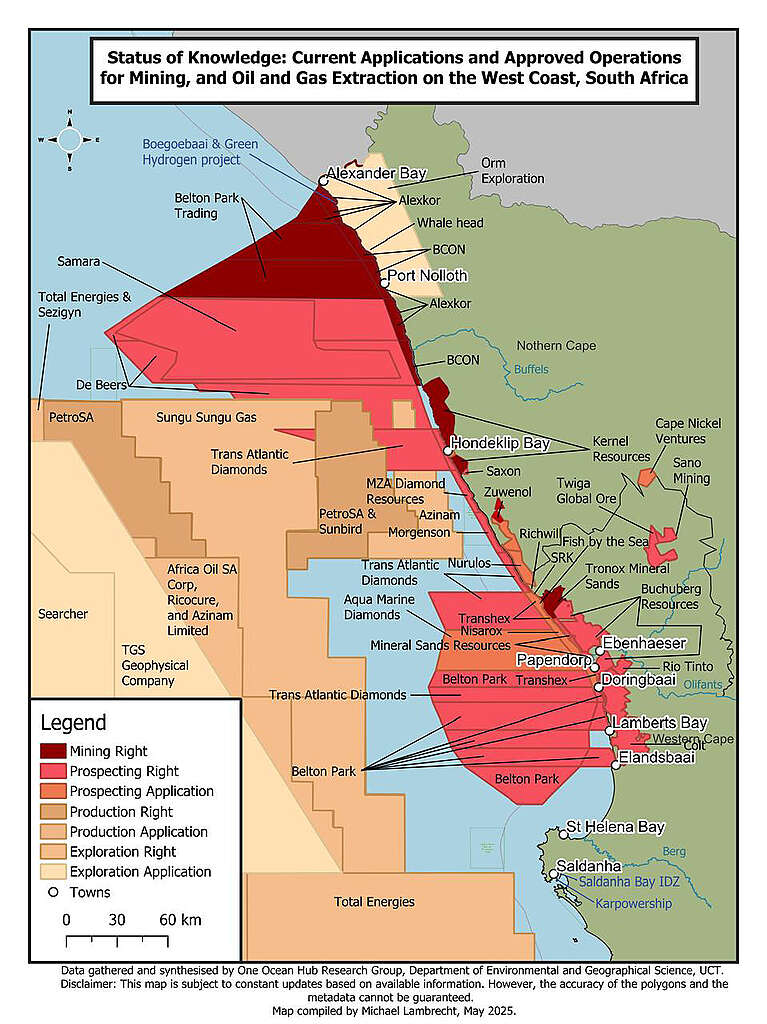
Hondeklipbaai is a small fishing village in the Northern Cape. The town has hosted mines in the area for at least 100 years. In recent years, it has become surrounded by mining or mining applications; mostly oil, gas, diamonds, and heavy mineral sands. In this way it is similar to Ebenhaeser, where Coetzee lives. Although Coetzee and Soudens have never met, they expressed very similar sentiments around this onslaught of mining on their coastline. “If you look in the heart of the ocean, I mean we call this mother nature, because nature is a woman. If they do that stuff you destroy our life, you sell our whole life, because how can we eat oil and gas?” says Coetzee. The system of extractivism, for Coetzee, is part of the same system causing climate breakdown and depleting the fish stocks: “Things have changed a lot, even the currents of the sea, from, as they say, climate change,” says Coetzee. “Climate change, we didn’t know what it was in the first place by COP17, I was there in Durban, I was there at COP17, it was my first in 2011. I didn’t understand what they meant by climate change, but I understand now at COP30, the effects, from then to now, has a huge huge impact on our source [of life], our living standard.” To the notion that resource extraction leads to development, Coetzee laughs and shakes his head: “The development is for people who is in the minerals, not for the people who is in the fishing industry.”
To the notion that mining leads to better lives, Soudens responds: “The decisions that Gwede [Mantashe] made were wrong. The benefits go to the DMRE [Department of Mineral Resources and Energy] and not to the community. We don’t benefit at all. I completely don’t agree with Gwede. I told him in Cape Town to come and visit us and he never does. So they must come to us to speak to us and tell us their nonsense so we can answer. They make their lives about lying to the communities. The Government must come and explain. They must say why they left us behind. Our people are suffering. The government must come back for our community and explain.”
“When are we going to get that equality of rights? When will it become reality that I am in the picture?” asks Coetzee.
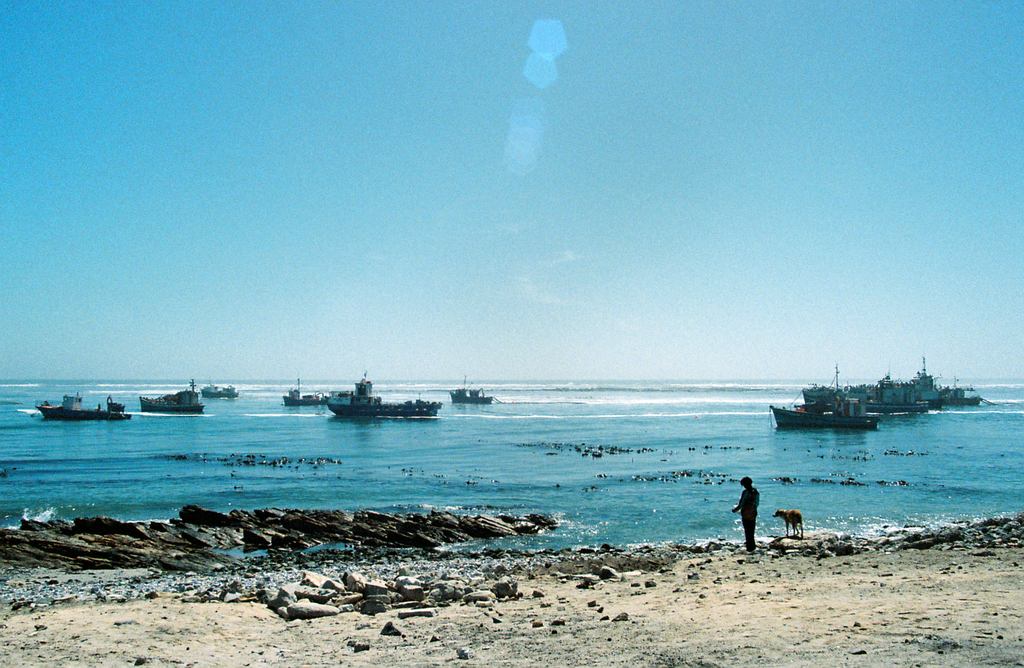
PART 1
Fields of gold PART 1: Community voices on extractive economies from the Richtersveld
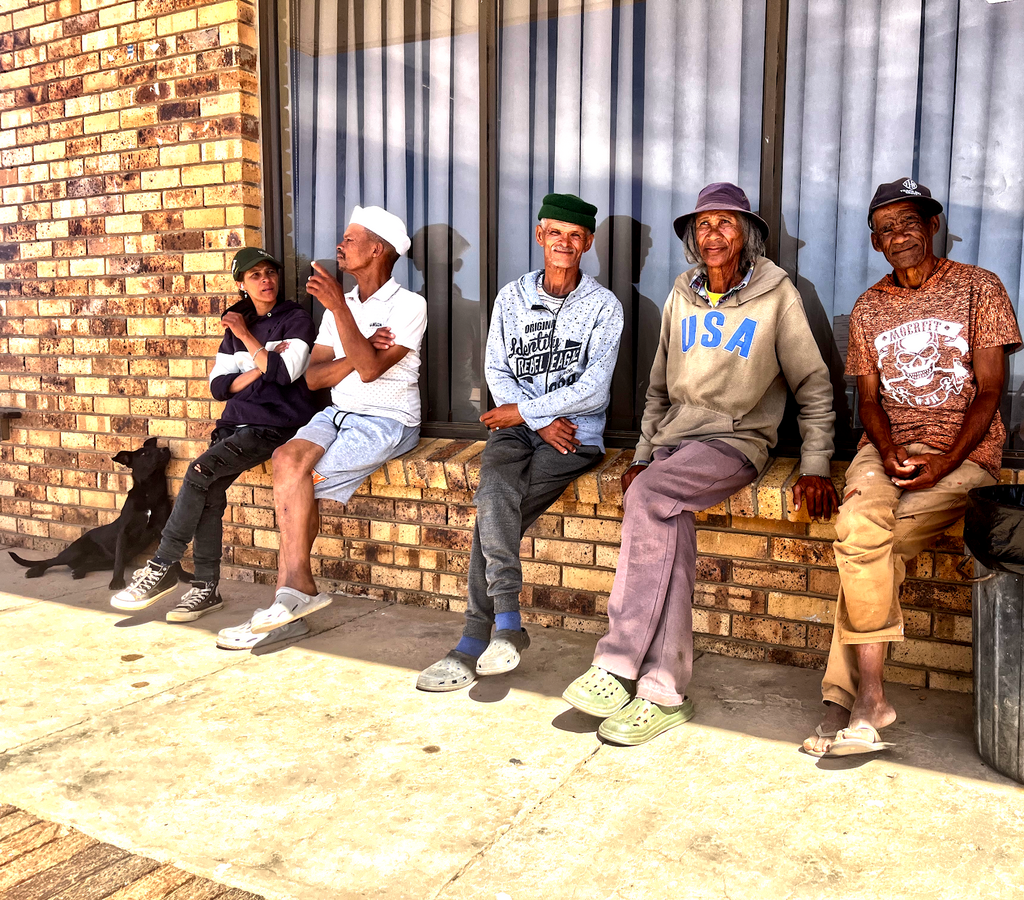
PART 2
Fields of gold PART 2: Community voices on extractive economies from Doringbaai