Slow progress on climate finance, just transition, and fossil fuel phase-out highlights the growing disconnect between political negotiations and the urgency of the climate crisis.
As the curtains fell on the climate talks here in Bonn, after two intensive weeks of discussion on adaptation, climate finance, just transition, transitioning away from fossil fuels and mitigation, a lot still needs to be resolved as we move forward to COP31 in Antalya, Türkiye. These talks came at a time when countries faced a myriad of complex geopolitical challenges that put immense pressure on multilateral cooperation. At the same time, negotiations took place alongside the G7 Heads of State Summit happening in the small French city of Evian, which unfortunately never focused on climate action.
El-Nino
We came to Bonn just as El-Nino was confirmed, with expectations of yet another record-hot year coming in 2027. In the words of the UN Secretary-General, Antonio Guterres, El Nino can be notoriously difficult to deal with; it can pour fuel on the fire of a warming world and lead to severe and unpredictable weather conditions. That being the case, what we are experiencing is misalignment between government actions and the level of urgency required, threatening the existence of climate-vulnerable countries and exposing millions of people, especially those in said countries, to the harms of escalating climate impacts. We are at a critical juncture in defending the emerging political momentum for a just transition and forest protection, giving us the best chance of limiting global warming. As we enter this supercharged moment and face its unpredictable impacts, we must act with the urgency required for both people and the planet.
However, several key pressure points and emerging issues were discussed including:
Electrification
Potentially born out of the Middle East crisis, particularly the disruption to the energy value chains through the Strait of Hormuz, this discussion has gained momentum. We must remember that COP28 in Dubai delivered a historic decision to triple renewable energy capacity and double energy efficiency by 2030. The critical question we must ask ourselves in this electrification debate is: where are we positioning the fossil fuel phase-out in our energy systems to achieve this? We are following this keenly, so that it does not become another distraction from the main agenda of phasing out fossil fuels.
Trade and climate technical dialogues
These emerged as potential areas of discussion, with dialogues happening alongside other items as mandated technical dialogues. These dialogues were formally introduced at COP30 in Brazil through two different streams. One, the launch of a multilateral trade and climate technical dialogue under the auspices of the Mutirāo decision and Brazil’s Integrated Forum on Climate Change and Trade (IFCCT). Countries continue to experience climate-related trade instruments such as carbon border adjustment measures, industrial policies, carbon accounting requirements, and deforestation-related measures, which are escalating political tensions between countries. The rationale here was for parties to find ways of addressing emerging unilateral trade measures that would undermine implementation of climate commitments, and in place come up with measures that would minimise these.
On Just Transition
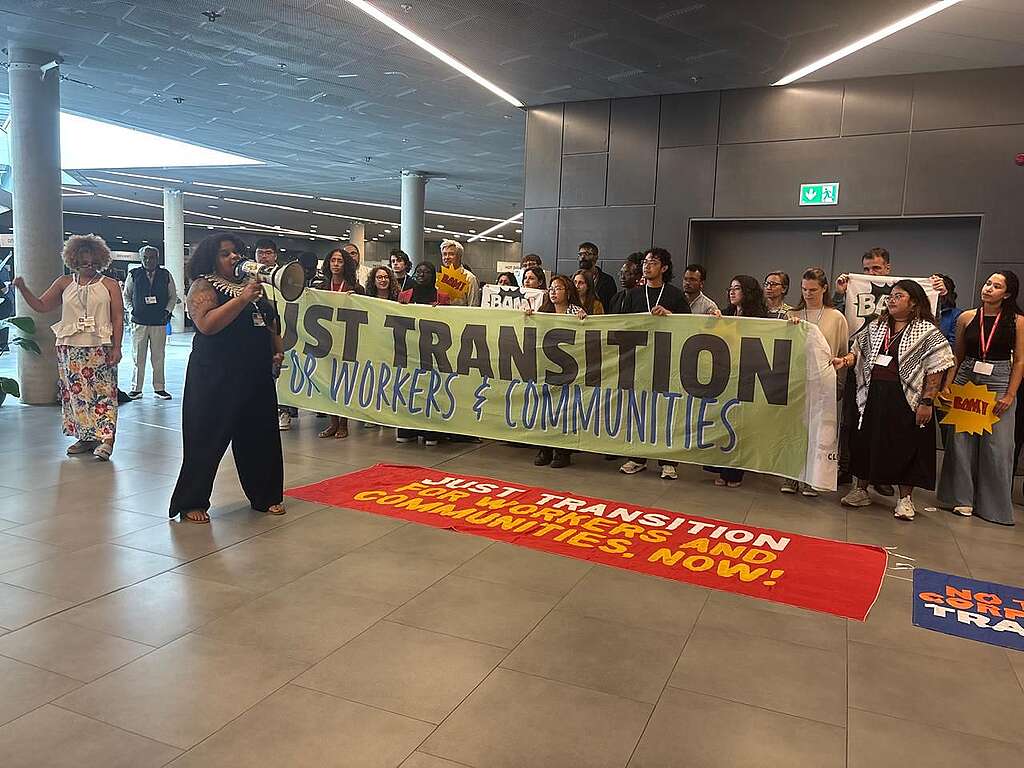
At last, here in Bonn, for the first time since the inception of the Just Transition Work Programme, parties made significant strides to agree on a provisional text that will advance the programme. This programme is seemingly moving away from just dialogues and exchanges to now a concrete political step forward, agreeing to establish a Just Transition Mechanism. A lot is still at stake, and it leaves parties and observers with a question of how this political momentum will translate into an operational mechanism that focuses on the means of implementation, particularly for countries in dire need of a just transition.
Transitioning away from fossil fuels was at the centre of our engagement with parties, armed with the Just Transition Away from Fossil Fuels Policy Brief. Coming to Bonn, this item was meant to gather political momentum post the Santa Marta Conference, and the landmark recognition of this subject at COP28 in Dubai. The COP30 Presidency came up with a process to develop a roadmap for which the main agenda was to transition away from fossil fuels from the national level while aligning with global climate targets.