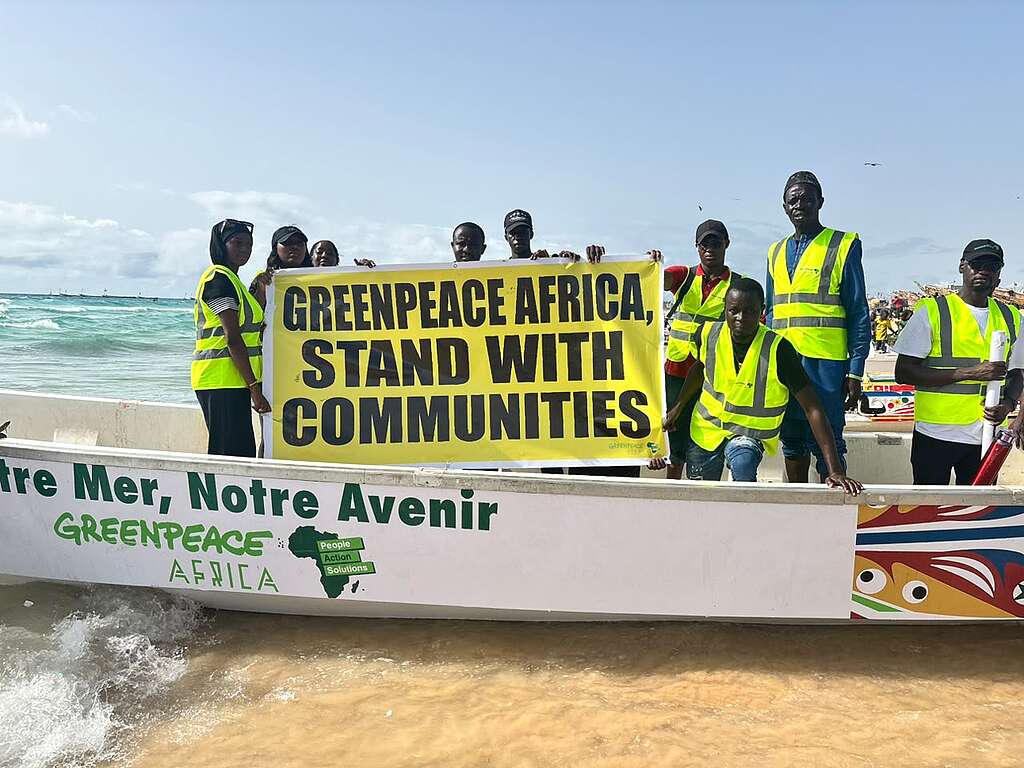
When I arrived in Kayar to attend the pirogue race, I expected to witness a sporting competition. But as the songs rose from the shore and the crowd cheered the crews on, I realised that what was unfolding before me was about much more than winning a race.
Out on the water, the rowers moved as one, driven forward by the rhythm of their paddles and the voices of an entire community. Families, friends and neighbours gathered along the shore, proudly supporting their teams. Each pirogue seemed to carry more than its crew. It carried a history, a shared pride and a heritage passed down through generations.
Watching the race reminded me that, for coastal communities, the ocean is not simply a workplace or a source of income. It is woven into everyday life. It brings people together, shapes traditions and carries the memories and stories passed on by elders.
Through the regatta, I saw a community celebrating its relationship with the sea. I understood more clearly that pirogues are not only vessels used for fishing. They tell the stories of the people who live along these shores: the fishers who leave before sunrise, the families who wait for their return, the solidarity that connects crews at sea and the knowledge shared with younger generations.
As a Greenpeace Africa volunteer, this experience deepened my understanding of what it means to protect the ocean. It is not only about safeguarding fish populations or defending an economic activity. It is also about protecting everything that has grown around the sea: collective memory, community bonds, cultural identity and the connection between generations.
Today, this heritage is becoming increasingly fragile. Fish populations are declining under the pressure of industrial overfishing and the impacts of climate change. When fish become scarce, the consequences extend far beyond the loss of income. An entire way of life is affected, along with the traditions, knowledge and relationships that depend on the ocean.
As I watched the pirogues race across the waters of Kayar, I found myself wondering what would remain of moments like this if communities could no longer make a living from the sea. What would become of the songs, the regattas and the stories of the elders if younger generations were gradually forced away from this heritage?
The regatta showed me that protecting the ocean also means protecting the right of coastal communities to keep their culture alive and pass their stories on. It means allowing today’s children to become tomorrow’s rowers, fishers or simply the guardians of a shared memory.
Because when the pirogues take to the sea in Kayar, it is not only their crews that move across the waves. An entire culture is sailing with them.
By Khawa Diakite – Greenpeace Africa volunteer (Dakar Local Group)