
COP31 · Antalya · –
Africa is ready to lead. We come for finance.
Greenpeace Africa is at COP31, the UN Climate Change Conference in Antalya, Türkiye. It’s the “implementation COP”, and we’re here to make sure the promises are funded through grants, built around local needs, and delivered to frontline communities.
COP31, day by day.
Last updated: Live updates · Newest first
-
The world is watching: voices from around the globe as COP31 nears its end
As COP31 enters its final two days of negotiations, Greenpeace is bringing together voices from around the world with one message for leaders: the world is watching. In this reel with Greenpeace Kenya volunteers, people hold up that message in their own languages, including “Die wêreld kyk” in Afrikaans, calling on leaders to make the right decisions and commit to a just transition away from fossil fuels. The people are watching, the world is watching, history is watching. Watch the reel and share it.
-
Greenpeace unveils wind turbine inside COP31, demanding fossil fuel phase-out and concrete climate finance
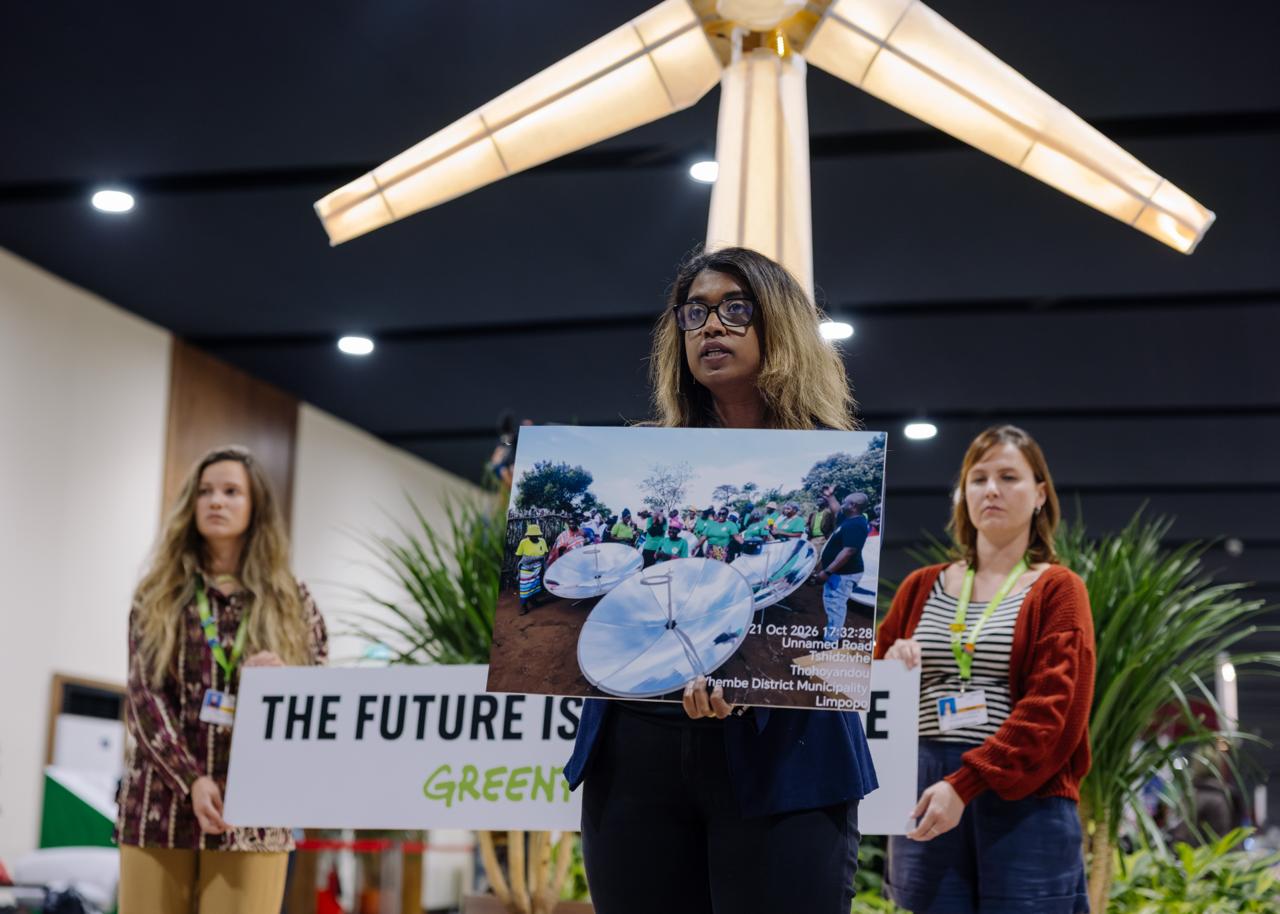
Inside the COP31 venue, beneath summit banners reading “Dialogue, Consensus, Action”, Greenpeace lit up a wind turbine carrying the message “The Future is Renewable”, alongside photos of community clean energy projects from Egypt, Fiji and South Africa. With hours left in Antalya, Greenpeace Africa is calling for a clear, time-bound roadmap to phase out fossil fuels, progressive taxes on major polluters and direct support for community-owned renewable energy. Developed countries must meet their Article 9.1 obligations with grant-based public finance, not debt, and clean electrification must be built into national plans in line with the COP31 Presidency’s “35 by 35” goal.

-
Africa cannot keep paying for a climate crisis it did not create: time to Make Polluters Pay
With climate finance talks stalled in Antalya, Sherelee Odayar argues that African countries are paying for a crisis they barely caused, from floods in South Africa and Kenya to drought across the Horn of Africa and rising seas in Senegal, while oil and gas companies make billions. Article 9.3 of the Paris Agreement gives governments a framework to tax fossil fuel profits and fund adaptation, loss and damage and a just energy transition. But polluter taxes must come on top of developed countries’ binding finance obligations under Article 9.1, not replace them, and new climate finance must not arrive as debt.
-
The future is renewable: we lit up a wind turbine at COP31
Beneath the summit banners reading “Dialogue, Consensus, Action”, Greenpeace lit up a wind turbine with a simple message for ministers as talks enter their final days: the future is renewable. Around it, we shared photos of community-led clean energy projects, including Earthlife Africa in South Africa, where solar cookers help families in off-grid villages boil safe water and cook without firewood, and two women-led, solar-powered Just Transition Centres keep the lights on when the power goes out. Communities are already leading the way. Now leaders must stop funding fossil fuels and invest in local renewable energy.
-
Why climate finance at COP31 needs a meaningful outcome, not a rushed compromise
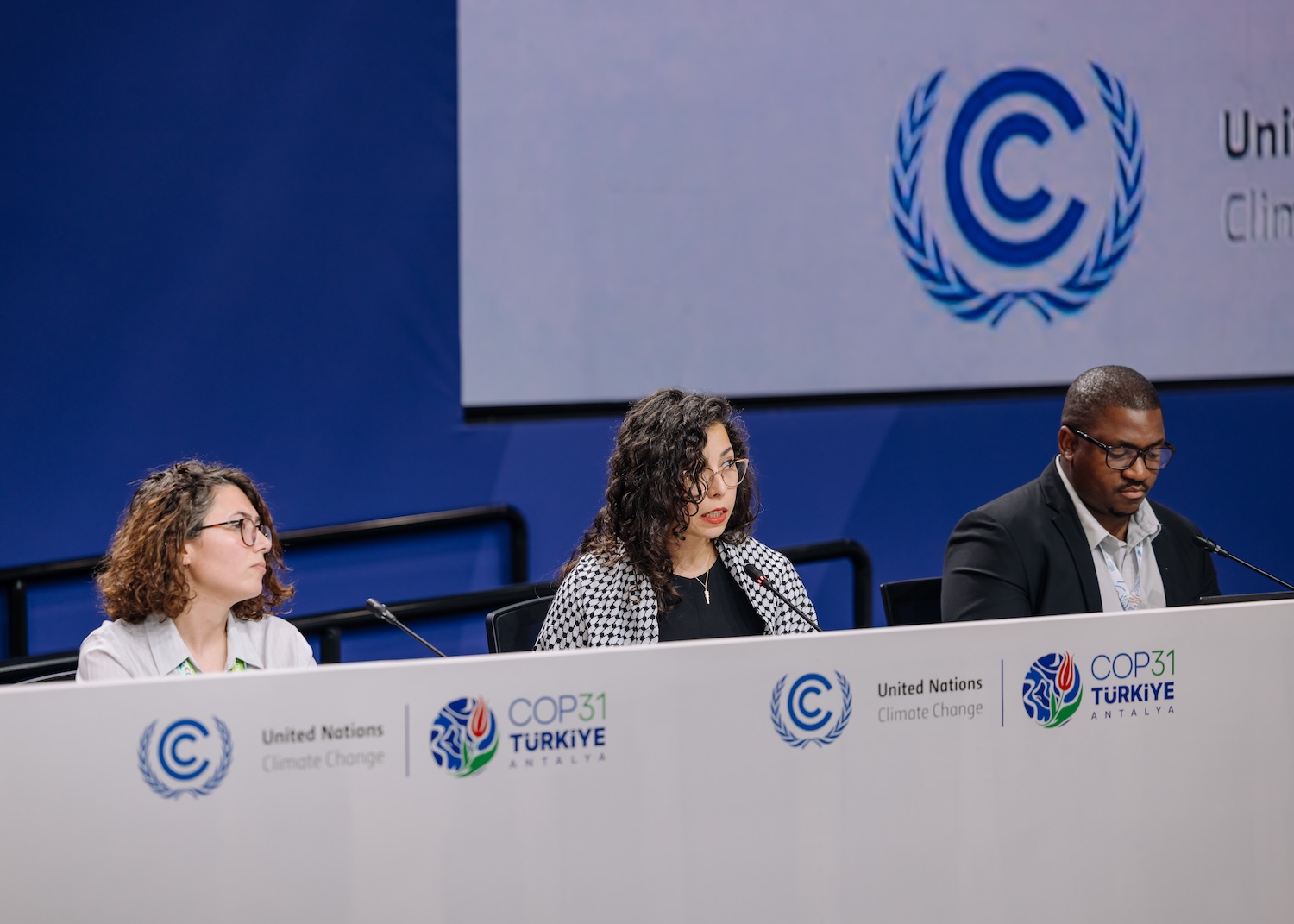
As COP31 enters its final days, the big question is whether developed countries will meet their climate finance obligations or settle for a deal that promises more than it delivers. Developing countries want clarity on the pledge to triple adaptation finance by 2035: the baseline, the target and the milestones. Under Article 9.1 of the Paris Agreement, developed countries must provide finance, and private money can’t replace predictable, grant-based public finance. Finance that deepens debt is not climate justice, and access barriers still keep money from reaching the least developed countries and small island states.
-
Africa needs climate justice, not more loans
Africa did the least to cause the climate crisis, yet we’re paying the highest price, and now we’re expected to take on more debt to survive it. At COP31, our message is clear: cancel unjust debt, deliver fair climate finance and fund a just transition that puts African communities first. Watch the reel and share it.
-
Beyond private capital: reclaiming public climate finance on the road to COP32 in Addis
At the Ethiopian COP32 Pavilion, Greenpeace Africa, Power Shift Africa, Tax Justice Network – Africa and CARE International made the case that public climate finance is a legal obligation under Article 9.1 of the Paris Agreement, not an investment opportunity. Adaptation finance still covers less than a tenth of the $305 billion developing countries will need each year by 2035, and smallholder farmers, who grow around a third of the world’s food, get just 0.8% of tracked climate finance. Speakers called for grants over debt, debt cancellation and fair global tax rules so African countries stop paying for a crisis they didn’t cause.

-
The future of energy is clean, renewable and within our reach
As UN Secretary-General António Guterres reminds us, we have the technology and the economic case for clean energy. What’s missing is the political will. It’s time for world leaders to stop protecting fossil fuel interests and start investing in a future powered by the sun and wind. The solutions exist. Now we need action. Watch the reel and share it.
-
Greta Thunberg isn’t mincing her words at COP31
While world leaders gather to discuss climate solutions, the fossil fuel industry keeps profiting from the very crisis we’re trying to solve. As Greta reminds us, we can’t keep looking to those who benefit from the destruction to save us. The climate crisis isn’t an accident: it’s fuelled by choices, profits and a system that puts corporate interests before people and the planet. No more empty promises, no more protecting polluters. Watch the reel and share it.
-
We marched for climate justice in Antalya
Together with Greenpeace Türkiye, we took to the streets of Antalya to march for climate justice. Our message to COP31 was loud and clear: we want a phase-out of fossil fuels and a fair future for all. Watch the reel and share it.
-
A six-metre Trojan Horse rolls into Antalya
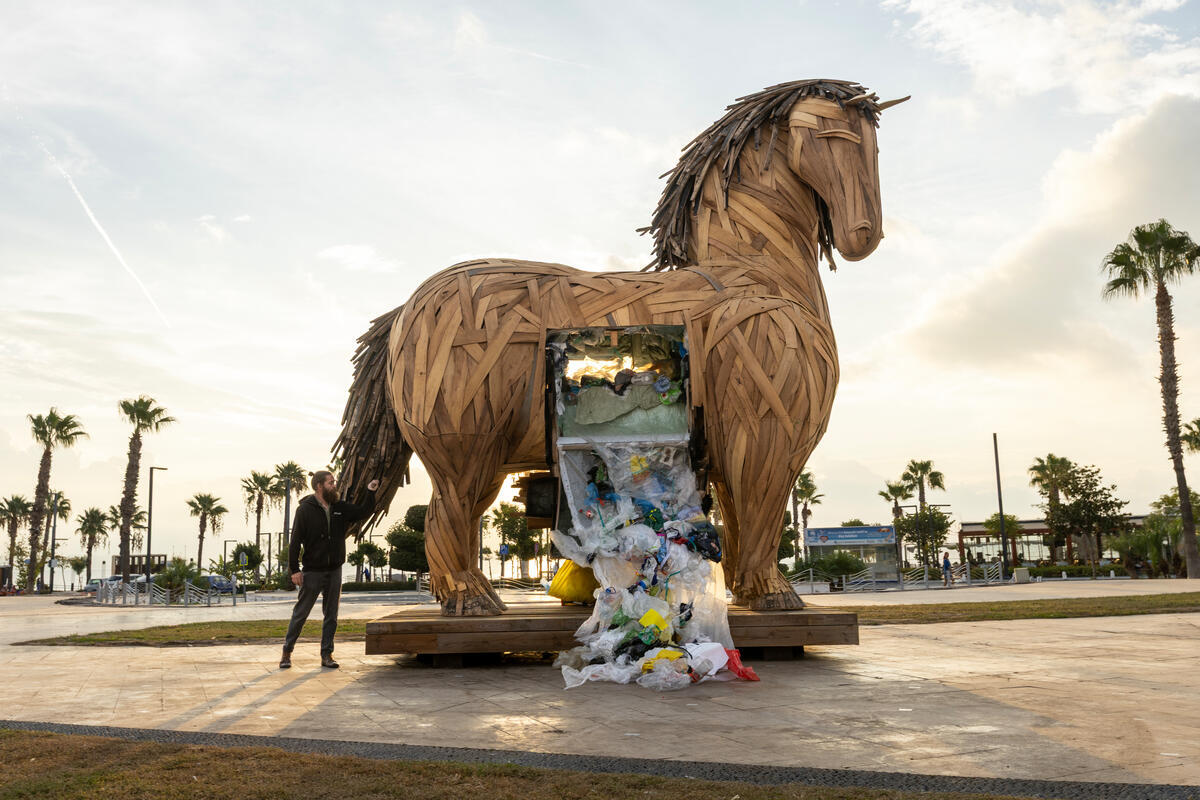
While world leaders meet at COP31, Greenpeace and Danish artist Thomas Dambo built a giant Trojan Horse to show what the fossil fuel industry doesn’t want you to see: when the trapdoor in its belly opened, plastic poured out. Plastic is how Big Oil plans to stay in business, turning oil and gas into more and more plastic as the world moves away from burning them. Leaders, don’t fall for it. A real climate deal has to tackle plastic production too.
-
Greenpeace unveils giant Trojan Horse at COP31 to expose fossil fuel industry’s plastic expansion
In Konyaaltı, Antalya, Greenpeace unveiled a six-metre Trojan Horse made with Danish artist Thomas Dambo. It shows how oil and petrochemical companies are expanding plastic production to keep demand for fossil fuels alive and protect their profits. Greenpeace is calling on governments to agree a strong Global Plastics Treaty that cuts plastic production at the source, ahead of the next round of negotiations in March 2027.
-
Day Four: Parties haggling over what should be included in the cover decision for COP 31, as African leaders continue to call for climate finance commitments
On day four, negotiators started work on the COP31 cover decision, which flags that global temperatures are likely to exceed 1.5°C, that the world must move away from fossil fuels, and that climate finance, adaptation, loss and damage and the just transition need more attention. The African Group is pushing to put adaptation and climate finance at the heart of the decision despite open opposition. At the summit, leaders from across Africa called for practical action rather than pledges, while the COP31 presidency’s “35-by-35” electrification targets won support from Ethiopia, Eswatini, South Africa, Seychelles, Togo and Liberia.

-
Fossil fuels must go the way of the dinosaurs
The dinosaurs didn’t have lobbyists, but fossil fuels do. Their playbook: distort the science, delay the policies and dodge accountability while the planet keeps heating up. At COP31, fossil fuel interests are fighting to protect their profits while communities around the world fight for their futures. No more delays, no more excuses: it’s time to end our fossil fuel addiction. Watch the reel and share it.
-
Day Three: COP 31 Leaders Summit begins, Africa calls for grants, not debt. Others demand end fossil fuels and fund just transition, while electrification pledge gains momentum
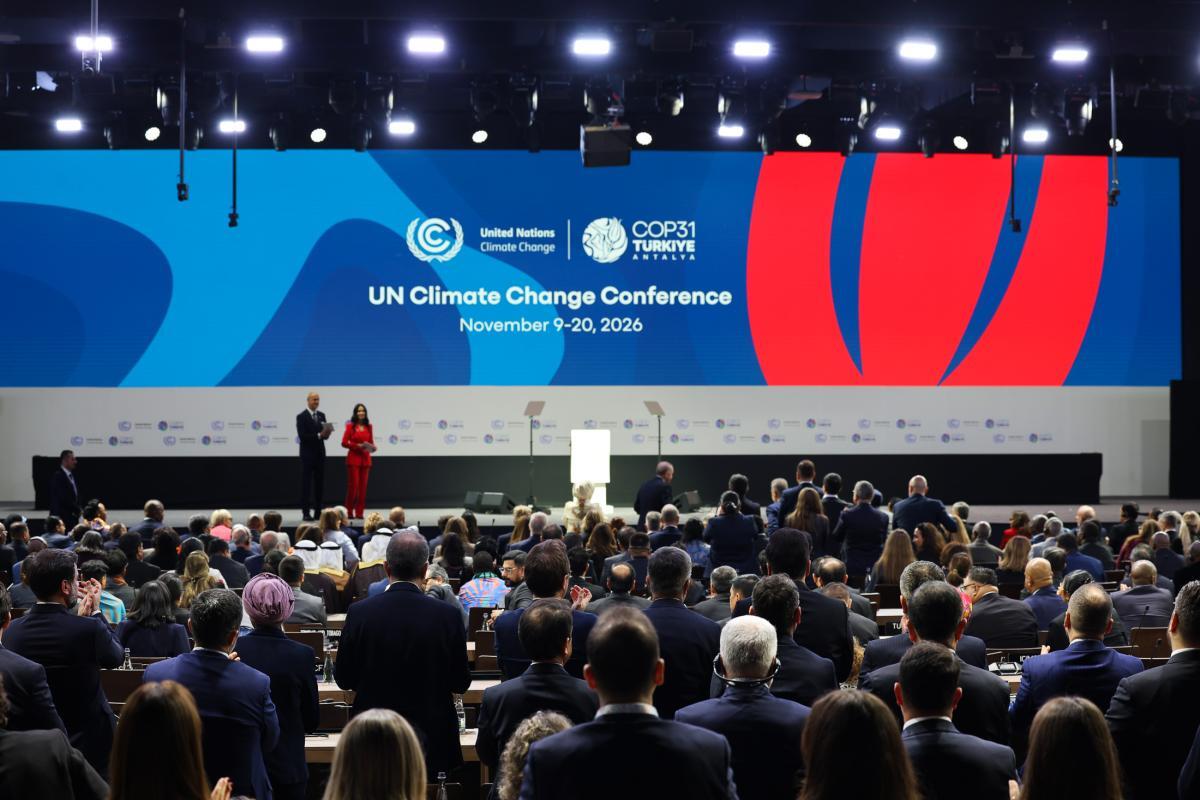
The World Leaders’ Summit opened on day three, with Türkiye expecting around 102 leaders from 95 countries and seven international organisations. UN Secretary-General António Guterres again urged governments to tax oil companies’ windfall profits, saying fossil fuels “must go the way of the dinosaurs”. African delegates called for grants, not debt, and a fast, fair energy transition, while the “35-by-35” electrification pledge gained momentum as a way to bring power to more than 600 million Africans.
-
Africa cannot afford another year of empty promises
Every year, world leaders meet at COP to talk about climate action, but frontline communities are tired of talk. Floods are destroying homes and livelihoods, and the people who did least to cause the crisis are paying the highest price. At COP31, we need urgent, decisive action, a just energy transition and renewable energy that is affordable and accessible to all. Watch the reel and share it.
-
Africa joins activists demanding a just transition at COP31
A just transition must be just for everyone. In Antalya, activists called for a cleaner, greener future that leaves no one behind. For Africa, climate justice means protecting vulnerable communities, creating decent jobs, ensuring access to affordable renewable energy and giving African countries the resources to build a sustainable future. Watch the reel and share it.
-
Greta isn’t holding back at COP31
Another COP. Same polluters. Same excuses. In Antalya, Greta Thunberg called out the hypocrisy of climate talks that keep giving polluting industries a seat at the table while frontline communities pay the price. Small victories matter, but we need real policy change and a future that puts people and the planet before profit. Watch the reel and share it.
-
What does a just transition look like for Africa?
A just transition that leaves people behind is not a just transition. As world leaders gather at COP31, Africa’s shift to clean, renewable energy must do more than cut emissions: it must protect vulnerable communities, respect Indigenous Peoples’ rights, create opportunities and let African countries develop sustainably. Watch the reel and share it.
-
Day Two: COP 31 holds an open dialogue on a Roadmap to Transition Away from Fossil Fuels, while electrification continues to gain momentum
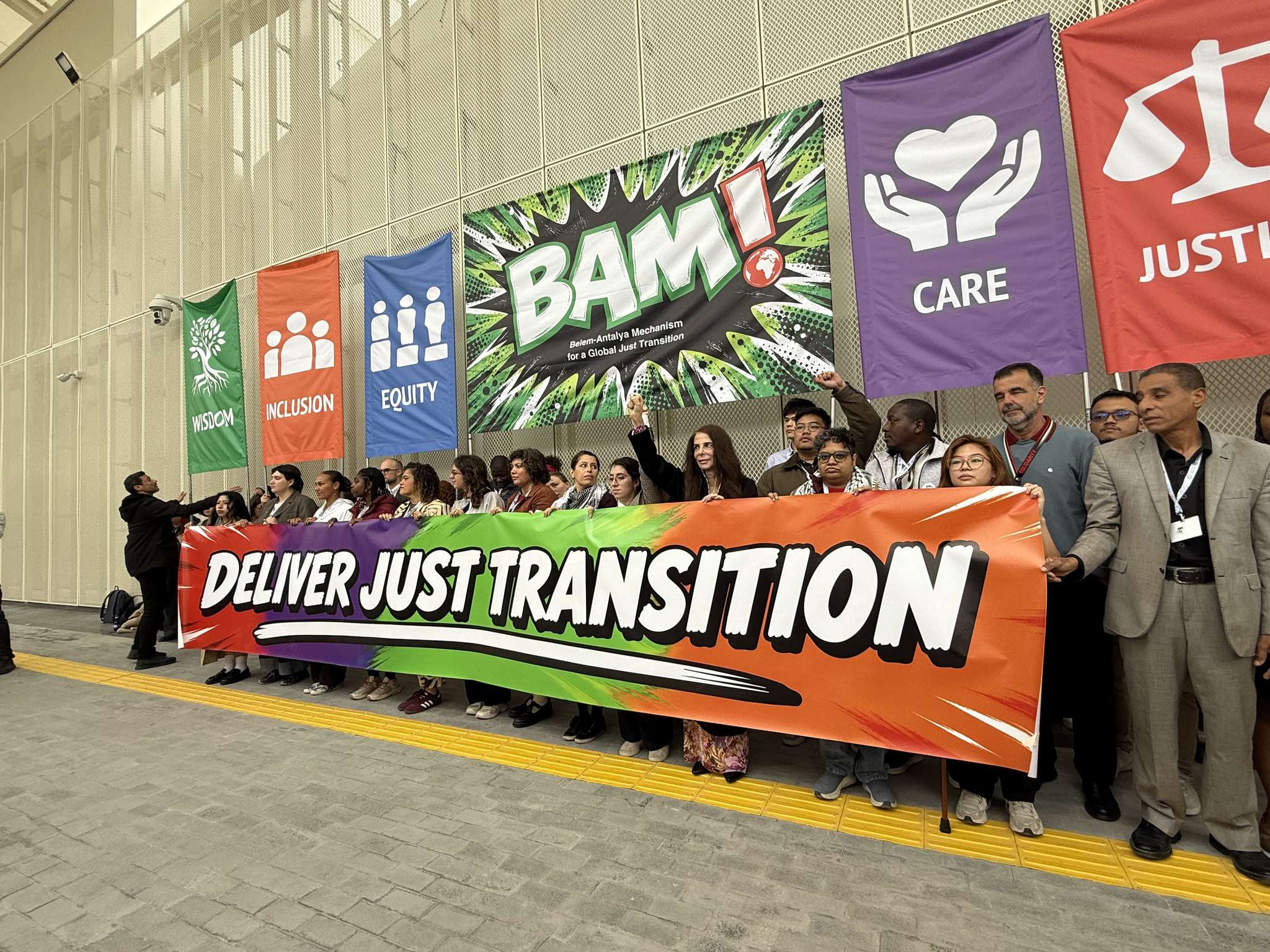
On day two, COP31 held an open dialogue on a roadmap for countries to transition away from fossil fuels, a shift essential to keeping 1.5°C within reach. UN Secretary-General António Guterres called for taxing polluters’ windfall profits. Developing economies need energy access and real financial support to switch to renewables, and Greenpeace has joined a public call for a Belém-to-Antalya Mechanism on Just Transition built on human rights, decent work and the rights of Indigenous Peoples.
-
Why climate finance matters for the Global South
Why does climate finance matter so much for the Global South? COP31 opened with calls to honour climate finance pledges, and our message is simple: Grants, Not Debt. Watch the reel and share it.
-
“Choked”: our 1.5°C installation at COP31
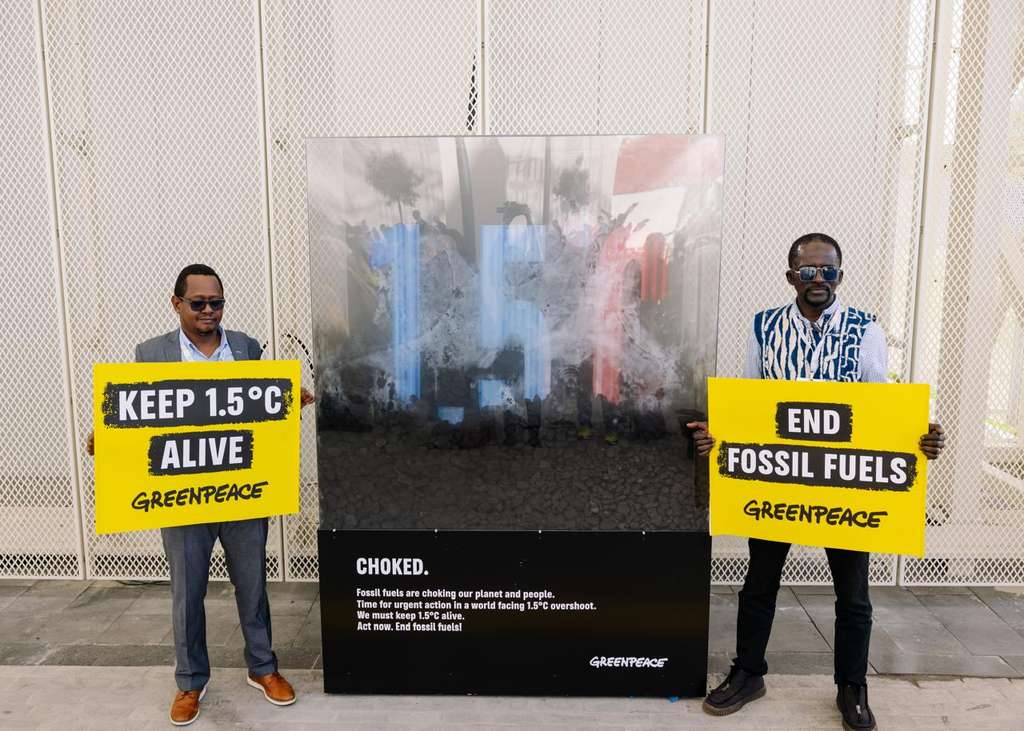
For Africa, 1.5°C isn’t just a number: it decides whether the rains come on time, whether crops grow and whether families have enough food and water. At COP31, Greenpeace unveiled “Choked”, an installation calling on world leaders to cut emissions at the source, fast, and deliver a just transition to clean energy that keeps our communities safe.
-
Day One: COP agenda adopted, but climate finance work faces resistance
The COP31 agenda was adopted on day one, clearing the way for negotiations. Speaking for the African Group, Ghana made clear that Africa’s adaptation plans and climate pledges depend on finance, but tripling adaptation finance did not make it onto the agenda as a standalone item. Greenpeace is calling for continuous, constructive dialogue on climate finance throughout COP31.
-
1.5°C overshoot must spark urgent action to end fossil fuels
With the world set to overshoot the 1.5°C warming limit, Greenpeace Africa is calling on governments at COP31 to respond with real action: phase out fossil fuels, end forest destruction and make fossil fuel companies pay for climate loss and damage.
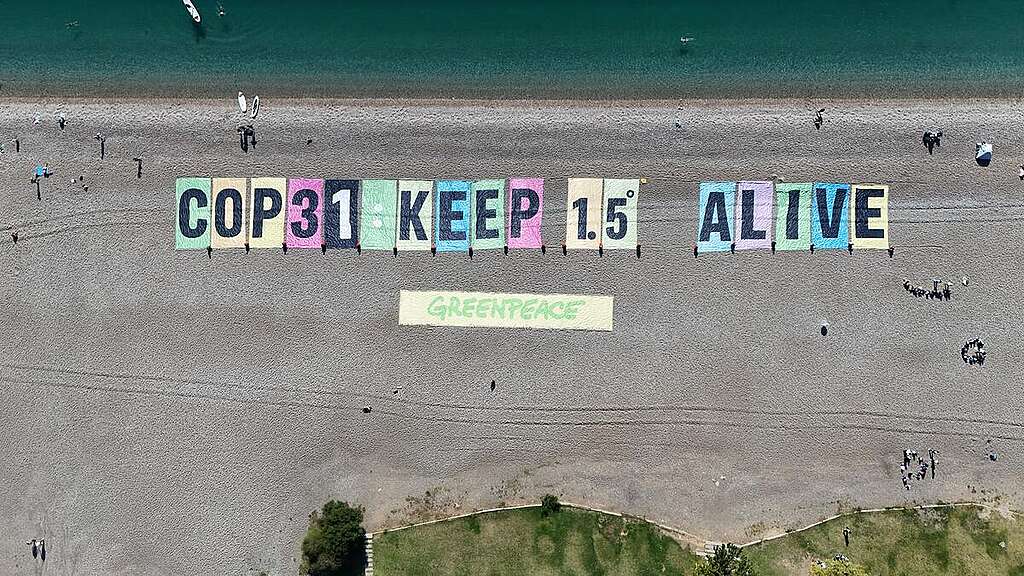
Greenpeace Türkiye’s giant banner on Konyaaltı Beach, Antalya. © Reha Salgın / Greenpeace -
Live from Antalya: COP31 opens
COP31 is officially open, and we’re in Antalya to hold leaders accountable for the promises they’ve made. Frontline communities in Africa are paying the highest price for the climate crisis, so our demands are clear: Grants, Not Debt. Make Polluters Pay. A Just Transition to Renewable Energy. Watch the reel and check back here for daily updates.
-
A message from the shores of Türkiye
For Africa, keeping 1.5°C alive is a matter of survival, and it can’t be done with empty promises, fossil fuel expansion or climate loans that deepen debt. As COP31 kicks off in Antalya, Greenpeace call on world leaders to protect frontline communities, deliver Grants, Not Debt and Make Polluters Pay.
-
Watch: Africa’s message for COP31
With COP31 just days away, hear why Africa’s leaders must deliver in Antalya. Watch the reel and share it with your network.
-
The countdown to Antalya is on
Days before COP31 opens, our team is getting ready to bring Africa’s demands to Antalya. Follow along on Instagram.
-
From rhetoric to reality: Why COP31 must deliver for Africa
As the world heads to Antalya, our Pan African Political Strategist Fred Njehu sets out what COP31 must deliver for Africa: make polluters pay for climate damage, speed up the shift to renewable energy, and provide adaptation and loss-and-damage finance as grants, not loans.

COP31 opens: the “implementation COP” begins
Negotiations kick off at the Antalya Expo Center. Our delegation is on the ground with one message: no more promises without delivery.
Grants, not debt: our finance briefing
Our team sets out why the new climate finance goal must mean more grant-based and concessional money for African countries.
Our message to heads of state
World leaders arrive in Antalya. We’re making sure the Just Transition puts African jobs, energy access and industry first.
Power Africa’s just transition
Young activists bring the demand for clean energy access, decent jobs and green industry on the continent to the venue.
Sending the bill to the polluters
As finance talks reach the crunch, we push for a Polluters Pay Pact: levies and taxes on fossil fuel profits to close the Baku to Belém finance gap.
The verdict: did COP31 deliver for Africa?
Our reaction to the final decisions on finance, the just transition and polluters paying their share.
Commitments are cheap. Delivery is the whole point.
Droughts, floods and storms are hitting African communities hardest, while the continent did least to cause the crisis. This year, Africa’s negotiators have framed COP31 around one thing: moving from promises to implementation, finance, adaptation and development. We’re there to back that up, loudly.
4 demands. Zero excuses.
What Greenpeace Africa is pushing for in every room at COP31: climate finance, a just energy transition, making polluters pay and protecting the Congo Basin forests.
Scale up climate finance
An “implementation COP” with no money to implement? Not happening. The new global climate finance goal has to land, and land fairly.
- Deliver the new climate finance goal in full
- Way more grants & concessional finance for Africa
- No new debt traps for adaptation
Power Africa’s just transition
Phase out fossil fuels, yes. But the Just Transition Mechanism has to be built around Africa’s own development priorities.
- Clean energy access for every household
- Green industry, value addition & decent jobs at home
- Partners in the green economy, not a raw-materials quarry
Make polluters pay
They profited from wrecking the climate. The wealthiest polluters must pay their fair share, and it’s fully possible.
- Climate accountability for Big Oil & Gas
- A Polluters Pay Pact: levies and taxes on industry profits
- The wealthiest polluters must pay.
- Use it to close the “Baku to Belém Roadmap” finance gap
Protect the Congo Basin forests
No climate credibility without protecting standing forests. Africa’s great rainforest needs enforceable action, led by the people who live there.
- Halt deforestation from destructive logging, mining, oil and agribusiness
- Land rights and free, prior and informed consent for forest peoples
- Forest finance that reaches communities directly
- Fund agroecology, community forestry, restoration and renewables
“Africa must not remain simply a supplier of raw materials while value addition, technology and jobs are created elsewhere. A truly just transition must enable Africa to participate equitably in, and benefit from, the emerging green economy.“Nana Dr. Antwi-Boasiako Amoah, Chair, African Group of Negotiators (AGN)
COP31, explained.
The quick answers on COP31, Africa and what Greenpeace Africa is fighting for.
What is COP31 and when is it?
COP31 is the 31st United Nations Climate Change Conference, where governments negotiate global climate action under the UN climate convention (UNFCCC) and the Paris Agreement. This year it takes place at the Antalya Expo Center in Antalya, Türkiye, from 9 to 20 November 2026, with a World Leaders’ Summit on 11 and 12 November.
Why is COP31 called the “implementation COP”?
Because the promises already exist; what’s missing is delivery. Africa’s negotiators have framed COP31 around moving from climate commitments to implementation: real finance, adaptation and development for the countries hit hardest by the climate crisis.
What is Greenpeace Africa demanding at COP31?
Greenpeace Africa has four key demands at COP31:
- Scale up climate finance: deliver the new global climate finance goal, with far more grant-based and concessional finance for African countries.
- Advance Africa’s just energy transition: phase out fossil fuels in a way that brings energy access, green industry, value addition and decent jobs to Africa.
- Make polluters pay: a Polluters Pay Pact that puts levies and taxes on fossil fuel industry profits to help close the climate finance gap.
- Protect the Congo Basin forests: enforceable action to halt deforestation, recognised land rights for Indigenous Peoples and local communities, forest finance that reaches communities directly, and funding for a just, forest-compatible development path.
Why does Africa need grants, not loans, for climate action?
Africa contributes the least to the climate crisis but faces some of its worst impacts, from droughts to floods. When climate finance arrives as loans, countries pay twice: once in climate damage and again in debt. Greenpeace Africa wants the new climate finance goal delivered mostly as grants and concessional finance, so adaptation doesn’t push African countries deeper into debt.
What is a just energy transition for Africa?
A just energy transition means moving away from fossil fuels in a way that is fair to African people. For Africa, that means clean energy access for every household, green industrialisation, adding value to minerals on the continent and creating decent jobs, so Africa isn’t left as a supplier of raw materials while the benefits are created elsewhere.
What is the Polluters Pay Pact?
The Polluters Pay Pact is Greenpeace’s call to governments to make the fossil fuel industry pay for the climate damage it has caused. Levies and taxes on fossil fuel profits would raise money for climate action and help fill the climate finance gap set out in the “Baku to Belém Roadmap”.
Why do the Congo Basin forests matter at COP31?
The Congo Basin is the world’s second-largest tropical rainforest, stretching across Central Africa. It stores vast amounts of carbon and is home to millions of people, including Indigenous Peoples who have protected it for generations. Greenpeace Africa wants enforceable commitments to halt deforestation driven by destructive logging, mining, fossil fuel extraction and large-scale agriculture, recognised land rights for Indigenous Peoples and local communities, forest finance that reaches communities directly, and funding for a just, forest-compatible development path. There is no climate credibility without protecting standing forests.
Where will COP32 be held?
COP32 will take place in 2027 in Addis Ababa, Ethiopia, bringing the UN climate talks back to African soil. What is decided at COP31 in Antalya will shape what Africa can achieve there.
How can I support Greenpeace Africa at COP31?
It takes 30 seconds: tweet your leader to tell them to deliver at COP31, or invite your network on WhatsApp, Facebook, LinkedIn or email. You can also follow our delegation’s updates in the COP31 day-by-day timeline.
Don’t just watch COP31. Pull up.
Tag your leader, bring your friends along, and help hold Africa’s leaders to what they promise in Antalya.