Last month, talks at the International Seabed Authority (ISA) council meetings showed that the world is nowhere near ready to proceed with deep sea mining. A lack of regulatory frameworks, risks of irreversible harm to ocean systems, mounting questions surrounding fairness and equity, and the overall doubt of its economic viability are just some of the red flags that have been raised. But that does not seem to stop The Metals Company (TMC), a deep sea mining firm headquartered in Vancouver, from pushing, at all cost, the commercial exploitation of the Pacific Ocean floor. In their race to the bottom, they continue to disregard international law by teaming up with Trump and pursuing unilateral licensing (rather than respecting multilateral agreements, like the ISA processes).
The legal quagmire of The Metals Company
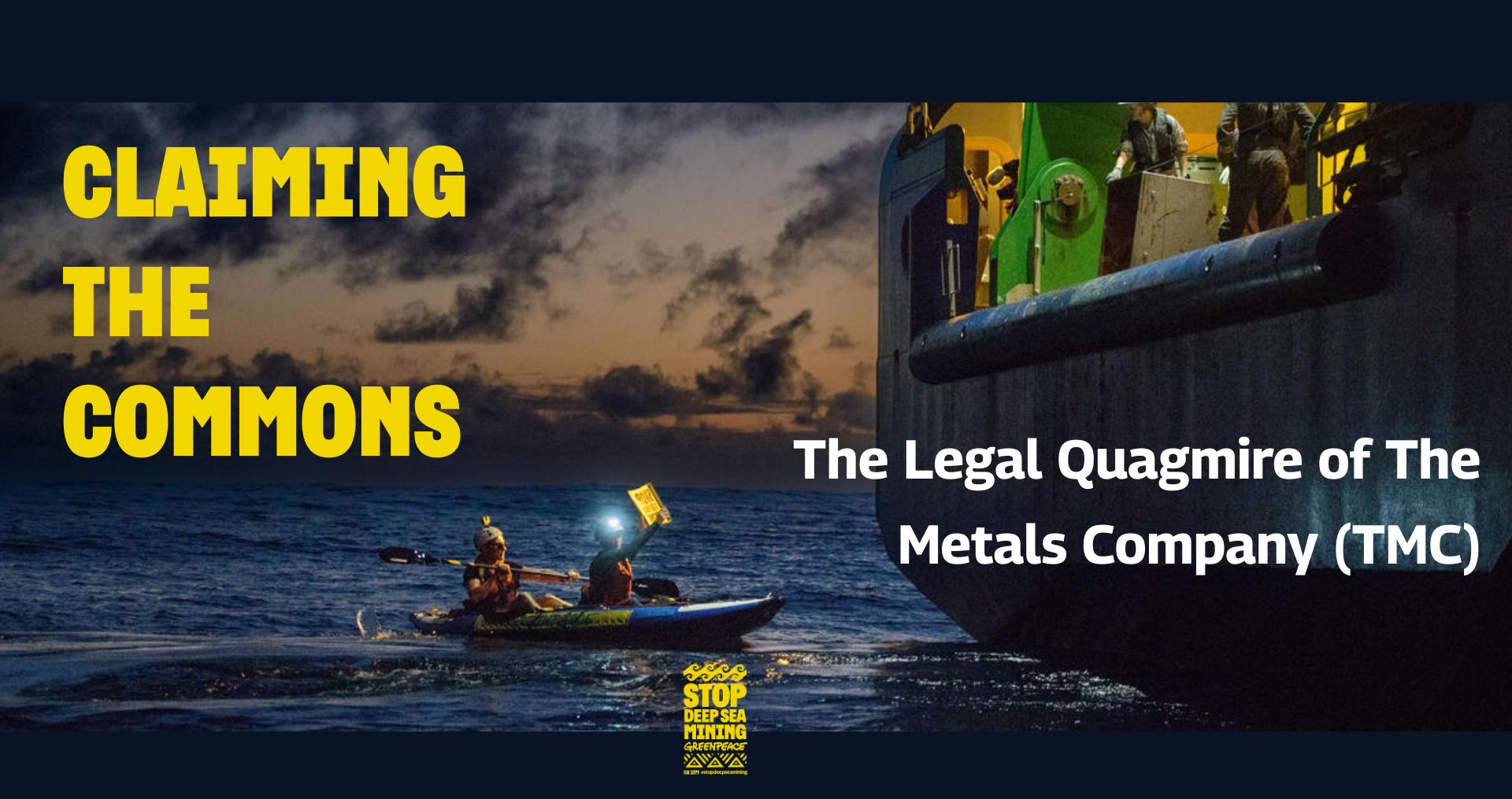
Greenpeace Canada’s newest report ‘Claiming the Commons: The Legal Quagmire of The Metals Company’ sheds light on the legal concerns surrounding TMC’s operations as it pursues deep sea mining without regard to international law and other important considerations. The report reveals that the company is circumventing, and thereby potentially violating, international law by using the United States’ permitting process to secure licenses to engage in deep sea mining.
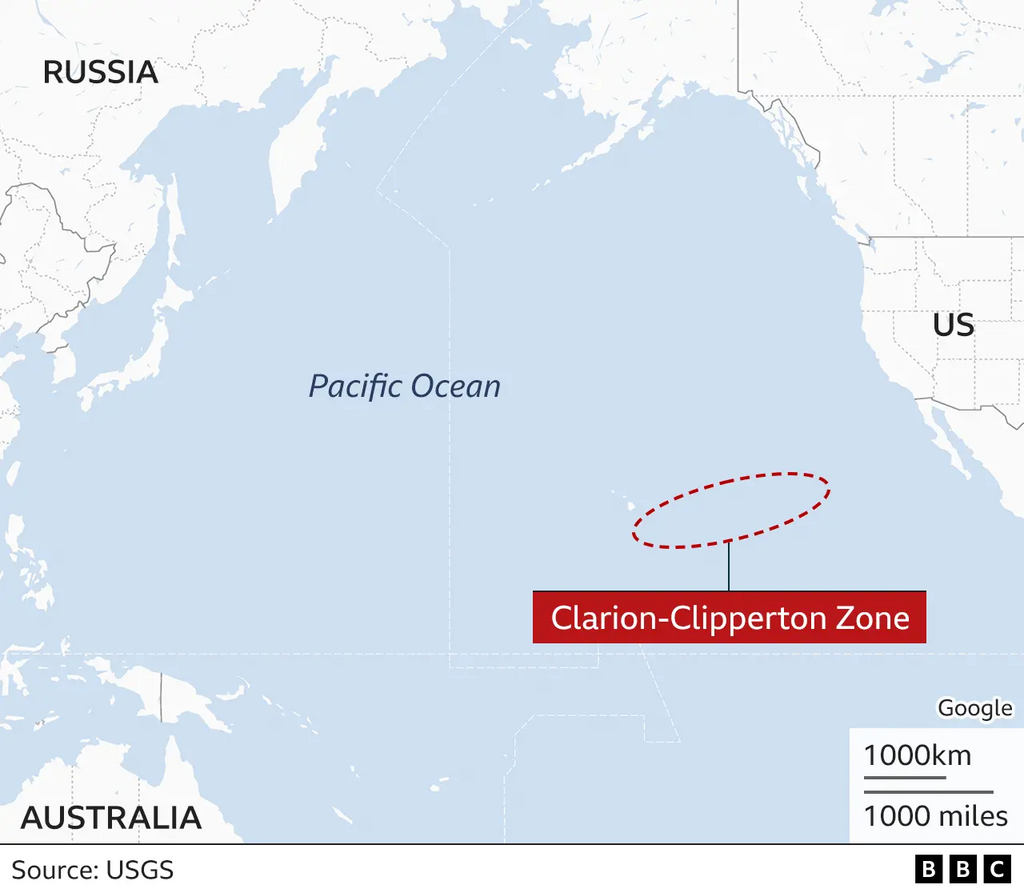
At the end of January, TMC USA filed the first consolidated deep sea mining application with US’ National Oceanic and Atmospheric Administration (NOAA). This application comes months after Trump’s Executive Order to fast-track deep sea mining in U.S. and international waters. The area in question, though—the Clarion-Clipperton Zone—lies beyond any country’s national jurisdiction. It is therefore under the charge of the International Seabed Authority (ISA), established under the UN Convention on the Law of the Sea (UNCLOS). This area is defined as the ‘common heritage of humankind’, and the ISA has the responsibility to act on behalf of humanity as a whole. Unilateral mining in the area is unlawful and Canada has a legal duty to ensure that TMC does not engage in unilateral mining activities.
The false dilemma of deep sea mining
TMC stands to make millions of dollars from its endeavour that would drive ocean destruction in a region already resisting the impacts of climate change, industrial fisheries, and plastic pollution. They claim the minerals and metals from deep sea mining are needed for energy and security purposes. However, a new report by Greenpeace International shows that we don’t need deep sea minerals for an ambitious energy transition, and we certainly don’t need another tech-bro CEO like Gerard Barron to continue the legacy of exploitation and disregard for frontline communities and nature.
The deep sea, which makes up 90% of the ocean, is the beating heart of the marine ecosystem. It’s one of the planet’s last frontiers, and an immense biome home to otherworldly species we’re only beginning to discover. The deep sea also acts as the largest carbon sink on Earth. Scientists warn that mining this fragile, undiscovered world would cause irreversible damage to ocean ecosystems. Above water, the impacts on communities won’t be shared equally. Pacific nations, coastal communities and Indigenous Peoples, whose cultures, economies, and food systems rely on a healthy ocean will face its most severe impacts if deep sea mining is permitted to start.
Exposing TMC at PDAC
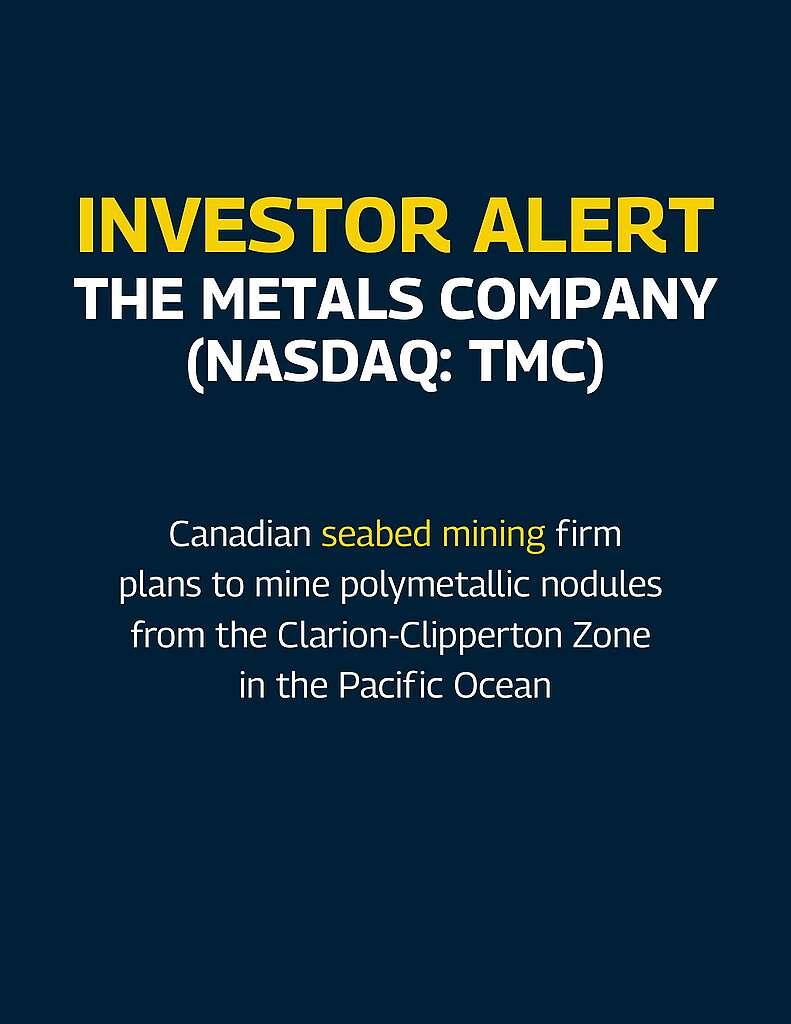
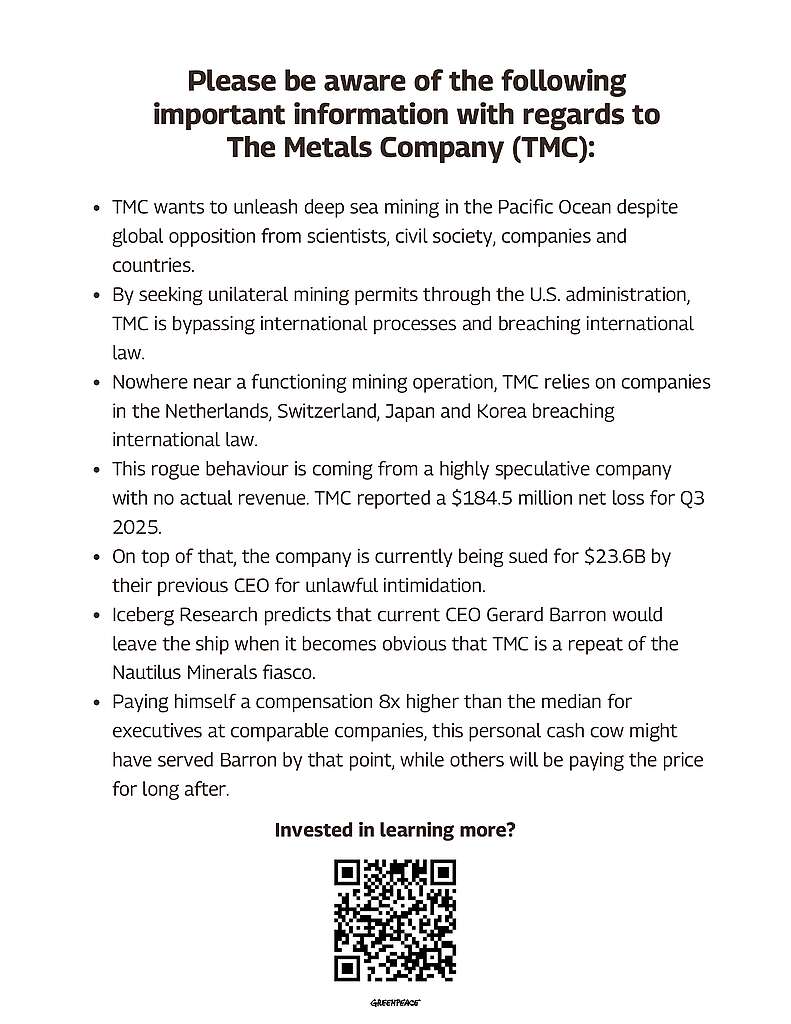
In order to clarify things for TMC’s investors and supply chain partners, we decided to pay them a surprise visit at PDAC—the annual mineral and mining convention that takes place Toronto. We spread these flyers across the centre, and even managed to sneak some of them onto TMC’s booth (you know, in case they needed a reminder).
Moratorium is the only sensible way forward
Some ideas are better left on the drawing board, and it is clear that deep sea mining is one that should never see the light of day. Environmentally, socially and economically speaking, deep sea mining just does not make sense. The good news is that we really can stop deep sea mining before it starts: A moratorium, or precautionary pause, is the only sensible way forward. Many countries support this moratorium already, and the last Canadian federal government actually did. Canada needs to reaffirm its support for a global moratorium and hold TMC accountable for bypassing international laws.

Add your name to demand that Canada lock the seabed out of reach for extractive industries.
Take action